
The Indian government has taken significant measures to quell intensifying youth protests in central Delhi, ordering telecom companies to disable mobile data services in and around the capital’s protest epicentre, as thousands demand the resignation of the education minister over a major examination paper leak scandal. This directive, confirmed by two Reuters sources on Thursday, marks a notable escalation in the government’s response to what has quickly become the most substantial youth challenge to Prime Minister Narendra Modi’s administration since he assumed power in 2014, and the biggest political crisis of his nascent third term, which began in 2024.
The immediate consequence of the internet shutdown was palpable across central Delhi on Thursday evening, as Reuters journalists reported a widespread lack of mobile data connectivity. This digital blackout not only impacted the protesters’ ability to organize and communicate but also severely disrupted daily life and commerce. Vendors, shopkeepers, and restaurants in the bustling commercial areas complained bitterly of their inability to process digital payments, a cornerstone of India’s rapidly digitizing economy, highlighting the ripple effect of the government’s security measures. The telecom companies, operating under government mandate, swiftly complied with the order, according to Reuters sources.
The Genesis of Discontent: The NEET-UG Examination Scandal
At the heart of the burgeoning unrest lies the National Eligibility cum Entrance Test (NEET-UG), a highly competitive examination for admission to undergraduate medical and dental courses across India. Administered by the National Testing Agency (NTA), the NEET-UG is a lifeline for millions of aspiring doctors, representing years of rigorous study, significant financial investment in coaching, and immense familial pressure. The sheer scale of the examination, with approximately 2 million students appearing annually, underscores its critical importance in the Indian educational landscape. For many, cracking NEET-UG is not just a career path but a symbol of upward mobility and societal contribution.
Allegations of widespread paper leaks for the NEET-UG examination held in May sent shockwaves across the nation. Reports began to surface suggesting that examination papers had been illegally obtained and sold, compromising the integrity of the highly standardized and fiercely contested test. This perceived corruption ignited a firestorm of anger and despair among students who had diligently prepared, only to feel betrayed by a system they believed was rigged. The emotional toll of the scandal was tragically underscored by reports linking the leaks to several student suicides, amplifying the urgency and desperation of the protest movement. Students and their families expressed profound disillusionment, questioning the fairness and transparency of national examinations, which are meant to be merit-based and equitable.
A Timeline of Escalation and Suppression
The current crisis has unfolded over several weeks, gaining momentum as student grievances remained unaddressed.
- Late May/Early June: Initial allegations of NEET-UG paper leaks begin to circulate widely on social media and through student networks. Students express concerns about irregularities in grading and results.
- Mid-June: Dissatisfied with the official responses, student groups begin to organize protests. The self-named "Cockroach" Janta Party (CJP) movement emerges as a prominent voice, galvanizing youth across the country. They establish a continuous presence at Jantar Mantar, a designated protest site in central Delhi.
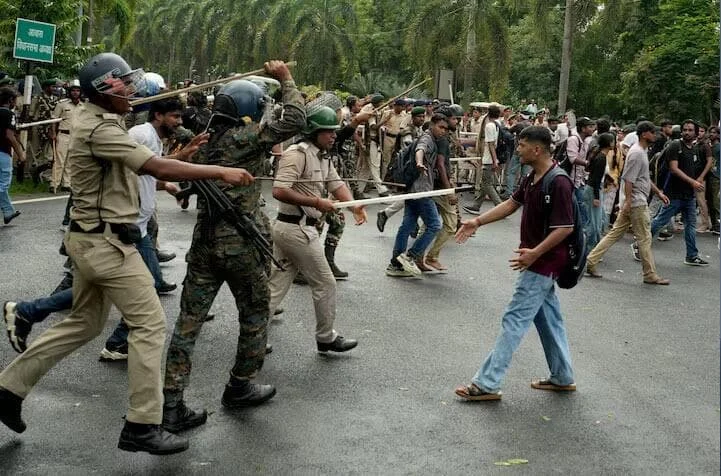
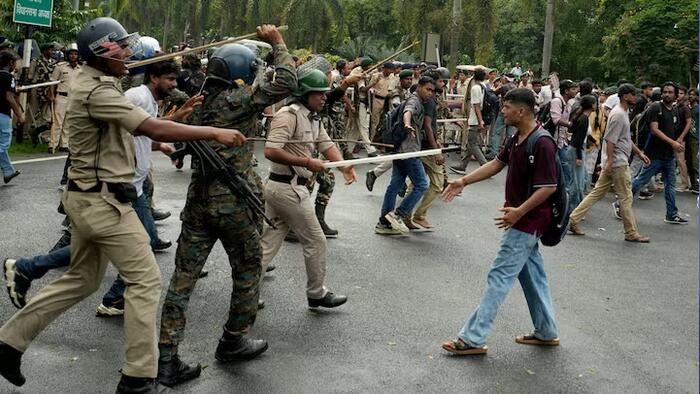
- Monday, [Date – e.g., July 15]: A major turning point occurs as tens of thousands of students and their supporters attempt a march on the Indian Parliament. The demonstration is met with significant police resistance, leading to clashes where police reportedly use tear gas and canes to disperse the crowds. Protesters allege instances of police brutality, further fueling their anger and resolve.
- Wednesday Night, [Date – e.g., July 17]: More than 10,000 people gather at Jantar Mantar, indicating the growing scale of the movement. During the night, some protesters reportedly engage in stone-pelting and throw plastic bottles at police officers, resulting in injuries to a few personnel, as reported by news agency ANI, citing Delhi Police.
- Thursday, [Date – e.g., July 18]: The government intensifies its crackdown. Mobile internet services are blocked in central Delhi, 16 metro rail stations are shut down, and businesses in Connaught Place are advised to close early. Prime Minister Modi makes his first public statement on the crisis, proposing special courts to prosecute those behind the leaks. However, the CJP rejects this proposal, demanding accountability for the systemic failures. Thousands return to Jantar Mantar amid heavy security, and protests begin to spread to other major cities including Ranchi, Pune, Thiruvananthapuram, and Kolkata.
- Friday, [Date – e.g., July 19]: In defiance of government appeals for dialogue and amidst heightened security, the CJP calls for nationwide peaceful protests, emphasizing solidarity with students who faced police action on Monday.
Government’s Response: A Multi-pronged Approach
The Modi government’s strategy to manage the crisis has been multi-faceted, combining appeals for dialogue with stringent security measures and a promise of judicial action.
Internet Shutdowns and Public Mobility Restrictions: The order to telecom companies to disable mobile data services in central Delhi is a potent tool often employed by Indian authorities to control information flow and prevent the rapid mobilization of protesters. This move, while aimed at containing the demonstrations, also had significant collateral damage. Local businesses, heavily reliant on digital payment platforms like UPI (Unified Payments Interface), found themselves unable to conduct transactions, leading to financial losses and widespread frustration. India has a history of using internet shutdowns, often citing public order concerns, but critics argue such measures infringe on civil liberties and disrupt essential services.
In tandem with the digital blackout, authorities also shut down 16 metro rail stations in and around the protest zones, severely inconveniencing thousands of daily commuters and disrupting the city’s public transport network. Additionally, the New Delhi Traders Association, citing an advisory from municipal authorities regarding the security situation, asked all offices and businesses in Connaught Place, a major central business district, to shut early on Thursday. These measures are widely interpreted as an attempt to physically isolate the protest area, limit the influx of new participants, and prevent the demonstrations from escalating into wider civil unrest.
PM Modi’s Initial Intervention: Prime Minister Narendra Modi broke his silence on the crisis on Thursday, stating that "special courts would be set up to prosecute those behind exam paper leaks." In a post on X (formerly Twitter), he affirmed, "Nothing is more important than the welfare and future of our youth!" This was his first direct public acknowledgment of the crisis, signaling the government’s recognition of its gravity. The promise of expedited legal action aims to reassure the public that perpetrators will be held accountable.
Appeals for Dialogue: Despite the restrictive measures, the government also made a fresh appeal to the protesters on Thursday to join talks to resolve the crisis. This dual approach of containment and dialogue suggests an attempt to de-escalate tensions while maintaining control. However, the protesters’ immediate rejection of Modi’s initial proposal indicates a deep-seated mistrust and a demand for more comprehensive solutions than merely prosecuting individuals.
Police Action: The police response to the protests has been robust, leading to clashes and allegations of excessive force. During Monday’s march on Parliament, police resorted to tear gas and lathi-charges (use of canes) to push back the demonstrators. On Wednesday night, the Delhi Police reported injuries to a few officers after some protesters allegedly attacked them with stones and plastic bottles at Jantar Mantar. These confrontations highlight the volatile nature of the protests and the challenges faced by law enforcement in maintaining order amidst large, emotionally charged gatherings.
Voices of Dissent and Disruption
The protest movement is characterized by a strong sense of grievance and a clear set of demands, articulated primarily by the "Cockroach" Janta Party (CJP) and echoed by a broad spectrum of stakeholders.
The "Cockroach" Janta Party (CJP): The CJP has emerged as a key organizing force behind the youth protests. Their primary demand is the immediate resignation of the education minister, holding him accountable for the systemic failures that led to the paper leaks. They also seek a complete overhaul of the National Testing Agency (NTA) and a transparent process for re-conducting the affected examinations. CJP spokesperson Ashutosh Ranka, in response to PM Modi’s proposal for special courts, sharply questioned the underlying causes: "But Modi-ji, tell us why are paper leaks happening in this country in the first place?" This statement underscores their belief that prosecuting individuals is insufficient without addressing the root causes of corruption and lack of oversight. Their call for nationwide peaceful protests on Friday demonstrates their intent to broaden the movement beyond Delhi and maintain pressure on the government.
Student Perspectives: For the 2 million students affected by the NEET-UG leaks, the scandal represents not just an academic setback but a profound crisis of faith in the system. Many have invested years and significant financial resources in preparing for this single, life-defining examination. Their aspirations, often shared by their families, are now jeopardized. The suicides linked to the scandal serve as a stark reminder of the immense psychological pressure on these young individuals. Their participation in the protests stems from a desperate plea for justice, transparency, and a fair chance at their chosen careers.
Opposition Parties: India’s opposition parties have quickly seized upon the issue, recognizing its potential to rally public sentiment against the ruling government. They have vociferously echoed the youth movement’s demands, particularly the call for the education minister’s resignation. The monsoon session of parliament, which commenced this week, has been significantly disrupted by opposition lawmakers raising the issue, using it as a major point of attack against the Modi administration. This alliance between the youth movement and political opposition amplifies the crisis, transforming it from a localized student grievance into a national political flashpoint.
Impact on Daily Life and Commerce: Beyond the political and social ramifications, the government’s measures have had a tangible impact on the daily lives of ordinary citizens. The mobile internet shutdown in central Delhi crippled digital transactions, causing significant inconvenience and financial losses for small businesses, street vendors, and restaurants that rely heavily on UPI for payments. Commuters faced severe disruptions due to the closure of 16 metro stations, forcing them to seek alternative, often more expensive and time-consuming, modes of transport. The advisory for businesses in Connaught Place to shut down early further compounded the economic strain on the city’s commercial heart. These disruptions highlight the broader societal cost of using such stringent control measures.
Broader Implications: A Test for Governance and Trust
The ongoing youth protests in Delhi represent a multifaceted challenge for Prime Minister Modi’s third term, testing his government’s ability to manage dissent, uphold institutional integrity, and address the aspirations of its vast youth population.
Political Challenge: This wave of protests is the most significant youth-led challenge Modi has faced since coming to power in 2014. Previous youth movements, such as the anti-corruption protests or those against specific government policies, have often signaled shifting public sentiment. For Modi, who secured a third term with a reduced majority, effectively addressing this crisis is crucial for maintaining political stability and demonstrating responsive governance. The opposition’s swift embrace of the students’ cause indicates a potential for broader political realignment and intensified parliamentary confrontation. The government’s handling of these protests will set a precedent for future expressions of dissent.
Educational System Under Scrutiny: The NEET-UG scandal has severely eroded public trust in India’s examination bodies, particularly the National Testing Agency (NTA). The credibility of national competitive exams, which are pillars of India’s meritocratic system, is now under immense scrutiny. This crisis necessitates not just punitive action against individuals but also fundamental reforms in the examination process, including robust security protocols, transparency in results, and accountability mechanisms for testing agencies. Failure to restore confidence could have long-lasting negative impacts on the aspirations of millions of students and the quality of professional education.
Digital Rights and Economic Fallout: The repeated use of internet shutdowns as a tool for managing public order raises critical questions about digital rights and freedom of expression in India. While governments often justify such measures on national security grounds, critics argue they disproportionately affect citizens’ fundamental rights and have significant economic repercussions. The impact on digital payments in central Delhi serves as a microcosm of how such shutdowns can impede economic activity in an increasingly digitized nation.
Social Cohesion: The protests also highlight potential generational divides and the growing political consciousness among India’s youth. Empowered by social media, this generation is increasingly vocal about issues that affect their future, challenging traditional forms of political engagement. The government’s response will shape how this critical demographic views its relationship with the state and its political institutions.
Path Forward: The immediate future of the protests remains uncertain. While the government calls for dialogue, its simultaneous use of restrictive measures risks further alienating the protesters. The CJP’s call for nationwide demonstrations on Friday suggests a determined effort to escalate the movement if their core demands are not met. The government faces a delicate balancing act: demonstrating a commitment to justice and reform without appearing to capitulate to protestor demands, while also ensuring public order. Long-term solutions will likely require comprehensive reforms within the education and examination systems, coupled with transparent communication and genuine engagement with student representatives.
The ongoing crisis in Delhi is more than just a student protest; it is a profound test for Indian democracy, its institutions, and its ability to respond to the aspirations and grievances of its youngest and most dynamic demographic. The resolution of this crisis will undoubtedly shape the political and social landscape of India for years to come.

