

The proposed digital euro stands as one of the European Union’s most significant and divisive financial initiatives. Supporters champion it as a crucial tool for safeguarding monetary sovereignty, reducing reliance on foreign payment behemoths, and ensuring the continued relevance of central bank currency in an increasingly digital economy increasingly influenced by dollar-denominated stablecoins. Conversely, a vocal contingent of critics views the digital euro with deep suspicion, fearing it could evolve into a mechanism for unprecedented surveillance and control over European citizens by a supranational entity.
Piero Cipollone, a member of the European Central Bank’s (ECB) executive board, articulated the official stance, stating, "The digital euro will reduce Europe’s excessive dependence on non-European providers. It will ensure that Europeans can pay with their money – the sovereign money issued by their central bank – in the digital economy." This perspective emphasizes the goal of bolstering Europe’s digital financial infrastructure and empowering its citizens with a secure, state-backed digital currency.
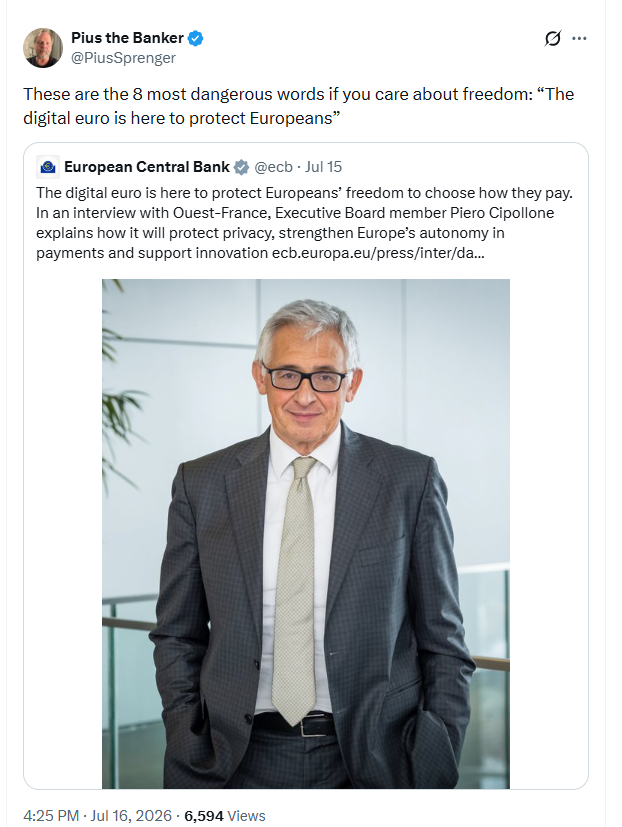
However, an alternative viewpoint posits that a Central Bank Digital Currency (CBDC) could fundamentally curtail individual freedoms. Former Deutsche Bank managing director Pius Sprenger voiced these concerns starkly, warning that the phrase "The digital euro is here to protect Europeans" might mask more insidious intentions. Spanish financial commentator José Vizner echoed these sentiments, suggesting that the digital euro could enable the ECB to exert control over every euro spent, dictating spending limits and potentially influencing individual financial autonomy. This divergence in opinion highlights a fundamental debate about the balance between technological advancement, financial stability, and civil liberties.
Understanding the Digital Euro: A Central Bank’s Digital Currency
At its core, the digital euro is envisioned as a digital manifestation of the euro, issued directly by the ECB. This makes it a form of Central Bank Digital Currency (CBDC), a concept that often triggers privacy alarms among cryptocurrency enthusiasts and privacy advocates, conjuring images of Orwellian surveillance states. The very acronym "CBDC" can evoke a sense of unease, reminiscent of dystopian narratives where state control extends to the minutiae of daily life.

This apprehension is not confined to the European context. In January, then-President Donald Trump signed an executive order aimed at banning CBDCs in the United States, citing threats to the financial system, individual privacy, and national sovereignty. Subsequently, a ban was formalized in housing bill legislation until 2030. Despite these developments in the U.S., the ECB maintains that the digital euro is essential for Europe’s future.
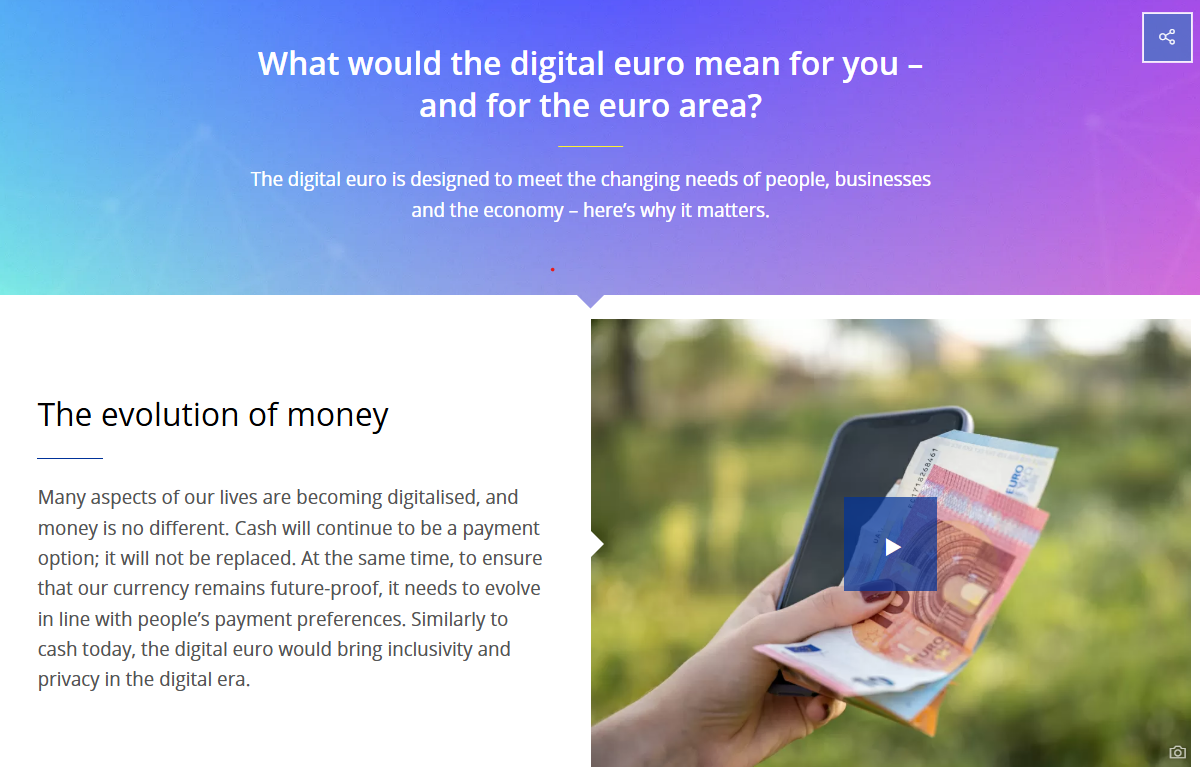
The ECB’s argument is that the digital euro would provide euro zone residents with an additional, reliable method for conducting everyday transactions in an era where physical cash usage is declining. It is presented as a complement to, rather than a replacement for, existing banknotes and coins, aiming to preserve the tangible benefits of cash in a digital environment. Cipollone reiterated this point in a July 14 interview, stating, "The main reason for issuing a digital euro is to preserve the benefits of cash in the digital era."
However, critics point out a potential paradox: while the ECB promises privacy, the very nature of a traceable digital currency raises questions. Vizner highlighted this concern, remarking, "They promise privacy… but it’s money that’s trackable by design." This suggests that even with privacy safeguards, the inherent traceability of a digital currency could be a significant departure from the anonymity afforded by physical cash.
Europe’s Rationale for a Digital Euro
The ECB’s public discourse on the digital euro largely sidesteps any discussion of surveillance benefits. Instead, officials emphasize the strategic imperative of developing a European-centric digital payment system. As cash transactions diminish, the argument goes, Europe risks becoming overly dependent on private, often foreign-operated, payment networks such as Visa and Mastercard.
Concerns have been articulated by various policymakers regarding the continent’s lack of control over its critical payment infrastructure. ECB President Christine Lagarde, in remarks made in 2025, expressed this apprehension: "The entire infrastructure mechanism that allows for payment, credit and debit, is not a European solution… We need to make sure there is a European offer, just in case." This statement underscores a desire for strategic autonomy in the financial sector, akin to efforts in other areas of digital infrastructure and technology.
Consumer groups, such as the European Consumer Organization (BEUC), have also weighed in, highlighting potential user benefits. Andrew Canning, Deputy Head of Communications at BEUC, told Cointelegraph that the digital euro could offer consumers a "secure and inclusive" payment option, particularly beneficial for individuals who face barriers to accessing traditional digital payment methods.
Despite these purported benefits, critics remain unconvinced, arguing that the digital euro could grant governments and central banks unprecedented control over citizens’ spending habits. These fears are not merely theoretical. The freezing of bank accounts during Canada’s 2022 Freedom Convoy protests serves as a recent, real-world example of how financial assets can be controlled or restricted by authorities in times of social or political unrest.
Tech entrepreneur and privacy advocate Efrat Fenigson warned that the digital euro could become "the infrastructure for programmable money, programmable identity and programmable behavior," cautioning that "freedom doesn’t disappear overnight. It disappears one permission at a time." Professor Patrick Schueffel of the Fribourg School of Management further cautioned that CBDCs could "significantly expand governments’ ability to monitor financial activity."
Safeguards and Privacy Concerns
In response to these widespread concerns, the EU’s own privacy watchdogs have stressed the necessity of robust safeguards. The European Data Protection Supervisor (EDPS) and the European Data Protection Board (EDPB) have jointly stated that a high level of privacy and data protection is "essential for the digital euro to gain public trust."
The ECB’s published materials on the digital euro’s privacy features assure skeptics that offline payment capabilities will be incorporated to provide "cash-like" privacy. The central bank insists that it will not have direct access to personal transaction data. Andrew Canning of BEUC indicated that the organization is "currently happy" with the proposal and trusts that consumer safeguards will be protected during final legislative negotiations. However, the assurances from the ECB may not be sufficient to assuage the deeply held reservations of many.
Operational Mechanics of the Digital Euro
Unlike privately issued stablecoins, which are pegged to existing fiat currencies like the US dollar, the digital euro would be denominated in euros and issued by the ECB. Consumers would access it through their existing banking or payment service providers, not directly from the central bank. This intermediary model aims to leverage existing financial infrastructure while maintaining the central bank’s ultimate liability for the digital currency.
The digital euro would be held and transacted through electronic wallets. These wallets would facilitate payments in physical stores, online, and directly between individuals. A key distinction from physical cash is that while cash is held directly by individuals, the digital euro would be accessed via these electronic wallets. The underlying digital euro would remain a liability of the ECB, offering the same public backing as physical cash, rather than being a claim on a commercial bank’s deposits.
Unlikely Allies: Banks and Crypto in Opposition
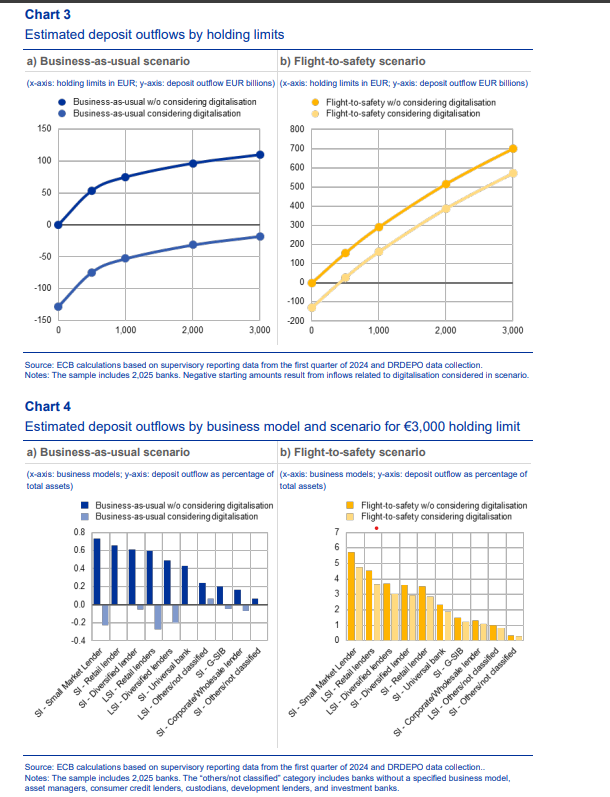
The push for a digital euro has fostered an unusual alliance between privacy-focused cryptocurrency advocates and segments of the traditional banking industry. Banks are reportedly concerned that a widespread shift to a digital euro could lead to a significant reduction in commercial bank deposits. This potential outflow of funds could force banks to re-evaluate their lending practices to businesses and consumers, potentially impacting the broader economy.
Lorenzo Bini Smaghi, a former member of the ECB’s executive board, has voiced concerns about a "high risk of financial instability, with strong repercussions for the real economy." The ECB, however, maintains that its design choices are intended to "minimize any potential risks" to the banking sector. Measures such as limits on the amount of digital euros individuals can hold in their wallets are designed to prevent excessive outflows from bank deposits. Furthermore, similar to cash, no interest would be paid on digital euro holdings, a move intended to discourage large-scale hoarding and maintain the attractiveness of bank deposits for savers.
Financial Implications and Implementation Costs
The projected cost of implementing the digital euro is a significant point of contention. The ECB estimates an investment of approximately €1.3 billion (around $1.5 billion) for the initial rollout, with ongoing annual operating costs projected at around €320 million ($370 million).
Beyond the central bank’s expenditures, commercial banks and other payment service providers are expected to incur substantial costs in integrating the digital euro into their existing systems. The ECB anticipates these implementation costs for the banking sector to range between $4.6 billion and $6.9 billion over a four-year period.
The Road Ahead: Timeline and Legislative Progress
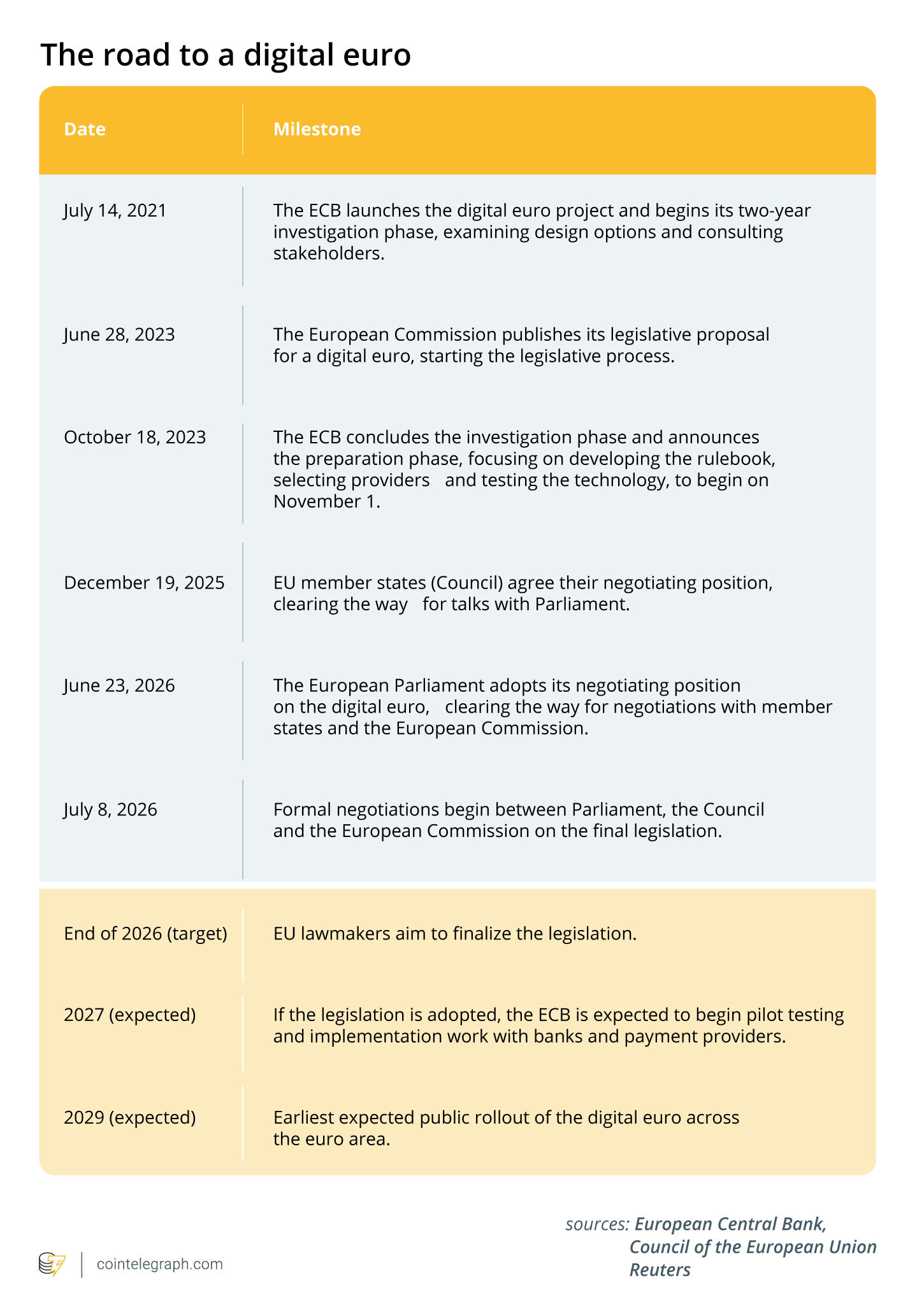
After years of deliberation, legislative bodies across the European Parliament, EU member states, and the European Commission have initiated negotiations on the final legal framework for the digital euro. The stated aim is to reach an agreement within the next six months. Piero Cipollone indicated in a July 13 interview that the hope is for the text to be finalized by the end of the year, at which point a decision on the future issuance of the digital euro can be made.
If the legislative process concludes successfully, the ECB’s Governing Council will then deliberate on whether to launch the digital euro, potentially in 2027. Widespread public adoption, however, is not anticipated before 2029, contingent on its ultimate approval.
Global Precedents and Lessons Learned
Globally, the exploration of CBDCs has been extensive. Over 100 countries have initiated research into CBDCs in recent years. However, many have subsequently abandoned retail CBDC projects or shifted focus to wholesale models, which are designed for interbank settlements rather than direct public use. The few retail CBDCs that have been launched have seen varied levels of adoption.
China initiated pilot programs for its digital yuan (e-CNY) in 2019, subsequently rolling it out nationwide. Despite processing trillions of yuan in transactions, a significant portion of the Chinese population continues to prefer established mobile payment platforms like Alipay and WeChat Pay.
The Bahamas became the first nation to launch a nationwide retail CBDC with its Sand Dollar in 2020. While intended to enhance financial inclusion, adoption rates were slower than anticipated, prompting authorities to increase distribution efforts through commercial banks.
Nigeria’s eNaira, launched in 2021, has also struggled to gain widespread traction despite strong government backing. Brazil’s central bank, citing cost and privacy concerns, decided to shut down its Drex CBDC platform in 2025. As the Bank for International Settlements (BIS) concluded in 2023, "a retail CBDC is a complex undertaking, and not only for the central banks." These international experiences underscore the significant challenges associated with developing and implementing successful retail CBDCs, highlighting the need for careful consideration of user needs, privacy implications, and economic impact.

