
F/m Investments’ Washington, D.C., office, typically a mere short drive from the Federal Reserve’s headquarters, has found the intellectual distance to the central bank’s inner workings feeling considerably greater under its new leadership. CEO Alexander Morris, whose investment theses heavily rely on anticipating the Fed’s interest rate decisions, has voiced alarm over Chairman Kevin Warsh’s recent overhaul of the central bank’s forward-looking communication strategy, a move initiated shortly after Warsh assumed his post in May. This deliberate reduction in "Fedspeak" – the jargon-heavy, often opaque communication style historically favored by central bank leaders – has prompted financial institutions to seek innovative solutions, including the deployment of artificial intelligence, to bridge the information gap.
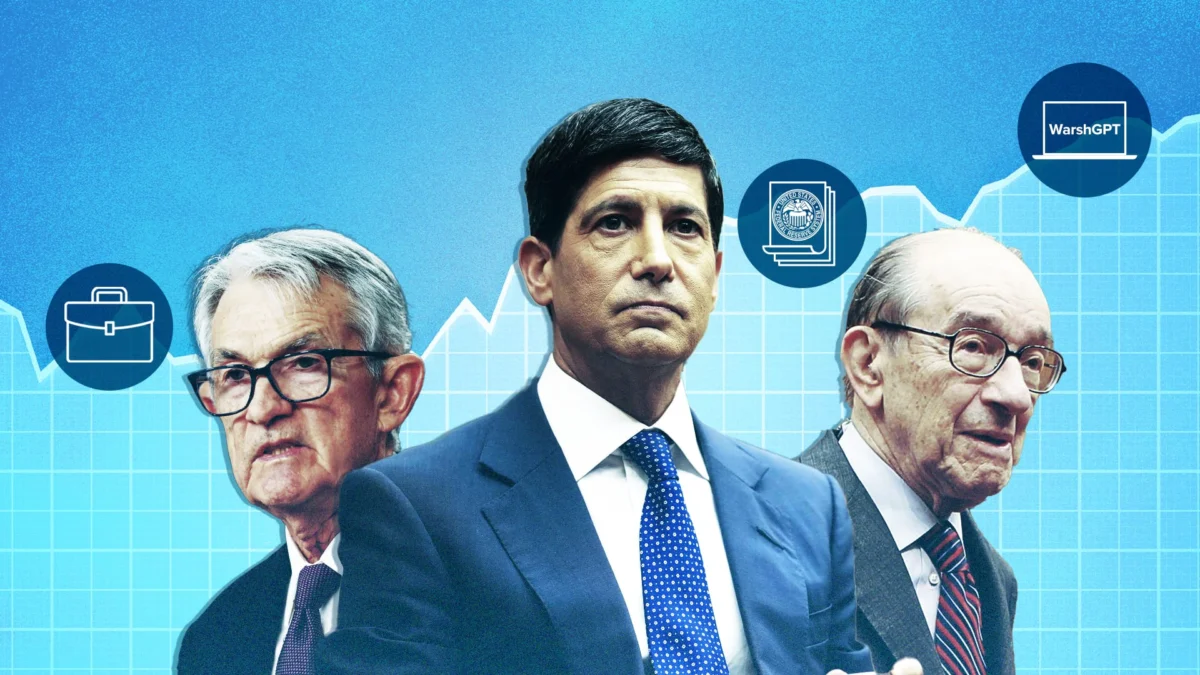
"We’ve made a pretty good business out of decoding Fedspeak," Morris stated, reflecting on the historical necessity of interpreting subtle cues from Fed communications. "And he just said he was going to go quiet on us." This declaration of a less transparent approach has sent ripples through the financial community, forcing a strategic re-evaluation among market participants. In response, F/m Investments, which manages exchange-traded funds tied to inflation and U.S. Treasurys, recently launched "WarshGPT." This AI-powered tool, designed to parse nearly 1,800 documents and transcripts from Chairman Warsh’s public record, aims to provide users with insights into his analytical framework concerning economic and monetary policy issues. This innovative development underscores a broader trend within the financial sector, as firms increasingly turn to AI models to gain a competitive edge in an era characterized by reduced public forecasting from the Warsh-led Fed.
Gary Richardson, a former historian at the central bank and now an economics professor at the University of California, Irvine, encapsulated the market’s predicament: "Whether the Fed is providing a lot of information or a little information, investors have to understand what the Fed is likely to do in the future. With limited information, people are going to try to do anything they can to figure out what the Fed is thinking." This sentiment highlights the fundamental challenge facing investors: the imperative to forecast monetary policy in the face of deliberately constrained communication, a stark departure from the more transparent era of Warsh’s predecessors.
The Deliberate Retreat from Transparency
Chairman Warsh’s tenure, commencing in May, quickly signaled a departure from the communication norms established over decades. His actions suggest a calculated effort to restore an element of ambiguity to the Fed’s stance, reminiscent of earlier eras of central banking. One of his first significant moves was to establish a task force specifically aimed at reshaping the Fed’s operational communication strategy, signaling the importance of this shift to his leadership.
The quantitative evidence of this pivot became immediately apparent. The Federal Reserve meeting statement released in June, Warsh’s first as chairman, notably contained around 130 words. This figure represented a significant reduction from the more than 300 words typically seen in prior publications, a finding corroborated by a CNBC analysis. Warsh himself acknowledged the statement’s brevity, describing it as "shorter" and "simpler," and explicitly stating that it purposefully excluded forward guidance – a cornerstone of modern central bank communication designed to manage market expectations.
Further analysis by UBS revealed a dramatic reduction in policy-relevant commentary during Warsh’s inaugural post-decision press conference. Only 5% of his sentences were allocated to topics directly related to monetary policy, a stark contrast to the 27% average observed during press conferences under his predecessor, Jerome Powell. This deliberate paring back of explicit guidance and detailed policy discussions forces market participants to infer the Fed’s intentions from a much smaller, less direct pool of information.
Historical Context: From Greenspan’s Enigma to Powell’s Transparency
The shift under Warsh prompts inevitable comparisons to the communication styles of past Fed chairs. Investors and Fed watchers often look to former Chairman Alan Greenspan’s era as a baseline for what a less communicative Fed might entail. Greenspan, who served from 1987 to 2006, was legendary for his elliptical "Fedspeak," often employing complex, multi-clause sentences designed to obscure rather than clarify the central bank’s intentions. During his tenure, market participants resorted to extreme measures to divine his meaning. Richardson recounted how people would jokingly claim that Greenspan merely saying "good evening" could trigger a market decline. Financial media even tracked the so-called "briefcase indicator," a theory suggesting that the bulkier Greenspan’s briefcase appeared, the more evidence he had accumulated to justify an alteration in borrowing costs. This period exemplifies an era where market signals were often sought in the minutiae of a chairman’s public persona rather than in explicit forward guidance.
The rationale behind Greenspan’s opacity was often cited as a desire to maintain policy flexibility and prevent markets from becoming overly reliant on Fed pronouncements, thereby potentially amplifying volatility if those pronouncements changed. However, the global financial crisis and subsequent economic downturns led to a re-evaluation of central bank communication strategies. The era of Ben Bernanke, and particularly Janet Yellen and Jerome Powell, saw a concerted effort to increase transparency, providing clearer forward guidance, publishing "dot plots" (which graphically represent FOMC members’ projections for future interest rates), and holding regular, detailed press conferences. This move towards greater openness was driven by the belief that clear communication could enhance monetary policy effectiveness by anchoring inflation expectations, reducing market uncertainty, and improving the transmission of policy decisions to the broader economy.
Warsh’s current approach, therefore, represents a significant philosophical divergence. While the explicit reasons for his shift are still being fully articulated, analysts speculate it could be an attempt to reclaim policy flexibility, reduce market "addiction" to Fed guidance, or perhaps to allow economic data to speak more loudly than central bank pronouncements. Whatever the underlying rationale, the immediate effect has been a vacuum of information that financial institutions are scrambling to fill.
The Market’s AI-Driven Response
The vacuum created by Warsh’s "quiet diplomacy" has catalyzed a wave of technological innovation within the financial sector. F/m Investments’ WarshGPT, while playfully named after OpenAI’s ChatGPT, was built using Anthropic’s Claude model. It cost less than $1,000 and took approximately two weeks from conception to release, including extensive pre-rollout testing by a diverse group of experts, including Fed alumni and financial newsletter writers. The bot is designed to tap into a vast repository of Warsh’s communications, alongside economic and political history, to provide contextually rich responses. Crucially, F/m has implemented strict guardrails: WarshGPT will not impersonate the chairman nor offer forward statements or forecasts, adhering to ethical AI principles while providing analytical assistance.

F/m is not alone in its strategic recalibration. UBS, a global financial services giant, has developed an interactive dashboard for its clients. This tool allows users to conduct an unbiased assessment of Warsh’s commentary during meetings, tracking shifts in policy tone. Elena Amoruso, a strategist at UBS, highlighted the critical importance of this data, stating, "Arguably, this is the most high-value data set… in terms of how much one word can move dollars." Following Warsh’s debut policy meeting, Amoruso noted that his policy-relevant comments were "overwhelmingly hawkish," driven by his views on the labor market, economic growth, and the persistent state of inflation. Such detailed analysis becomes even more vital when explicit guidance is scarce.
At JPMorgan Asset Management, Chief Global Strategist David Kelly has outlined backup plans for a less communicative Fed. Should the central bank discontinue key releases like the "dot plot," Kelly’s team intends to intensify its scrutiny of individual speeches by members of the Federal Open Market Committee (FOMC), the body responsible for setting interest rates. By dissecting individual FOMC members’ public remarks, Kelly’s team aims to construct a mosaic of potential voting patterns and policy inclinations. Kelly, however, also urged patience, suggesting that major changes to Fed communication would likely unfold over several months and that the final decisions might not be as drastic as some currently anticipate. "Just like the Federal Reserve says it can be patient in adjusting interest rates to the economy, we can be patient in adjusting our resources," Kelly remarked, emphasizing a measured approach to adaptation.
Implications for Market Dynamics and Investment Strategies
The prospect of less forward guidance from the Fed carries significant implications for market stability and investment strategies. Investors widely anticipate that reduced clarity could lead to larger market swings following policy decisions or public appearances by Fed officials. This heightened volatility, while posing risks, also presents opportunities for skilled traders.
Steve Friedman, a New York Fed alum and now senior macroeconomist at MacKay Shields, articulated this dual nature: "If there’s less communication about the reaction function, I actually think that’s a negative for the economy." He quickly added, however, that "less clarity about what the Fed may do can actually be a source of alpha for investors if you have a robust framework for thinking about the economy and monetary policy." This suggests a potential shift from strategies reliant on parsing explicit Fed guidance to those focused on fundamental economic analysis and a deeper understanding of monetary policy frameworks.
In this environment, the value of specific voices within the Fed becomes amplified. Friedman noted that if Warsh reduces his public speaking engagements, he would more closely monitor speeches from Fed Governor Christopher Waller, whom he described as a "bellwether" for the broader committee. Waller recently stated that the Fed should not be focused on "fighting the last war" with inflation but cautioned that interest rate hikes could still be on the table, offering a glimpse into the ongoing internal policy debate. Such statements, once potentially overshadowed by the Chairman’s pronouncements, now carry significantly more weight.
For retail traders, the added policy uncertainty under Warsh necessitates a further diversification of portfolios, according to UC-Irvine’s Richardson. Investment firms, meanwhile, are expected to significantly increase spending on hiring Fed alumni and other experts who can provide nuanced predictions in a lower-transparency environment. This human element, coupled with advanced AI tools, will become crucial in navigating the new communication landscape.
The Broader Economic and Policy Context
The shift in communication style by the Federal Reserve is not merely an inconvenience for financial markets; it has broader implications for economic forecasting, monetary policy transmission, and potentially, the Fed’s credibility and independence. Less transparent communication could lead to increased market misinterpretations, potentially causing unwarranted volatility or mispricing of assets. This, in turn, could complicate the Fed’s ability to effectively manage the economy, as market reactions might diverge from policy intentions.
Furthermore, a reduction in forward guidance could challenge the concept of monetary policy being a predictable and rules-based process. If market participants are left to speculate more, it could lead to higher risk premiums in bond markets, impacting borrowing costs for businesses and consumers. The Fed’s dual mandate of maximum employment and price stability relies, in part, on its ability to steer expectations. If those expectations become unmoored due to a lack of clear communication, achieving these mandates could become more arduous.
Currently, there are already differing expectations forming for how the Fed will proceed with policy in the coming months, illustrating the immediate impact of this uncertainty. Fed funds futures traders are pricing in an almost 59% likelihood that the central bank will increase interest rates in September, according to CME’s FedWatch tool. Conversely, Kalshi traders, an alternative prediction market, believe it is most likely that the Fed will keep rates unchanged at that same meeting. This divergence in expectations, before any definitive policy action, underscores the challenge posed by reduced transparency.
"For ordinary investors, it’s already really hard for them to figure out what’s going on," Richardson concluded. "It’s going to become much harder." As Chairman Warsh continues to reshape the Fed’s communication strategy, the financial world is bracing for an era where interpreting the central bank’s intentions will demand unprecedented analytical sophistication, blending human expertise with the cutting-edge capabilities of artificial intelligence. The new "quiet diplomacy" of the Fed is not just a change in style; it is a fundamental shift that is redefining how markets interact with and anticipate the actions of the world’s most powerful central bank.

