
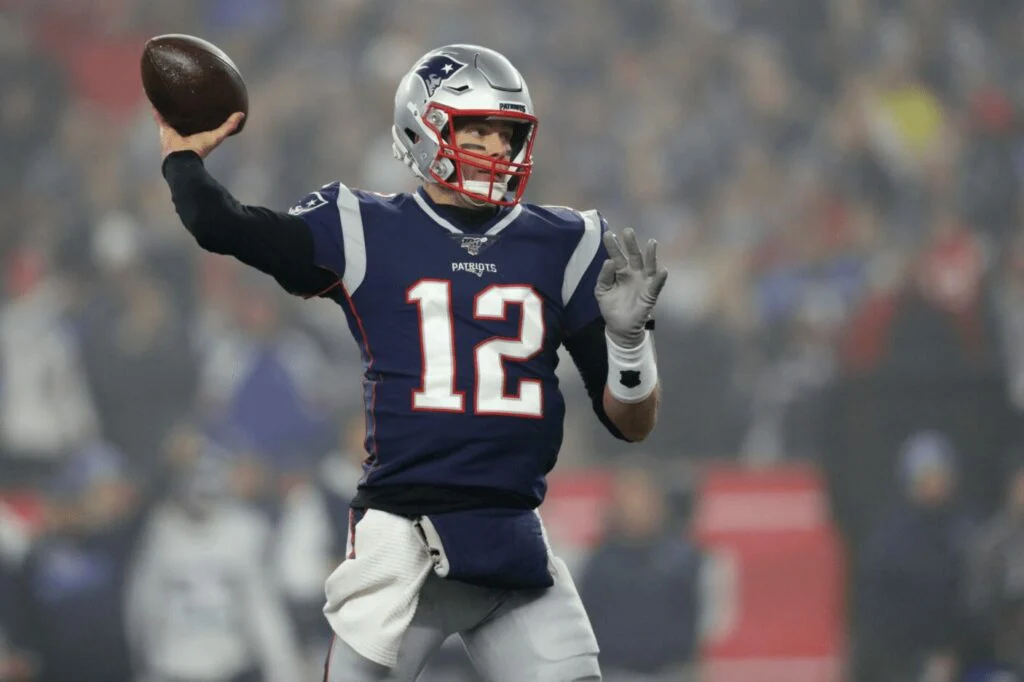
The retirement of Tom Brady, widely considered the greatest quarterback in NFL history, offers a compelling case study for individuals navigating significant career transitions. While the accolades and immense wealth of a seven-time Super Bowl champion might seem distant from the realities of most working professionals, the underlying principles guiding his decision and the subsequent considerations provide valuable insights for anyone contemplating their own post-career future. Examining Brady’s journey through the lens of strategic planning, personal reflection, and relational considerations can illuminate pathways toward a fulfilling transition, irrespective of one’s professional stature.
The Strategic Timing of Departure
Brady’s announcement on February 1, 2022, marked the end of an illustrious 22-season career. This decision came after a season where he still performed at an elite level, leading the NFL in passing yards with 5,316 and finishing as a leading MVP candidate. His stated goal had been to play until at least age 45, a milestone he was poised to reach in August 2022. However, he ultimately retired one year shy of this personal benchmark.
This divergence from his long-held ambition underscores a critical lesson: knowing when it’s time to move on is paramount, even if it means deviating from a pre-set target. For individuals planning their retirement, setting a definitive date is often a useful exercise. However, it is equally important to engage in ongoing self-assessment regarding one’s feelings about work and the prospect of a new chapter. The ability to recognize and act upon this internal cue for transition is a hallmark of a proactive approach. It is also a stark reminder that, in reality, a significant portion of the workforce faces circumstances beyond their control. Data from the U.S. Bureau of Labor Statistics consistently shows that unexpected job losses or health issues can necessitate early retirement for a substantial percentage of individuals, making the ability to pivot and adapt to evolving circumstances crucial. Brady’s voluntary departure, while still at the peak of his powers, highlights the power of agency in shaping one’s exit.
The Value of Exiting at the Apex
Brady’s decision to retire while still performing at an exceptionally high level resonates with the concept of "going out on top." His statistical dominance in his final season, particularly in passing yards and overall offensive efficiency, allowed him to leave the game on his own terms, as a top performer. This contrasts sharply with the careers of many athletes and professionals who continue to compete or work long past their peak performance years, a phenomenon often referred to as "hanging on."
This strategic choice minimizes the risk of a gradual decline in performance and preserves a legacy defined by sustained excellence. For professionals in any field, the question arises: Will you be able to walk away on your own terms, when you are still performing at a high level and are highly valued, or will circumstances dictate your departure? This perspective encourages proactive career management, where individuals consider their exit strategy not as an afterthought, but as an integral part of their professional journey. The ability to command respect and opportunities even as one transitions away from a primary role is a testament to effective career stewardship.
Proactive Planning for the Next Chapter
A particularly insightful aspect of Brady’s approach is his long-term strategy for life after professional football. For years, he actively built a diverse portfolio of business ventures, including TB12, a health and wellness company, Brady Brand, a clothing line, and 199 Productions, a media production company. These initiatives were not merely passive investments; they represented deliberate steps to establish a foundation for his post-playing career, developed concurrently with his NFL tenure.
This forward-thinking strategy serves as a powerful model for individuals contemplating retirement. The advice to begin conceptualizing and developing post-work aspirations while still actively engaged in a full-time career is invaluable. Whether the envisioned future involves part-time employment, volunteer work, consulting, creative pursuits like writing a book, or extensive travel, early exploration and planning are essential. This proactive phase allows for thorough research, a realistic assessment of what these activities truly entail, and the development of necessary skills or connections. A practical step for those in the workforce is to dedicate time, perhaps monthly, to connect with individuals who have successfully transitioned into similar post-retirement roles. These informational interviews can provide invaluable insights, dispel misconceptions, and offer a tangible glimpse into the realities of one’s desired future, making the transition smoother and more informed.
Prioritizing Family Considerations
Speculation surrounding Brady’s retirement heavily emphasized the role of family considerations. For individuals with spouses, partners, or children, this aspect of retirement planning is deeply relatable. The decision is rarely solely an individual one, and the dynamics of a shared life require open and honest communication. A notable statistic from a 2021 Fidelity survey of 1,600 couples revealed a significant disconnect: 57% of respondents admitted they did not accurately know their significant other’s retirement timeline.
This data highlights a widespread tendency to defer or avoid in-depth discussions about retirement within relationships. Brady’s reported prioritization of family life suggests a conscious decision to invest more time and energy into personal relationships. For couples, a series of deliberate conversations about retirement is crucial. These discussions should move beyond assumptions and embrace active listening, allowing each partner to fully articulate their expectations, concerns, and desires for the future. Such open dialogue is fundamental to ensuring that the retirement transition is a shared and mutually supportive endeavor.
Maintaining Dignity and Professionalism
Brady’s retirement announcement drew some criticism for its perceived omission of the New England Patriots, the franchise where he spent the first two decades of his career and achieved unprecedented success. While the precise motivations behind this omission remain subject to interpretation, the broader principle of exiting with grace and professionalism is a vital lesson. The temptation to engage in public commentary that could be perceived as petty, spiteful, or vindictive is often present during significant departures. However, history demonstrates that such actions rarely serve an individual well in the long term.
The narrative of maintaining composure and avoiding contentious public discourse is paramount in professional transitions. Burning bridges or engaging in negative commentary can have lasting repercussions on one’s reputation and future opportunities. An anecdote shared by the author recounts a former employee’s "scorched earth" resignation letter, which went viral, detailing extensive criticisms of their former employer. While momentarily cathartic, such actions ultimately proved detrimental to the individual’s career trajectory. The wisdom lies in rising above the fray, focusing on acknowledging contributions positively, and fostering goodwill, thereby preserving relationships and a positive professional standing.
The Possibility of Unretirement
Brady’s retirement announcement, while seemingly definitive, was not entirely without ambiguity. The history of professional sports, and indeed many careers, is punctuated by individuals who choose to return after an initial retirement. Studies conducted before the COVID-19 pandemic indicated that a significant percentage of retirees in the U.S. and UK—over 20% within five years—unretired. Notably, financial reasons were not always the primary drivers; many cited a loss of purpose, the desire for workplace camaraderie, or the need to maintain cognitive engagement as key motivators.
The possibility of Brady reconsidering his retirement, as some observers have speculated regarding a potential move to his hometown San Francisco 49ers, illustrates the concept of "never say never." While Brady has since announced his return to the NFL for the 2022 season with the Tampa Bay Buccaneers, his initial retirement and subsequent unretirement highlights the fluid nature of career transitions. This underscores the importance of not rigidly closing doors. Maintaining flexibility, keeping professional networks active, and remaining open to unforeseen opportunities can be crucial for those who find that their initial retirement plans do not fully meet their evolving needs or desires. The experience of "unretirement" often stems from a deep-seated need for engagement and purpose, reinforcing the idea that retirement is not necessarily a final cessation of activity, but a phase that can be redefined.
Broader Implications for Career Transitions
The lessons derived from Tom Brady’s retirement extend far beyond the realm of professional athletics. They offer a framework for individuals across all sectors to approach their own career transitions with greater intentionality and foresight. The emphasis on understanding personal readiness, maximizing peak performance for an exit, strategic pre-retirement planning, the critical role of family dialogue, maintaining professional integrity, and acknowledging the potential for future engagement collectively form a comprehensive approach to navigating one of life’s most significant junctures.
As Joe Casey, an executive coach and author of "Win the Retirement Game: Outsmart the 9 Forces Trying to Steal Your Joy," notes, studying the actions of highly successful individuals can provide adaptable strategies for personal application. By internalizing these principles, individuals can move beyond simply reacting to retirement as an inevitable endpoint and instead proactively design a fulfilling and purposeful next chapter, ensuring that their transition is not merely an ending, but a gateway to new opportunities and continued growth. The ability to learn from prominent figures like Brady and apply those lessons to one’s own circumstances empowers individuals to take control of their professional destinies, even as they move into new phases of life.

