
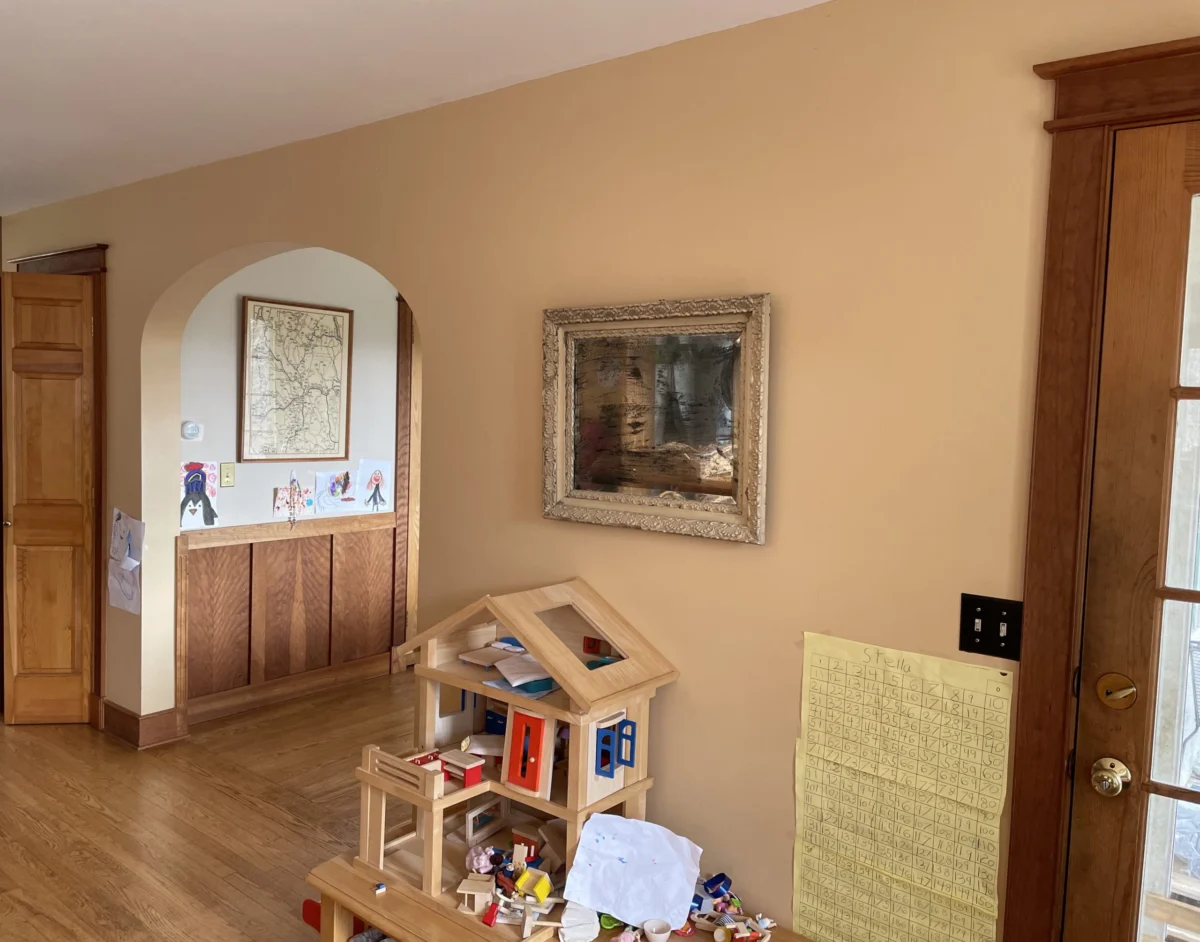
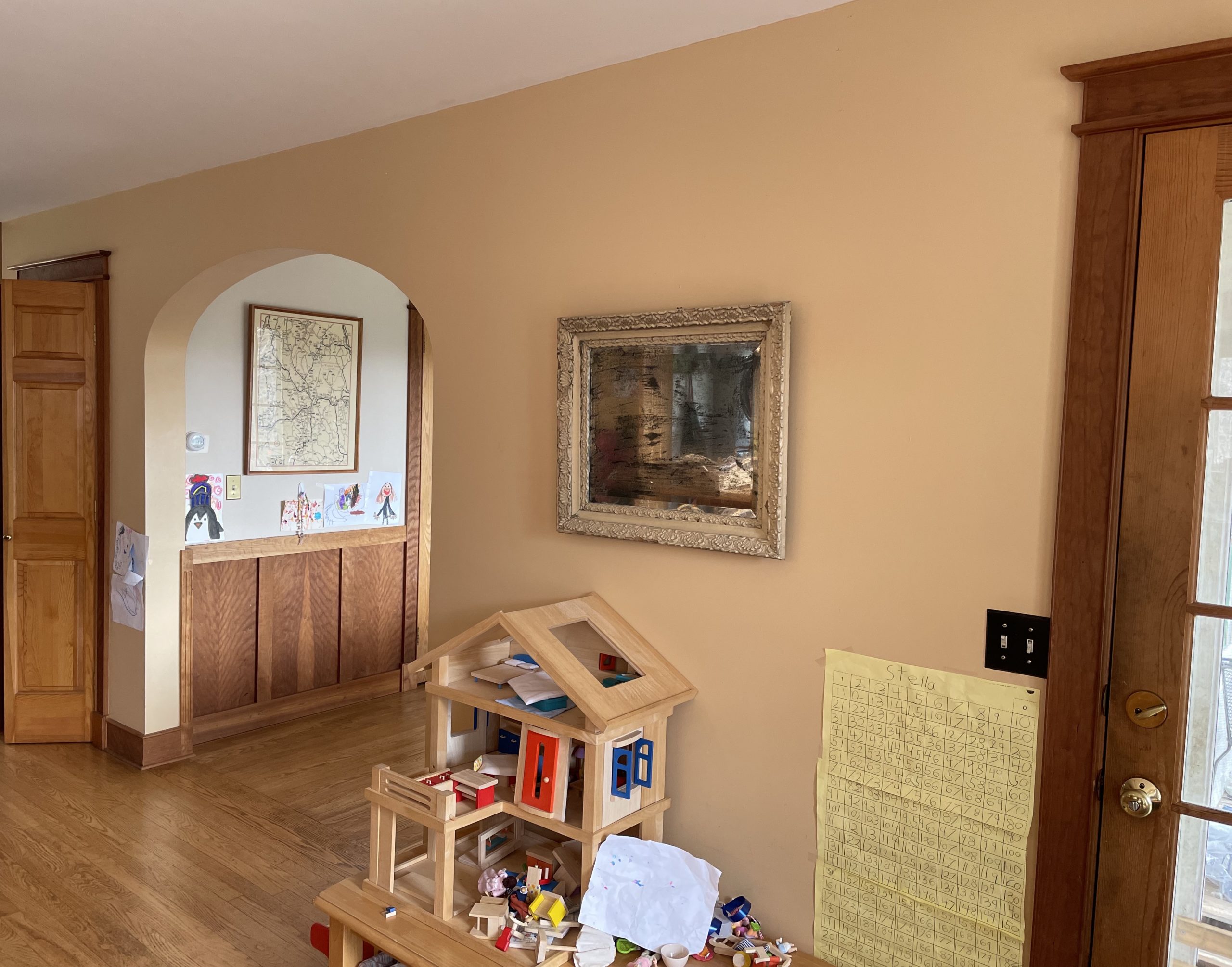
A significant residential renovation project was recently completed in a 1991-era home, marking a pivotal milestone in a multi-year effort to modernize the property’s interior architecture. The project centered on the removal of a load-bearing partition that previously divided the kitchen and dining areas from the primary living space. This structural modification, while aesthetically motivated by the modern preference for open-concept floor plans, presented substantial engineering challenges due to the concentration of critical household utilities housed within the wall’s frame.
Structural Engineering and Utility Rerouting
The wall in question served as a primary utility corridor, containing a plumbing stack, an electrical distribution box, and several branch circuits. Because the wall was load-bearing, its removal required a sophisticated approach to maintain the structural integrity of the upper floor and roof system. According to project documentation, the homeowners engaged an architect to perform precise load calculations, ensuring that the replacement support system would meet local building codes and safety standards.
The technical execution involved several distinct phases:

- Demolition and Discovery: Initial removal of drywall revealed the extent of the internal systems.
- Plumbing Reconfiguration: A professional plumber was contracted to reroute the plumbing stack. This required a complex "zig-zag" configuration through the ceiling joists, eventually descending through a discreet corner of the pantry.
- Electrical Relocation: An electrician was tasked with moving the electrical box and rerouting the wiring that previously serviced the central part of the ground floor.
- Temporary Shoring: To prevent structural sagging during the transition, a temporary support wall was constructed to carry the load while the permanent solution was installed.
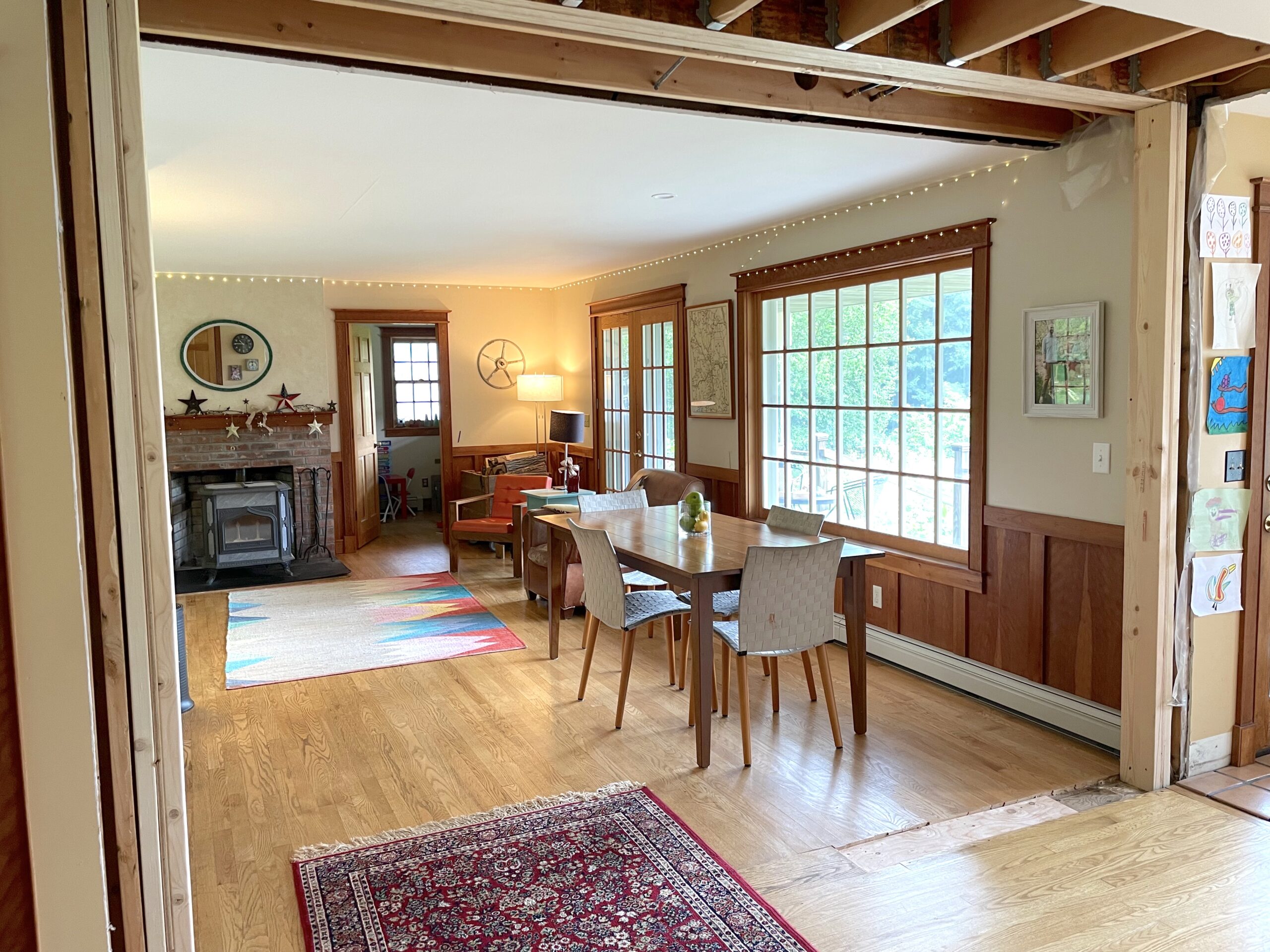
- Beam Installation: The final structural solution involved the installation of a recessed support beam. This required cutting into the existing floor joists of the level above, inserting the beam, and securing it with specialized hangers and fasteners.
This "flush-beam" approach is often preferred in high-end renovations as it allows for a continuous, unbroken ceiling plane, eliminating the visual obstruction of a dropped soffit or exposed header.
Detailed Analysis of June Renovation Expenditures
The completion of this phase coincided with the release of a comprehensive monthly expense report, totaling $5,044.63 for the month of June. The financial data reveals a strategic blend of professional labor and "sweat equity" to manage costs. While technical tasks such as plumbing and electrical work were outsourced to licensed professionals, the homeowners performed the demolition, carpentry, and finishing work themselves.
Construction and Tooling Costs
The renovation-specific costs for June represented a significant portion of the monthly budget:
- Lumber and Drywall: $703.53 was allocated for the permanent beam, the materials for the temporary support structure, and new drywall panels.
- Specialized Tools and Supplies: $600.61 was spent on project-specific hardware, including a bottle jack for lifting structural members, fasteners, Simpson Strong-Tie brackets, and drywall finishing compounds.
- Electrical Labor: $494.98 covered the professional rerouting of circuits and the installation of a new recessed lighting fixture in the dining area.
Operational and Household Expenses
Beyond the renovation, the household maintained a disciplined approach to recurring costs. Groceries remained the largest non-construction expense at $1,147.44, reflecting broader national trends in food price inflation. Household supplies accounted for $302.53, while dining and restaurant expenses were kept to $251.94.
The report also highlighted the impact of energy-efficient investments. The monthly electric bill was recorded at a base price of $36.42, a result of a grid-tied solar array installed on the property. This system allows the residents to offset their consumption through net metering, significantly insulating the household from fluctuating utility rates.
Strategic Financial Management and MVNO Utilization
A notable aspect of the household’s financial strategy is the use of Mobile Virtual Network Operators (MVNOs) for telecommunications. For the month of June, the total cost for two active cellular lines was $28.24, or approximately $14.12 per person.
MVNOs operate by purchasing bulk network capacity from major national carriers (such as Verizon, AT&T, or T-Mobile) and reselling it to consumers at lower price points. This model eliminates the high overhead costs associated with maintaining physical infrastructure and retail storefronts. Financial analysts often point to MVNO switching as one of the most effective "low-effort, high-impact" ways for households to reduce fixed monthly expenditures without sacrificing service quality.
Furthermore, the household utilized high-yield savings accounts (HYSA) to optimize their cash reserves. With current interest rates in the 4% range, a $5,000 balance generates approximately $200 in annual passive income, contrasted with the negligible returns offered by traditional big-bank savings accounts.

Chronology of the Renovation and Future Outlook
The removal of the "menace wall" is part of a long-term, phased renovation strategy. By spreading projects over several years, the homeowners are able to cash-flow improvements, avoiding the interest costs associated with Home Equity Lines of Credit (HELOCs) or personal loans.
- 1991: Original construction of the home with a compartmentalized floor plan.
- Pre-2023: Planning phase, architectural consultation, and initial cosmetic updates.
- June 2023: Structural demolition, utility rerouting, and recessed beam installation.
- Immediate Future: Final drywall finishing, flooring repairs, and interior painting.
- Long-term Goal: A comprehensive kitchen remodel that will leverage the newly opened space.
The project leads indicated that the current open-ceiling state provides a strategic opportunity to upgrade kitchen lighting and electrical infrastructure before the final drywall is installed, thereby preventing the need for future invasive work.
Socio-Economic Implications of the DIY-Professional Hybrid Model
The project serves as a case study for a growing trend in the residential real estate market: the "semi-DIY" renovation. As labor costs for skilled trades continue to rise, many homeowners are choosing to act as their own general contractors.
Industry data suggests that by performing labor-intensive but low-complexity tasks—such as demolition and painting—homeowners can save between 20% and 40% on total project costs. However, the retention of professionals for "critical path" items like structural engineering, plumbing, and electrical work remains essential for insurance compliance and resale value.
"I’m always happy to pay people to do stuff I can’t, or don’t know how, to do," the homeowner noted in the project log. "I’m equally happy to do stuff myself that I feel safe and confident in my ability to do." This pragmatic approach balances financial efficiency with risk management.
Market Context and Property Value
The transition to an open-concept layout is widely recognized by real estate professionals as a value-adding improvement. According to data from the National Association of Realtors (NAR), homes with open-plan living areas tend to sell faster and at higher price points than those with traditional, segregated room structures. The increased natural light and improved "flow" for entertaining are cited as primary drivers for buyer demand.
In the context of this specific 1991 build, the renovation effectively "de-ages" the property, aligning it with contemporary architectural standards. While the upfront costs in June were significant, the long-term appreciation of the asset and the immediate improvement in daily functionality provide a substantial return on investment.
Conclusion
The successful removal of the structural wall represents a triumph of careful planning and disciplined financial execution. By navigating the complexities of load-bearing structures and integrated utilities, the homeowners have transformed the core of their residence. The accompanying expense report underscores a broader commitment to fiscal transparency and strategic spending, providing a roadmap for others looking to balance ambitious home improvements with long-term financial stability. As the project moves into the finishing stages, the focus shifts toward aesthetic integration, marking the beginning of a new chapter for the property’s interior design.

