

If you are looking for inspirational goals bullet journal page ideas, you have come to the right place. Research consistently shows that the act of writing down one’s goals significantly increases the likelihood of achieving them. This practice serves multiple crucial functions: it clarifies objectives, fosters accountability, and reinforces commitment. For individuals seeking a structured yet flexible system for personal development, the bullet journal, or "bujo," has emerged as a remarkably effective tool. Whether one prefers minimalist layouts, vibrant designs, or intricate trackers, a bullet journaling approach can be tailored to maintain motivation and meticulously monitor progress. This article explores 14 creative and practical bullet journal goal page ideas designed to inspire effective planning, ranging from broad, overarching visions to granular monthly breakdowns, all aimed at helping users maintain focus and organization.

The power of goal setting is well-documented across various disciplines, from psychology to business management. A study published in the Journal of Personality and Social Psychology found that individuals who wrote down their goals were 42% more likely to achieve them compared to those who did not. This phenomenon is often attributed to the cognitive benefits of externalizing thoughts; the act of writing transforms abstract desires into tangible objectives, making them more concrete and actionable. Furthermore, the visual presence of these written goals within a bullet journal serves as a constant, gentle reminder of commitments, thereby bolstering self-discipline and reducing procrastination. The personalized nature of a bullet journal also allows for a unique reflection of the user’s journey, incorporating personal insights and evolving priorities.
Goals Bullet Journal Page Ideas For The Minimalist
For those who gravitate towards a clean, uncluttered aesthetic, minimalist goal pages offer a serene yet powerful framework for personal achievement. These layouts prioritize ample white space, clean lines, and intentional design elements, ensuring that the focus remains squarely on the goals themselves without the distraction of excessive ornamentation. The simplicity of these approaches often enhances clarity, making it easier to define and track objectives.

Whether the preference is for a single-page overview or a more structured grid system, these minimalist ideas provide an organized and visually appealing method for goal management that avoids feeling overwhelming. The emphasis is on functionality and practicality, creating a streamlined experience for the user.
1. Black, White, And Functional
This approach embodies the essence of minimalism by relying on stark contrasts and essential elements. A purely black-and-white palette, often utilizing simple typography and clean box layouts, ensures that readability is paramount. Such a spread might divide the page into distinct sections, perhaps categorized by life areas such as "Personal," "Career," "Health," and "Financial." Each section would contain space for specific, actionable goals. The absence of color forces the user to engage with the content more directly, emphasizing the substance of their aspirations. This method is particularly effective for individuals who find vibrant colors distracting or who prefer a more disciplined, no-nonsense approach to planning. The visual simplicity can also contribute to a sense of calm and control, making the process of goal setting feel less daunting.

2. Soft Colors With New Spring Buds
Introducing subtle, soft colors can add a touch of gentle inspiration without sacrificing the minimalist aesthetic. Think of muted pastels or earth tones that evoke a sense of calm and growth. This style might incorporate delicate floral or botanical illustrations, perhaps in the form of small sprigs or leaves, to symbolize new beginnings and personal development, akin to spring buds emerging. The goals themselves would be clearly laid out in a clean font, with color used sparingly for emphasis or to delineate different goal categories. This approach blends visual appeal with functional clarity, creating a space that is both motivating and aesthetically pleasing. The subtle use of color can make the journal feel more inviting and personal, encouraging more frequent engagement.
3. Pastels On A Blank Slate
This design concept leans into a light and airy feel, utilizing a palette of soft pastels against a clean white background. The "blank slate" aspect emphasizes the potential for new beginnings and the unwritten future that goal setting represents. The layout would likely be uncluttered, with ample breathing room between elements. Goals might be listed using a simple, elegant font, with pastel accents used for headings, borders, or small decorative motifs. The overall impression is one of serenity and possibility, making it an ideal choice for individuals who seek a peaceful and inspiring environment for their goal-setting endeavors. This approach can make the often challenging task of setting ambitious goals feel more approachable and less intimidating.

4. Simple Quadrant Layout
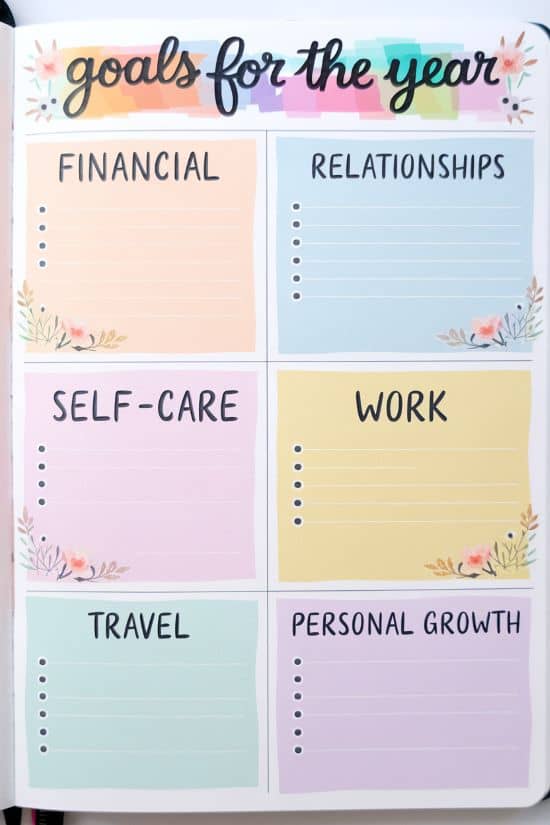
A quadrant layout is a highly effective minimalist design for organizing goals. The page is divided into four equal sections, each dedicated to a specific area of focus. Common divisions include: Personal Growth, Career/Professional Development, Health & Wellness, and Finances/Hobbies. This structured approach ensures that all major life domains are considered, promoting a balanced and holistic approach to goal setting. Within each quadrant, goals can be listed concisely. The simplicity of the grid structure makes it easy to scan and update, providing a clear overview of progress across different facets of life. This layout is particularly useful for those who benefit from clear categorization and a straightforward visual organization.
Annual Goals: Mapping Your Long-Term Vision
An annual goal spread serves as a foundational element in any comprehensive goal-setting system. It provides a high-level overview of aspirations for the entire year, acting as a roadmap for future planning. By establishing overarching objectives at the beginning of the year, individuals can ensure that their day-to-day actions remain aligned with their larger ambitions. This perspective is crucial for maintaining long-term motivation and preventing the feeling of being adrift.

Breaking down annual goals into key categories—such as personal development, career advancement, financial stability, and overall well-being—allows for a more structured and comprehensive approach. This segmentation ensures that no critical area of life is overlooked. Supporting pages dedicated to tracking progress, facilitating reflection, or housing motivational quotes can further enhance the utility of the annual spread, keeping long-term visions consistently visible and actionable.
5. Annual Goals By Major Category
This layout offers a structured way to map out aspirations for the year. The page is typically divided into distinct sections, each representing a major life category. For example, one might have sections for "Career & Professional Growth," "Personal Development & Learning," "Health & Fitness," "Financial Goals," "Relationships & Social," and "Hobbies & Creative Pursuits." Within each category, users can list 1-3 key goals for the year. This visual organization helps ensure a balanced focus across different life areas. The use of clear headings and concise bullet points makes this spread easy to digest and refer back to. Some variations might include small checkboxes or progress bars within each category to visually track milestones.

6. The Year In Bold
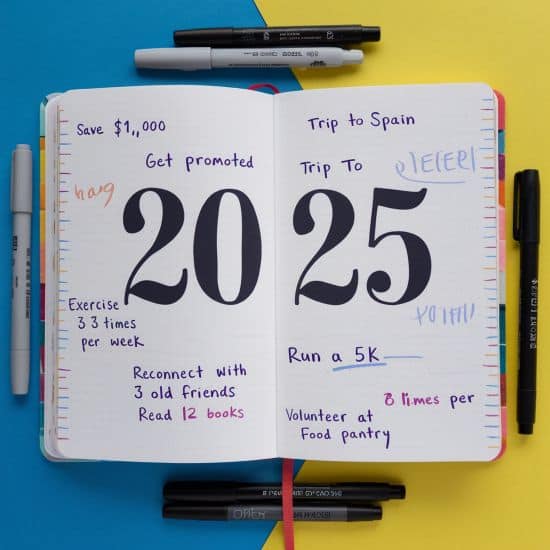
This design emphasizes impact and clarity through strong typography and bold visual statements. The year itself, for example, "2025," would be prominently displayed as a central theme. Goals are then articulated with assertive language, perhaps using a bold sans-serif font. The layout might be more graphic in nature, using strong lines and blocks of color to define goal areas rather than traditional boxes. This approach aims to create a sense of power and determination, encouraging users to approach their goals with confidence. It’s ideal for individuals who are motivated by a direct and impactful presentation of their aspirations. This style can also incorporate visual elements like a stylized calendar or a timeline graphic to represent the year’s progression.
7. Colorful Quadrants
Building on the quadrant concept, this approach injects vibrancy and energy through the use of a rich color palette. Each quadrant is assigned a distinct, bright color, making the spread visually dynamic and engaging. For instance, "Career" might be represented by a bold blue, "Health" by a vibrant green, "Personal Growth" by an uplifting yellow, and "Finances" by a solid purple. This not only helps in quickly identifying goal categories but also adds an element of joy and excitement to the planning process. The goals themselves are listed clearly within their respective colored sections, ensuring that the functional aspect is not lost amidst the visual appeal. This layout is perfect for those who find color to be a significant motivator.
Goals Bullet Journal Page Ideas For Monthly Goals
Monthly goal spreads are instrumental in transforming ambitious annual objectives into manageable, actionable steps. By setting specific targets for each month, individuals can maintain consistent momentum and make tangible progress throughout the year. This focused approach allows for regular review and adjustment, ensuring that plans remain relevant and achievable.
Whether employing a simple list format, a calendar-style layout, or a dedicated tracker, organizing goals on a monthly basis provides structure and clarity. This method helps in celebrating incremental successes and fosters a sense of continuous forward movement, making the overall journey towards larger goals feel less overwhelming and more rewarding.
8. Goals By Month
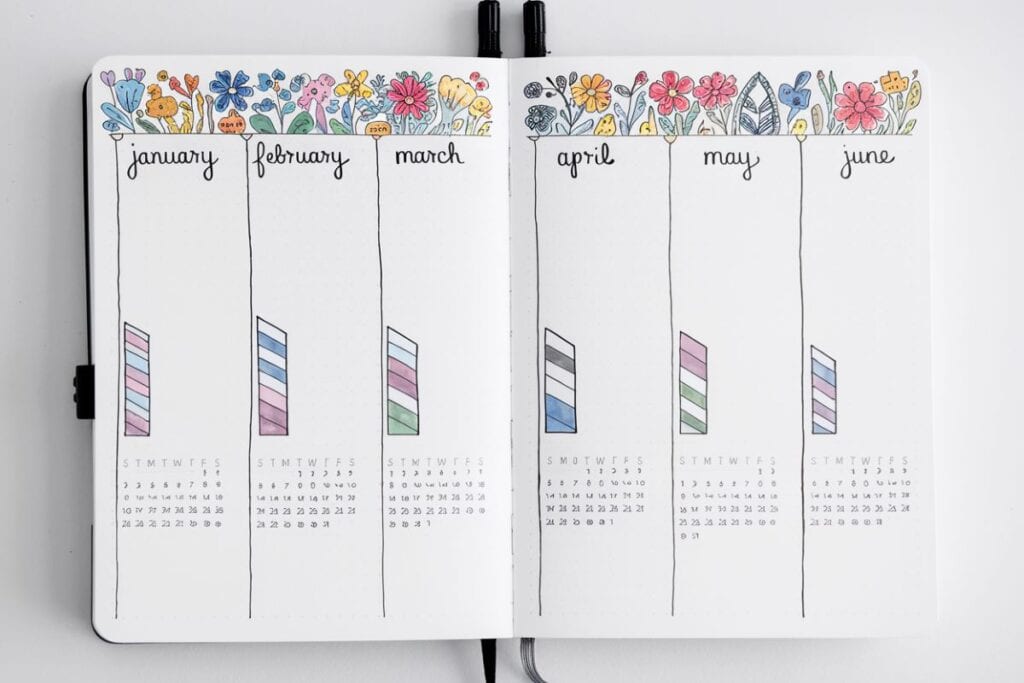
This spread provides a clear, month-by-month breakdown of yearly objectives. A typical layout would feature a section for each month, allowing users to list specific goals or sub-goals relevant to that period. This could be structured as a simple list under each month’s heading, or it might involve a more visual representation, such as a small calendar grid for each month where goals are noted. This approach is highly effective for ensuring that long-term goals are systematically addressed throughout the year. It allows for flexibility, as goals can be adjusted or reprioritized from one month to the next based on progress and changing circumstances. The sequential nature of this layout also aids in visualizing the progression of one’s journey over time.
9. Big Ideas
The "Big Ideas" spread is designed for a more free-form and expansive approach to goal setting, serving as a brainstorming space for aspirations before they are fully defined. This layout encourages users to think broadly about their dreams, potential future projects, and overarching life visions without immediate constraint. It might feature ample blank space for mind-mapping, sketching, or free-writing. The purpose is to capture nascent thoughts and inspirations, providing a fertile ground for ideas to develop. Once these broad concepts are articulated, they can later be refined and broken down into more concrete, actionable goals in other sections of the bullet journal. This spread acts as a catalyst for creativity and long-term aspiration.

10. Blocks Of Goals
This layout uses distinct visual "blocks" or sections to organize goals, often categorized by theme or priority. Each block might be visually separated by color, borders, or different font styles, creating a visually segmented yet cohesive page. This approach is effective for presenting a variety of goals in an organized manner without adhering to rigid grids. For example, one block might be for "Learning Goals," another for "Health Habits," and a third for "Financial Milestones." This visual segmentation helps in quickly identifying and focusing on specific goal areas. The use of color or decorative elements within each block can further enhance the aesthetic appeal and reinforce the theme of each goal category.
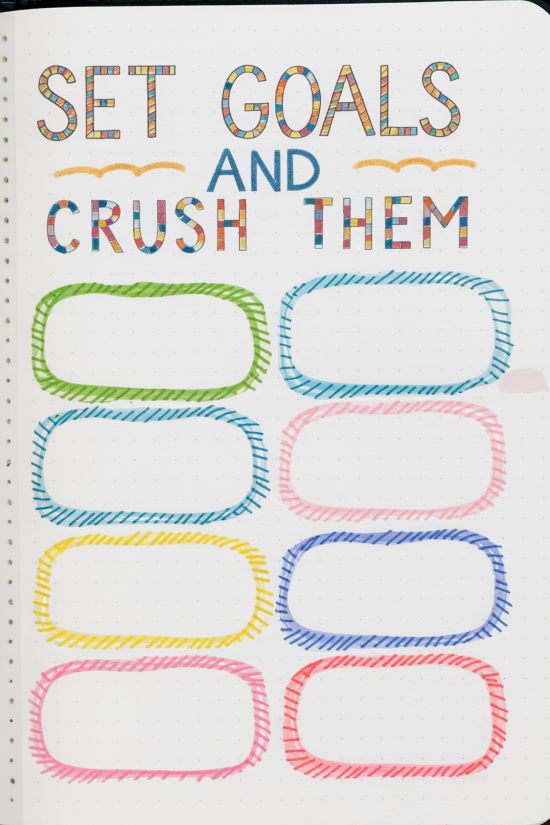
11. Crush Your Goals
This design is characterized by its motivational and action-oriented tone. The title itself, "Crush Your Goals," sets an assertive and empowering tone. The layout would likely be dynamic, perhaps using bold lettering, energetic doodles, or strong visual metaphors related to achievement and success. The goals listed would be framed in active language, emphasizing the drive to accomplish them. This spread is designed to inspire a proactive mindset and a sense of urgency in pursuing objectives. It could incorporate elements like a progress tracker that visually represents the journey toward "crushing" each goal, making the process feel like an exciting challenge.
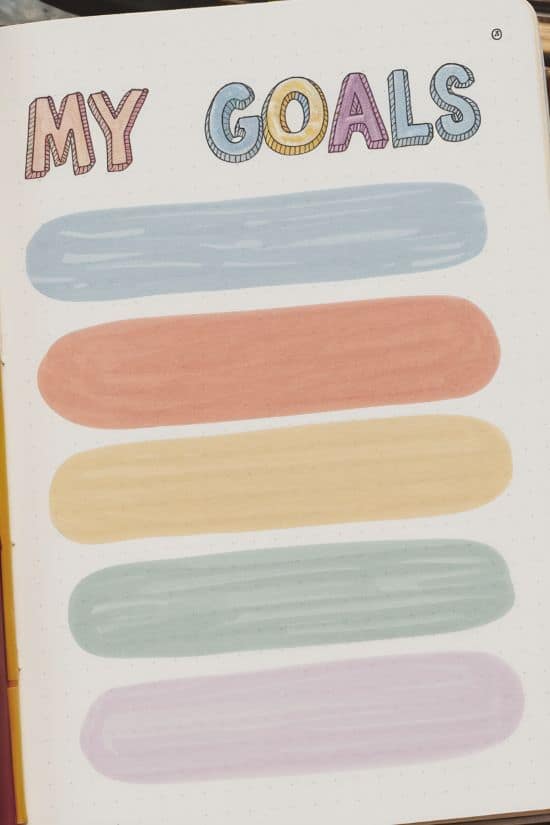
12. My Goals
This is a straightforward and personal approach, allowing individuals to clearly articulate their aspirations. The title "My Goals" is simple and direct, emphasizing ownership and personal commitment. The layout is typically clean and uncluttered, allowing the goals themselves to take center stage. It can be adapted to various styles, from minimalist to colorful, depending on the user’s preference. The key is that it serves as a dedicated space for the user to list and reflect upon their personal objectives, fostering a sense of direct engagement with their ambitions. This spread acts as a central hub for all personal aspirations.
Goals Bullet Journal Page Ideas For Conquering Overwhelm
For individuals who find themselves daunted by extensive lists of objectives, simplified goal-setting strategies are essential for maintaining focus and avoiding burnout. Approaches that emphasize prioritization and clarity can transform potentially overwhelming tasks into manageable steps.

A "Top 3 Goals" spread, for instance, encourages a laser focus on the most critical priorities, ensuring that efforts are concentrated where they will have the greatest impact. Alternatively, a "Must Do vs. Should Do" layout facilitates effective categorization, enabling users to distinguish between urgent, essential tasks and those that are important but can be addressed at a later time. This strategic differentiation helps in managing workload and maintaining a sense of control over one’s commitments.
13. Top 3 Goals
This highly focused spread is designed to combat the feeling of being overwhelmed by limiting the visible goals to a manageable number, typically three. The page would prominently feature sections for "Top Priority 1," "Top Priority 2," and "Top Priority 3." Underneath each heading, users can detail their most crucial goals for a given period (e.g., the week, month, or quarter). This approach forces prioritization and encourages deep engagement with a few key objectives, rather than spreading oneself too thin across numerous smaller tasks. This method is exceptionally effective for individuals who benefit from clear direction and a simplified focus. The visual representation of only a few key goals can make them feel more attainable and less intimidating.
14. Must Do – Should Do Goal Spread
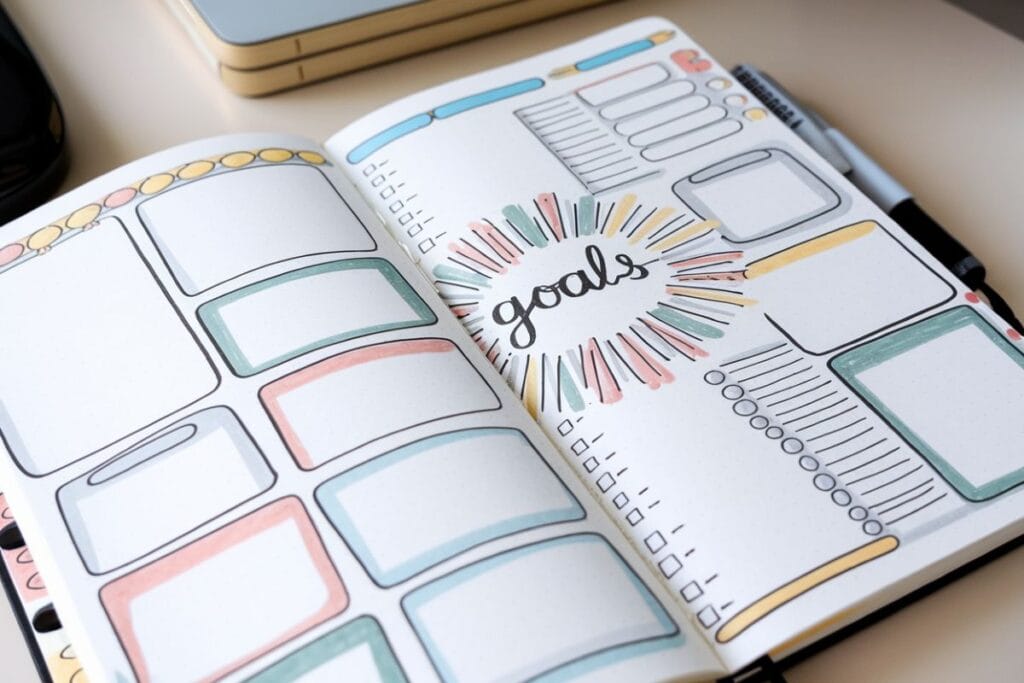
This pragmatic layout helps users differentiate between tasks that are absolutely essential and those that are important but less time-sensitive. The page is typically divided into two main columns or sections: "Must Do" and "Should Do." Goals or tasks are then placed into the appropriate category. The "Must Do" section contains the non-negotiable objectives that require immediate attention, while the "Should Do" section holds tasks that are beneficial but can be deferred if necessary. This system is invaluable for effective time management and prioritization, ensuring that critical tasks are addressed first. It helps in creating a realistic plan of action and reduces the stress associated with feeling like everything is equally urgent. This structured approach also aids in identifying potential bottlenecks and managing workload effectively.
Goals Bullet Journal Page Ideas – Wrap-Up
The act of setting a goal is merely the first step; consistent engagement and active tracking are what truly differentiate aspiration from achievement. A well-designed bullet journal goal spread transcends mere aesthetics; it functions as a dynamic tool for keeping ambitions visible, monitoring progress, and sustaining motivation.
Regardless of whether one favors structured, methodical layouts or more organic, free-flowing idea pages, the ultimate objective is to establish a system that resonates with individual needs and preferences. This personalized approach ensures sustained engagement and a higher probability of success.
It is a fundamental principle that small, consistent actions, when diligently applied over time, yield significant and lasting results. Therefore, dedicating time to reflection, strategic adjustment, and the acknowledgment of progress—no matter how incremental—is paramount. The invitation is now extended to procure your journal, select a layout that sparks enthusiasm, and embark on the transformative journey of turning your goals into tangible realities.
The practice of goal setting, amplified by the structured yet flexible nature of bullet journaling, offers a powerful pathway to personal and professional development. By leveraging these creative and practical page ideas, individuals can transform their ambitions into concrete plans and steadily move towards achieving their most cherished objectives.

