
The global economic landscape has undergone a profound transformation, with semiconductors officially surpassing oil and gas in global export value for the first time. This seismic shift, highlighted by a recent Deutsche Bank analysis of International Trade Centre data, signals the dawn of what some economists are now dubbing the "chip-dollar era," where silicon, not crude, dictates a growing share of international trade flows and financial dynamics. However, this historic milestone arrives at a remarkably turbulent period, as global markets, particularly those sensitive to artificial intelligence (AI) sentiment, grapple with unprecedented volatility, reflecting investor uncertainty despite the underlying surge in demand for compute power.
The Paradigm Shift: From Petrodollar to Chip-Dollar
For decades, the global economy has been inextricably linked to the "petrodollar" system, where oil-exporting nations accumulated vast surpluses, often recycled into U.S. Treasuries, underpinning the dollar’s dominance and financing government debt worldwide. Jim Reid, global head of macro and thematic research at Deutsche Bank, now suggests that a new paradigm is emerging. "For decades we’ve talked about the petrodollar. Perhaps increasingly we need to think about the chip dollar," Reid articulated in a pivotal report this month, underscoring the profound implications of this reordering of global commodity hierarchies.
The data unequivocally supports this assertion. During the January-March quarter of 2026, semiconductor exports reached approximately $1.61 trillion, using four-quarter rolling totals, effectively eclipsing oil and gas exports, which stood at about $1.53 trillion. This gap widened further in the subsequent quarter, with semiconductor exports climbing to approximately $1.60 trillion while oil and gas exports declined to around $1.47 trillion. This widening disparity was partly exacerbated by significant disruptions to global oil supplies, notably through the critical Strait of Hormuz. Following a hypothetical "Iran war" event, daily oil flows through the Strait collapsed nearly 77% in the second quarter of 2026, dropping to 4.9 million barrels from 21.6 million barrels in the fourth quarter of 2025, according to the U.S. Energy Information Administration. This geopolitical shock to oil markets underscored the vulnerability of traditional energy supplies, accelerating the relative rise of the semiconductor sector.
The ascent of semiconductors is not merely a statistical anomaly but a reflection of the global economy’s fundamental reorientation towards digital infrastructure and AI. The demand for advanced logic chips, memory components like High Bandwidth Memory (HBM), and specialized Graphics Processing Units (GPUs) has surged exponentially, fueled by the relentless expansion of data centers, AI research, and the proliferation of AI-driven applications across every industry. This sustained demand contrasts with the cyclical and often geopolitically sensitive nature of oil and gas markets, which have seen periods of both boom and bust influenced by cartel decisions, geopolitical conflicts, and energy transition policies.
Unprecedented Market Volatility and Investor Reassessment
Despite the groundbreaking achievement in export value, the semiconductor sector has been anything but stable in financial markets. The milestone coincides with an awkward and intense period of investor reassessment concerning the outlook for artificial intelligence spending. This re-evaluation has translated into violent swings in semiconductor stock prices, creating a challenging environment for investors and industry players alike.
South Korea’s stock market, home to global memory chip giants SK Hynix Inc. and Samsung Electronics Co., has become a bellwether for global AI sentiment. These companies are at the forefront of producing cutting-edge memory technologies like HBM4E, crucial for next-generation AI accelerators. Their performance, and that of the broader Korean market, offers a real-time pulse on investor appetite and risk tolerance for the AI supply chain.
Just last week, prior to a brief but breathtaking reversal, semiconductor stocks experienced their worst weekly loss in a quarter-century. The PHLX Semiconductor Index (SOX), a key benchmark for the industry, plummeted nearly 11% on one Friday alone, capping a more than 17% weekly decline. This sharp correction wiped out billions in market value and sparked widespread concern about potential overheating or overvaluation in the AI sector.
Individual stock performances illustrate the extreme swings. Nvidia, the leading maker of AI chips and a poster child for the AI boom, had endured a grueling seven-week losing streak, during which its stock plunged by a staggering 46%. Then, in a dramatic turnaround, it soared more than 31% on a single Monday, igniting hopes of a market rebound. However, this rally proved fleeting, with the stock dropping almost 10% again over the subsequent Tuesday and Wednesday. Other major players suffered similar fates: Advanced Micro Devices (AMD) tumbled 20% in just two days during the previous Thursday and Friday, while Micron Technology sank 27% over the seven days ending last Friday.
This intense volatility is driven by a confluence of factors. Investors are grappling with questions about the sustainability of current AI spending levels, the pace of technological innovation, competitive pressures, and potential supply chain bottlenecks. Concerns about the immense capital expenditure required for data center expansion, the cost of cutting-edge chip fabrication, and the ability of companies to maintain profitability amidst rapid technological shifts are contributing to market unease. Furthermore, the prevalence of leveraged chip bets, particularly in South Korea, amplifies these market swings, turning modest price movements into exaggerated shifts as derivatives and margin calls cascade through the system.
The Insatiable Demand for AI Compute
Despite the market’s nervous jitters, the fundamental demand for semiconductors, particularly those powering AI, remains robust, if not insatiable. The proliferation of artificial intelligence, from large language models to advanced robotics and autonomous systems, is driving an unprecedented surge in demand for specialized computing power. This demand translates directly into massive orders for GPUs, application-specific integrated circuits (ASICs), and High Bandwidth Memory (HBM) – components that are increasingly scarce due to their complex manufacturing processes and limited production capacities.
The scale of investment in AI infrastructure is staggering. Hundreds of billions of dollars are being poured into the construction and expansion of hyperscale data centers globally by tech giants like Microsoft, Google, Amazon, and Meta. These data centers are the backbone of the AI revolution, housing the vast arrays of servers, GPUs, and networking equipment necessary to train and deploy complex AI models. Rothschild & Co. Redburn, in a recent report, articulated this fundamental shift: "Compute will be the new commodity fueling this transformation on a global scale," stated analyst Cara Thomson. This statement underscores a paradigm shift where raw processing power is becoming as vital and strategically important as traditional commodities like oil, gas, or metals.
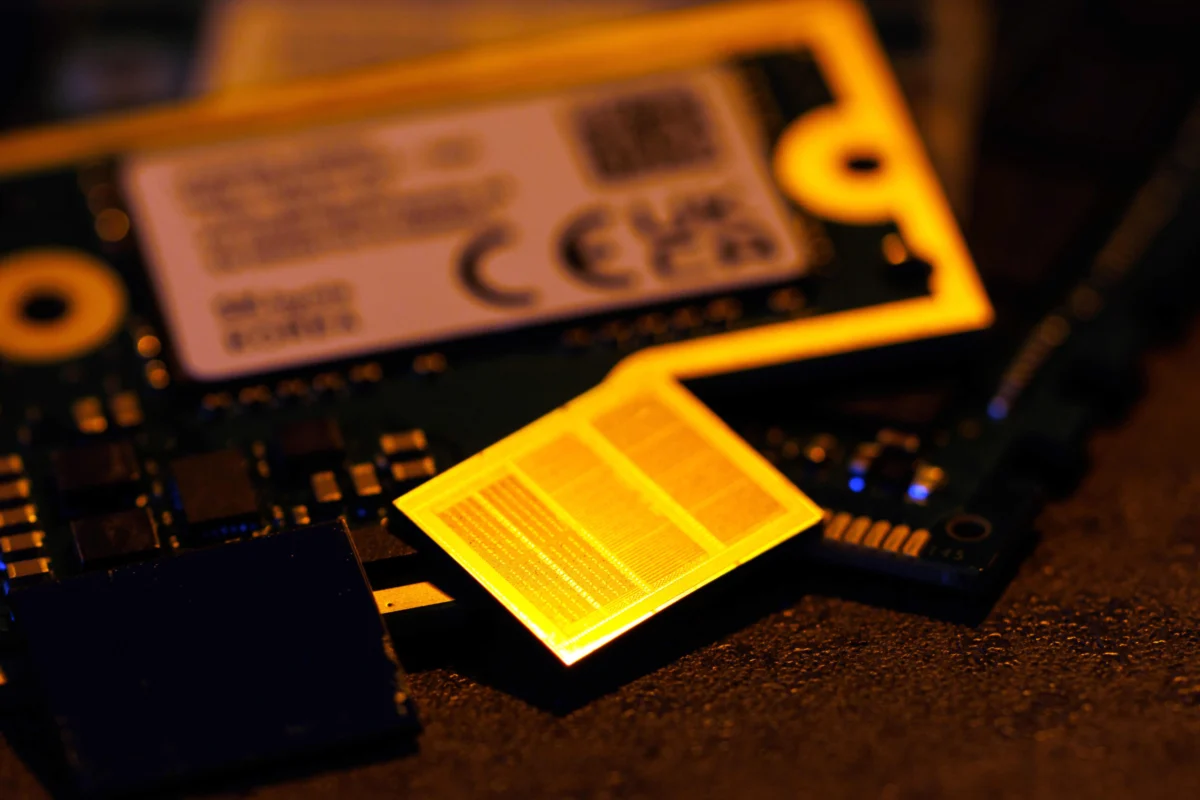
The development of advanced memory chips like SK Hynix’s 12-layer HBM4E, showcased on LPDDR5X CAMM2 memory modules, exemplifies the cutting edge of this demand. HBM technology is critical for AI accelerators, allowing for much higher bandwidth and efficiency in data transfer, which is essential for handling the massive datasets and complex computations involved in AI. The race among manufacturers to produce these advanced components, coupled with challenges in advanced packaging technologies (like CoWoS), highlights the bottlenecks and strategic importance of these specialized capabilities. The constant evolution of AI hardware requirements means that manufacturers must continually innovate, invest heavily in R&D, and expand their production capacities, all while navigating a complex and often unpredictable global supply chain.
Geopolitical Currents and Supply Chain Resilience
The ascendancy of the "chip dollar" also brings significant geopolitical implications, drawing parallels to the strategic importance of oil in the 20th century. The concentration of advanced semiconductor manufacturing capabilities in specific regions, particularly Taiwan (home to TSMC, the world’s leading foundry), South Korea (Samsung, SK Hynix), and increasingly the United States, has turned the industry into a focal point of international competition and strategic rivalry.
Governments worldwide recognize the critical role of semiconductors in national security, economic competitiveness, and technological leadership. Initiatives such as the U.S. CHIPS and Science Act, the EU Chips Act, and similar programs in Japan and India aim to bolster domestic semiconductor production and reduce reliance on single points of failure in the global supply chain. These efforts reflect lessons learned from the COVID-19 pandemic, which exposed the fragility of global supply chains and the profound impact of chip shortages on industries ranging from automotive to consumer electronics.
The ongoing technological rivalry between the United States and China further underscores the geopolitical significance of chips. Export controls on advanced semiconductor technology and manufacturing equipment, alongside efforts to restrict access to cutting-edge AI chips, highlight the strategic intent to control the technological high ground. This environment fosters a complex interplay of collaboration and competition, where alliances are forged and broken based on technological dependencies and strategic interests. The ability of nations to secure their access to advanced semiconductors is now as critical as securing energy supplies, influencing foreign policy, defense strategies, and economic planning.
Macroeconomic Repercussions and the Future of Global Finance
The shift towards a chip-centric global economy carries profound macroeconomic repercussions, particularly for global financial flows and capital allocation. Just as oil-exporting countries historically recycled their surpluses into U.S. Treasuries and other sovereign bonds, the emergence of semiconductor-surplus nations, primarily in Asia, could alter the landscape of international investment.
Jim Reid of Deutsche Bank posits that since semiconductor-surplus countries in Asia are often more closely tied to U.S. technology companies and the broader innovation ecosystem, a significant portion of chip-export earnings could flow back into U.S. technology stocks, startups, and data centers. This would create a powerful feedback loop, further helping to finance the massive AI investment cycle and potentially driving innovation and growth in the tech sector. Such a shift could reorient capital away from traditional government debt markets and towards equity and venture capital, impacting asset prices and investment strategies globally.
The changing dynamics in global trade could also tilt the mix of global financial flows, influencing currency valuations and the overall stability of the international financial system. The "chip-dollar era," as envisioned by Reid, promises "potentially more growth, more excitement, more volatility, and structurally higher yields" in corporate and government debt. This implies a more dynamic, but also potentially more unpredictable, global economy. Increased demand for capital to fund the immense infrastructure needs of AI could push up borrowing costs for both corporations and governments, influencing everything from interest rates to national budget allocations.
Furthermore, the concentration of wealth and economic power in countries dominating semiconductor production and AI innovation could lead to new forms of economic inequality between nations. Countries that fail to adapt to this new technological paradigm or secure their place in the AI value chain might find themselves at a disadvantage. This necessitates strategic investments in education, research and development, and infrastructure to foster domestic capabilities in advanced technologies.
Challenges and the Road Ahead
While the "chip-dollar era" heralds unprecedented technological advancement and economic opportunity, it also presents significant challenges. The capital intensity of the semiconductor industry is enormous, requiring continuous, multi-billion-dollar investments in research, development, and advanced fabrication plants (fabs). The demand for highly skilled talent, from materials scientists to AI engineers, is outstripping supply, creating a global talent crunch.
Environmental concerns are also rising, particularly regarding the massive energy consumption of AI data centers and the environmental footprint of chip manufacturing, which requires vast amounts of water and generates chemical waste. Addressing these sustainability challenges will be crucial for the long-term viability and public acceptance of the AI revolution.
Looking ahead, the trajectory of the chip-dollar era will be shaped by a complex interplay of technological innovation, geopolitical stability, economic policy, and market dynamics. The current volatility in semiconductor stocks serves as a stark reminder that even the most revolutionary technological shifts are not immune to market corrections, investor sentiment, and unforeseen global events. However, the fundamental shift in global trade from fossil fuels to silicon underscores an irreversible progression towards an increasingly digital, AI-powered future, making the semiconductor industry the new lynchpin of global economic power and innovation.

