

The landscape of real estate investment is constantly evolving, with state-level legislation playing a pivotal role in shaping the profitability and operational ease for rental property owners. Understanding which states offer a more favorable environment for landlords is crucial for investors seeking to maximize their cash flow and return on investment. This analysis delves into the characteristics that define a "landlord-friendly" state and identifies the top five jurisdictions in the U.S. housing market for 2026.
Defining Landlord-Friendliness: Beyond Simple Labels
A landlord-friendly state is characterized by laws and regulations that streamline the process of owning and managing rental properties, often by lowering entry barriers and operational costs. It’s important to clarify that this designation does not imply a disregard for tenant rights. Every state enforces tenant protection laws, and compliance is paramount for successful property management. A strong landlord-tenant relationship is the bedrock of a sustainable rental business. Instead, landlord-friendly markets tend to exhibit a combination of factors that support rental property owners.
Key Characteristics of Landlord-Friendly States:
Several key indicators contribute to a state’s landlord-friendly reputation. These include:
-
Low Property Taxes: Property taxes represent a significant ongoing expense for real estate investors. In 2026, effective property tax rates across the U.S. typically range from 0.25% to 2% of a property’s assessed value. While property taxes are often deductible, higher rates in certain states directly impact a landlord’s net income and capitalization rate (cap rate). States with lower property taxes allow landlords to retain a larger portion of their rental income, thereby enhancing cash flow and overall profitability. The predictability of tax burdens is also a factor, as annual increases in property taxes can erode profit margins.
-
Absence of Rent Control: Rent control policies, designed to ensure housing affordability and stability for tenants, can limit how much landlords can charge for rent and restrict the frequency and extent of rent increases. While beneficial for tenants in the short term, these regulations can significantly hinder long-term cash flow and investment growth. When operating costs such as insurance premiums, property taxes, management fees, and maintenance expenses rise, landlords operating under rent control may be unable to adjust rental rates accordingly. This can lead to deferred maintenance, potentially diminishing the property’s value and its revenue-generating potential. For new investors, states without stringent rent control laws offer greater flexibility in responding to market fluctuations and managing expenses.
-
Low-Barrier Entry: Establishing a rental property business often involves navigating various licensing and permit requirements, which can vary based on property type, rental strategy (e.g., short-term vs. long-term rentals), and location. These can include business licenses, rental permits, landlord registration, and occupancy permits. Some states impose stringent licensing protocols that can substantially increase initial setup costs. Landlord-friendly states typically simplify these processes, allowing investors to establish their rental businesses with less bureaucratic red tape and lower upfront expenditures.
-
No Caps on Security Deposits: Security deposits serve as a crucial financial safeguard for landlords, covering potential damages beyond normal wear and tear, unpaid rent or utilities, and lease violations. When renter-friendly states impose caps on security deposit amounts, it can leave landlords vulnerable. The cost of extensive damages or prolonged vacancies might exceed the maximum allowable deposit, leaving the landlord to absorb the difference. Furthermore, lower security deposit limits may not adequately reflect a tenant’s financial responsibility. States without security deposit caps generally offer landlords greater protection, though they typically require landlords to set a "reasonable" deposit amount.
-
Minimal or Short Notice-of-Entry Requirements: The ability for landlords to access their rental properties with reasonable notice is essential for various property management tasks. This includes conducting routine inspections, performing necessary repairs and maintenance, showing the property to prospective tenants, and responding to emergencies. Legally mandated long notice periods can impede timely interventions, potentially leading to increased costs or tenant dissatisfaction. Many landlord-friendly states require only 24 to 48 hours’ notice for entry, allowing for efficient property management.
-
Efficient Eviction Processes: While no landlord anticipates the need for eviction, it remains a potential reality in the rental market. Eviction proceedings can vary significantly in duration and cost across the United States, ranging from approximately three weeks to as long as six months. In states where landlords are not receiving rent, lengthy eviction processes translate into ongoing financial burdens. During this period, landlords continue to incur expenses such as mortgage payments, property taxes, and insurance, while the property remains unoccupied or occupied by a non-paying tenant. Furthermore, disgruntled tenants may inflict damage during extended eviction timelines. States with streamlined eviction processes, fewer legal hurdles, and lower associated fees offer landlords a more predictable and less financially taxing resolution to tenant issues.
-
Additional Landlord Rights: Beyond these core characteristics, some states offer further protections and incentives for landlords. These can include the absence of limits on late rent fees, immediate rights to dispose of abandoned property left by tenants, and state preemption laws. State preemption means that local governments within that state are prohibited from enacting their own rental property regulations that are more stringent than state laws. This creates a more uniform and predictable regulatory environment for landlords operating across different municipalities within a state.

It is important to note that no single state embodies all these landlord-friendly characteristics. The designation often results from a favorable balance of these factors. For instance, Texas offers no rent control and a relatively efficient eviction process, but investors might contend with higher property taxes. Moreover, the regulatory environment can differ at the local level. A state might be considered landlord-friendly overall, but a major city within that state could have specific ordinances that are more tenant-oriented. Therefore, a thorough understanding of local laws is indispensable, regardless of the state’s general classification.
The Top 5 Most Landlord-Friendly States in 2026
Based on the aforementioned criteria, the following five states are identified as leading the pack for landlord-friendliness in 2026:
Alabama
Alabama stands out in 2026 as a state with minimal regulations specifically targeting individual landlords. This generally translates to lower compliance burdens and greater operational freedom.
- Low Property Taxes: Alabama generally boasts low property tax rates, making it an attractive option for investors looking to control ongoing expenses.
- No Rent Control: The state does not have statewide rent control measures, allowing landlords to adjust rents based on market conditions.
- Streamlined Eviction Process: Alabama generally offers a relatively efficient eviction process, helping landlords regain possession of their properties in a timely manner.
- Limited Security Deposit Restrictions: While landlords must act reasonably, there are typically no strict caps on security deposit amounts.
- Limited Notice-of-Entry Requirements: Landlords generally face minimal notice requirements for entering rental properties.
Top Landlord-Friendly City with High Average Cap Rate: Birmingham often presents opportunities with a favorable combination of property prices and rental demand, leading to attractive cap rates for investors.
Florida
Florida continues to be a strong contender for real estate investors due to its business-friendly climate and limited regulatory burdens on landlords.
- Low Property Taxes: While property taxes vary by county, Florida’s overall tax burden is often considered moderate compared to other states.
- No Rent Control: Florida law prohibits rent control, providing landlords with significant flexibility in setting and adjusting rental rates.
- Efficient Eviction Process: The state has established procedures for eviction that are generally considered efficient, although specific timelines can vary.
- No Caps on Security Deposits: Florida law does not impose strict limits on the amount landlords can charge for security deposits, offering greater financial protection.
- Limited Notice-of-Entry Requirements: Landlords typically need to provide reasonable notice (often 12-24 hours) before entering a tenant’s unit.
- No State-Level Landlord Licensing: Florida does not mandate state-level licensing for landlords, reducing initial setup hurdles.
Top Landlord-Friendly City with High Average Cap Rate: Jacksonville, with its growing population and diverse housing market, often provides investors with opportunities for strong rental income and competitive cap rates.
Arizona
Arizona offers a balanced environment for landlords, characterized by a relatively straightforward legal framework and a growing economy.
- Moderate Property Taxes: Property taxes in Arizona are generally considered moderate, especially when compared to some of the highest-tax states.
- No Rent Control: Arizona law prohibits rent control, allowing for market-driven rent adjustments.
- Streamlined Eviction Process: The state has a well-defined and generally efficient eviction process, providing landlords with a predictable recourse.
- No Caps on Security Deposits: Arizona law allows landlords to set security deposits at amounts they deem reasonable to cover potential tenant liabilities.
- Limited Notice-of-Entry Requirements: Landlords are typically required to provide at least two days’ written notice before entering a rental unit for inspections or repairs.
- No Statewide Landlord Licensing: Arizona does not have a statewide landlord licensing requirement.
Top Landlord-Friendly City with High Average Cap Rate: Phoenix, as a major metropolitan area with consistent population growth and a robust job market, offers numerous investment opportunities with appealing cap rates.
Indiana
Indiana presents a compelling case for landlords seeking a low-cost, low-regulation environment for their rental properties.
- Low Property Taxes: Indiana is known for its relatively low property tax rates, which significantly contribute to positive cash flow for landlords.
- No Rent Control: The state does not implement rent control policies, granting landlords autonomy in setting rental prices.
- Efficient Eviction Process: Indiana’s eviction process is generally considered efficient and less complex than in many other states.
- No Caps on Security Deposits: Landlords in Indiana are not subject to strict caps on security deposit amounts.
- Limited Notice-of-Entry Requirements: Indiana law typically requires landlords to provide 24 hours’ notice before entering a tenant’s dwelling.
- No Statewide Landlord Licensing: There is no statewide mandate for landlord licensing in Indiana.
Top Landlord-Friendly City with High Average Cap Rate: Indianapolis, the state capital and largest city, offers a diverse rental market and often presents attractive investment opportunities with solid cap rates.
Texas
Texas is renowned for its business-friendly approach, which extends to its real estate market, offering significant advantages for landlords, though with certain trade-offs.
- No Rent Control: Texas strictly prohibits rent control, allowing landlords to freely adjust rents according to market dynamics.
- Efficient Eviction Process: The state’s eviction process is generally swift and well-defined, facilitating a faster resolution for non-paying tenants.
- No Caps on Security Deposits: Texas law does not place statutory limits on security deposit amounts, providing landlords with substantial financial protection.
- Limited Notice-of-Entry Requirements: Landlords in Texas are typically required to provide reasonable notice, often 24 hours, before entering a rental unit.
- No Statewide Landlord Licensing: Texas does not require statewide licensing for landlords.
Trade-off: Higher Property Taxes: A notable characteristic of the Texas housing market is its generally higher property tax rates. Investors must factor this into their financial projections, as it can impact overall cash flow despite other favorable regulations.
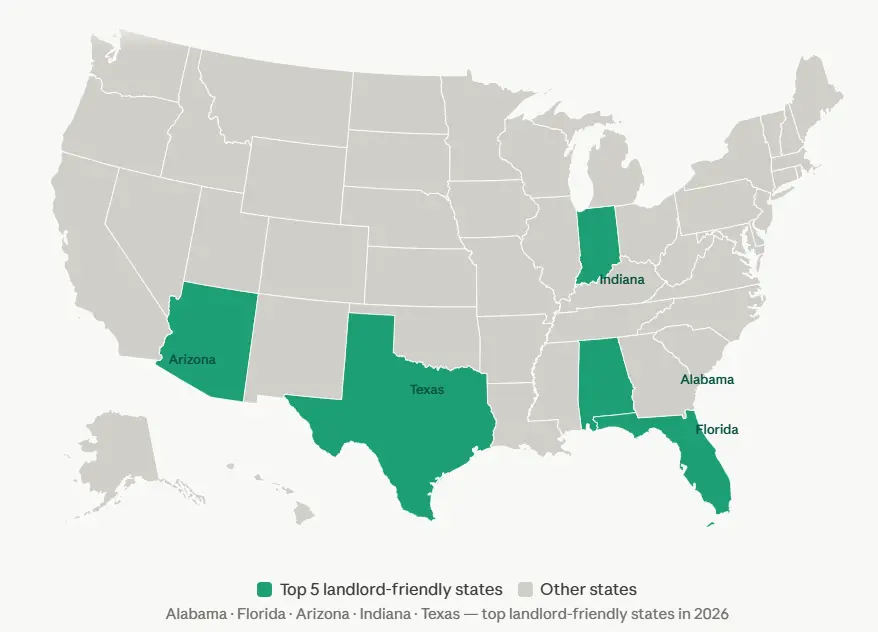
Top Landlord-Friendly City with High Average Cap Rate: Houston, a sprawling metropolis with a robust economy and diverse rental demand, frequently offers investors appealing cap rates due to its market dynamics.
The Investor’s Perspective: Why Consider Tenant-Friendly States?
While the allure of landlord-friendly states is undeniable, it’s crucial to acknowledge that real estate investors also find compelling opportunities in tenant-friendly markets. A recent Q4 2025 Redfin report, for instance, highlighted a significant increase in investor purchases in the Milwaukee housing market, which has recently enacted renter-centric regulations, including extended eviction timelines and stricter requirements for security deposits and inspections.
Daryl Fairweather, Chief Economist at Redfin, emphasizes a nuanced perspective: "Landlord-friendly and tenant-friendly labels can be helpful, but they can be too broad to guide an investment decision on their own. What matters more is the underlying economics (fundamentals) of a market, like home prices, rent levels, job growth, and long-term demand. A landlord-friendly market with weak fundamentals can underperform a tenant-friendly market with strong population growth and tight supply, for example. I would suggest that investors should treat the regulatory environment as just one of many factors."
Indeed, landlord-friendliness does not automatically equate to low risk. In some markets, rapid investor activity can inflate property prices, compressing yields. The risk of overbuilding or economic volatility also exists. Favorable regulations alone do not guarantee investment success. Investors must prioritize fundamental market indicators such as affordability, migration trends, and local employment.
Navigating Tenant-Friendly Markets: Expert Strategies
For investors who identify promising opportunities in tenant-friendly markets, several strategies can mitigate potential challenges:
-
Optimizing Cash Flow in Rent-Controlled Markets: Fairweather advises that in rent-controlled areas, cash flow begins with the acquisition price. Investors must purchase at a basis that accounts for future rent limitations. Minimizing turnover and vacancy is paramount. This can be achieved through diligent tenant screening, proactive property maintenance, and fostering positive tenant relationships. Some investors also explore properties with built-in mechanisms for allowable increases, such as inflation-based adjustments or capital improvement pass-throughs.
-
Conservative Underwriting and Professional Operations: In tenant-friendly states, meticulous underwriting and professional management are essential. This includes rigorous tenant screening, setting appropriate initial rents, and budgeting for potentially longer resolution timelines for issues. A deep understanding of local regulations—notice periods, eviction timelines, and rent increase rules—is critical to avoid unexpected challenges. Engaging with local property managers or legal experts, especially for first-time investors, is highly recommended.
The Ultimate Investment Decision: Beyond the Label
The prevailing wisdom in real estate investment is shifting away from solely relying on "landlord-friendliness" as a primary decision-making criterion. As Fairweather aptly states, "That’s increasingly true. What we’re seeing now is that investors are prioritizing fundamentals over labels. A market like Milwaukee, for example, may be considered tenant-friendly, but if it offers relatively affordable entry points and stable rental demand, it can still be attractive. Meanwhile, some traditionally landlord-friendly markets—like parts of Florida—have cooled due to rising prices and insurance costs. So today, the more important question is: ‘Does the deal make sense given the local market conditions?’ Regulation matters, but it’s not the whole story."
Ultimately, the key to successful real estate investment lies in a thorough analysis of the deal’s financial viability, underpinned by a comprehensive understanding of local market conditions. Data-driven underwriting, utilizing tools and resources that provide accurate market insights, is paramount for identifying profitable opportunities in any regulatory environment.

