
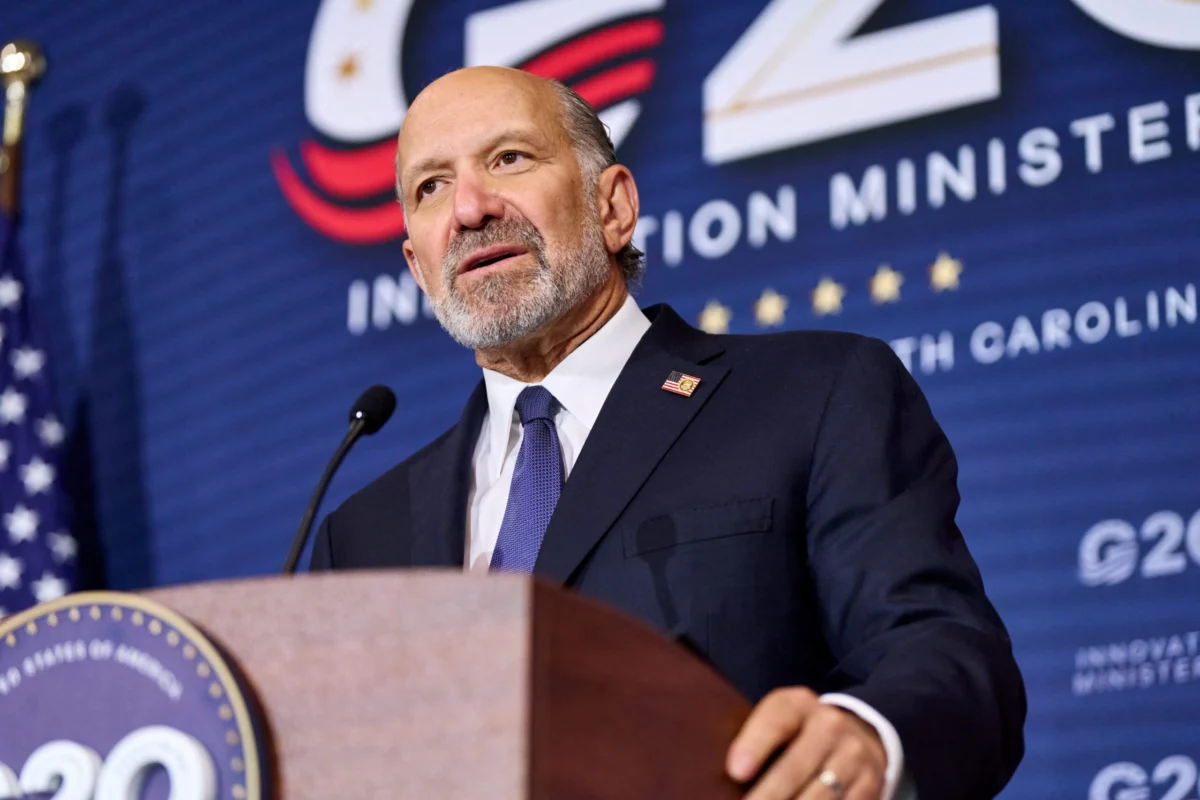
A deepening controversy surrounding U.S. Commerce Secretary Howard Lutnick has cast a spotlight on the complex interplay between high-stakes finance, national security, and the powerful artificial intelligence (AI) industry. At the heart of the matter are allegations that Lutnick repeatedly resisted efforts to crack down on a Singapore-based company, Megaspeed, suspected of illegally funneling advanced Nvidia AI chips to China, even as his former firm, Cantor Fitzgerald, underwent significant shifts in its Nvidia stock holdings and maintained extensive business ties within Nvidia’s ecosystem. This unfolding narrative, punctuated by classified intelligence warnings, high-profile investor meetings, and diverging opinions within the Trump administration, raises significant ethical and national security questions.
The Core Allegations and Shifting Stakes
The controversy gained significant traction with reports from Axios on November 10 and 11, 2026, detailing Lutnick’s alleged resistance to imposing export restrictions on Megaspeed. These reports emerged amidst escalating concerns within the White House and U.S. intelligence circles regarding China’s access to cutting-edge AI technology, particularly advanced chips from Nvidia, a dominant player in the global AI hardware market. The U.S. government has been increasingly wary of China’s military and technological ambitions, viewing unrestricted access to advanced AI chips as a potential threat to national security.
Concurrently, Cantor Fitzgerald, the Wall Street firm formerly led by Howard Lutnick and now under the stewardship of his sons, Brandon and Kyle Lutnick, exhibited a curious shift in its investment posture towards Nvidia. Despite hosting Nvidia CEO Jensen Huang and other top executives for investor meetings in late September 2026, where the firm reportedly "liked what it heard" and maintained an "overweight" rating with a $350 price target on Nvidia stock, Cantor Fitzgerald’s reported holdings of Nvidia shares declined by nearly 50% between September 2025 and March 2026. This reduction saw Nvidia, once one of Cantor’s largest reported stock positions, diminish significantly in its portfolio, raising questions about the timing and motivations behind such a divestment.
A Detailed Chronology of Events
The timeline of events highlights the intricate connections and escalating pressures:
- End of 2024: Prior to Howard Lutnick’s appointment as Commerce Secretary, Cantor Fitzgerald reported holding over 3.5 million Nvidia shares valued at $479 million, making it the firm’s second-largest reported stock position.
- February 2025: Howard Lutnick officially leaves his role at Cantor Fitzgerald to assume the position of U.S. Secretary of Commerce in the Trump administration. He transfers his ownership stake in Cantor to his children via trusts.
- May 2025: Semafor reports that bankers at Cantor Fitzgerald informally advised executives at Taiwan Semiconductor Manufacturing Co. (TSMC), Nvidia’s primary chip manufacturer, on navigating Washington, a claim Cantor Fitzgerald vehemently denied as "baseless and false." Separately, Newmark, a commercial real estate firm controlled by Cantor, facilitates a $7.1 billion construction loan for Lancium’s Abilene, Texas data center campus, a key site for the Stargate AI infrastructure project.
- Summer 2025: The Trump administration eases some restrictions on Nvidia’s H20 chip sales to China, a move that allows Nvidia to offer a downgraded chip variant to the Chinese market while still complying with U.S. export controls.
- September 2025: Cantor Fitzgerald’s reported Nvidia share count holds steady at 3.5 million, but its value climbs to $652 million due to stock appreciation.
- October 2025: Cantor Fitzgerald advises Lancium, an AI infrastructure developer, on a $600 million debt financing deal for its Abilene data center campus.
- December 2025: Democratic Senators call for an ethics investigation into whether the Lutnick family stood to benefit from Howard Lutnick’s push to expand AI data centers. Cantor Fitzgerald’s reported Nvidia share count drops to 3 million.
- March 2026: Sens. Jim Banks (R-Ind.) and Elizabeth Warren (D-Mass.) urge Secretary Lutnick to suspend or reconsider Nvidia’s export licenses following indictments linked to a Super Micro Computer customer allegedly smuggling AI chips to China. Cantor Fitzgerald’s Nvidia holdings further decrease to 1.78 million shares, valued at $310 million.
- May 7, 2026: Nvidia and Australia-based cloud computing provider IREN announce a five-year, $3.4 billion cloud computing contract and a strategic partnership, including Nvidia’s right to invest up to $2.1 billion in IREN.
- Prior to May 10, 2026: Howard Lutnick reportedly receives a highly classified intelligence memo detailing concerns about Jensen Huang’s ties to a suspected Chinese spy.
- May 12, 2026: As President Trump departs for China, Secretary of State Marco Rubio reportedly warns him about Huang’s relationship with a suspected Chinese spy. Huang, initially not on the delegation, joins the trip. On the same day, IREN announces the pricing of a convertible bond offering, ultimately raising $3 billion, with Cantor Fitzgerald serving as one of seven bookrunners alongside financial giants like JPMorgan Chase and Goldman Sachs.
- May 14, 2026: Lutnick’s Commerce Department quietly clears approximately 10 Chinese companies, including Alibaba and ByteDance, to buy Nvidia’s advanced H200 chips, though some approvals predated the intelligence memo.
- June 30, 2026: Cantor Fitzgerald’s reported Nvidia holdings remain at 1.81 million shares. The firm also reports $115 million in IREN shares, with Nvidia and IREN collectively accounting for over 9% of Cantor’s reported $5.2 billion securities holdings (excluding options).
- Late September 2026: Cantor Fitzgerald hosts Nvidia CEO Jensen Huang and other top executives for investor meetings in New York. Howard Lutnick had also appeared alongside Huang at a G20 technology summit in North Carolina.
- October 3, 2026: Cantor analyst C.J. Muse and his colleagues publish a research report maintaining a $350 price target and "overweight" rating on Nvidia, stating, "We continue to view NVDA as the best risk/reward in our coverage."
- November 5, 2026: President Trump authorizes new export restrictions on companies suspected of smuggling Nvidia chips to China for a third time.
- August 2026: Nvidia agrees to invest $2 billion for a roughly 20% stake in Lancium, with up to $1 billion more tied to future milestones, as reported by The Information. Lancium confirms an investment and technology partnership without disclosing financial terms.
- November 10, 2026: Axios reports on the classified intelligence warning Lutnick received regarding Huang’s ties to a suspected Chinese spy.
- November 11, 2026 (Wednesday): Sens. Warren and Chris Coons (D-Del.) demand that Howard Lutnick, Marco Rubio, and White House chief of staff Stephen Miller preserve records concerning Nvidia’s chip exports to China and intelligence warnings about Huang. Cantor Chairman Brandon Lutnick publicly praises Nvidia’s leadership, calling it "one of the great companies on the planet."
- November 12, 2026 (Thursday): Jensen Huang resigns from Nvidia. A White House official states President Trump maintains "complete confidence" in Secretary Lutnick.
- November 13, 2026 (Friday): Treasury Secretary Scott Bessent reveals on CNBC’s "Squawk Box" that the departments of Treasury, Defense, and State, along with the Office of the U.S. Trade Representative, "were in favor of putting Megaspeed on the entity list for months," pointing to the Commerce Department as responsible for imposing the list. Senator Coons expresses concerns on CNBC’s "Squawk Box" that the Trump administration has "failed here" by licensing advanced chip exports and turning a blind eye to the black market.
The Strategic Importance of AI Chips and Export Controls
At the core of this controversy lies the critical role of advanced AI chips in global technological competition and national security. Nvidia’s graphic processing units (GPUs), particularly high-end models like the H100, H200, and upcoming Blackwell series, are indispensable for training and deploying sophisticated AI models. These chips power everything from large language models to advanced military applications, making their control a strategic imperative for nations like the U.S. and China.
The U.S. government, through the Commerce Department’s Bureau of Industry and Security (BIS), implements export controls to prevent sensitive technologies from falling into the hands of adversaries. The "entity list" is a powerful tool used to restrict U.S. companies from doing business with specific foreign entities deemed a national security risk. Megaspeed’s alleged role in circumventing these controls to supply China with Nvidia’s advanced chips directly undermines U.S. policy aimed at curbing China’s technological advancements. The repeated authorization of new export restrictions by President Trump on November 5, 2026, underscores the White House’s intent, highlighting the apparent disconnect with Lutnick’s alleged resistance.
Cantor Fitzgerald’s Deepening Ties to Nvidia’s Ecosystem
Beyond its fluctuating Nvidia stock position, Cantor Fitzgerald’s financial engagements with companies in Nvidia’s orbit have drawn significant attention. The firm’s involvement as a bookrunner in IREN’s $3 billion convertible bond offering in May 2026, just days after Nvidia announced its strategic partnership and investment rights with IREN, demonstrates a continued presence in critical financing deals for Nvidia’s partners. IREN, a cloud computing provider focused on AI infrastructure, represents a crucial component of the expanding AI ecosystem that relies heavily on Nvidia’s hardware.
Furthermore, Cantor’s reach extends to other significant AI infrastructure projects. Its advisory role in Lancium’s $600 million financing deal in October 2025 and its control over Newmark, which arranged a $7.1 billion construction loan for Lancium’s Abilene campus, further illustrate these connections. Lancium is a key player in Stargate, a massive AI infrastructure project backed by tech giants like OpenAI, SoftBank, and Oracle, and subsequently received a substantial investment from Nvidia itself. These engagements suggest a broad and active role for Cantor Fitzgerald in facilitating the growth of companies deeply intertwined with Nvidia’s AI ambitions.
Ethical Scrutiny and Inter-Agency Discord
The interwoven relationships between Howard Lutnick, his former firm, and the companies he regulates have predictably triggered ethical concerns. Richard Painter, former chief White House ethics lawyer for President George W. Bush, noted that while there is "no proof of" Lutnick sharing nonpublic information with Cantor Fitzgerald, "the appearance doesn’t look great." He emphasized the importance of Lutnick’s conversations with his sons being limited to "publicly available information." The lack of response from the Commerce Department, the White House, and the Lutnick family to detailed questions from CNBC has only fueled speculation.
The discord within the Trump administration itself is particularly striking. Treasury Secretary Scott Bessent’s public statement that Treasury, Defense, State, and the U.S. Trade Representative were all in favor of placing Megaspeed on the entity list for months, directly implicates the Commerce Department for its inaction. This internal division suggests a significant policy disagreement, with potential ramifications for the administration’s national security strategy and its public image. Senator Coons’ comments about the administration "turning a blind eye to the black market" for advanced chips further underscores the seriousness of these internal disagreements.
Broader Implications and Future Outlook
The controversy surrounding Secretary Lutnick carries significant implications across several domains:
- National Security: The core issue remains the integrity of U.S. export controls. If a key official is perceived as impeding efforts to prevent sensitive technology from reaching adversaries, it undermines the entire framework designed to protect national interests. The alleged funneling of Nvidia chips to China via Megaspeed could accelerate China’s AI development, with potential military and surveillance applications that directly challenge U.S. strategic superiority.
- Ethical Governance: The situation raises fundamental questions about conflicts of interest when high-ranking officials maintain close family and financial ties to industries they regulate. Even without proof of direct wrongdoing, the "appearance" of impropriety can erode public trust and invite intense scrutiny from Congress and the media. The calls for ethics investigations and demands for record preservation signal a growing demand for transparency.
- U.S.-China Relations: The saga unfolds against a backdrop of intense U.S.-China tech rivalry. Any perceived weakness or inconsistency in enforcing export controls could embolden China and complicate diplomatic efforts to manage competition. Conversely, a robust crackdown would reaffirm U.S. resolve but could further strain an already tense relationship.
- Market Dynamics: For Nvidia and its partners, the controversy introduces an element of uncertainty. While Nvidia is a global leader, its operations are subject to geopolitical currents. The resignation of CEO Jensen Huang, though its reasons are not explicitly linked to this controversy, adds another layer of instability to a company whose trajectory is intimately tied to the future of AI.
As the Commerce Department’s next quarterly filing is due, further details on Cantor Fitzgerald’s Nvidia holdings may emerge. However, the broader questions surrounding Howard Lutnick’s role, the integrity of U.S. export controls, and the ethical standards of public service will likely continue to dominate headlines, shaping both policy and public perception in the months to come. The resolution of this intricate affair will undoubtedly have lasting consequences for U.S. tech policy, national security, and the delicate balance between government and industry.

