
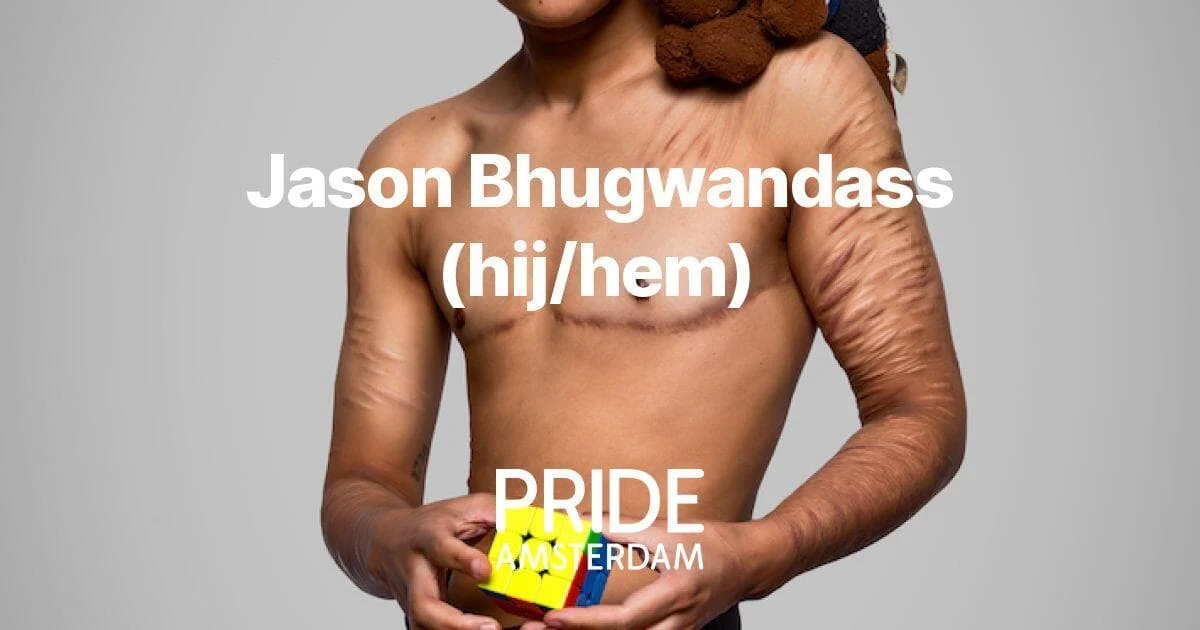
Youth-care activist Jason Bhugwandass, a prominent figure in Dutch advocacy and one of the faces of Pride Amsterdam’s 2022 campaign, has died at the age of 28. Reports from both international and Dutch media outlets strongly suggest his death on Friday, November 20th, was by euthanasia, casting a poignant spotlight on the intersection of severe chronic illness, mental health struggles, and the contentious debate surrounding assisted dying. Journalist Andy Ngo explicitly stated that Bhugwandass died by euthanasia, a claim echoed by Dutch newspaper de Volkskrant, which described it as "the self-chosen end of life," a phrase commonly used in the Netherlands to denote euthanasia or assisted dying.
Bhugwandass, who was born female and identified as a transgender man, was a deeply influential voice in challenging systemic failings within the Netherlands’ closed youth-care system, a battle born from his own traumatic experiences. His public profile soared not only through his tireless advocacy but also through his powerful, albeit controversial, representation in the LGBTQ+ community. His life, marked by profound personal suffering and remarkable resilience, now concludes with a final act that invites both reflection and renewed discussion on end-of-life choices for those battling chronic and seemingly intractable conditions.
A Life Forged in Adversity: Bhugwandass’s Early Years and Activism
Jason Bhugwandass’s journey into activism was rooted in personal hardship. At the tender age of 16, he was placed into the Netherlands’ closed youth-care system, a period he later described as profoundly damaging. Instead of receiving the comprehensive care he needed as a depressed and suicidal teenager, Bhugwandass endured prolonged periods of isolation and a punitive environment, essentially being "locked up" rather than supported. This deeply scarring experience fueled a lifelong determination to expose and rectify the injustices embedded within the system. He became a relentless critic, arguing that the very institutions meant to protect vulnerable youth often exacerbated their suffering.
His advocacy gained significant traction through meticulous research and compelling personal narratives. In 2024, Bhugwandass published a pivotal report titled Eenzaam gesloten (Lonely Locked Up). This groundbreaking document was not merely an academic exercise; it was a deeply personal and empathic investigation, drawing on interviews with 51 young people who had been confined in ZIKOS units—the most restrictive wards within the closed youth-care system. The report painted a stark picture of neglect, isolation, and further traumatization within these facilities.
The impact of Eenzaam gesloten was immediate and profound. Within a month of its release, the Dutch government announced the permanent closure of all ZIKOS units, a monumental victory for Bhugwandass and the young people he championed. Furthermore, his persistent efforts contributed directly to the abolition of isolation cells in youth care facilities across the country, a practice that had long been a source of significant concern for human rights advocates. These policy changes stand as a testament to his unwavering commitment and the undeniable power of his voice.
On August 29, 2026 (based on the article’s cited date for the apology), a significant moment of official acknowledgment arrived when Minister Mirjam Sterk, on behalf of two ministries, the association of Dutch municipalities, and Jeugdzorg Nederland (Dutch Youth Care), issued a public apology to all young people who had suffered harm in closed youth care. The minister’s words, "It was not, and is not, your fault," represented a critical validation of the experiences Bhugwandass and countless others had endured. Following this apology, Bhugwandass announced his decision to step back from public life, citing his deteriorating health as making it impossible to continue his work.
Public Recognition and Representation: Pride Amsterdam and Amsterdammer of the Year
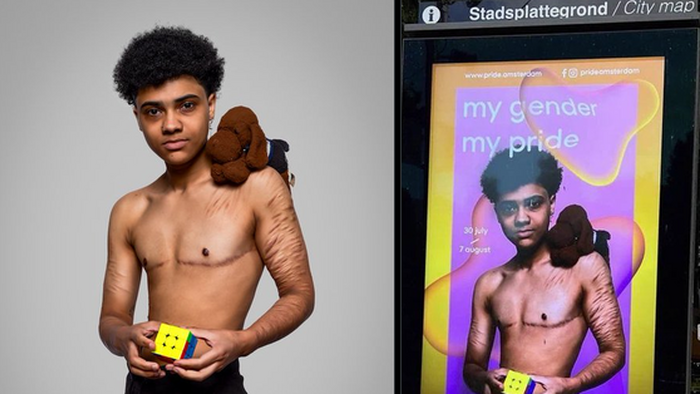
Beyond his transformative work in youth care reform, Jason Bhugwandass also became a prominent public figure through his role as an ambassador for Pride Amsterdam’s 2022 "My Gender, My Pride" campaign. This campaign aimed to celebrate diverse gender identities and experiences, and Bhugwandass’s inclusion was intended to highlight the multifaceted realities within the transgender community.
The campaign poster featuring Bhugwandass was striking and immediately drew significant attention, as well as controversy. It depicted him topless, proudly displaying his mastectomy scars—a visible marker of his transition as a transgender man. More strikingly, the poster also prominently featured a line of self-harm scars running from his wrist to his shoulder, an unvarnished portrayal of his past struggles with mental health. Perched on one shoulder was a stuffed dog, which Bhugwandass explained in a linked video was a self-soothing mechanism, offering a glimpse into his coping strategies.
While intended to foster openness and acceptance, the campaign sparked a considerable backlash, particularly from some feminist critics online. These critics argued that featuring visible self-harm scars, even in the context of personal struggle and identity, risked normalizing or even celebrating years of self-harm, rather than promoting recovery and mental well-being. The debate underscored the complex challenge of representation, particularly when dealing with sensitive issues like mental health and trauma within public campaigns.
Despite these controversies, Bhugwandass’s profound impact on Amsterdam was widely recognized. In 2022, he was named "Amsterdammer of the Year," an honor that celebrated his tireless dedication to social justice and his courageous advocacy. Following his death, Amsterdam’s Mayor Femke Halsema shared a heartfelt tribute on Instagram, stating, "From the first moment I got to know Jason, I loved him," reflecting the deep respect and affection he garnered from civic leaders. Lawmaker Lisa Westerveld further highlighted the initial skepticism Bhugwandass faced, noting to NOS that he "was only believed when he started interviewing young people and his report was scientifically supervised," underscoring the systemic barriers often faced by those with lived experience advocating for change.
Battling Chronic Illness: The Final Years
In his final years, Jason Bhugwandass contended with a constellation of severe and debilitating health conditions that profoundly impacted his quality of life. He suffered from severe post-traumatic stress disorder (PTSD), a direct consequence of his traumatic experiences in youth care. PTSD is a complex mental health condition triggered by experiencing or witnessing a terrifying event, leading to flashbacks, nightmares, severe anxiety, and uncontrollable thoughts about the event.
In addition to PTSD, Bhugwandass was diagnosed with functional neurological disorder (FND), a condition characterized by neurological symptoms like weakness, movement disorders, seizures, or sensory changes, which are not explained by structural neurological disease but are related to how the brain sends and receives signals. Furthermore, he battled Lance-Adams syndrome, a rare movement disorder that can occur after oxygen deprivation to the brain, often manifesting as sudden, involuntary muscle jerks (myoclonus) that can severely impair daily activities. These conditions collectively rendered his existence incredibly challenging, restricting his ability to live a full and independent life.
Earlier in the year of his death, Bhugwandass had reportedly emerged from a coma, a detail shared by friends who spoke to NOS, further illustrating the severity and unpredictability of his health struggles. In his final weeks, rather than being at home, he resided in a care facility, suggesting the intensive level of medical and personal support he required.
The profound suffering he experienced was articulated in a message posted to his Instagram account shortly after his death. Translated from Dutch, it read: "I could not realize my ambitions in this life, with these experiences and these conditions." The message conveyed a sense of resignation and acceptance, concluding with the statement that he would go "with head held high," a testament to his enduring spirit even in the face of insurmountable challenges.
Euthanasia in the Netherlands: A Broader Context
The reports surrounding Jason Bhugwandass’s death by euthanasia place his case within a broader, often contentious, societal and ethical discussion in the Netherlands, one of the few countries where euthanasia is legal under strict conditions. Dutch law permits euthanasia and assisted suicide if a patient is suffering unbearably with no prospect of improvement, and has made a voluntary and well-considered request. For psychiatric conditions, the criteria are even more stringent, requiring the suffering to be chronic, intolerable, and untreatable, with multiple independent medical opinions confirming the hopelessness of the situation.
Statistics from the Netherlands’ regional euthanasia review committees highlight a notable trend. In 2025, these committees received 174 notifications of euthanasia performed due to psychiatric conditions. While this figure represented a decrease from the 219 notifications in 2024, it still marked a substantial increase of 51% compared to the 115 cases recorded in 2021. This upward trend underscores the growing number of individuals with severe mental health conditions seeking an end to their suffering through legal means.
Overall, euthanasia accounts for a significant and growing proportion of deaths in the Netherlands, now representing approximately 6% of all fatalities. This statistic reflects a societal acceptance of end-of-life choices in cases of profound and irremediable suffering, but it also fuels ongoing debate among medical professionals, ethicists, and the public about the boundaries of such practices, particularly concerning mental health. Critics often raise concerns about the potential for misdiagnosis, the evolving understanding of mental illness treatability, and the implications for vulnerable individuals.
Legacy and Implications
Jason Bhugwandass leaves behind a complex and multifaceted legacy. His personal bravery in confronting his own trauma and channeling it into systemic reform fundamentally reshaped Dutch youth care. The closure of ZIKOS units and the abolition of isolation cells stand as enduring monuments to his advocacy, offering a measure of justice and protection to future generations of vulnerable youth. His life exemplified the power of lived experience in driving policy change and demanding accountability from institutions.
However, his story also prompts uncomfortable questions about societal support for individuals battling severe mental and physical illnesses, particularly those with complex trauma histories. His representation in the Pride Amsterdam campaign ignited crucial conversations about how communities grapple with issues of self-harm, trauma, and authenticity in public messaging.
His reported choice of euthanasia, following years of battling debilitating conditions and profound psychological distress, adds another layer to his narrative. It forces a stark reckoning with the limits of medical intervention and societal support for those whose suffering is deemed unbearable and untreatable. Bhugwandass’s death, if confirmed as euthanasia, will undoubtedly become a touchstone in the ongoing global dialogue about assisted dying, mental health care, and the right to self-determination in the face of profound adversity. His life was a testament to courage and resilience, and his passing, particularly under these circumstances, will continue to resonate, challenging society to confront the deepest questions of suffering, compassion, and end-of-life choices.

