
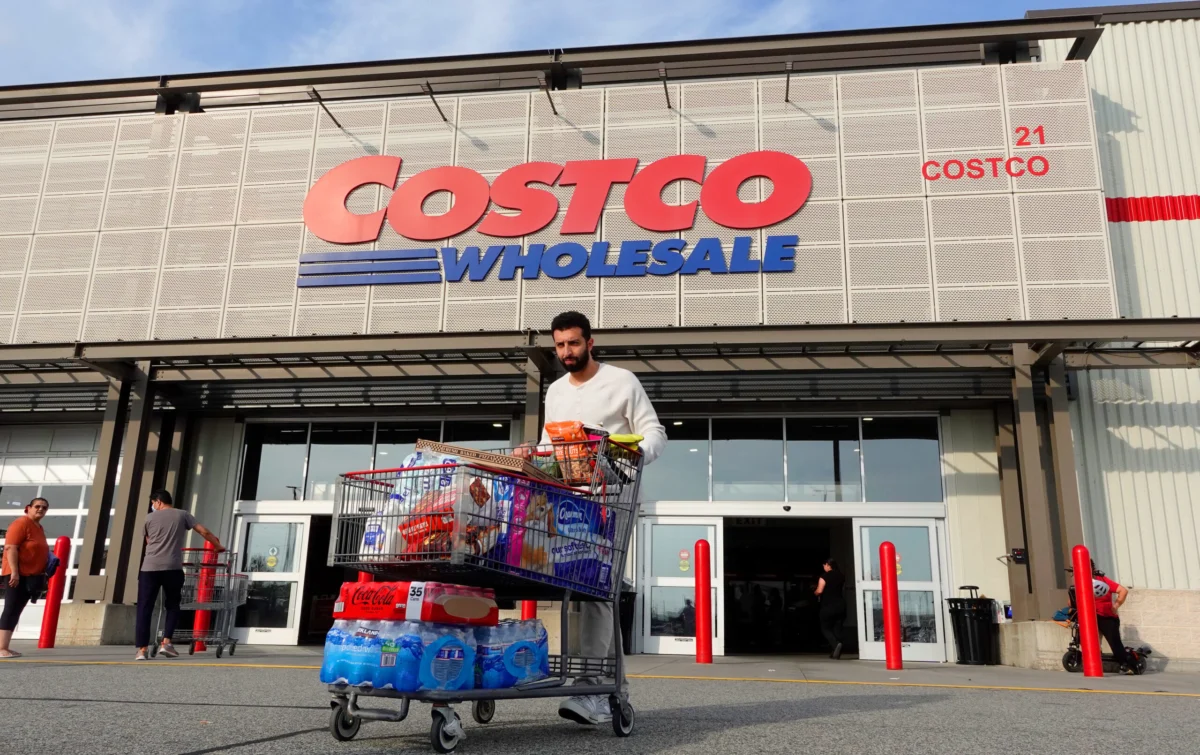
The final week of October witnessed a notable uptick in consumer purchasing of emergency supplies, a direct response to a series of high-profile system failures that affected everything from corporate communications to national air traffic control. Research firm Mizuho estimates that Costco’s U.S. comparable sales, excluding gasoline, soared by an impressive 11% to 12% in that period, marking a substantial increase from the more typical 6% to 7% growth observed during the first three weeks of the month. For October as a whole, Costco reported an 8.1% increase, a figure bolstered by this late-month buying frenzy. The trend shows no signs of abating in November, with Mizuho reporting that 21 of the 26 high-ticket generators – indicative of crucial emergency items – tracked on Costco’s website were sold out as of Sunday night, underscoring the sustained demand for essential preparedness items.
Despite this robust sales performance, shares of Costco remained relatively flat-to-lower in Wednesday morning trading, hovering around $1,107 apiece. This market reaction suggests investors may be cautiously assessing whether the sales spike represents a temporary anomaly or a more enduring shift in consumer behavior. However, Mizuho has demonstrated confidence in Costco’s trajectory, raising its price target on the retailer to $1,150 from $1,100 and maintaining its "buy-equivalent outperform" rating, projecting U.S. comparable sales growth could exceed 10% in November.
A Cascade of Disruptions: A Timeline of Recent Outages
The recent wave of tech disruptions has been particularly impactful due to its breadth and the critical nature of the affected services, fueling public apprehension and a palpable sense of urgency among consumers. The chronology of these events paints a picture of successive failures that have collectively eroded public confidence in digital reliability:
- Thursday, October 24, 2026: A widespread outage struck Microsoft’s widely used communication platforms, Outlook and Teams. Millions of users globally reported difficulties accessing their email and collaborative workspaces, leading to significant disruptions in business operations, remote work, and personal communication. The incident highlighted the immense reliance on cloud-based services for daily productivity and the ripple effects when such foundational systems falter.
- Friday, October 25, 2026: The Federal Aviation Administration (FAA) was forced to halt all domestic departures nationwide due to a system outage. This unprecedented ground stoppage stranded thousands of passengers, caused extensive flight delays and cancellations, and brought air travel across the United States to a standstill. The incident underscored the fragility of critical infrastructure and its direct impact on mobility and commerce.
- Monday, October 28, 2026: The financial sector experienced its own tremors as a software outage at JPMorgan Chase led to widespread banking transaction delays. Consumers reported issues with processing payments, accessing funds, and managing accounts, creating significant financial anxiety. On the same day, United Airlines also faced a system outage, causing further flight delays and operational challenges, compounding the travel chaos initiated by the FAA incident.
- Tuesday, October 29, 2026: Even national security apparatuses were not immune, as the National Security Agency (NSA) announced a temporary communication network outage. While the spy agency quickly restored services, the incident, however brief, raised concerns about the resilience of even the most secure digital systems and the potential implications for national security.
This rapid succession of seemingly disparate yet pervasive technical failures has fostered an environment of unease, prompting consumers to consider the potential consequences of prolonged disruptions to essential services.
Retailers Reap Rewards: The Emergency Preparedness Boom
The surge in sales at Costco is a clear indicator of a growing societal inclination towards self-reliance in the face of perceived instability. David Bellinger, an analyst at Mizuho, articulated this sentiment in a research note, stating, "Consumer anxiety following the Microsoft Outlook outage, the ground stoppage for all U.S. airline flights, and apocalyptic concerns flaring up across social media have all contributed to increased emergency prep sales at COST." Bellinger, who is scheduled to appear on CNBC’s "The Exchange," highlighted the immediate correlation between these high-profile incidents and a tangible shift in consumer spending.
The products flying off the shelves at Costco and similar retailers reflect a pragmatic approach to preparedness. Consumers are stocking up on non-perishable food items such as canned goods, dried fruits, and emergency meal kits with extended shelf lives. Water purification tablets, large bottled water supplies, and water filtration systems are also in high demand. Beyond sustenance, there’s a significant focus on power solutions: portable generators, battery packs, solar chargers, and ample supplies of various battery types are being snapped up. First-aid kits, essential medications, communication devices like NOAA weather radios, and personal hygiene products are also seeing elevated sales figures. The rapid depletion of "high-ticket generators" on Costco’s website specifically points to a deep-seated concern about potential power grid vulnerabilities.
The ripple effect of this preparedness trend extends beyond Costco. Mizuho also anticipates that Walmart’s Sam’s Club, another major warehouse retailer, will benefit significantly as shoppers fill their pantries with bulk emergency supplies. Furthermore, the firm projects increased sales for home improvement giants Home Depot and Lowe’s. These retailers are likely seeing heightened demand for products such as manual tools, plywood for securing homes, emergency lighting, carbon monoxide detectors, fuel storage containers, and possibly even water storage barrels and heavy-duty tarps for weatherproofing, indicating a holistic approach to home and personal resilience.
The Undercurrent: AI, Vulnerabilities, and Digital Dependence
While the recent outages have been jarring, officials have moved to reassure the public, stating there is "no reason for panic." However, the underlying cause for this spate of disruptions is attributed to a critical juncture in cybersecurity: a rush to recover software vulnerabilities uncovered by advanced AI tools. This explanation introduces a complex layer to the narrative, suggesting that the very tools designed to enhance digital security may, in their aggressive identification of flaws, inadvertently trigger system instabilities during remediation efforts.
The emergence of sophisticated AI in cybersecurity has dramatically accelerated the process of identifying latent vulnerabilities within vast and intricate software ecosystems. While this capability is crucial for proactive defense against cyber threats, the subsequent scramble to patch and update systems can be inherently destabilizing. Large, interconnected networks, often built upon layers of legacy code and diverse software, are notoriously difficult to update without introducing new bugs or compatibility issues. The speed and scale at which AI can pinpoint these weaknesses necessitate an equally rapid, but often delicate, response, which may have contributed to the recent operational glitches across various platforms. This highlights a paradoxical challenge: the race to secure digital infrastructure against increasingly intelligent threats might itself be a source of temporary fragility as systems are rapidly reconfigured and fortified.
The Amplifying Echo Chamber: Social Media’s Role
In an era defined by instant information dissemination, social media platforms have played a significant role in amplifying consumer anxiety and catalyzing the emergency preparedness movement. Platforms like TikTok, X (formerly Twitter), and Facebook have become virtual town squares where posts urging people to stock up on food, water, and other supplies are gaining significant traction. User-generated content, often featuring personal anecdotes, preparedness checklists, and even speculative scenarios, spreads rapidly through algorithmic amplification and peer-to-peer sharing.
This digital echo chamber can swiftly transform isolated incidents into widespread concerns, even if official sources maintain a calm demeanor. While some social media content offers practical and responsible advice on disaster preparedness, other posts can lean into alarmism, fostering a sense of urgency that transcends official reassurances. The visual nature of platforms like TikTok, with users showcasing their "prepper" pantries or demonstrating emergency equipment, can be particularly compelling, influencing others to follow suit. This phenomenon underscores the dual nature of social media: a valuable tool for information sharing, but also a potent amplifier of collective anxieties, particularly in moments of perceived systemic vulnerability.
Official Responses and Calls for Calm
In the wake of these disruptive events, governmental agencies and corporate entities have been compelled to issue statements addressing the public and stakeholders. Officials from various affected sectors have consistently reiterated that while the incidents were regrettable, they were swiftly managed and did not indicate a broader systemic collapse. The overarching message has been one of reassurance, emphasizing that there is "no reason for panic."
The FAA, for instance, initiated a thorough review of its Notice to Air Missions (NOTAM) system following the ground stoppage, pledging investments in system resilience and redundancy to prevent future occurrences. Microsoft issued apologies for its service interruptions, explaining the root causes and detailing steps taken to restore full functionality and enhance future stability. Similarly, JPMorgan Chase and United Airlines communicated transparently about their respective outages, outlining corrective actions and reaffirming their commitment to reliable service. The NSA’s brief outage was also quickly addressed, with the agency emphasizing the temporary nature of the disruption and the robust security protocols in place.
These responses aim to restore public confidence and mitigate the economic and psychological impact of the disruptions. They highlight the ongoing efforts to bolster cybersecurity defenses and system resilience, acknowledging the increasing sophistication of digital environments and the challenges inherent in maintaining uninterrupted service across vast, interconnected networks.
Broader Economic and Societal Implications
The recent string of tech outages carries significant broader implications, extending beyond immediate sales boosts for retailers. Economically, such disruptions incur substantial costs through lost productivity, delayed transactions, and supply chain interruptions. The FAA ground stoppage alone likely cost airlines and businesses millions in revenue and operational expenses, not to mention the personal cost to travelers. Banking system delays can ripple through the economy, affecting everything from payroll processing to large-scale financial transactions.
More profoundly, these events underscore society’s escalating dependence on digital infrastructure. As more aspects of daily life—from communication and commerce to transportation and healthcare—become digitized, the vulnerability of these systems becomes a critical national and global concern. The incidents serve as a stark reminder that even temporary failures can have cascading effects, highlighting the need for robust backup systems, diverse connectivity options, and comprehensive disaster recovery plans at both institutional and individual levels.
Looking ahead, this period of heightened anxiety could mark a pivot towards more sustained consumer preparedness. What might have once been considered a niche "prepper" mentality could evolve into a more mainstream practice, with households consistently allocating resources to emergency supplies. For retailers like Costco, this potential shift represents a strategic opportunity. The upcoming reporting of Costco’s first quarter of fiscal 2027 on December 10 will be keenly watched by Mizuho and other analysts, particularly for data on new member sign-ups. A significant increase in new memberships would suggest that the recent events have not only spurred existing members to buy more but have also drawn in new customers specifically seeking the bulk-buying capabilities and perceived reliability of warehouse clubs for their emergency preparedness needs, solidifying Costco’s role as a vital resource in an increasingly uncertain digital landscape.

