
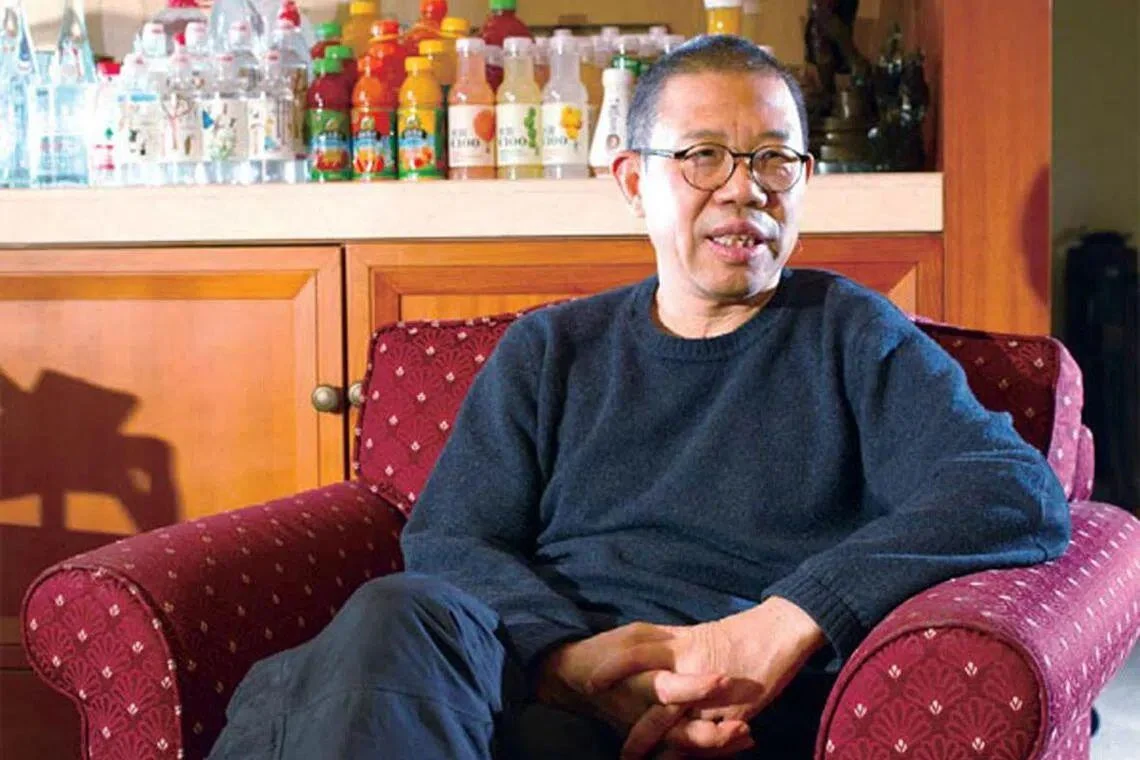
A significant industrial development in Fairfield, California, spearheaded by a Chinese billionaire, is poised to secure a substantial portion of the city’s water supply, igniting a fierce debate over foreign investment, national security implications, and the allocation of vital resources in a drought-prone state. The $200 million project, led by Zhong Shanshan, China’s second-richest man and founder of the prominent beverage conglomerate Nongfu Spring, involves the establishment of a bottling operation that has raised eyebrows both locally and nationally, as reported by the California Post on November 18, 2026. The contentious agreement grants Zhong Shanshan’s U.S. subsidiary access to an average of 1.65 million gallons of municipal water daily, equating to approximately 10% of Fairfield’s total daily water demand, for a period of 15 years. Adding to the complexity and concern, the Chinese-owned enterprise is slated to occupy a former Anheuser-Busch brewery located just seven miles from Travis Air Force Base, a critical U.S. military transportation and logistics hub.
The Project at a Glance: Streamfill Packers and Fairfield’s Water
The core of the controversy lies in the scale and nature of the industrial project. Streamfill Packers, the U.S. subsidiary of Nongfu Spring, plans to repurpose the extensive facilities of the former Anheuser-Busch brewery into a state-of-the-art bottling plant. This venture, representing a significant foreign direct investment of $200 million, promises economic revitalization for Fairfield, a city constantly seeking opportunities for growth and job creation. However, the associated water demand has quickly become the focal point of local and federal scrutiny. Under the approved 15-year agreement, Streamfill Packers will draw an average of 1.65 million gallons of municipal water per day. To put this figure into perspective, the average residential water usage in California is estimated to be around 80-120 gallons per person per day. Thus, the company’s daily consumption could potentially serve the needs of a small town, underscoring the significant impact on Fairfield’s municipal water resources.
The agreement specifies access to the city’s water supply, explicitly stating that it does not confer ownership or control over Fairfield’s municipal water system. This distinction is crucial, as it implies the company is purchasing water from the city rather than owning the underlying water rights or infrastructure. Nevertheless, the sheer volume of water involved has raised questions about long-term sustainability, especially in a state perpetually grappling with water scarcity and the increasing frequency of severe droughts. Nongfu Spring, known for its bottled water and beverages, has a vast operational footprint globally, and its expansion into the U.S. market is a strategic move to tap into one of the world’s largest consumer bases. The choice of Fairfield, with its existing industrial infrastructure and access to municipal services, likely presented an attractive proposition for the beverage giant.
Chronology of a Controversial Deal
The journey of this project from proposal to approval has been marked by escalating concerns and public debate. While the exact timeline of initial negotiations between Streamfill Packers and Fairfield city officials remains somewhat opaque, preliminary discussions likely began several months, if not a year or more, prior to the city council’s final vote.
- Early 2026 (Inferred): Initial contact and preliminary discussions between Streamfill Packers (Nongfu Spring) representatives and Fairfield city economic development officials begin, exploring the potential acquisition and repurposing of the former Anheuser-Busch site.
- Mid-2026 (Inferred): Detailed proposals are submitted, outlining the $200 million investment, job creation projections, and the proposed water usage. City staff begin due diligence and prepare reports for the city council.
- Fall 2026 (Inferred): The proposed agreement, including the 15-year water supply contract, is presented to the Fairfield City Council for review and public discussion. This period likely saw initial public engagement and the surfacing of early concerns regarding water usage and the foreign ownership aspect.
- November 2026 (Specific): Vice Mayor Pam Bertani publicly voices her concerns, advocating for a crucial amendment to the agreement. She specifically requested that the deal include a written term committing Streamfill Packers to voluntarily submit the project for review by the Committee on Foreign Investment in the United States (CFIUS).
- November 18, 2026 (Specific): Despite Bertani’s plea and growing public apprehension, the Fairfield City Council proceeds to reject the proposed condition for a CFIUS review and subsequently approves the agreement without amendments. This decision is reported by the California Post, bringing the story into wider public consciousness.
- Post-Approval (Ongoing): The approval sets the stage for the project to move forward, but the controversy continues to simmer, drawing attention from various stakeholders, including federal authorities and national security experts.
The rapid progression and ultimate approval without the requested CFIUS clause underscore the perceived urgency by some council members to secure the economic benefits promised by the project, potentially overriding caution expressed by others.
Fairfield’s Water Landscape and the Demand
Fairfield, like much of California, operates within a complex and often precarious water ecosystem. The state has endured a series of severe droughts over the past two decades, leading to stringent water conservation measures, mandatory cutbacks, and ongoing debates about water rights and infrastructure. Fairfield’s municipal water supply primarily originates from a combination of local groundwater sources and imported water from state and federal projects, such as the State Water Project and the Central Valley Project, which draw water from the Sacramento-San Joaquin Delta.
The city’s average daily water demand fluctuates based on seasonal factors, population growth, and industrial activity. A figure of 1.65 million gallons per day represents a significant fraction—approximately 10%—of the city’s total daily demand. While this might seem manageable in periods of abundant rainfall, it becomes a point of contention during drought years when every drop is scrutinized. Critics argue that dedicating such a large volume to a single industrial user, especially one involved in bottling and potentially exporting water in a product, is imprudent when local residents and agricultural sectors face cutbacks.
The historical context of California’s water wars further amplifies these concerns. Water has always been a highly politicized resource in the state, with fierce competition among agricultural, urban, and environmental interests. The "California Forever" project, mentioned by former Fairfield Mayor Cat Moy, is a prime example of another massive development proposal in the region that has faced intense scrutiny over its potential water demands and impact on local infrastructure. Moy’s exasperation stems from the apparent contradiction: on one hand, the city and region have been "exhaustively going after California Forever for basically water rights and other things," yet on the other, they approve a significant water allocation to a foreign-owned entity without what she views as adequate safeguards. This highlights a perceived inconsistency in how major water-intensive projects are evaluated, depending on their ownership and specific proposals.
National Security Concerns and Travis Air Force Base
Perhaps the most potent aspect of the controversy revolves around national security. The chosen location for Streamfill Packers’ bottling plant – a former Anheuser-Busch brewery approximately seven miles from Travis Air Force Base – has raised alarm bells among federal officials and national security analysts. Travis AFB is not merely a local military installation; it is a strategic asset of immense importance to the United States. It serves as a major hub for military airlift and logistics operations, projecting American power and humanitarian aid globally. Its proximity to the Pacific theater makes it critical for operations in Asia.
Concerns typically associated with foreign-owned entities operating near sensitive military installations include:
- Intelligence Gathering: The possibility of industrial espionage or covert intelligence collection, even through seemingly innocuous operations, cannot be entirely dismissed. While a bottling plant might seem an unlikely front, any large-scale operation near a critical base could offer opportunities for observation or technical surveillance.
- Infrastructure Vulnerability: Foreign control over local resources, particularly water, could theoretically create vulnerabilities. While the agreement does not grant ownership of the municipal system, a foreign entity controlling a significant portion of its output could be seen as a strategic concern.
- Supply Chain Resilience: In a crisis, the presence of foreign-owned critical infrastructure near a military base could complicate response efforts or raise questions about the reliability of local services.
- Data Security: Modern industrial operations involve significant data. Even if not directly linked to military data, the presence of foreign-owned digital infrastructure near a base can raise concerns about cybersecurity and potential vectors for attack.
Vice Mayor Pam Bertani’s insistence on a CFIUS review stems directly from these national security considerations. The Committee on Foreign Investment in the United States (CFIUS) is an interagency committee authorized to review certain transactions involving foreign investment in the United States to determine their effect on U.S. national security. While CFIUS reviews are typically triggered by foreign acquisitions of U.S. businesses or real estate near sensitive sites, it can also review transactions involving critical infrastructure or critical technologies. The proximity to Travis AFB, combined with the scale of the investment and the resource involved (water), makes this project a prime candidate for such a review in the eyes of many security experts.
The Fairfield City Council’s rejection of the CFIUS review condition is particularly striking. Council members who voted against the amendment may have believed that the project, being a bottling plant, did not pose a direct national security threat or that the economic benefits outweighed these concerns. Alternatively, they might have deemed a voluntary submission an unnecessary hurdle that could delay or derail the project, trusting that federal agencies would initiate a review if they deemed it necessary. However, the absence of a written commitment leaves the initiative for such a review solely with federal authorities or the foreign investor, rather than making it an explicit term of the local agreement.
Local Voices and Divided Opinions
The Fairfield City Council’s decision was not unanimous and certainly not without passionate opposition from local officials and residents. Vice Mayor Pam Bertani emerged as a leading voice for caution, particularly regarding the national security implications. Her statement, "I would prefer to have the intended act of voluntarily submitting this project for CFIUS review as a written term in the agreement," highlights her desire for proactive federal oversight rather than reactive intervention. She emphasized the importance of ensuring that all potential risks are thoroughly vetted before such a significant deal is finalized.
Former Fairfield Mayor Cat Moy was even more outspoken in her condemnation. Her powerful statement, "We do need the jobs, we do need the money – but you don’t sell out your nation for that," encapsulates the deep moral and patriotic dilemma many feel. Moy’s reference to the "California Forever" project further illustrates her frustration with what she perceives as a double standard or inconsistent approach to major development and resource allocation. Her sentiment reflects a broader concern among some segments of the community that the city is prioritizing short-term economic gains over long-term strategic interests and resource stewardship.
On the other side of the debate, council members who voted in favor of the agreement likely emphasized the significant economic benefits promised by the $200 million investment. Such a project is expected to create a substantial number of jobs, both during construction and ongoing operations, providing much-needed employment opportunities for local residents. Furthermore, the industrial plant would generate considerable tax revenue for the city, bolstering its budget and potentially funding public services. Proponents might argue that the project represents a responsible use of an existing industrial site and that the water usage is within acceptable limits for an industrial entity, contributing to the local economy. They might also contend that concerns about national security are exaggerated for a beverage bottling plant and that a CFIUS review is not strictly mandatory for this type of investment. From their perspective, delaying or rejecting the project based on unconfirmed national security fears could mean missing out on a valuable economic opportunity for Fairfield.
Local residents are likely divided, with some welcoming the jobs and economic activity, while others express apprehension about water sustainability, increased truck traffic, and the implications of foreign ownership near a military base. Environmental groups, in particular, would likely voice concerns over the water allocation, emphasizing the need for stricter conservation and prioritizing local needs over industrial consumption, especially for a product like bottled water, which often faces criticism for its environmental footprint.
The Broader Geopolitical and Economic Context
The Fairfield water deal does not exist in a vacuum; it is embedded within a complex and often tense geopolitical relationship between the United States and China. Over the past decade, U.S. scrutiny of Chinese investments, particularly in critical infrastructure, technology, and real estate near sensitive sites, has intensified significantly. This heightened vigilance is driven by concerns over national security, intellectual property theft, economic coercion, and China’s growing global influence.
U.S. government officials, across administrations, have expressed apprehension about the Chinese Communist Party’s strategic objectives, which include acquiring foreign technology, resources, and influence. Investments that might appear purely commercial on the surface are sometimes viewed through a lens of potential dual-use capabilities or long-term strategic advantage for China. The presence of a major Chinese-owned facility near Travis AFB, regardless of its primary function, plays into these broader geopolitical anxieties.
Moreover, the deal highlights the ongoing economic competition between the two global powers. While the U.S. generally welcomes foreign direct investment for its economic benefits, the origin of that investment has become an increasingly critical factor. There’s a delicate balance between fostering economic growth through international partnerships and safeguarding national interests. The Fairfield case serves as a microcosm of this larger struggle, where local economic imperatives collide with national security doctrines.
Implications for Fairfield and Beyond
The approval of the Streamfill Packers project carries multifaceted implications, both for the city of Fairfield and potentially as a precedent for future foreign investments in the U.S.
- Economic Impact: For Fairfield, the immediate economic benefits are clear: job creation, increased tax revenue, and the revitalization of a dormant industrial site. These factors are crucial for local economic development and can provide a much-needed boost to the city’s coffers and employment rates. However, there’s also the question of long-term economic resilience if the city becomes overly reliant on a single foreign-owned entity for a significant portion of its industrial base.
- Environmental Impact: The allocation of 1.65 million gallons of water daily raises significant questions about environmental sustainability. While the company is paying for the water, the cumulative effect of such large-scale industrial consumption in a drought-prone region could strain local water resources, impact ecosystems, and potentially lead to future water stress for residents and other businesses. The environmental footprint of bottling operations, including plastic waste and transportation logistics, also warrants consideration.
- National Security Precedent: The decision to bypass a CFIUS review, or at least a commitment to one, could set a concerning precedent. It might be interpreted as a weakening of local defenses against potential national security risks associated with foreign investment, particularly near vital military installations. This could encourage similar investments in other sensitive areas if local governments prioritize economic incentives over federal security recommendations.
- Community Trust and Governance: The controversial nature of the deal and the division within the city council could erode public trust in local governance. Residents might question the transparency of the process, the prioritization of foreign interests over local concerns, and the robustness of the city’s due diligence, especially regarding long-term resource management and national security.
- U.S.-China Relations: While a local deal, it adds another layer to the complex narrative of U.S.-China economic engagement. If federal authorities eventually intervene or express strong disapproval, it could become a point of diplomatic friction, highlighting the challenges of balancing local economic autonomy with national strategic interests.
Looking Ahead
The Fairfield water deal is far from settled in the public discourse, even with city council approval. While Streamfill Packers can proceed with its plans, the lack of a CFIUS review commitment means the project remains under a potential federal spotlight. CFIUS has the authority to review transactions retroactively if deemed necessary for national security. This means that even without a voluntary submission, federal agencies could initiate a review of the acquisition and the water agreement at any point, potentially leading to modifications or even divestment orders if severe national security risks are identified.
Local activists and former officials like Cat Moy and Pam Bertani will likely continue to advocate for greater scrutiny and transparency, potentially mobilizing public opinion and engaging federal representatives. The ongoing narrative of water scarcity in California, coupled with increasing geopolitical tensions, ensures that this $200 million industrial project, and its access to Fairfield’s precious water, will remain a subject of intense public and political debate for the foreseeable future. The outcome will not only shape Fairfield’s economic and environmental landscape but could also serve as a critical test case for how local jurisdictions navigate the intricate balance between economic development, resource management, and national security in an increasingly interconnected and competitive global environment.

