

Almost two decades into a self-directed life following early retirement, a notable individual, often referred to as a pioneer in the financial independence and early retirement (FIRE) movement, has articulated a nuanced perspective on the seemingly idyllic state of complete freedom. While the initial years of this lifestyle were characterized by immense productivity and personal fulfillment, a recent introspection reveals a subtle yet profound challenge: the absence of external obligations can inadvertently foster a decline in self-driven initiative, transforming what appears to be an ultimate advantage into an unexpected hindrance to sustained self-mastery.
The Lure and Lethargy of Unbound Freedom
For nearly nineteen years, the early retiree documented his journey, frequently highlighting the profound benefits of his chosen path. Foremost among these was the unparalleled freedom to dedicate himself entirely to raising his son from birth through his eighteenth birthday, a commitment made without the compromises typically necessitated by traditional employment. Beyond family, this boundless time was invested in a diverse array of valued pursuits: fostering health, nurturing friendships, embarking on ambitious adventures, engaging in hands-on construction and restoration projects, and consistently contributing to his popular blog. These initial years were marked by an almost ceaseless engagement with activities that brought deep satisfaction and tangible results.
However, the individual observed a gradual shift in recent years. What began as a vibrant, multi-faceted engagement with life’s possibilities started to wane. The once-constant drive to build, create, and share became increasingly difficult to harness. Instead of the habitual bounce towards a construction site or the laser-like focus on crafting a compelling article, there was a growing inclination towards passive distraction. Afternoons increasingly found the individual retreating to the couch, phone in hand, acknowledging a desire for more enjoyable, productive activities but lacking the intrinsic energy and focus to initiate them. This period of introspection led to a startling realization: his greatest life advantage – complete freedom – was being inadvertently weaponized against his own progress. The ability to avoid anything undesirable was slowly eroding his capacity to pursue challenging, yet ultimately more rewarding, endeavors.
This phenomenon, while seemingly a "first-world problem," underscores a deeper psychological truth about human motivation. The early retiree postulates that while total freedom combined with financial security sounds like a utopian playground of self-actualization, its reality is far more complex and dependent on individual psychological make-up. Freedom, he argues, acts as a crucible, revealing a person’s true strengths and weaknesses. The spectrum of outcomes is vast, ranging from chronic indulgence and stagnation ("Unlimited drugs and booze on the couch") to profound societal contribution ("Create and manage a series of nonprofit foundations which employ thousands of people to research and invest in medical advances and clean energy"). For many, the challenge lies in finding a sustainable balance within this spectrum.
The Quest for Renewed Drive: A Chronological Account
Initially, the individual sought to counteract this creeping lethargy through conventional self-improvement methods. He delved into the burgeoning fields of health and wellness, researching optimal daily habits, exploring strategies to steer clear of excessive comfort, and studying techniques to enhance energy, focus, and motivation. Many of these insights were shared with his audience, reflecting a genuine commitment to personal growth. Articles detailing lessons from neurobiology, the perils of comfort, and the benefits of structured routines demonstrated a proactive approach to his well-being.
The crucial flaw, however, was in the application of this knowledge. Despite learning effective new strategies and successfully incorporating them for periods, a pattern emerged: his brain would gradually invent excuses, leading to inconsistency. The gap between knowing what to do and consistently doing it widened, leaving him with a wealth of theoretical knowledge but an increasingly frustrating lack of tangible accomplishment.
The pivotal revelation occurred just a few months ago: he had been actively sabotaging his own progress by misusing his freedom. "I have been using my freedom too much – in order to avoid doing things that I didn’t feel like doing," he concluded. This insight highlighted a critical distinction: true freedom is not merely the absence of external constraints, but the liberation to choose activities that are more valuable and growth-oriented than the obligations one has shed. If freedom merely leads to passive consumption and avoidance of effort, its transformative potential is squandered.
This self-deception manifested in a prioritization of easy, less demanding tasks (like household chores or casual socializing) over more challenging activities requiring significant planning, energy, or focus – even though these more demanding tasks were integral to the life he genuinely enjoyed. Workouts served as a clear example. Despite knowing that consistent exercise offers unparalleled benefits across all aspects of life, his approach had become convoluted:
"I want to get in a really good weight training workout today. But I don’t feel like doing a workout because it’s hard. So I’ll try to grease the wheels for myself so it’s easier to achieve. I’ll pick the perfect time of day when the weather is nice, and my energy level is high. I’ll set up my gym in advance the night before. And when that golden moment of perfect conditions hits, I’ll hit the gym!"
This elaborate pre-negotiation with himself often failed. Weeks passed with inconsistent effort, and fitness results were predictably lackluster. The turning point arrived with a radically simplified approach:
"I want to work out today. I don’t feel like it. ^^^ AHA!! I JUST CAUGHT MYSELF TRYING TO SELF SABOTAGE! ^^^ I am now already putting on my shoes and walking to the gym."
This paradigm shift involved identifying the exact "moment of hesitation" – that instant of internal resistance or excuse-making – and re-framing it not as a signal to retreat, but as an immediate trigger for action. This counter-intuitive strategy, though initially challenging, proved profoundly effective, transforming hesitation from a barrier into a catalyst.

External Catalysts: The Influence of Extreme Discipline
The individual’s introspection and new approach were further illuminated by interactions with his social circle. When he shared his struggles with self-motivation, responses varied significantly. Roughly half of his friends resonated with his experience, acknowledging their own tendencies towards underachievement despite desires for more. The other half, however, found his predicament baffling, as they themselves were perpetually engaged in demanding schedules, juggling multiple children, managing businesses, and training for extreme endurance events like Ironman triathlons. This divergence highlighted a broad spectrum of human drive and underscored that while some individuals may benefit from "slowing down," others, like the early retiree, require a conscious effort to "speed up."
The most significant external catalyst came from an unexpected source: an interview with David Goggins, a figure widely regarded as one of the planet’s most extreme examples of self-mastery and pushing human limits. Goggins’s life story is a testament to overcoming unimaginable adversity through relentless self-discipline. Born into a severely abusive household, he leveraged his traumatic past into an insatiable drive to conquer extreme hardship. His journey includes not only qualifying for the elite Navy SEALs despite multiple initial failures and physical limitations but also completing numerous ultra-endurance events that would break most individuals. Notable feats include running 240 miles over four days with minimal sleep, and setting a world record by completing 4025 pull-ups in 24 hours, an endeavor that left his hands severely mutilated.
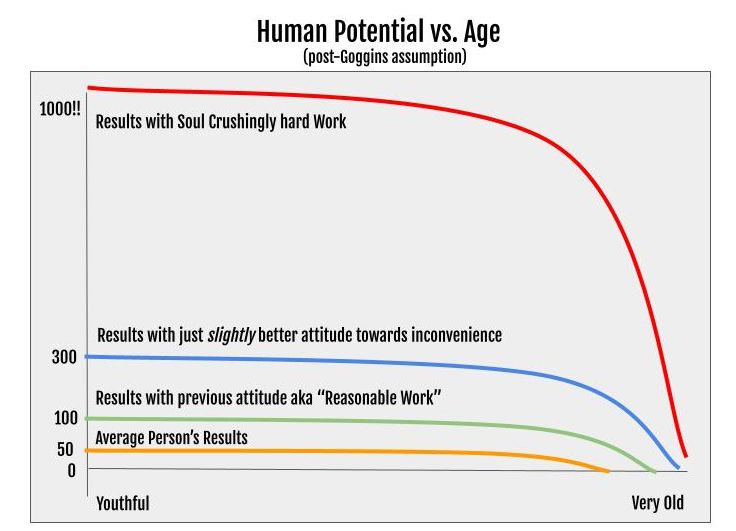
Goggins’s philosophy posits that human limitations are predominantly mental rather than physical. His life serves as a stark illustration that the "barriers" most people encounter are self-imposed psychological constructs. While the early retiree explicitly stated he harbored no desire to emulate Goggins’s extreme lifestyle, which frequently involved pushing his body to the brink of collapse, the exposure to such an uncompromising commitment to self-overcoming provided a crucial re-calibration of his own perceived limits. It shifted his perspective from a linear, often self-limiting view of potential to one where the vast majority of barriers are understood to be internal and thus surmountable. This realization, he noted, felt "like the sky has opened way up."
The Practical Application of Extreme Inspiration
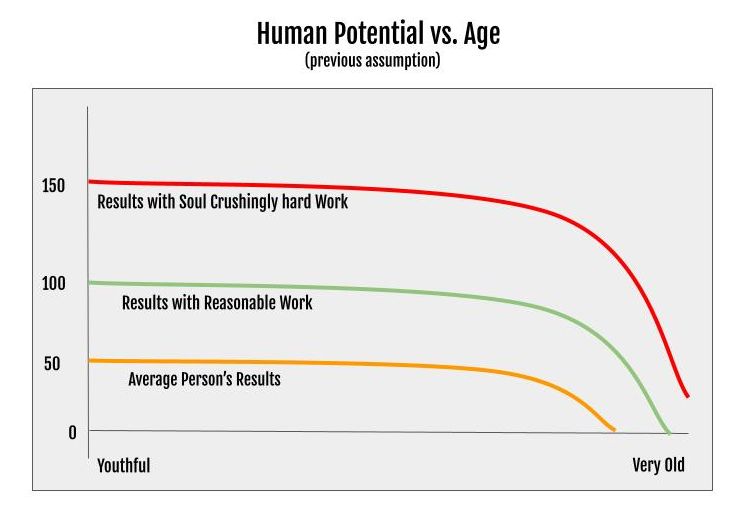
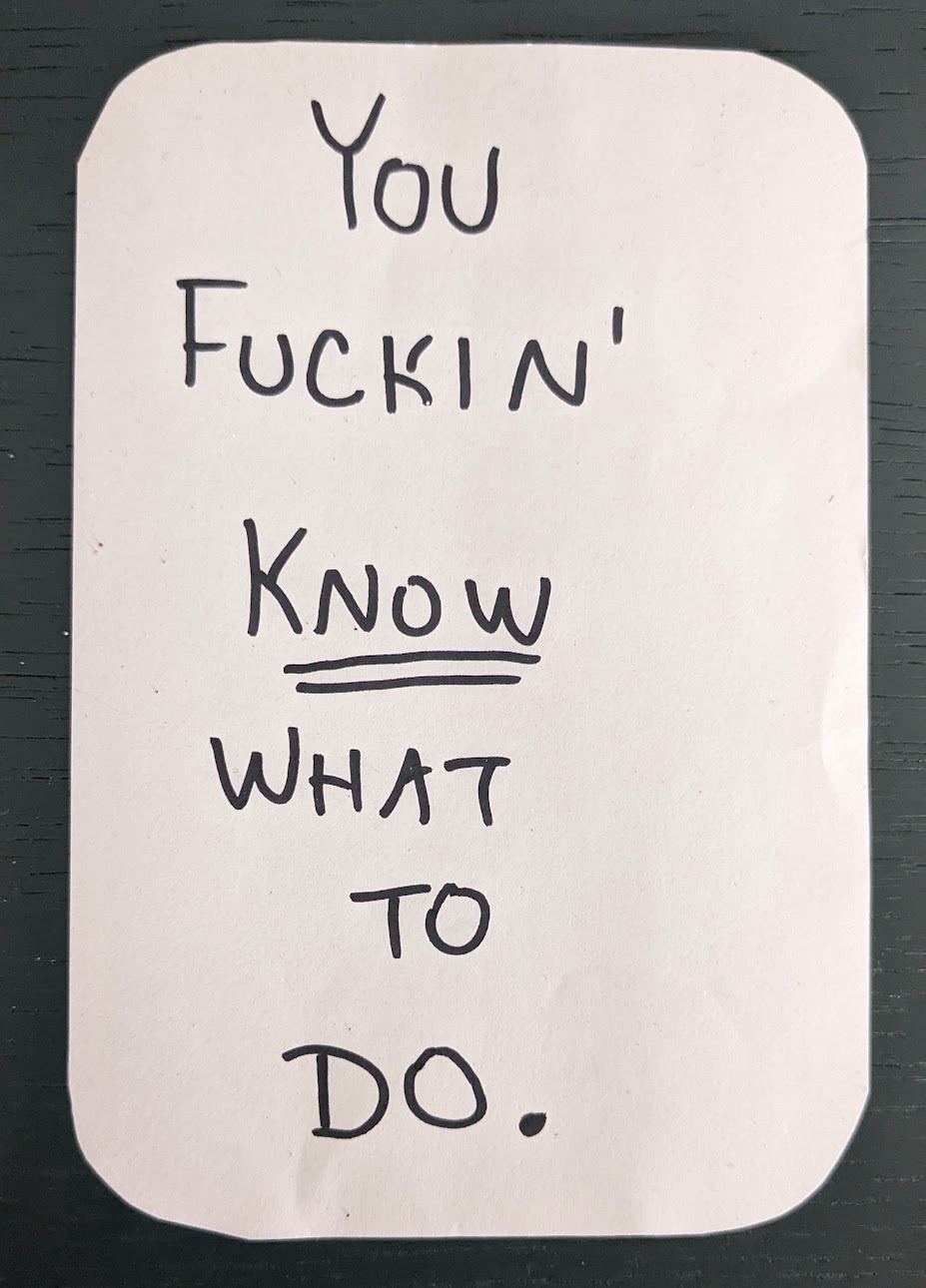
Inspired by Goggins’s unyielding ethos, the early retiree immediately put his new understanding into practice. A concise Goggins quote, "You already fuckin’ know what to do," was prominently displayed on his bathroom mirror, serving as a constant reminder and trigger. This direct, no-nonsense approach solidified the "moment of hesitation" strategy. Whether he wanted to work out or didn’t want to work out, either feeling became an immediate cue to act.
The results were swift and tangible. Within four months of adopting this mindset, the individual reported gaining ten pounds of lean muscle mass, achieving a level of strength and flexibility comparable to his physical state at age 25. Every joint in his body, he noted, felt significantly upgraded. This renewed vigor extended beyond the gym; he increased his running frequency (over 20 runs since returning to Colorado), made more consistent visits to his coworking space for focused work and social interaction, and found the discipline to write this very article, overcoming the inherent allure of easier activities. This demonstrates that while external success and internal satisfaction can be correlated, achieving the "right level" of engagement often demands significant internal discipline, even in a life of apparent freedom.
The wellspring of inspiration, once tapped, continued to be replenished. The individual consumed Goggins’s audiobooks, followed by Peter Attia’s "Outlive" – a work focused on extending healthspan and proactive health management – and Jocko Willink’s "Extreme Ownership," which emphasizes leadership, accountability, and disciplined execution. While acknowledging the contemporary debates around "Bro Science" or "Toxic Masculinity" sometimes associated with such figures, the retiree adopted a pragmatic approach: he absorbed messages that resonated and discarded the rest. This selective engagement allowed him to continually draw energy and motivation from successful, disciplined individuals who exemplify the capacity for high output and self-driven achievement.
Broader Implications and a Refined Understanding of Freedom
The journey of this early retiree offers profound implications for a wider audience, extending beyond those in FIRE or traditional retirement. It highlights a critical paradox: the very freedom sought after, if not actively managed with intentional discipline, can become a conduit for complacency and underachievement. True freedom, in this context, is redefined not merely as the absence of obligation, but as the empowered capacity to choose and execute challenging, growth-oriented tasks that align with one’s highest values, irrespective of momentary desire or discomfort.
This perspective challenges the conventional understanding of "leisure" and "retirement." Instead of a passive state of rest, it proposes an active engagement with life that demands self-regulation and a willingness to confront internal resistance. The psychological benefits of consistent physical activity, enhanced focus, and productive engagement are well-documented, contributing to improved cognitive function, mood regulation, and overall life satisfaction. The individual’s experience underscores that these benefits are not automatically conferred by freedom; they must be actively pursued through disciplined effort.
The lessons gleaned from figures like David Goggins, though extreme, serve as powerful reminders of the vast, often untapped, potential within each individual. By demonstrating that most perceived limitations are mental constructs, these narratives empower individuals to re-evaluate their own capacities and push beyond self-imposed boundaries. The early retiree’s transformation illustrates that even after achieving a dream lifestyle, the pursuit of self-mastery remains an ongoing, dynamic process. It requires a continuous commitment to identifying and overcoming internal resistance, ultimately leading to a more fulfilling and purpose-driven existence, even in the absence of external pressure. This refined understanding of freedom, coupled with a proactive approach to discipline, is presented as the key to unlocking sustained personal growth and well-being at any stage of life.

