
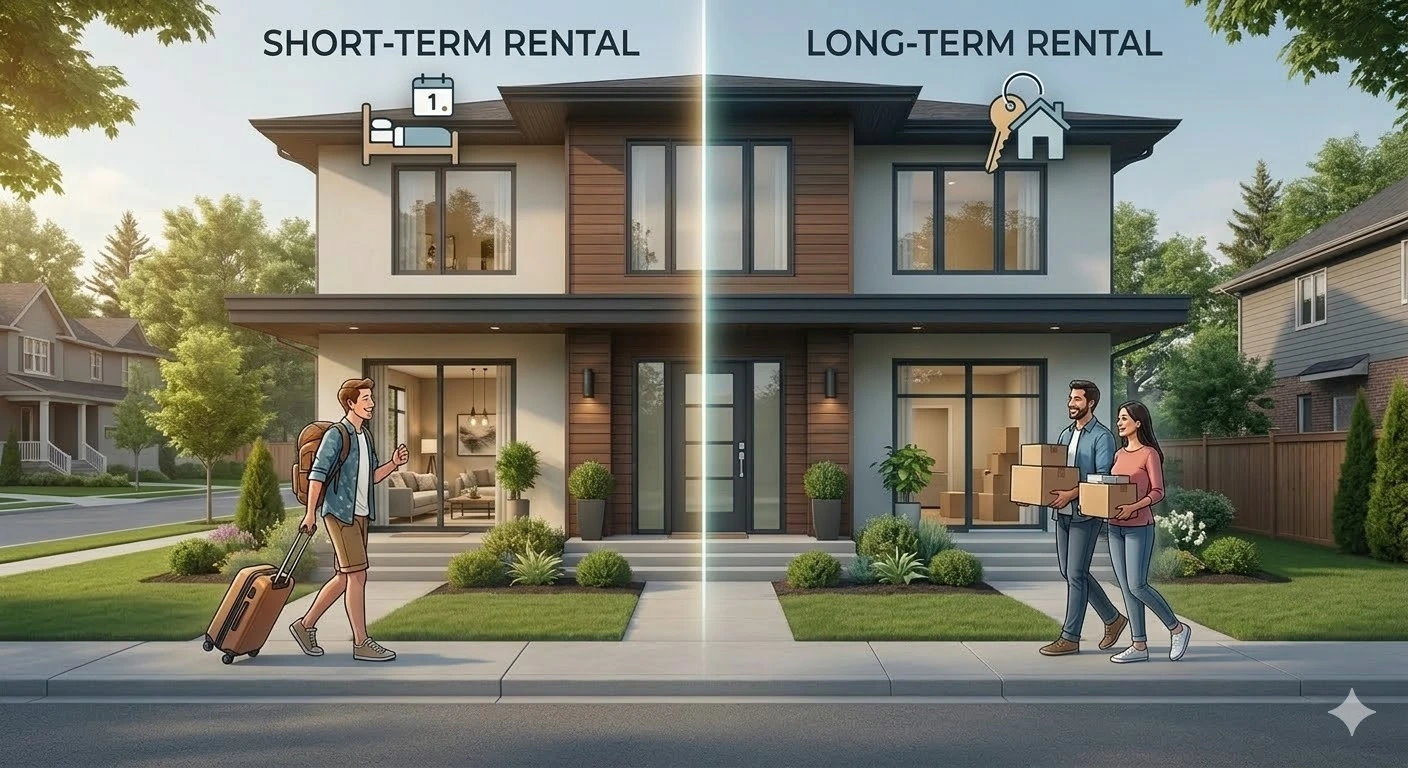
Just a few years ago, the allure of short-term rental properties, particularly through platforms like Airbnb, painted a picture of effortless passive income. Students renting out spare rooms and investors capitalizing on a burgeoning travel market during the post-pandemic boom of 2021-2022 saw seemingly guaranteed returns. Data from that era frequently indicated that short-term rentals outpaced their long-term counterparts in many U.S. markets, fueling a surge in investor interest. However, as 2026 unfolds, this once straightforward strategy has undergone a significant transformation, demanding a more nuanced and business-minded approach from real estate investors. The passive income dream has largely given way to the reality that operating short-term rentals is now a complex business, facing increased regulations and market saturation.
This shift has not automatically propelled traditional, long-term rentals to the forefront as the clear alternative. The long-term rental market also presents its own set of challenges, often intensified by evolving tenant protections and economic pressures. Amidst this recalibration, a third category, the mid-term rental, has emerged as a compelling option, further complicating the decision-making process for investors. Consequently, the era of a single, universally "easy" rental strategy has passed. Real estate investors in 2026 must meticulously re-evaluate their options, moving beyond generalized assumptions to a data-driven assessment of profitability, risk, and operational capacity. This requires a deep dive into the fundamental pillars of rental property investment: legal frameworks, financial outlays, locational dynamics, occupant considerations, operational effort, and the emerging viability of mid-term rentals.
The Shifting Tides: Re-evaluating Rental Investment Strategies in 2026
The decision-making process for real estate investors has become significantly more intricate. What was once a relatively simple choice between capitalizing on fleeting travel demand or securing consistent monthly income now involves a more comprehensive risk-reward analysis. Several key factors necessitate this re-evaluation.
1. The Regulatory Maze: Navigating Evolving Legal Landscapes
Historically, the less regulated nature of short-term rentals (STRs) was a significant draw for investors. The lag time between the emergence of new business models and the implementation of corresponding legislation meant that many locations had few, if any, restrictions on platforms like Airbnb. This allowed for rapid market entry and, often, lucrative returns.
However, this landscape has dramatically changed. By 2026, a substantial number of housing markets, particularly those heavily reliant on tourism, have enacted stringent short-term rental regulations. Cities like New York City, Honolulu, Santa Monica, New Orleans, and San Francisco are often cited as examples of markets with "de facto" bans, where the regulatory burden effectively prohibits most short-term rental operations. These regulations can encompass a wide array of requirements, including:
- Permitting and Licensing: Obtaining specific permits and licenses to operate an STR, often with annual renewal fees.
- Zoning Restrictions: Limitations on where STRs can be located, such as prohibiting them in residential-only zones.
- Occupancy Limits: Caps on the number of guests allowed in a rental property at any given time.
- Taxation: The imposition of specific taxes on short-term stays, often mirroring hotel taxes.
- Safety Standards: Mandates for smoke detectors, carbon monoxide detectors, and fire extinguishers, akin to hotel requirements.
- Advertising Restrictions: Limitations on how and where STRs can be advertised.
For investors considering STRs in 2026, a thorough understanding of and capacity to comply with these complex legal frameworks is paramount. Mashvisor’s portal, which tracks U.S.-wide short-term rental regulations, highlights the sheer volume and variety of these rules, underscoring the need for due diligence.
Simultaneously, the traditional long-term rental market, while historically subject to established landlord-tenant laws dating back to the 1920s, is also experiencing legislative shifts. These laws have traditionally covered aspects such as:
- Lease Agreements: Standardized contractual obligations for landlords and tenants.
- Eviction Procedures: Formal processes for removing non-compliant tenants.
- Habitability Standards: Requirements for maintaining safe and livable rental units.
- Security Deposit Regulations: Rules governing the collection and return of tenant security deposits.
However, recent legislative trends in 2026 increasingly favor tenants, introducing new complexities and costs for landlords. Examples include:
- California: New rent control measures and stricter eviction protections can limit a landlord’s ability to adjust rents or quickly regain possession of a property.
- Washington: Legislation aimed at enhancing tenant rights, potentially increasing the difficulty and cost associated with evictions and property management.
The ripple effect of successful tenant-friendly legislation in major states like California and Washington means that investors must remain vigilant, as similar laws can be adopted by other states. Comprehensive legal review is no longer a suggestion but a necessity for both short-term and long-term rental strategies.
2. The Escalating Costs: A Broader Financial Reassessment
The financial calculus of real estate investment has also become more demanding. While short-term rentals have generally remained the more expensive investment option compared to long-term rentals, costs have risen across the board for both strategies. The broader economic environment, characterized by higher U.S. home prices, increased property taxes, and elevated mortgage rates, contributes to a higher barrier to entry.
For short-term rental properties, the financial implications of regulatory changes are significant. Annual fees for permits and registrations, potential fines for non-compliance, and additional taxes directly increase operating expenses. Furthermore, platform fees, such as those introduced by Airbnb in 2025, add to the cost burden for hosts. Beyond these mandated expenses, the competitive landscape necessitates greater investment in property presentation and amenities. What was once considered a desirable add-on, like a hot tub in Gatlinburg, Tennessee, is now often perceived as a baseline expectation, forcing hosts to invest more to attract bookings. This escalating competition translates into higher costs for maintaining a competitive edge.
Long-term rental properties are also experiencing increased overhead. New tenant-focused laws can mandate upgrades to essential appliances like stoves and refrigerators. Moreover, growing tenant awareness and demand for energy efficiency are compelling landlords to invest in more sustainable and cost-effective solutions, further increasing initial and ongoing expenses.
The era of relying on a "general idea" of costs is over. Investors in 2026 must conduct rigorous financial analyses, obtaining precise cost estimates for both startup and ongoing operations, alongside realistic income projections, to determine which rental strategy offers the most favorable cash flow.
3. The Shifting Geography of Demand: Location, Location, Location Reimagined
The importance of location in real estate investment has always been paramount, but the dynamics are continually evolving. Beyond the legal implications, investors must consider shifts in travel trends and migration patterns.
For short-term rentals, oversaturation has become a growing concern in previously lucrative markets. While popular tourist destinations may still offer opportunities, the sheer volume of available listings can depress occupancy rates and rental prices.
In the long-term rental market, significant migration trends are reshaping demand. Data indicates a continued influx of people moving to the Southeast and the Mountain West (the Sunbelt), a stark contrast to the historical preference for larger, established cities. Understanding these demographic shifts is crucial for identifying markets with sustained rental demand.
Daryl Fairweather, Chief Economist for Redfin, provides valuable insights into these locational dynamics:
- Conversions from STR to Long-Term: Fairweather notes that conversions are most likely to occur in markets where short-term rental economics are weakening or regulations are tightening. The sweet spot for such conversions is where STR revenue is softening, but the fundamentals for long-term rentals remain robust. This suggests a strategic pivot for investors in markets experiencing a downturn in short-term demand but retaining strong underlying rental markets.
- Markets Favoring STRs: Despite the challenges, some markets will continue to favor short-term rentals. Fairweather emphasizes that STR success in these locations hinges on professional management, dynamic pricing strategies, and consistent demand. The days of "passive Airbnb investments in random towns" are deemed risky, pointing towards a professionalization of the STR sector.
Investors must therefore conduct granular market analysis, not only identifying areas with demand but also understanding how to best position their asset within that specific market, considering the prevailing regulatory environment and competitive landscape.
4. The Occupant Factor: A Comparative Analysis of Tenant Profiles
A significant initial attraction of short-term rentals was the perceived ease of dealing with temporary guests. The assumption was that transient occupants would pose fewer issues than long-term tenants, avoiding common landlord headaches such as:
- Late Rent Payments: Less frequent occurrence with short-term bookings.
- Property Damage: Potentially less severe damage from short stays.
- Evictions: Generally not applicable to short-term guests.
- Tenant Turnover: Less frequent need for lease renewals and unit turnovers.
This perception, however, has been challenged by a growing number of "Airbnb horror stories" circulating online. These accounts detail issues ranging from property damage and unauthorized parties to guests overstaying their welcome or engaging in illegal activities. Furthermore, the operational costs associated with hosting short-term guests are substantial, including the provision of high-speed internet, hotel-like amenities, and professional cleaning services after each stay.
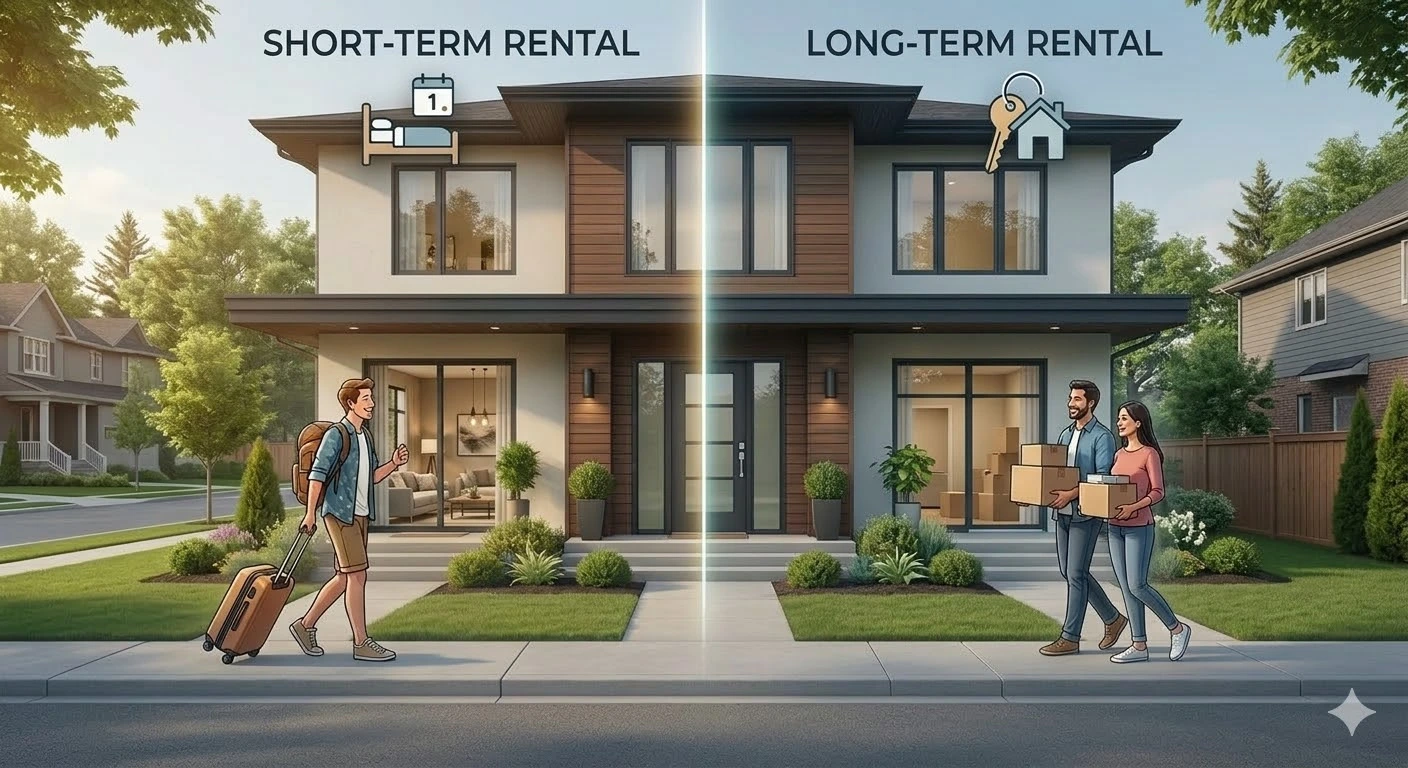
In 2026, it is no longer accurate to label one occupant type as inherently "better" than the other. Both short-term guests and long-term tenants require distinct management approaches and come with their own associated costs and potential risks. Investors must realistically assess their capacity for managing these different dynamics, including implementing effective risk mitigation strategies for each.
5. The Effort Equation: From Passive Dream to Active Reality
The perception of short-term rentals as a source of passive income has largely dissolved. Online communities and forums for STR hosts are replete with accounts from individuals who underestimated the operational demands of running a hospitality business. Unless a significant portion of management is outsourced, being an Airbnb host is an active investment, requiring constant attention to bookings, guest communication, cleaning, and maintenance.
Similarly, being a landlord for long-term rentals has always been recognized as an active endeavor, particularly during periods of tenant turnover, evictions, or emergency maintenance. While both strategies can be made more passive through professional property management, this comes at a cost. Property management fees for long-term rentals typically range from 8% to 12% of monthly rental income, whereas for short-term rentals, these fees can be substantially higher, often between 15% and 25%.
The core reality is that neither hosting short-term rentals nor managing long-term rentals is inherently passive. Investors must honestly assess their willingness and ability to engage in the day-to-day operations or factor in the significant costs of professional management when evaluating potential cash flow and return on investment.
6. The Rise of the Middle Ground: Exploring Mid-Term Rentals
The dichotomy between short-term and long-term rentals has been further complicated by the growing popularity of mid-term rentals. These properties, typically leased for periods ranging from one month to six months, and sometimes up to a year, represent a significant middle ground. They often cater to a specific demographic, including traveling healthcare professionals, individuals on extended business assignments, digital nomads, and those in the process of relocating.
The success of mid-term rentals is often concentrated in locations with a strong presence of these target demographics, such as:
- Cities with Major Hospitals and Healthcare Systems: Attracting traveling nurses and medical professionals.
- Areas with Significant Corporate Relocation Programs: Accommodating business travelers and temporary employees.
- University Towns: Providing housing for visiting scholars, researchers, or students on specific programs.
- Destinations Popular with Digital Nomads: Catering to remote workers seeking longer stays.
A key advantage of mid-term rentals is their ability to often sidestep the stringent regulations that plague many short-term rental markets. While short-term rentals typically boast higher average daily rates (ADRs), mid-term rentals often achieve higher occupancy rates. The combination of consistent bookings, reduced turnover costs, and fewer cleaning fees can lead to higher overall profitability within the same real estate market.
Compared to traditional long-term leases, mid-term rentals offer greater flexibility and are usually furnished. This makes tenants willing to pay a premium, with estimates suggesting an additional $600 to $800 per month compared to a standard long-term lease for a similar unfurnished property. This hybrid model presents a compelling new avenue for investors seeking a balance between the income potential of short-term stays and the stability of longer leases.
Strategic Decision-Making in a Multifaceted Market
The choice of rental strategy in 2026 is no longer a simple matter of preference but a complex decision driven by a confluence of factors. Location and individual risk tolerance play critical roles. Ultimately, the primary objective for any real estate investor remains the identification of the strategy that will yield the highest cash flow and return on investment. This requires leveraging reliable market data, including current Airbnb occupancy rates, long-term rent estimates, and historical performance trends, to make informed decisions before committing capital. Platforms like Mashvisor aim to provide these critical data points, enabling investors to assess the potential performance of various rental strategies for any given listing.
The Next Move: Converting or Selling Existing Properties
For investors who currently own properties operating as short-term rentals, the evolving market may necessitate a strategic re-evaluation. If a once-profitable STR is now facing reduced profit margins due to market oversaturation or prohibitive new regulations, investors must consider their next steps: convert to a long-term rental or sell the property.
Convert or Sell Your Rental Property?
This decision hinges on a thorough analysis of current real estate market trends and the investor’s financial situation. Key questions include:
- Is the current market conducive to a profitable sale, or would selling result in missing out on potential future gains?
- Can the property be held through a transition period without incurring significant carrying costs and negative cash flow?
- How are long-term rentals performing in the same housing market?
Daryl Fairweather offers guidance on when selling might be more advantageous than converting:
- When the property no longer justifies the complexity and risk of STRs: If the operational demands and regulatory hurdles of STRs outweigh the potential returns, selling becomes a more attractive option.
- When capital could be better utilized elsewhere: If the funds tied up in the property could generate a higher return in a different investment, selling is prudent.
- When market prices are favorable: Selling during a period of high market valuations can maximize capital gains.
- When regulations render the STR strategy unprofitable: If legal restrictions make the STR model unsustainable, exiting the market through a sale is a logical step.
If converting to a long-term rental is deemed the more strategic move, Fairweather advises focusing on several key areas:
- Market Research: Understand local long-term rental demand and pricing.
- Property Condition: Ensure the property meets the standards for long-term occupancy, potentially requiring updates.
- Tenant Screening: Implement a robust screening process to secure reliable tenants.
- Lease Agreements: Utilize clear and legally sound lease agreements.
Treating the conversion as a strategic business decision, rather than an afterthought, is crucial for long-term rental success, which offers greater predictability compared to the potential upside of STRs.
Conclusion: Data-Driven Decisions in a Dynamic Market
The real estate investment landscape in 2026 is characterized by significant shifts in both short-term and long-term rental markets. While opportunities persist, investors must adopt a more discerning and data-driven approach. Whether committing to a specific strategy or re-evaluating existing assets, leveraging reliable market data—including occupancy rates, rental income projections, and historical performance trends—is paramount. Tools designed to analyze these factors can provide the clarity needed to navigate this complex environment and identify the most profitable rental strategies for any given market. The future of real estate investment success lies in informed decision-making, adaptability, and a keen understanding of evolving market dynamics.
Frequently Asked Questions
-
Can short-term rentals still be profitable in 2026?
Yes, short-term rentals can still be profitable in 2026, but their success is highly contingent on location, local regulations, occupancy rates, and operating costs. In tourism-driven markets with robust demand, Airbnb rentals may indeed generate higher income than traditional long-term leases. However, investors must conduct thorough due diligence on local laws and competitive conditions before investing. -
What is the difference between short-term and long-term rental profitability?
Short-term rentals often generate higher revenue per night due to their transient nature. However, long-term rentals typically offer more stable monthly income and incur lower management costs and less frequent turnover. The most profitable strategy depends on a complex interplay of factors, including local tourism demand, rental regulations, property prices, and expected occupancy rates. -
How do short-term, mid-term, and long-term rentals differ?
Short-term rentals are typically rented for periods ranging from a few nights to several weeks, commonly facilitated by platforms like Airbnb. Mid-term rentals generally span from one to six months and are popular with traveling professionals or digital nomads. Long-term rentals are traditional leases lasting six to twelve months or more, providing a steady income stream for landlords. -
Is Airbnb a better investment than a traditional long-term rental?
Airbnb can potentially generate higher income in high-demand markets, especially tourist destinations. However, it also demands more active management, incurs higher operating costs, and requires strict adherence to local regulations. Long-term rentals tend to offer more predictable cash flow and fewer day-to-day management responsibilities, making them a more stable option for some investors. -
How should investors choose between a short-term and long-term rental strategy?
Investors typically compare projected rental income, expected occupancy rates, operating costs, and local regulations before deciding on a rental strategy. Analyzing historical rental data and current market trends is crucial for determining whether a property is likely to perform better as a short-term or long-term rental.

