
The world of online retail, driven by complex algorithms and consumer psychology, recently caught an unexpected participant in its web: the acclaimed personal finance blogger, Mr. Money Mustache (MMM). Known for his rigorous advocacy of frugality and early financial independence, MMM embarked on a nine-month experiment with Amazon Vine, an invitation-only program offering free products in exchange for reviews. What began as an innocent endeavor to save money and provide helpful feedback quickly evolved into a profound personal and economic exploration, revealing the insidious power of behavioral nudges and the hidden costs of "free" consumption. His journey, documented retrospectively, serves as a compelling case study on how even the most financially disciplined individuals can be susceptible to sophisticated marketing tactics designed to encourage perpetual engagement and consumption.
Understanding Amazon Vine: A Strategic Review Ecosystem

Amazon Vine is a critical component of Amazon’s vast e-commerce infrastructure, designed to generate authentic and helpful product reviews. Launched in 2007, the program invites a select group of trusted reviewers, known as "Vine Voices," to receive free products from participating vendors. In return, these reviewers commit to providing unbiased feedback, helping other shoppers make informed decisions and boosting product visibility for sellers. The program’s exclusivity is a key draw; reviewers are chosen based on the helpfulness and quality of their previous reviews, creating a sense of elite status. For Amazon, Vine reviews are invaluable, often appearing prominently on product pages and carrying a higher perceived credibility due to their "Vine Voice" badge, which signifies that the product was provided free of charge. This system helps new products gain traction and offers existing products a fresh wave of consumer insight.
The initiation into this exclusive world began for MMM last winter. After posting a five-star review for a heated vest he had genuinely enjoyed, he received an unexpected email: "Congratulations! You’ve been selected to join Amazon Vine for writing helpful reviews!" Already familiar with the program, MMM saw it as an opportunity to acquire items he genuinely needed without cost, aligning with his frugal principles. His initial thought, "Who doesn’t like free stuff? Especially since I’ve already been writing product reviews out of the goodness of my heart – why not be rewarded for it?" encapsulated a common perception. Without extensive deliberation, he accepted the terms and conditions, setting the stage for an experiment that would challenge his core values and expose the subtle mechanisms of consumer manipulation.
The Descent into "Scarcity Brain" and the Online Casino Effect

MMM’s experience quickly highlighted how Amazon Vine leverages fundamental principles of behavioral psychology, particularly those outlined in Michael Easter’s "Scarcity Brain." Easter’s work explores how modern platforms, from gambling sites to social media, exploit two evolutionary weaknesses: the desire for status and the seeking of unpredictable rewards. The Vine program, MMM observed, masterfully incorporates these elements:
- Exclusivity and Status: Being a "Vine Voice" confers a sense of belonging to an elite group, a form of social currency. The "reviewers only" website reinforces this exclusivity, making participants feel privileged.
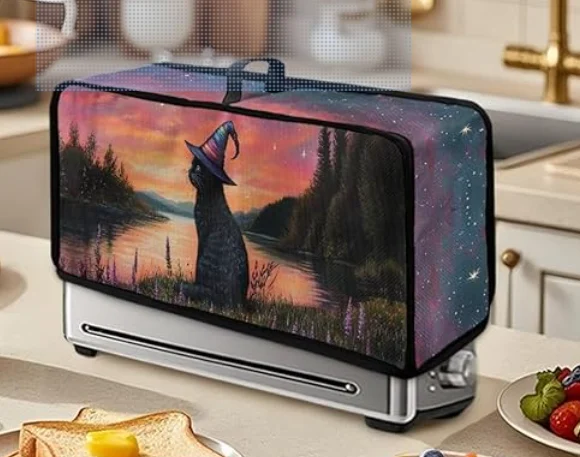
- Variable Reinforcement Schedules: The inventory on the Vine website is constantly changing and largely unpredictable. Reviewers log in daily, sifting through a deluge of mundane or absurd items (e.g., "a toaster cover with a cat wearing a witch hat") for the occasional "score" – a genuinely useful tool, a desirable electronic, or a quality household item. This intermittent reinforcement, similar to a slot machine payout, is highly addictive, keeping users returning for the next potential jackpot.
- Scarcity and Urgency: Items on Vine are often available in limited quantities and disappear rapidly. This fosters a powerful "fear of missing out" (FOMO), compelling reviewers to order items quickly, even if they hadn’t explicitly planned to, simply because they might not be there later.
- Gamification: The program includes tiers, such as "Vine Silver" and "Vine Gold," with higher tiers potentially offering access to more valuable items. To upgrade from Silver to Gold, reviewers must maintain a high review rate (e.g., 80%) on a certain number of items. This gamified progression incentivizes continuous engagement and a higher volume of reviews, regardless of actual need.
Over the course of nine months, MMM found himself deeply entrenched in this system. He admitted to checking the Vine page daily, even when he didn’t need anything, driven by the unpredictable promise of a valuable find. This routine led to a significant time investment, with products arriving almost daily, necessitating assembly-line efficiency for unpacking, photographing, and batch-writing reviews. The sheer volume of incoming packages strained his recycling efforts, overflowing bins with cardboard, and generated substantial manufacturing and packaging waste – a direct contradiction to his life’s values of environmental consciousness and minimal consumption. The "consumerism bender" reached a point where he discreetly tucked away boxes to avoid scrutiny from his son and girlfriend, who had begun to mock his more frivolous acquisitions.
Balancing the Scales: Benefits and Practicalities

Despite the psychological traps, the Vine experiment wasn’t without its practical benefits. MMM reported saving "at least a few thousand dollars" on genuinely useful items. These included tools and materials for his construction business and renovations at the MMM-HQ Coworking space. Specific examples cited were super nice light fixtures, various tools, plumbing parts, an EV charger, and clothing. Notably, his "favorite ridiculous Eagle shirt" and a supply of "super-realistic artificial plants" for hard-to-water courtyard areas at the MMM HQ were among his Vine finds.
Furthermore, MMM extended the benefits to his community, involving friends and coworkers from HQ in the process. He allowed them to request and review items they desired, which they then kept. This fostered a shared experience, distributing both the labor of reviewing and the "bounty" of free products, often accompanied by shared laughter at the more outlandish items available, such as a "totally-not-photoshopped cold plunge." A key underlying motivation for MMM, beyond simple savings, was the explicit intent to conduct a real-world experiment that could be documented and shared through his blog, a goal that was successfully achieved with the publication of his findings.
The Path to Recovery and Systemic Criticisms

The novelty and initial excitement of the Vine program eventually gave way to a growing sense of unease for MMM. He recognized that his daily engagement with Vine had become a form of procrastination, diverting time and energy from activities that genuinely brought him joy, such as daily workouts, construction projects, and creative writing. This realization marked the beginning of his "recovery stage."
His critique extended beyond personal accountability to the program’s inherent design flaws. He described the Vine website’s search functionality as "crap," noting the deliberate absence of filtering or sorting options. This design choice, he inferred, was intended to force reviewers to scroll through endless pages, maximizing exposure to products and devaluing the reviewer’s time. Another point of frustration was the "hilariously bureaucratic AI-based evaluation system" for reviews. His "totally tame, factual reviews" were occasionally flagged for "Not meeting our Community Standards" without explanation, forcing him into a tedious process of random word and punctuation changes until the AI was "pacified."
These experiences crystallized a broader observation for MMM: the Vine program, despite its "freebies," ultimately resembled conventional "work." Reviewers are given tasks and rules within a system they didn’t create and have no power to change, akin to churning out "TPS Reports" for a paycheck. This echoed his earlier "Uber Driving experiment" in 2017, where he immediately identified systemic improvements but found no avenue for input as a mere driver. Such encounters reinforced his profound appreciation for financial independence, which affords him the freedom to "be the boss" and control his time and creative endeavors, a privilege he recognized many do not have.

The Taxing Reality of "Free" Products
One of the most significant, yet often overlooked, aspects of Amazon Vine is its tax implication. The "free" products are not truly free. Amazon is legally obligated to report the estimated retail value (ETV) of all items received by Vine Voices to the IRS via a 1099-MISC form at the end of the year. This means reviewers are liable for income tax on the total ETV of the products received.
For MMM, this translated to approximately $7,000 worth of items in 2025. At his marginal tax rate of about 25%, this initially suggested a potential tax bill of up to $1,750. However, his situation was somewhat mitigated because roughly 75% of the items were for commercial use in his construction business or HQ renovations, effectively converting the tax burden into a legitimate business expense or income equivalent. The remaining ~$1,000 of "pure nonsense" items, however, would still incur a tax liability of $250 – a "penance" for impulsive ordering.

A crucial update, thanks to advice from his readers, shed further light on reducing this tax burden. Many Vine reviewers utilize strategies like the "50/200 rule" or simply mark down the estimated value of opened and reviewed products by approximately 80% when declaring them, arguing that the resale value is significantly diminished. This practice, if applicable and properly documented, could drastically reduce the tax bill for frivolous items, potentially bringing MMM’s $250 liability down to around $50. This detail underscores the complex financial realities even within seemingly "free" programs and highlights the importance of understanding tax laws related to non-cash compensation.
Epilogue: Breaking Habits and Broader Lessons
Ultimately, MMM decided to break his engagement with the Amazon Vine program, not through an explicit cancellation, but through a behavioral modification technique known as the "Keystone Habit trick." He remapped his browser bookmark for the Vine page to his "Badassity Tracker," a personal chart of daily habits including exercise. Now, every time he instinctively clicks the bookmark, he is redirected to a reminder to engage in a quick physical activity, effectively replacing a consumptive habit with a constructive one.

MMM acknowledged that publicly discussing the Amazon Vine program, especially its inner workings and his criticisms, might constitute a violation of its terms and conditions ("the first rule of Vine is to not talk about Vine"). Should his account be canceled, he promised to share that "funny story" as well.
His Vine experience led him to broader conclusions about human behavior and financial independence. He drew parallels between the addictive nature of the Vine program and the "One More Year Syndrome" – a phenomenon where financially independent individuals continue working beyond necessity, often driven by similar psychological incentives and difficulty breaking ingrained patterns. MMM observed this syndrome to be far more common than he initially imagined, emphasizing the pervasive influence of habit and external motivators.
The central lesson from MMM’s Vine saga, consistent with his blog’s philosophy, transcends the specifics of Amazon or product reviews. It is a call for continuous self-reflection and questioning one’s own assumptions and patterns. He stressed the importance of seeking feedback from trusted individuals and accepting that perfection is unattainable. The narrative serves as a reminder that even small course corrections in habits and mindset can yield profound differences over the long journey of life, urging readers to remain vigilant against subtle forces that can derail their intentions, even those masquerading as beneficial "freebies." The heated vest that started it all, he noted, remains a beloved and useful item, a testament to the fact that not all consumption is inherently bad, but unchecked engagement with systems designed for perpetual consumption carries inherent risks.

