
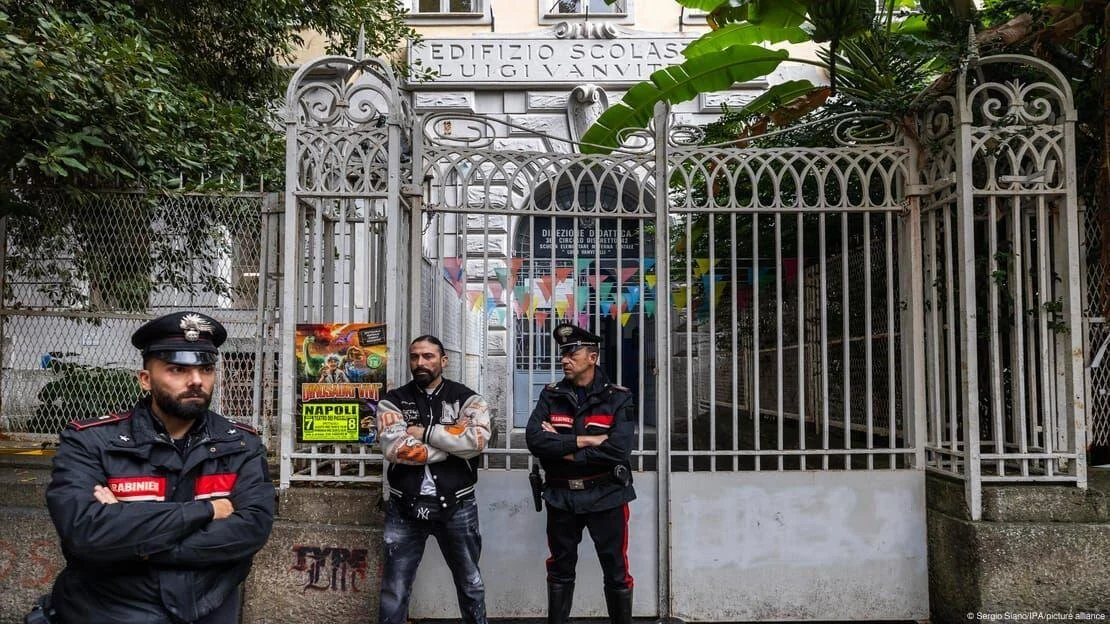
Thousands of schools across Italy were plunged into chaos on Wednesday, November 11, 2026, as a wave of hoax bomb threats, disseminated via email, forced emergency evacuations and widespread disruption. The alarming messages, which explicitly threatened "genocide against the Italians" and claimed the planting of "powerful devices," mirrored similar threats received by educational institutions in Ireland, Scotland, and Northern Ireland. This incident marks a significant escalation in a series of disruptive events across Europe, coming barely a week after a string of bomb threats diverted numerous commercial flights and amidst a broader landscape of escalating cyberattacks targeting critical infrastructure.
Italy at the Epicenter of the Disruption
Italy bore the brunt of Wednesday’s orchestrated campaign. According to the Italian Education Ministry, approximately 6,000 schools across the nation received the threatening email, leading to at least 300 confirmed evacuations. The scale of the response was immediate and extensive, with police and emergency services rapidly deploying to verify the credibility of the threats. News agency ANSA reported the initial figures, highlighting the profound impact on the country’s educational system and daily life. The email’s chilling content, translated from Italian, stated, "We have come to annihilate you. We will carry out a genocide against the Italians." It further detailed the alleged placement of a "powerful device" in a plastic bag with a "remote detonator," and, in a particularly audacious claim, asserted that a bomb had been planted in the Prime Minister’s car. The message was signed by "Mikhail Antropov, leader of the Vilayat of Misoginistan," a name also rendered as Andropov in some Italian reports, adding a layer of pseudonymous mystery to the perpetrator.
Prime Minister Giorgia Meloni quickly addressed the nation, taking to social media to reassure the public that "no element has emerged that would suggest a concrete danger." She characterized the alerts as seemingly "attributable to a strategy" designed specifically to generate alarm and concern among the populace. In response to the gravity of the situation, Prime Minister Meloni swiftly convened a high-level meeting at Palazzo Chigi, gathering key ministers, the heads of the intelligence services, and representatives from the National Cybersecurity Agency for a 4 p.m. briefing. Demonstrating a commitment to national unity in the face of such threats, she also extended invitations to opposition leaders for a meeting the following morning, Thursday, at 9 a.m., underscoring the bipartisan nature of national security concerns.
Education Minister Giuseppe Valditara corroborated the figures, placing the count of affected schools at 312, and echoed the Prime Minister’s sentiment, stating that "the concrete risk is practically non-existent." He further emphasized that the sheer volume of schools targeted served as an indicator of the threat’s "low credibility," suggesting a mass-mailing tactic rather than targeted, credible threats. Defense Minister Guido Crosetto weighed in, noting that the threats aimed "to spread fear and create anxiety," while prudently cautioning against immediately attributing them to a hostile state, suggesting they could also be the work of attention-seekers. Interior Minister Matteo Piantedosi, however, adopted a more cautious tone, remarking that it was "premature to speak of a common direction," indicating that investigations were still in their nascent stages and a definitive link or motive had yet to be established.
A Broadening European Landscape of Threats
The unsettling events in Italy were not isolated. Concurrent with the Italian crisis, schools across Ireland, Scotland, and Northern Ireland received identical or similar threatening emails, indicating a potentially coordinated, multi-national campaign.
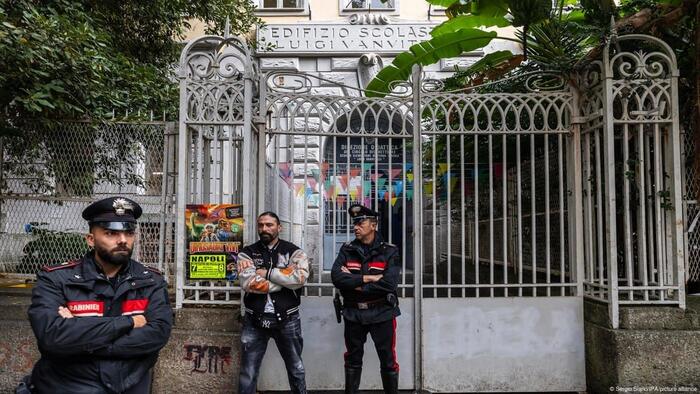
In Ireland, Wednesday morning saw approximately 400 schools across the Munster region targeted, alongside institutions in the capital, Dublin. The scale of the threat was not confined to educational establishments; major news organizations, including The Journal (which reported receiving the threat itself), RTÉ, Sky News, Reuters, the BBC, and The Guardian, also became recipients of the same menacing message. Irish national police, An Garda Síochána, swiftly assessed the threats as "not credible" and consequently did not advise schools to evacuate. The National Security Intelligence Service has launched an investigation into the matter, seeking to identify the origin and perpetrators of this widespread disruption.
Across the Irish Sea, the United Kingdom also experienced significant fallout. Scotland reported around 470 schools receiving the threat, as detailed by The Telegraph. Northern Ireland, too, was heavily impacted, with approximately 300 schools receiving the email. The Education Authority in Northern Ireland noted a striking resemblance between these latest threats and a previous hoax incident that occurred just last month. Police Scotland, after conducting its preliminary inquiries, issued a public statement confirming that "nothing to suggest that they represent a credible threat or that there is any wider threat to the public." This assessment provided crucial reassurance to parents, students, and staff across the affected regions.
Escalating Pattern: A Chronology of Disruption
This wave of school bomb threats is not an isolated incident but rather the latest in a troubling chronology of disruptive campaigns targeting Europe. A clear pattern of escalating cyber and psychological warfare tactics has emerged over recent weeks and months.
-
October 19, 2026: Northern Ireland and Scotland School Threats: Just weeks prior to the widespread November 11th incidents, Northern Ireland’s Education Minister Paul Givan revealed that 160 schools in the region had received an email threat that morning. This earlier message was signed off with "Allah Akbar" and, according to Givan, appeared to originate "from Islamists threatening that Sharia law will be brought into our country." Police in both Northern Ireland and Scotland treated these threats as hoaxes, similar to the current situation, but the recurrence points to a persistent strategy of disruption. Euronews reported on this initial wave, highlighting the early warning signs of a coordinated campaign.
-
November 7, 2026: European Flight Bomb Threats: Only four days before the school threats, Europe’s skies were gripped by pandemonium as at least 18 commercial flights faced bomb threats. This unprecedented event forced emergency landings and involved fighter jet escorts for some aircraft. An Aer Lingus jet en route from Dublin to Rome was diverted to a French military air base, while a Finnair flight also destined for Rome required an escort by fighter jets. Subsequent investigations confirmed that no explosives were found on any of the affected flights, classifying them as elaborate hoaxes, yet demonstrating the capacity of such threats to cause massive operational disruption and significant public anxiety.
The proximity and similarity of these incidents – from the October school threats to the flight diversions and now the widespread November school hoaxes – strongly suggest a coordinated effort rather than disparate acts. The common thread appears to be the use of mass-distributed, low-credibility threats designed to maximize disruption and psychological impact.
The Message and Its Elusive Source

The specific content of the emails, particularly in Italy, was designed to be terrifyingly provocative. The threats of "genocide" and the claim of bombs targeting both schools and the Prime Minister’s vehicle aimed to instill maximum fear. The purported author, "Mikhail Antropov, leader of the Vilayat of Misoginistan," appears to be a fabricated persona, likely chosen to obscure the true origin and potentially invoke a sense of a radical, fictional entity. The name "Misoginistan" itself, a portmanteau suggesting a land of misogyny, adds a bizarre and perhaps deliberately disorienting element to the threat.
Investigators have made initial progress in tracing the technical origin of the emails. According to ANSA, the emails were dispatched from a compromised account at Taiwan’s Daye University. Early speculation suggests the compromised account may have belonged to a former student. This detail is crucial, as it indicates the perpetrators leveraged existing, legitimate infrastructure rather than creating new, easily traceable accounts. Using a compromised account from an academic institution in a distant country complicates attribution and adds a layer of deniability for the actual senders. Reuters further reported that the same purported author had claimed responsibility for email bomb threats sent to newsrooms in Ireland and Bulgaria just two days prior, on Friday, underscoring the consistent nature of the campaign.
Official Responses and Ongoing Investigations
The multi-national nature of these threats has necessitated a coordinated response from law enforcement and cybersecurity agencies across Europe. In Italy, prosecutors in Genoa have swiftly opened a case, pursuing charges for causing alarm, interrupting a public service, and serious threats, potentially aggravated by a terrorist purpose. The investigation is being spearheaded by the postal police, renowned for their expertise in cybercrime, and DIGOS, Italy’s counterterrorism police, signaling the serious view taken by authorities.
The Italian government’s immediate and high-level response, including Prime Minister Meloni’s direct engagement and the summoning of intelligence chiefs, underscores the strategic importance placed on understanding and neutralizing such threats. The public statements from ministers like Valditara and Crosetto, while aiming to reassure the public that the threats were not credible, also served to frame the events within a broader context of psychological warfare.
In Ireland, the Gardaí’s rapid assessment and the National Security Intelligence Service’s ongoing investigation reflect a proactive approach. Similarly, Police Scotland’s diligent inquiries and public communication have been vital in managing public perception and preventing undue panic. The consistency in police assessments across different countries – deeming the threats non-credible – suggests shared intelligence and a common understanding of the nature of the campaign.
Broader Geopolitical Context: A Landscape of Cyber Warfare
The recurring nature and increasing sophistication of these hoax threats cannot be viewed in isolation. They are occurring within a broader European landscape characterized by a significant uptick in cyberattacks and disruptive campaigns targeting various sectors. Reuters specifically highlighted that the school emails are merely "the latest in a series of threats and cyberattacks across Europe against supermarkets, blood banks, air traffic and broadcasters."

This wider context includes specific incidents such as France summoning Iran’s ambassador just days prior, accusing Tehran of a cyberattack that reportedly disabled refrigerators in hundreds of supermarkets. While Iran vehemently denied these accusations as "baseless and hostile," the incident points to the vulnerability of critical supply chains to digital disruption. Furthermore, US agencies have issued warnings regarding ongoing cyber threats targeting industrial refrigeration controllers, echoing the concerns raised by the French incident and suggesting a potential focus on critical cold chain infrastructure.
Some European officials and intelligence analysts have openly voiced suspicions that Russia may be orchestrating or backing a broader disruption campaign against nations that support Ukraine. While Moscow consistently denies such accusations, the pattern of cyberattacks and psychological operations aligns with known tactics used by state-sponsored actors to sow discord, test response capabilities, and exert pressure on adversaries. A national security source quoted by Reuters succinctly captured the ease with which such widespread alerts can be generated, stating that "sending the alerts ‘was as easy as drinking a glass of water,’" highlighting the low barrier to entry for causing mass disruption in the digital age.
Implications for Security and Society
The implications of such widespread hoax campaigns are multifaceted and profound.
- Resource Strain: Even non-credible threats necessitate a significant deployment of emergency services – police, fire brigades, and sometimes even bomb disposal units. This diverts critical resources from genuine emergencies and places immense strain on already stretched public services.
- Psychological Impact: The primary goal of these hoaxes is often psychological warfare. The fear and anxiety generated among students, parents, teachers, and the wider public can be substantial, eroding trust in public safety and creating an atmosphere of unease. The disruption to education, even if temporary, has a tangible impact on learning and well-being.
- Economic Costs: While difficult to quantify precisely, the economic costs include lost productivity from evacuations, the operational expenses of emergency responses, and potential long-term impacts on public confidence.
- Cybersecurity Vulnerabilities: The ease with which a compromised university email account can be used to launch a multi-national campaign underscores persistent vulnerabilities in cybersecurity infrastructure. It highlights the need for robust email security protocols, multi-factor authentication, and continuous monitoring to prevent such compromises.
- Challenges of Attribution and Deterrence: Tracing the true perpetrators behind such anonymized or spoofed threats is notoriously difficult. The use of compromised accounts and potentially VPNs or proxies creates layers of obfuscation, making attribution a complex international challenge. This difficulty, in turn, makes deterrence equally challenging.
- Erosion of Trust: Repeated hoax threats, while ultimately proven false, can gradually erode public trust in official communications and even desensitize individuals to genuine warnings, creating a dangerous paradox.
Looking Ahead
The events of November 11, 2026, serve as a stark reminder of the evolving nature of threats in the digital age. They highlight the vulnerability of open societies to information warfare and coordinated disruption campaigns, whether state-sponsored or from independent actors seeking to sow chaos. European nations, already grappling with a complex geopolitical landscape, face the urgent task of bolstering their cybersecurity defenses, enhancing intelligence sharing, and refining protocols for responding to such widespread, yet often non-credible, threats. The investigations in Italy, Ireland, and the UK will be crucial in unmasking the perpetrators and understanding their motives, ultimately contributing to a more resilient defense against future attempts to destabilize and alarm. The ongoing dialogue and collaboration among national security agencies will be paramount in navigating this increasingly complex and digitally interconnected threat environment.

