
Global financial markets concluded the week with a complex interplay of forces, as major US equity indices like the NASDAQ and S&P500 rallied on Friday, defying an otherwise potent economic signal: a stronger-than-expected payrolls report. This surprising resilience came even as the robust jobs data pushed Treasury yields higher, signaling potential headwinds from future Federal Reserve policy. Simultaneously, a significant political shift in the United States, marked by a decisive Democratic sweep in recent elections, sent ripples through the oil markets and reshaped expectations for both domestic and foreign policy, particularly concerning escalating tensions in the Middle East.
Market Dynamics and Economic Undercurrents
Friday’s trading session saw a notable divergence in investor sentiment across US equity benchmarks. The technology-heavy NASDAQ and the broader S&P500 posted gains, illustrating a strong undercurrent of bargain-hunting. Investors, it appeared, seized the opportunity to re-enter positions in tech stocks that had faced considerable selling pressure in the preceding session, contributing to a pattern of heightened volatility that has become a hallmark of the current market cycle. This trend is being closely scrutinized by sceptics of the ongoing "AI trade" rally, who question the sustainability of rapid price swings in growth-oriented sectors.
In contrast, the Dow Jones Industrial Average, typically representing more established, value-oriented companies, registered a decline of 0.46%. This downturn was primarily led by a slump in the consumer discretionary sector, which showed palpable apprehension regarding the increased likelihood of further interest rate hikes by the Federal Reserve. The stronger-than-anticipated payrolls report, indicating robust job creation and wage growth, fueled these concerns. Economists widely interpret such data as potentially inflationary, thus strengthening the Fed’s resolve to maintain or even accelerate its tightening cycle to curb price pressures.
The bond market reacted swiftly to the employment figures. The Treasury curve experienced a "bear flattening" phenomenon, where shorter-term yields rose more steeply than longer-term yields. Specifically, two-year Treasury yields climbed by 5 basis points (bps), while ten-year yields lifted by a more modest 2 bps. A bear flattening typically suggests that the market anticipates tighter monetary policy in the near future, which could stifle economic growth, even as longer-term inflation expectations remain relatively contained or the market prices in a potential future slowdown.
The Political Earthquake: A Democratic Sweep and its Ramifications
The most significant domestic development impacting markets and policy outlooks was the unexpected "Democratic sweep" in recent US elections. Voters, seemingly weary of prolonged conflicts and domestic economic uncertainties, delivered a unified Democratic control of the House of Representatives, the Senate, and several key gubernatorial races, including some long-shot victories. This outcome represented a profound repudiation of the incumbent Trump administration and dramatically reshaped the political landscape in Washington.
For President Trump, this electoral setback immediately translated into the prospect of serving out the remainder of his term as a "lame duck." A lame-duck president typically faces significant legislative constraints, as the opposing party controls Congress and can effectively block major policy initiatives. This new political reality is expected to effectively kill off Republican hopes for ambitious fiscal expansion, most notably the previously planned increase in military spending to a staggering $1.5 trillion. For bond traders, who often view large government spending plans as inflationary and detrimental to fiscal stability, this legislative gridlock offered a measure of relief, potentially dampening expectations for a surge in government debt issuance.
However, the loss of influence over domestic affairs carries a critical implication: it significantly increases the likelihood that President Trump’s focus will shift predominantly to foreign policy for the remainder of his term. This pivot, often observed in second-term or lame-duck presidencies, suggests a potential for heightened activity on the international stage, where executive power is less constrained by congressional approval.
Oil Markets: Geopolitics, Supply Chains, and Price Pressures
The oil market reacted sharply to the evolving political and geopolitical landscape. Over the course of the previous week, oil prices experienced a substantial decline, with Brent crude falling by nearly 16.5%. This significant drop was largely attributed to the aforementioned US election results, which were interpreted as signaling a potential reduction in the "war premium" embedded in oil prices. A war-weary American electorate, by delivering a Democratic sweep, was seen by some analysts as favoring a less interventionist or at least a more cautious foreign policy, thereby lessening the perceived risk of large-scale military conflicts that could disrupt oil supplies.
On Friday, oil prices remained relatively stable, with Brent crude closing just above $98 per barrel and West Texas Intermediate (WTI) trading slightly above $90. However, early trade in the new week indicated renewed selling pressure on Brent, suggesting that the downward momentum from the previous week might continue.
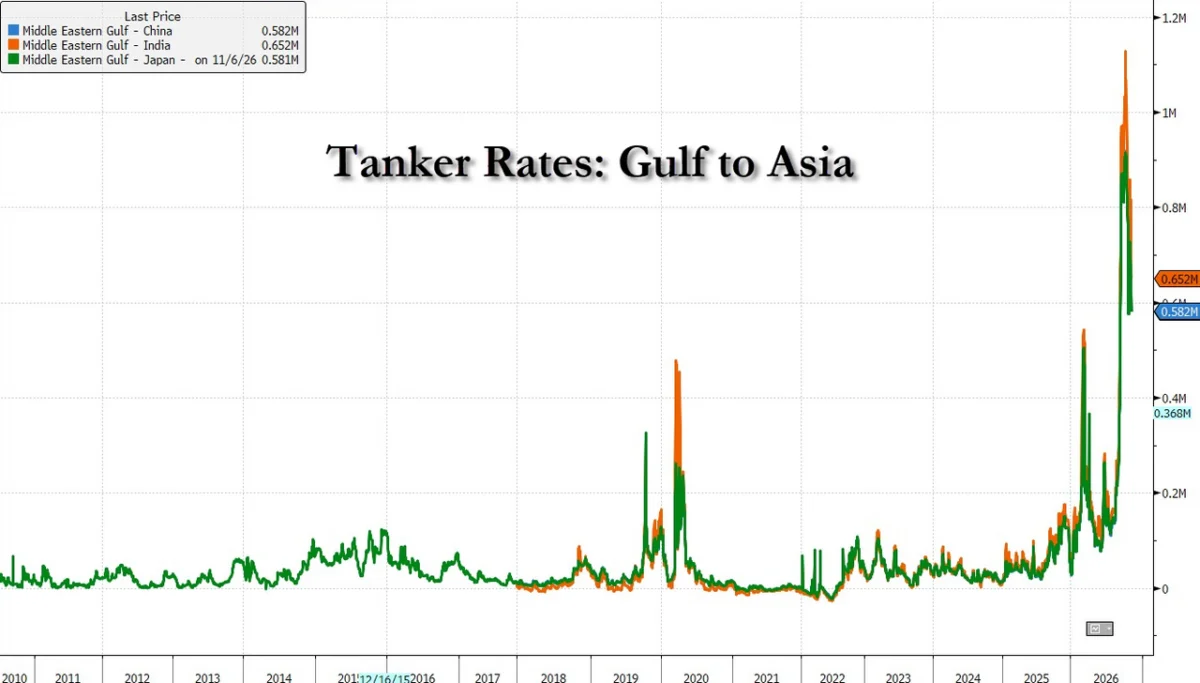
Despite the electoral impact on the war premium, analysts caution that fundamental factors limit how far oil prices can realistically fall. Specifically, persistently high freight and insurance prices continue to add significant costs to every marginal barrel of oil shipped globally. These elevated operational expenses are a direct consequence of ongoing geopolitical instability, particularly in key maritime chokepoints, and act as a floor for price declines, regardless of shifts in perceived geopolitical risk.
The long end of the bond curve has seen yields drift higher, reflecting a growing market sentiment that the geopolitical landscape in the Middle East may have fundamentally and irrevocably changed. This perspective suggests that a return to pre-conflict stability might be a distant prospect, if at all achievable. However, it is noteworthy that long-term bond prices still remain below the levels observed before the most recent escalation of regional conflicts, indicating that some measure of optimism or uncertainty persists. Some traders might be giving credence to claims by figures like Scott Bessent, who has suggested that the strategic importance of the Strait of Hormuz could be structurally diminished over time. Such a development, if realized, would hypothetically lead to a more resilient global energy system and lower long-term risk premia for oil, although this remains a highly speculative and long-term outlook.
Escalating Tensions in the Middle East: A Diplomatic Deadlock
The geopolitical focus remains sharply on the Middle East, particularly the intractable diplomatic standoff between the United States and Iran. Speaking on Sunday, Secretary of State Marco Rubio publicly stated that diplomatic efforts with Iran continue to be "unproductive." He characterized Iran’s demands as "not just unacceptable, but in some cases outrageous and ridiculous and really not realistic," painting a grim picture of the negotiation prospects.
Iran, perhaps emboldened by what it perceives as the electoral setbacks of the Trump administration, has maintained that de-escalation of tensions remains possible but is strictly contingent on several preconditions. These include the US lifting its economic blockade, delivering comprehensive sanctions relief, and fully implementing the terms of the Islamabad Memorandum of Understanding (MOU). Crucially, Tehran has offered "no guarantees" on the pivotal nuclear issue, which was the original "casus belli" or cause for war in the first place, highlighting the deep chasm between the two sides.
President Trump, in recent days, has reiterated a dual message: he will not order military strikes if there is a genuine prospect of diplomatic efforts succeeding, but he simultaneously qualified this by asserting that he would order strikes "if needed." This rhetoric echoes the tense period in February, when nuclear talks in Geneva were supposedly being given space to progress even as US carrier strike groups were deploying to the region. The current state of negotiations appears to be following a similar trajectory, with military posturing accompanying diplomatic overtures. The USS Theodore Roosevelt carrier and the amphibious assault ship USS Makin Island are currently en route to the Gulf, and CENTCOM has just announced the formation of the "Iron Gate" task force, specifically aimed at cracking down on Iranian weapons resupply via overland routes and the Caspian Sea. These deployments and initiatives underscore the continued high-stakes military dimension underlying the diplomatic impasse.
The past weekend saw a further escalation of hostilities in the region. Fresh strikes were conducted against Iranian targets on Qeshm Island, a strategically important location. The UK Maritime Trade Operations (UKMTO) reported that two tankers were targeted in the vicinity of the Strait of Hormuz on Sunday, though Iran’s Islamic Revolutionary Guard Corps (IRGC) claimed the number was three. Concurrently, the Houthi movement in Yemen continued its missile strikes on targets in Riyadh, Saudi Arabia, including the headquarters of the state-owned oil giant, Saudi Aramco, demonstrating the ongoing proxy conflicts that destabilize the wider region.
The Wider Geopolitical Web: Cold War 2.0 and Strategic Realignment
The pattern of weapons resupply through the Caspian Sea, a critical component of the "Iron Gate" task force’s focus, once again highlights the increasingly undeniable impression that the conflicts in Ukraine and Iran are not isolated events but rather interconnected facets of a wider systemic rupture in global order. This emerging "Cold War 2.0" dynamic sees Russia and Iran coordinating extensively on arms production and intelligence sharing, while China plays a crucial role as a financial lifeline, acting as a willing buyer for sanctioned energy cargoes, thereby enabling Moscow and Tehran to circumvent international punitive measures.
This new geopolitical alignment was further underscored by a recent controversy involving NVIDIA CEO Jensen Huang, who reportedly confessed to an "infidelity" involving an executive accused of being a Chinese spy. While NVIDIA quickly stated there was no reason to suspect that trade secrets or national security (which, for a company at the forefront of AI and advanced computing, are often inextricably linked) had been compromised, the incident served to amplify concerns about industrial espionage and the tech sector’s vulnerability in this burgeoning era of great power competition.
Against this backdrop, the United States under President Trump has been pursuing a strategic gambit often referred to as a "reverse Nixon." Just as President Nixon sought to isolate the Soviet Union by improving relations with China, the Trump administration has reportedly aimed to isolate China by fostering improved relations with Russia. Such a strategy, however, faces significant resistance from various quarters, including the ongoing conflict in Ukraine, strong opposition from European allies, and considerable skepticism within the US Congress. Despite these formidable obstacles, the administration appears to be making another attempt at this strategy through ongoing negotiations in Abu Dhabi this week. Hints have emerged of a potential "Yalta-style grand bargain," suggesting that concessions might be made regarding Russia’s long-standing grievances over NATO encroachment, alongside offers of new security guarantees. However, historical precedent is rife with "false dawns" in US-Russia relations, making the prospect of a breakthrough highly uncertain.
Israel’s Political Labyrinth and Regional Implications
In Israel, President Isaac Herzog has taken a significant step by inviting opposition leader and former IDF chief Gadi Eisenkot to attempt to form a government. This move comes amid a complex and fractured political landscape, highlighting the difficulty in establishing a stable coalition. Eisenkot has publicly stated his intention to pursue "creative and unconventional" paths to cobble together what he terms a "national emergency government." His strategy reportedly includes making overtures to disaffected members of Prime Minister Benjamin Netanyahu’s Likud party, as well as reaching out to ultra-Orthodox factions, some of whom have expressed opposition to mandatory military service, a contentious issue in Israeli society.
President Trump, commenting on the Israeli political situation, remarked that Eisenkot and Netanyahu are "very similar in terms of their policy." However, critical distinctions exist. Eisenkot has indicated a preference for a more nuanced approach to regional security challenges, favoring "economic pressure, diplomacy, and targeted strikes against nuclear facilities," rather than supporting Netanyahu’s more assertive push for an "all-out regime change war" against Iran. This divergence could prove significant. Furthermore, it has been suggested that Eisenkot might be more amenable to implementing the Gaza peace plan in its entirety than Netanyahu has been. Such a shift in Israeli leadership and policy orientation, if it materializes, could be viewed as a diplomatic win for American foreign policy, potentially easing regional tensions and facilitating broader peace initiatives.
White House Shift: Stephen Miller’s Ascendancy and the Lame Duck Presidency
Back in Washington, a significant personnel change in the White House further signals President Trump’s likely pivot towards a more assertive, foreign-policy-centric final term. Hardliner Stephen Miller has replaced Susie Wiles as White House Chief of Staff. The Wall Street Journal, among other outlets, has noted Miller’s past role as the architect of controversial immigration and drug enforcement policies, and his well-documented preference for a maximalist approach to executive power.
Miller’s appointment is particularly noteworthy given his reported stance on the Iran conflict. He has previously shown a preference to wind down the Iran war, suggesting a potential pragmatic streak despite his hardline reputation. However, he has consistently demonstrated unwavering loyalty to President Trump, backing the President’s decisions even when they have contradicted his own advice or initial policy leanings.
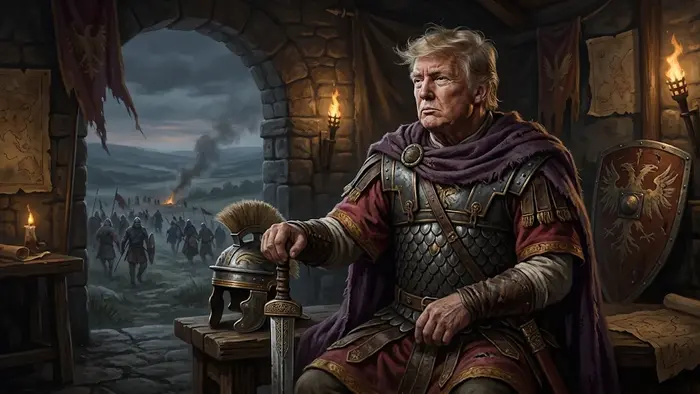
The elevation of a figure like Miller, known for his combative style and commitment to executive authority, raises a pertinent question: Is the appointment of such a "pugilist" a clear signal that a "lame duck" President Trump intends to serve out the remainder of his term not as a passive placeholder, but as a "Dux Bellorum" – a war leader, intent on shaping global events through decisive, potentially unilateral, foreign policy actions, especially in the volatile Middle East?
Outlook and Broader Implications
The confluence of these market dynamics, domestic political shifts, and escalating geopolitical crises paints a picture of profound uncertainty for the coming months. The unexpected resilience of tech stocks amidst rising yields underscores a market grappling with conflicting signals, while the Democratic sweep in the US promises legislative gridlock at home but potentially heightened executive focus on foreign policy abroad. The volatile oil markets remain a barometer of geopolitical risk, with underlying supply chain costs preventing significant relief even as the "war premium" shifts.
Crucially, the diplomatic deadlock with Iran, coupled with heightened military posturing and ongoing regional hostilities, suggests that the Middle East will remain a flashpoint. The broader "Cold War 2.0" narrative, linking conflicts from Ukraine to the South China Sea, highlights the systemic nature of global instability and the interconnectedness of seemingly disparate crises. As Israel navigates its own political challenges, the potential for a shift in leadership could offer a glimmer of hope for alternative approaches to regional conflicts.
Ultimately, the appointment of Stephen Miller to a pivotal White House role underscores a potential for a more aggressive, presidential-driven foreign policy. As the world watches, the delicate balance between diplomacy and military deterrence, economic stability and geopolitical risk, will continue to define this complex and rapidly evolving global landscape.

