
The landscape of American technological development and environmental policy appears poised for a significant shift as Democrats, buoyed by a substantial victory in the U.S. midterm elections on Tuesday, November 5, 2026, are already signaling a determined intent to confront the rapid expansion of artificial intelligence infrastructure, particularly data centers. This burgeoning political consensus within the Democratic party, evident in both federal and state-level campaigns, reflects a growing public unease with the environmental footprint and societal implications of the AI boom, setting the stage for potential legislative battles and regulatory overhauls that could reshape the technology sector.
The Midterm Mandate: Voters Speak on AI and Data Centers
The 2026 midterm elections delivered a clear message from the electorate, indicating that concerns surrounding artificial intelligence and its foundational infrastructure are no longer niche issues but potent political drivers. According to the CNBC Voter Poll, a striking 56% of voters identified AI and data centers as a crucial or major factor influencing their decision at the ballot box. Of this significant demographic, a commanding 65% cast their votes for Democratic candidates for Congress, underscoring a strong correlation between public apprehension regarding Big Tech’s expansion and support for the Democratic platform. This electoral outcome has emboldened party leaders to push for immediate and decisive action.
Leading Voices Call for Immediate Action
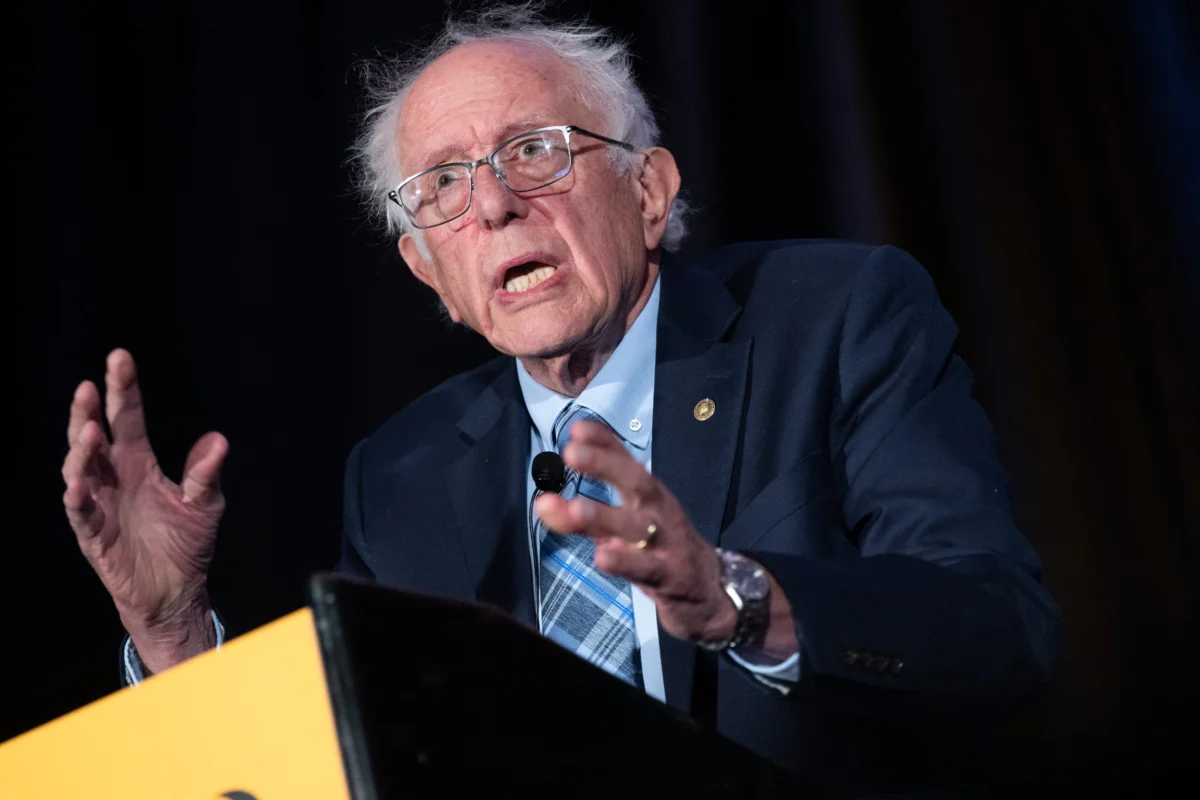
The call for a national reckoning on data center development found immediate and prominent amplification from key Democratic figures post-election. Senator Bernie Sanders (I-VT), who caucuses with the Democrats and has long been a vocal critic of corporate power, wasted no time in articulating the perceived mandate. In a post on X, Senator Sanders celebrated numerous referendums across the U.S. where local communities had successfully approved restrictions on data centers. His message to political leaders was unequivocal: "National data center moratorium now," he wrote. "Americans don’t want Big Tech oligarchs wrecking the environment, gutting jobs and threatening humanity’s future."
Sanders’ robust statement follows his earlier participation in the "Pro-Human Assembly" in Washington, D.C., on September 15, 2026. This gathering, convening leaders from various constituencies concerned about the rise of artificial intelligence, served as an early indicator of the growing movement to scrutinize and potentially curb unchecked technological advancement. The assembly provided a platform for discussions on the ethical, environmental, and socio-economic challenges posed by AI, foreshadowing the issues that would later dominate the midterm discourse.
Echoing Sanders’ sentiments, Representative Yassamin Ansari (D-Ariz.) took to X to declare that "pausing AI development" must be a top priority for the newly empowered Democratic majority in the House "on Day 1." Her call for a halt to AI development, a more expansive demand than merely restricting data centers, signals a broader ambition within the progressive wing of the party to exert greater control over the direction of technological innovation. This stance was quickly amplified by Representative Greg Casar (D-Texas), the chair of the influential Congressional Progressive Caucus, who enthusiastically responded with "Yes!" to Ansari’s post, indicating a coordinated and unified front among progressive Democrats on this issue.
State-Level Victories Echo National Concerns
The groundswell of opposition to unbridled data center expansion was not confined to national rhetoric but demonstrably played a pivotal role in numerous state and local electoral contests. Democratic candidates who flipped critical races on Tuesday often made big tech companies and data centers central to their campaigns, leveraging local grievances into significant political gains.
In South Carolina, Democrat Annie Andrews successfully flipped a hotly contested Senate seat, strategically branding her opponent, incumbent Republican Senator Darline Graham, as "data center Darline." Andrews’ campaign capitalized on local anxieties regarding land use, resource consumption, and the perceived influence of powerful corporations. In her triumphant victory speech, Andrews emphasized, "Voters chose a South Carolina where decisions about communities are made by the people who live in our communities, not the billionaires or data center companies in Washington D.C." This statement powerfully encapsulated the populist sentiment that fueled her victory and many others.
Similarly, in Ohio, Senator Sherrod Brown, a long-standing progressive Democrat, secured his return to the Senate after defeating incumbent Republican Senator Jon Husted. Brown, known for his focus on working-class issues and skepticism of corporate power, declared in his victory speech, "I do not work for data centers." This direct assertion resonated with voters concerned about corporate influence and the allocation of public resources.
Democratic governors also entered the fray, using their victory platforms to address the issue. Pennsylvania Governor Josh Shapiro, who had already demonstrated his commitment to regulating data center growth by signing an executive order in August to slow their development, reiterated his position. He stated that big tech companies should not dictate the futures of Pennsylvania residents, asserting, "Instead, the folks in our local communities get the final say." Shapiro’s executive order, implemented months before the election, showcased a proactive approach to the issue and likely contributed to his strong showing.
Perhaps the most significant victory for the anti-data center movement occurred in Texas, a state critical to the industry’s future. Texas currently hosts an estimated 27% of all planned data center capacity in the U.S., according to analyses by Wells Fargo, making it a pivotal battleground. Gina Hinojosa, the Democrat who ousted incumbent Republican Governor Greg Abbott, did not explicitly mention data centers in her victory speech, but the issue was a cornerstone of her campaign. In a video posted to her X account in late October, Hinojosa had unequivocally stated, "When I am governor, I will issue a moratorium, a ban, on all data center approvals until laws can be passed by the legislature to protect Texans." She framed the debate as a fundamental struggle: "This is about one fight. Is this going to be a Texas that is by and for the people, or is this the billionaire’s world and we just live here? Data centers are part of that fight." Her victory, therefore, represents a potentially seismic shift for data center development in the nation’s largest planned capacity state.
The Economic Nexus: Data Centers’ Environmental Footprint and Resource Demands
The escalating political scrutiny of data centers is rooted in increasingly urgent environmental and resource concerns. Modern data centers are enormous consumers of electricity, operating 24/7 to power the servers that run AI algorithms, cloud computing, and digital services. A single large data center can consume as much electricity as a small city, with estimates suggesting that global data centers already account for approximately 1-2% of worldwide electricity consumption, a figure projected to grow exponentially with the proliferation of AI. This massive energy demand often places strain on local power grids and contributes significantly to carbon emissions, especially in regions reliant on fossil fuels.
Beyond electricity, data centers are also prodigious users of water, primarily for cooling their heat-generating servers. Some facilities can use millions of gallons of water daily, a critical concern in drought-prone regions or areas facing water scarcity. The methods vary from evaporative cooling towers, which consume vast amounts of water, to closed-loop systems that are more efficient but still require initial fill and periodic replenishment. The environmental impact also extends to land use, as these sprawling facilities require extensive tracts of land, often in rural or suburban areas, leading to concerns about habitat destruction, visual blight, and increased localized traffic.
From a socio-economic perspective, while data centers do create some high-paying technical jobs during construction and operation, the total number of permanent jobs is often relatively small compared to their resource demands and land footprint. Critics argue that the benefits—often in the form of tax incentives offered to attract these facilities—do not always outweigh the environmental costs and potential displacement of other economic activities. The fear of "gutting jobs," as Senator Sanders put it, refers to the broader anxiety that AI-driven automation could lead to widespread job displacement across various sectors, making the infrastructure that enables it a target for public frustration.
Market Reaction: Tech Stocks Tumble Amidst Regulatory Fears
The market’s response to the Democratic wins and their clear stance on data centers was swift and severe, particularly for companies intertwined with the artificial intelligence build-out. Stocks linked to AI development initially saw a slight decline on Wednesday following the election results, but the selling intensified dramatically on Thursday as investors fully grasped the potential for stringent new regulations and moratoriums on data center construction.
Chip stocks, which are the backbone of AI processing power, led the decline. The iShares Semiconductor ETF (SOXX), a key indicator for the sector, tumbled nearly 9% on Thursday. Individual companies experienced even sharper drops: Nvidia, a dominant player in AI chip manufacturing, declined 8%, while Advanced Micro Devices (AMD), another major chip designer, sunk more than 14%. Other companies involved in data center infrastructure, cloud services, and AI development also saw significant corrections, reflecting investor anxiety over potential delays, increased costs, and regulatory hurdles that could impede their growth trajectories. This market reaction underscores the financial community’s recognition of the serious implications that a unified Democratic effort to regulate AI infrastructure could have on the booming tech industry.
A Deeper Dive into Key Battlegrounds: Texas and Beyond
The shift in Texas governorship holds particular weight for the data center industry. With 27% of planned U.S. data center capacity slated for the Lone Star State, Gina Hinojosa’s proposed moratorium could halt billions of dollars in investment and significantly alter the national distribution of AI infrastructure. Texas has historically attracted data centers due to its deregulated energy market, relatively low power costs, and available land. However, the state’s susceptibility to extreme weather events, including heatwaves and winter storms that strain its grid, coupled with increasing water scarcity, has made it a flashpoint for environmental concerns. Hinojosa’s victory suggests a fundamental reevaluation of the state’s growth strategy, prioritizing environmental protection and local community input over unchecked industrial expansion.
Beyond Texas, other states and localities are likely to follow suit, either through direct legislation, executive orders, or local referendums. The success of local referendums touted by Senator Sanders indicates a bottom-up movement gaining momentum. This fragmented regulatory landscape could create a patchwork of rules across the country, complicating national deployment strategies for tech companies. States like Virginia and Arizona, which have seen significant data center development, could become new battlegrounds as local communities and newly elected officials seek to replicate the successes seen in the 2026 midterms.
Industry Response and Future Outlook
The tech industry, historically adept at lobbying and navigating regulatory environments, is expected to mount a robust defense of its growth model. Industry groups and individual companies are likely to emphasize the economic benefits of data centers, including job creation, local tax revenue, and the role of AI in driving innovation across various sectors, from healthcare to scientific research. They may argue that moratoriums and stringent regulations could stifle American competitiveness in the global AI race and impede technological progress.
Anticipated responses from the tech sector could include increased lobbying efforts at both federal and state levels, public awareness campaigns highlighting AI’s positive contributions, and a renewed focus on sustainable data center practices. Companies might accelerate investments in renewable energy sources for their facilities, develop more efficient cooling technologies, and explore modular or distributed data center architectures to reduce their localized impact. However, these proactive measures may not be enough to placate a politically energized Democratic party and a concerned public.
Broader Implications for Policy and Innovation
The Democratic party’s emerging stance on data centers and AI development has profound implications for future policy and the trajectory of technological innovation. Federally, a "national data center moratorium" could be pursued through various legislative avenues, potentially as part of broader climate change or infrastructure bills. Such a move would require overcoming significant opposition, but with a large Democratic majority in the House and a strengthened position in the Senate, the possibility is now more tangible than ever. Other federal actions could include national standards for data center energy efficiency, water usage, and siting regulations.
At the state level, the victories of governors like Hinojosa and the re-election of Shapiro suggest a trend towards state-led regulation that could precede or complement federal action. This could lead to a dynamic tension between states seeking to attract tech investment and those prioritizing environmental protection and local control.
For the AI industry, this political shift necessitates a re-evaluation of business models and expansion strategies. Companies may need to diversify their geographical footprint, prioritizing regions with more favorable regulatory environments or proactively engaging with communities to address concerns before they escalate into political opposition. The emphasis on "pausing AI development" also raises questions about the scope of future regulation—will it merely target infrastructure, or will it extend to the algorithms and applications of AI itself?
Conclusion: A Defining Challenge for the New Political Landscape
The 2026 midterm elections have undeniably reshaped the political discourse around technology, pushing artificial intelligence and its infrastructure to the forefront of the national agenda. The unified and forceful stance adopted by key Democrats, from Senator Sanders to newly elected governors, signals a new era of scrutiny and potential regulation for the tech industry. As the U.S. grapples with the accelerating pace of technological change, the debate over data centers and AI development will serve as a defining challenge for the new political landscape, balancing innovation with environmental stewardship, economic growth with community well-being, and corporate power with democratic accountability. The coming legislative sessions, both federal and state, are set to become crucial arenas for this unfolding conflict, with significant consequences for the future of technology and society.

