
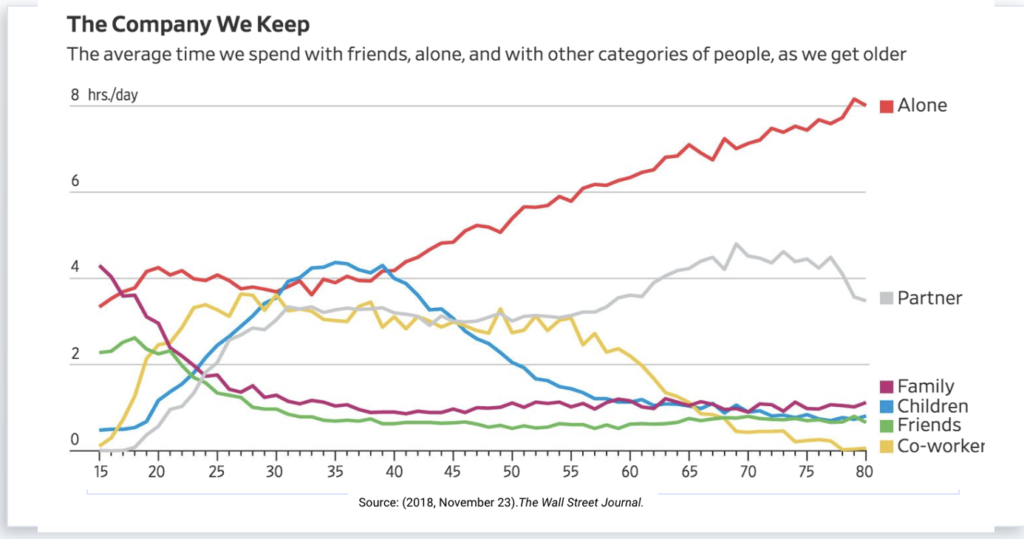
The transition into retirement, a period often heralded for its newfound freedom and expansive leisure, frequently brings an unexpected companion: solitude. While the liberation from professional obligations is a celebrated aspect of this life stage, many retirees find themselves confronting a significant increase in time spent alone. This solitude, however, is not merely an absence of others; it is a profound immersion in one’s own internal landscape. Consequently, some of the most pivotal dialogues of retirement are not conducted aloud but within the confines of one’s own mind. These continuous, internal conversations, a form of self-talk, can significantly shape the trajectory of one’s post-work life, either by constricting possibilities or by fostering a more intentional and expansive embrace of the future.
The nature of this inner dialogue is multifaceted. It can encompass constructive elements such as planning, imaginative exploration, and reflective processing. Conversely, it can also manifest as worry, repetitive rumination, self-questioning, harsh criticism, and self-blame. Research presented in two recent episodes of "The Retirement Wisdom Podcast" highlights the critical distinction between these internal conversations, suggesting that their quality can either narrow an individual’s life experience or, conversely, empower them to approach their next chapter with heightened intention and a broader sense of possibility.
Dr. Marilee Adams, founder and CEO of The Inquiry Institute and author of the recently updated fifth edition of "Change Your Questions, Change Your Life," has dedicated her work to understanding the profound impact of self-directed inquiry. Her central thesis posits that the questions we pose to ourselves act as powerful architects of our mindset. Adams outlines a dualistic framework, identifying two primary operating mindsets: the "Judger" and the "Learner." Judger questions are typically backward-looking or introspective, often tinged with negativity and blame. Examples include queries such as, "What’s wrong with me?" "Why did this happen?" or "Why bother?" In contrast, Learner questions are designed to foster curiosity, assert agency, and open avenues for possibility. These might take the form of, "What do I want now?" "What can I contribute?" or "How else can I think about this?"
This dichotomy holds particular relevance as individuals navigate the significant life transition of retirement. The sudden absence of the structured routines, defined identities, and established feedback mechanisms of the workplace can inadvertently amplify the influence of Judger questions. Without these external anchors, negative self-talk can gain considerable momentum. However, by consciously engaging in what Adams terms "wise questions," individuals can redirect their attention toward their core values and aspirations, such as cultivating deeper meaning, experiencing greater joy, fostering meaningful contributions, strengthening relationships, and pursuing personal growth.
Further contributing to this discourse on internal dialogue is Dr. Ethan Kross, director of the Emotion & Self Control Laboratory at the University of Michigan and author of "Chatter: The Voice in Our Head, Why It Matters, and How to Harness It." Kross’s research delves into the science of self-talk, distinguishing between ordinary negative thoughts and what he defines as "chatter"—a persistent, looping pattern of worry, rumination, and catastrophizing. Kross’s work does not advocate for the elimination of negative emotions, acknowledging their potential as sources of learning in measured doses. The critical issue, he argues, arises when individuals become ensnared in these negative emotional cycles.
A significant point of convergence between the work of Adams and Kross lies in their shared understanding that the objective is not to silence the inner voice but to engage with it more skillfully. Both scholars emphasize the universal presence of an inner critic and the necessity of accepting its existence. Moreover, they highlight that heightened self-awareness is the precursor to choice. Both offer practical methodologies designed to shift individuals from automatic, reactive responses to more intentional and deliberate reactions to their internal monologues.
Dr. Adams’s contribution is particularly noteworthy for its elegant framework, embodied in "The Choice Map." This tool provides a clear lexicon and a practical roadmap for navigating internal dialogue. The process involves recognizing Judger tendencies, pausing to interrupt negative momentum, and then consciously transitioning into a Learner mindset. A particularly potent question within Adams’s framework, designed to facilitate this shift, is: "Who do I choose to be in this moment?" This question empowers individuals to assert their agency and consciously select their response to internal or external stimuli.
Dr. Kross, on the other hand, champions a "toolbox" approach, recognizing that different challenges necessitate distinct strategies. Among his recommended techniques is "distance self-talk," which involves addressing oneself using one’s own name and offering coaching advice as one would to a trusted friend. Another effective strategy is "mental time travel," encouraging individuals to project themselves into the future—six months or a year hence—to gauge the relative significance of current challenges. The integration of physical activities, such as walking in nature, is also presented as a valuable ritual that can contribute to becoming a more adept "chatter advisor," equipped with a personalized repertoire of coping mechanisms.
Practical Strategies for Navigating Inner Dialogue
In light of these expert insights, several actionable strategies can be implemented to cultivate a more constructive inner dialogue, particularly during the significant life transition of retirement.
Enhancing Self-Awareness
The foundational step in managing one’s internal conversation is to develop a heightened awareness of its existence and content. This involves actively listening to the thoughts that arise throughout the day, without immediate judgment. This practice can be initiated through simple, deliberate pauses.
The "Stop, Breathe, Be" Method
Drawing from the work of Dr. Aditi Nerurkar, as referenced by Dr. Adams, a powerful technique for interrupting negative thought patterns involves a physical pause. This method, encapsulated as "Stop. Breathe. Be.," aims to halt the momentum of automatic reactions. By consciously stopping, taking a deliberate breath, and simply being present, individuals can create a crucial space between stimulus and response.
Identifying Questioning Patterns
Following the pause, the next step is to scrutinize the questions being posed to oneself. This involves a conscious effort to discern whether these are "Judger" questions, characterized by self-criticism and blame, or "Learner" questions, which promote curiosity and growth.
Navigating the "Judger Pit"
When an individual finds themselves entrenched in what Adams describes as the "Judger Pit"—a cycle of persistent negative thinking—the "Switching Lane" move becomes essential. This involves intentionally posing a Learner question to facilitate a mental shift into a more constructive mindset. For instance, if a Judger question is "Why am I so bad at this?", a corresponding Learner question could be "What can I learn from this experience to improve next time?"
Modifying Internal Voice and Time Perspective
From Dr. Kross’s research, practical tools include altering the internal voice. Addressing oneself by name, as if coaching a friend, can create psychological distance and foster a more objective perspective. For example, instead of thinking, "I’m failing," one might ask, "What advice would [Your Name] give a good friend facing this?" Furthermore, shifting the temporal perspective by asking, "How important will this feel in six months?" can help reframe current challenges and reduce their immediate perceived magnitude.
The Role of Empathetic Listening and Broadened Perspectives
Finally, recognizing the patterns of venting is crucial, as it can inadvertently perpetuate negative loops. Seeking out individuals who offer genuine empathy and can facilitate a broader perspective is a valuable component of managing internal dialogue. This involves engaging with others who can validate feelings while also offering constructive insights that help move beyond repetitive rumination.
Broader Implications and Future Outlook
The increasing prevalence of research highlighting the significance of internal dialogue underscores a critical understanding of human psychology and well-being. As retirement offers individuals unparalleled freedom, the ability to harness this freedom effectively hinges on a more nuanced approach to one’s thoughts and emotional life. With consistent practice, the inner voice can be cultivated to transition from a self-critical auditor to a supportive ally and an invaluable coach.
The implications of this evolving understanding extend beyond individual well-being. For societal discourse, it suggests a potential shift in how we frame personal challenges and support networks. As more individuals become adept at managing their inner narratives, the collective capacity for resilience and personal growth is likely to increase. This emphasis on internal management also has potential applications in broader mental health initiatives, offering accessible strategies for individuals experiencing stress, anxiety, or depressive symptoms.
The ongoing exploration of self-talk, by researchers like Adams and Kross, provides a robust scientific and practical foundation for navigating the complexities of the human mind. The insights derived from their work are not confined to specific life stages but offer universal principles for enhancing self-awareness, emotional regulation, and overall psychological resilience. As retirement, in particular, presents a unique landscape for self-reflection and personal redefinition, the mastery of one’s internal conversations emerges as a paramount skill for achieving a fulfilling and purposeful post-career existence. The journey of retirement, therefore, becomes not just about the external experiences, but profoundly about the internal dialogue that shapes them.
Further Exploration and Resources:
For those interested in delving deeper into these concepts, several resources offer comprehensive insights and practical tools:
-
Podcast Conversations:
- A detailed discussion with Dr. Marilee Adams on "Change Your Questions, Change Your Life in Retirement" is available on "The Retirement Wisdom Podcast."
- Two podcast episodes with Dr. Ethan Kross explore "Chatter & Your Inner Voice" and "Shift: Managing Your Emotions."
-
Recommended Reading:
- "Change Your Questions, Change Your Life, 5th Edition" by Marilee Adams, PhD.
- "Chatter: The Voice in Our Head, Why It Matters, and How to Harness It" by Ethan Kross, PhD.
- "Shift: Managing Your Emotions—So They Don’t Manage You" by Ethan Kross, PhD.
-
Interactive Tools:
- The Inquiry Institute offers "The Choice Map," a valuable tool for understanding and shifting internal questioning patterns, accessible via their website. An accompanying survey is also available for personalized assessment.

