
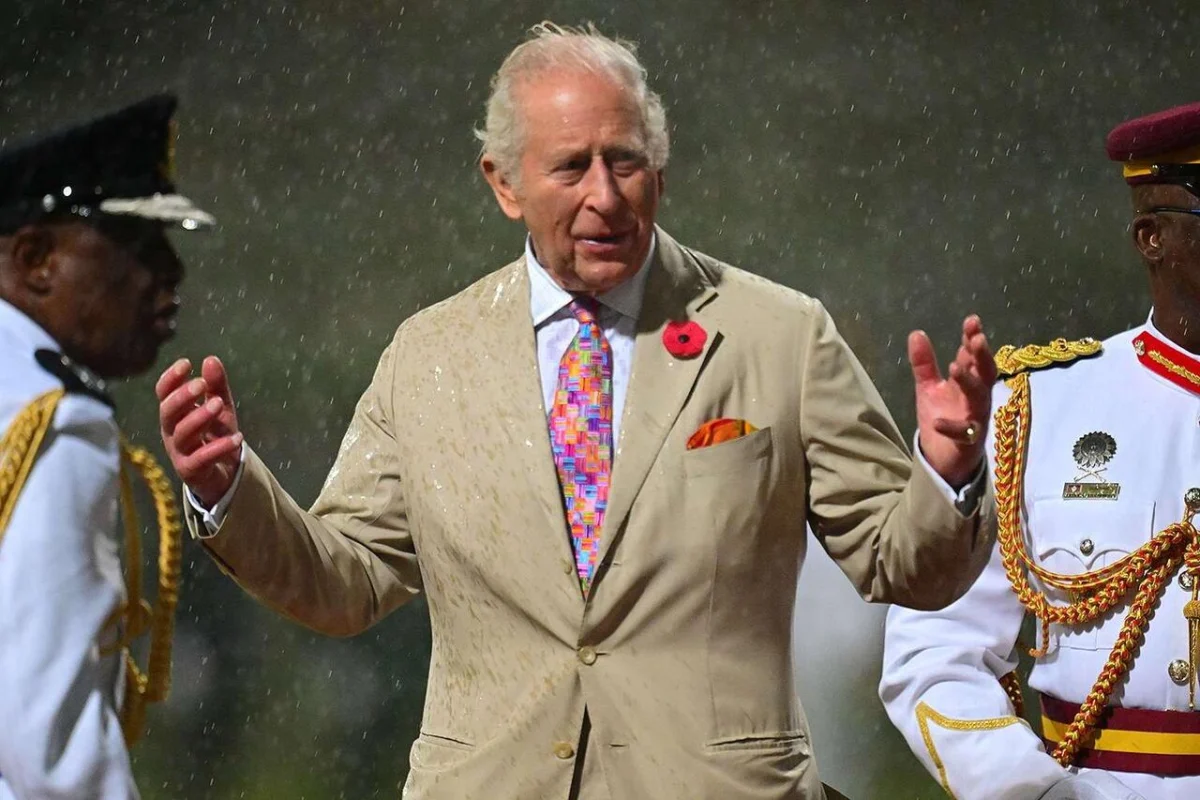
King Charles III experienced an unexpected and drenching tropical downpour during a significant visit to Antigua, an event that momentarily disrupted royal decorum and elicited a rare public display of frustration from the monarch. The incident, which unfolded at the Sir Vivian Richards Stadium on November 1, 2026, during celebrations marking the 45th anniversary of Antigua and Barbuda’s independence, saw the 77-year-old sovereign caught without an umbrella as heavy rain abruptly descended. This momentary lapse in logistical preparedness left the King visibly perturbed, though he later made light of the situation, underscoring both the unpredictable nature of royal engagements and the intense scrutiny surrounding the British monarchy’s ongoing efforts to reinforce its ties with Commonwealth realms amidst evolving geopolitical landscapes and sensitive historical dialogues.
The Unforeseen Downpour: A Moment of Royal Frustration
The ceremonial visit to St John’s, Antigua, was a pivotal engagement in King Charles III’s broader Caribbean tour, designed to strengthen diplomatic bonds and celebrate the region’s rich heritage. Upon arriving at the Sir Vivian Richards Stadium alongside Queen Camilla, the royal couple was greeted by enthusiastic crowds and the vibrant atmosphere of national celebrations. The weather, initially clear and warm, typical of the tropical climate, took an abrupt turn as the ceremony was underway.
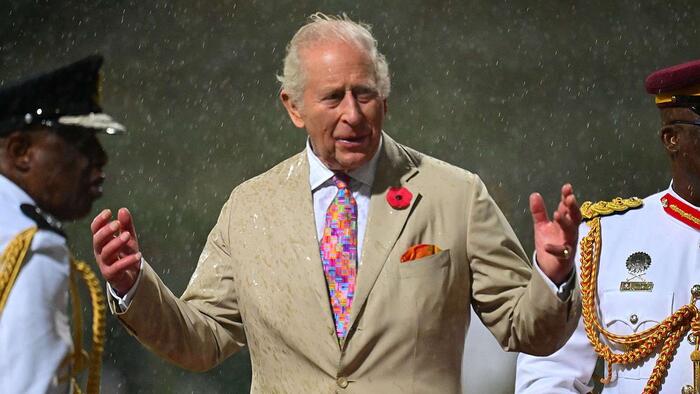
As the military parade commenced, dark clouds rapidly gathered, and within moments, a torrential downpour erupted. While Queen Camilla was promptly provided with an umbrella, King Charles found himself exposed to the sudden deluge. For what was reportedly over a minute, the monarch stood in the open, his ceremonial attire quickly becoming soaked. Footage from the event captured the King’s increasing irritation; he was observed throwing his arms into the air, turning towards his aides, and repeatedly questioning, "Where’s the umbrella?" His gestures, including mimicking the act of holding an umbrella, conveyed a clear and urgent request amidst the unexpected soaking. This uncharacteristic public display of exasperation highlighted the human element beneath the regal facade, drawing significant media attention.
Eventually, an umbrella was rushed to the King, allowing him to continue his duties, including inspecting military personnel, despite his drenched appearance. The intense downpour, a common feature of tropical weather patterns, lasted approximately five minutes before the skies cleared, allowing the remainder of the ceremony to proceed as planned. The brief, intense shower served as a stark reminder of the challenges inherent in meticulously planned public events, particularly those held outdoors in variable climates.
Context of the Royal Caribbean Tour
King Charles III’s tour of the Caribbean is set against a complex backdrop of historical ties, evolving political landscapes, and contemporary challenges. Antigua and Barbuda, a twin-island nation in the Eastern Caribbean, gained full independence from Britain on November 1, 1981, becoming a sovereign state within the Commonwealth and retaining the British monarch as its head of state. The 45th anniversary of this independence is a significant milestone, celebrating decades of self-governance and national development. Royal visits to Commonwealth realms historically serve to reaffirm these constitutional links, express goodwill, and foster cultural exchange.
Such tours are a cornerstone of the monarchy’s soft power diplomacy, aiming to reinforce Britain’s enduring relationships with its former colonies. Since ascending the throne, King Charles III has articulated a commitment to the Commonwealth, viewing it as a vital network for global cooperation and mutual support. His extensive experience as Prince of Wales, during which he undertook numerous overseas visits, prepared him for the intricate demands of such diplomatic engagements. These tours often involve a packed schedule of state functions, cultural events, and meetings with local dignitaries and community leaders, all meticulously planned to project an image of continuity and partnership.
However, these visits also occur at a time when several Caribbean nations are actively re-evaluating their constitutional ties to the British monarchy. The move towards republicanism, exemplified by Barbados becoming a republic in 2021, indicates a broader regional sentiment for complete sovereignty and a redefinition of national identity. Consequently, each royal engagement is scrutinized not only for its immediate diplomatic outcomes but also for its symbolic resonance within this evolving political context.
Navigating Royal Protocol and Logistical Challenges
The incident of the missing umbrella, while seemingly minor, underscores the intricate web of royal protocol and logistical planning required for state visits. Royal engagements, particularly those abroad, are typically the culmination of months of detailed preparations involving palace staff, the Foreign, Commonwealth & Development Office (FCDO), and host nation authorities. Every aspect, from security and transportation to wardrobe and weather contingencies, is meticulously considered.
In tropical climates like Antigua’s, sudden and heavy rainfall is a known meteorological phenomenon. Therefore, contingency plans for adverse weather, including the immediate provision of umbrellas for the royal party, are usually standard procedure. The delay in providing King Charles with an umbrella, especially when Queen Camilla received hers promptly, suggests a momentary lapse in coordination or an unforeseen disruption in the established protocol chain. This oversight, though brief, attracted significant attention precisely because of the high standards of logistical perfection generally associated with royal events.
The complexities of managing a large royal entourage in a foreign environment, often involving multiple security layers and adherence to local customs, can occasionally lead to such minor, yet publicly visible, errors. The pressure on royal aides to ensure seamless execution of events is immense, and even a few seconds of disarray can be amplified by modern media scrutiny. The incident offered a rare glimpse into the practical challenges faced by royal staff in maintaining an impeccable public image under unpredictable circumstances.
The King’s Humor and Public Perception
Despite the initial display of frustration, King Charles III demonstrated characteristic adaptability and good humor in the aftermath of the downpour. Following the ceremony, he reportedly engaged in a lighthearted exchange with Antigua and Barbuda Prime Minister Gaston Browne, quipping, "I’ve started growing watercress on my trousers." This self-deprecating joke served to diffuse any lingering awkwardness from the incident and underscored the King’s ability to connect with people on a more personal level, a trait often appreciated by the public.
Such moments, where a monarch displays a relatable human reaction before swiftly recovering with wit, often resonate positively with the public. In an era of heightened media scrutiny and a desire for authenticity, the King’s candid reaction and subsequent joke provided a humanizing element to the otherwise formal proceedings. It showed a monarch capable of both expressing displeasure and quickly moving past it with grace, an important aspect of maintaining public appeal and demonstrating resilience in the face of minor setbacks. The incident, therefore, evolved from a potential embarrassment into a memorable anecdote that highlighted the King’s personal qualities.

Broader Implications: Commonwealth Ties and Reparations Debate
Beyond the immediate incident, King Charles III’s Caribbean tour carries significant geopolitical weight, particularly concerning the future of the Commonwealth and the contentious issue of reparations for historical injustices. The original purpose of the tour was to "shore up ties" with former British colonies, many of which are grappling with their colonial legacy and the path forward.
A central theme dominating discussions in the Caribbean is the demand for reparations related to the transatlantic slave trade. Several nations, including Antigua and Barbuda, have formally called upon Britain to acknowledge its historical role in slavery and provide financial redress for the enduring economic and social consequences. The Caribbean Community (CARICOM) has developed a 10-point plan for reparatory justice, encompassing formal apologies, debt cancellation, and financial investments in affected communities. These demands are not merely symbolic; they are rooted in the profound economic disparities and systemic disadvantages that persist in the region, directly linked to centuries of colonial exploitation and the transatlantic slave trade.
The UK government’s official stance has generally acknowledged the "appalling" nature of slavery but has resisted calls for direct financial reparations, instead favoring initiatives focused on development aid and cultural exchange. Royal tours, therefore, become a delicate balancing act, requiring the monarch to navigate these sensitive historical dialogues while promoting goodwill and contemporary partnership. The King, as head of the Commonwealth, must carefully articulate messages that respect the past while looking towards a future of mutual respect and cooperation.
The reparations debate intertwines with growing republican sentiment across the Caribbean. Following Barbados’s transition to a republic in 2021, other nations like Jamaica, Belize, and Antigua and Barbuda have openly discussed similar constitutional reforms. Prime Minister Gaston Browne of Antigua and Barbuda has previously indicated his government’s intention to hold a referendum on becoming a republic, potentially during the next term of office. These discussions reflect a desire for complete self-determination and a severing of what some perceive as lingering colonial ties. Royal visits, while intended to strengthen connections, invariably bring these debates into sharper focus, prompting national conversations about identity, sovereignty, and the future role of the monarchy in these nations.
The Future of Monarchy in the Caribbean
The events in Antigua, while focused on a logistical mishap, are emblematic of the broader challenges facing the British monarchy in its Commonwealth realms. King Charles III is committed to preserving and evolving the Commonwealth, viewing it as a vital multilateral organization. However, the nature of this relationship is undeniably changing. The King’s ability to engage with these nations, acknowledge historical sensitivities, and project a vision of modern partnership will be crucial in shaping the future of the monarchy’s role in the region.
Ultimately, the King’s Caribbean tour, including its unexpected moments, serves as a testament to the complex, evolving tapestry of international relations and the enduring, yet continually re-evaluated, role of the British monarchy. Despite the brief inconvenience of a tropical downpour, the King’s subsequent humor and continued dedication to his duties reinforced the message of resilience and commitment to the Commonwealth, even as the region continues its profound journey of self-definition and historical reckoning.

