
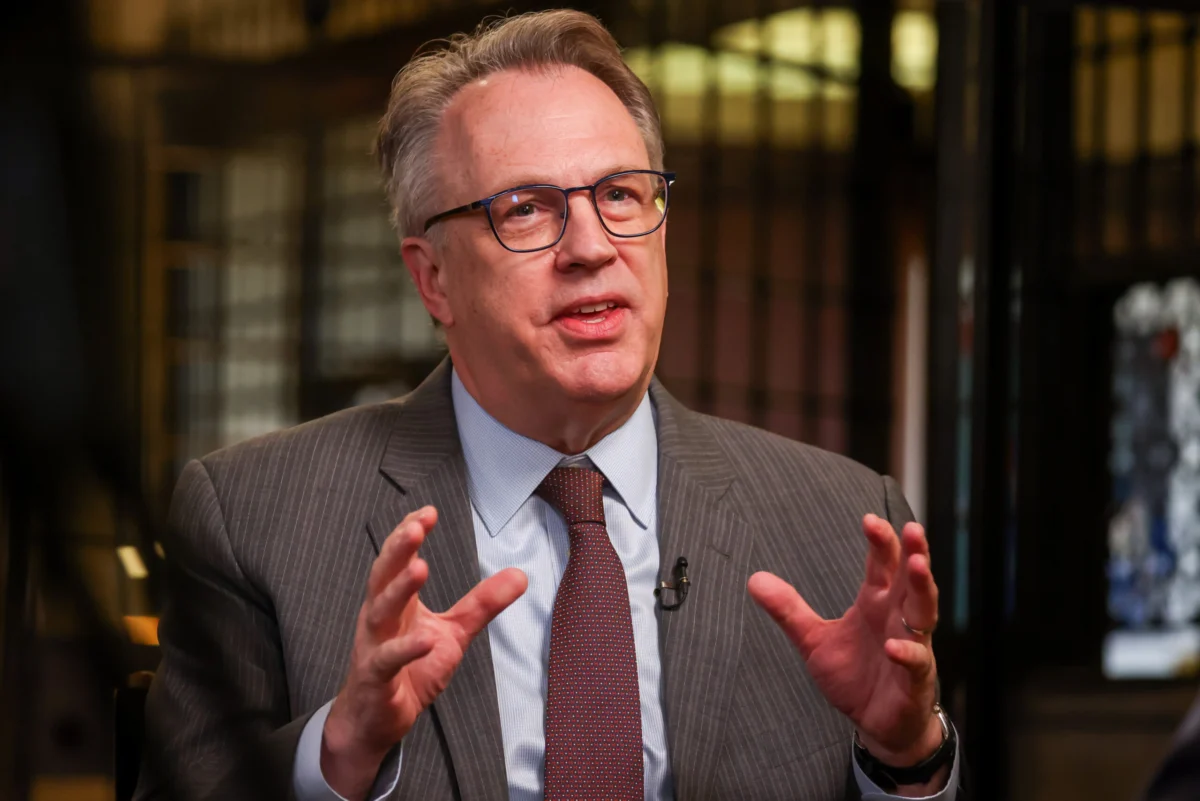
New York Federal Reserve President John Williams, a permanent voting member of the influential Federal Open Market Committee (FOMC), indicated on Tuesday that he foresees only one additional interest rate hike by the central bank in the current year, with no further increases anticipated throughout 2027. Williams’ statement, made during a Bloomberg News interview, positions him in a notably more cautious stance regarding future monetary tightening compared to the prevailing sentiment in financial markets and a segment of his central bank colleagues. This outlook underscores a significant divergence in expectations for the trajectory of U.S. monetary policy at a critical juncture for the economy.
Williams articulated his firm belief that "it may be appropriate to have one more rate hike" this year, reinforcing his consistent view. Crucially, he added, "I don’t think at this time I have any reason to believe that we would need to do more," specifically referencing the calendar year 2027. This forward guidance from a key Fed official provides a valuable insight into the internal deliberations of the central bank, even as it highlights the complex and often conflicting signals emanating from economic data and market pricing.
The Evolving Economic Backdrop: A Resurgent Inflation Challenge
To understand the significance of Williams’ comments, it is essential to contextualize the Federal Reserve’s journey through a period of unprecedented economic volatility. Following the initial shock of the COVID-19 pandemic in 2020, the U.S. economy experienced a dramatic surge in inflation, driven by a confluence of factors including robust fiscal stimulus, ultra-loose monetary policy, persistent supply chain disruptions, and a shift in consumer demand towards goods. This period saw the personal consumption expenditures (PCE) price index, the Fed’s preferred inflation gauge, climb to multi-decade highs, far exceeding the central bank’s long-term 2% target.
In response, the Fed embarked on an aggressive monetary tightening cycle beginning in March 2022. Over the course of 2022 and 2023, the FOMC raised the federal funds rate from near-zero to a range of 5.25%-5.50%, marking the fastest pace of rate hikes in decades. This decisive action aimed to cool an overheating economy, dampen aggregate demand, and bring inflation back under control. After a period of holding rates steady to assess the cumulative impact of these increases, the Fed resumed its tightening in September 2026, delivering its first rate increase since 2023. This September hike signaled the Fed’s continued vigilance against inflation, suggesting that despite some progress, price pressures remained too elevated for comfort. Minutes from recent FOMC meetings had indicated plans for another hike, though the precise timing remained unclarified, with upcoming meetings scheduled for the end of this month and December.
Divergent Paths: Market and FOMC Perspectives on Future Hikes
Williams’ cautious projection stands in contrast to the more hawkish expectations embedded in financial markets. Data from CME’s FedWatch Tool, which tracks Fed funds futures traders’ expectations, revealed that as of Tuesday, there was an approximately 90% probability that the Fed’s overnight rate would end 2027 at least a half percentage point higher than its current level. This implies that market participants are largely betting on at least one, and potentially more, rate hikes extending into 2027, beyond any anticipated increase in 2026. This significant discrepancy between a leading Fed official’s outlook and market consensus can introduce volatility and uncertainty, as investors grapple with differing interpretations of future monetary policy.
Furthermore, Williams’ view, while aligning with a substantial portion of the FOMC, is not universally shared within the central bank. The Fed’s quarterly "dot plot" projections, which anonymously chart each FOMC member’s forecast for the federal funds rate, offered a glimpse into the diverse opinions within the committee. The September 2026 dot plot indicated that eight of the 18 officials who provided a rate forecast for 2027 anticipated only one additional increase after an expected hike this year. Williams falls squarely into this group. However, this also means that a majority of the committee members (ten individuals) foresee either more than one additional hike or a different trajectory entirely for 2027, underscoring the lack of a strong consensus on the future path of interest rates. The FOMC’s next policy-setting gatherings are closely watched, particularly the December meeting, where updated economic projections and a new dot plot will be released, offering a clearer picture of the evolving consensus, or lack thereof.
The ‘Disinflationary’ Undercurrents and Inflation Metrics
A core tenet of Williams’ forward-looking assessment is his conviction in "disinflationary forces at play" within the economy. He emphasized the importance of observing "underlying trends" in inflation, distinguishing them from transient price shocks. While acknowledging that energy prices continue to exert upward pressure on overall inflation in the short term, the former San Francisco Fed chief suggested that these could provide annual relief in the future as base effects shift. Similarly, he noted that the inflationary effects of tariffs, a significant concern in recent years, have largely run their course.
Williams projects overall inflation for 2027 to be "near" the Fed’s 2% annual target. This forecast, if realized, would represent a substantial improvement from current readings. The personal consumption expenditures price index (PCE), the Fed’s preferred gauge, in August showed a 12-month increase of 3.4%. When stripping out volatile food and energy prices, the core PCE index registered a 3.0% increase. While both figures represent a moderation from their peaks, they remain significantly above the Fed’s target, highlighting the persistent challenge. Williams’ optimism about disinflationary trends suggests he believes the cumulative effects of past tightening, combined with potentially easing supply constraints and a rebalancing of demand, will continue to bring price pressures down. This perspective stands in contrast to those who might worry about sticky services inflation or the potential for a reacceleration if economic growth remains robust.
Beyond Inflation: Labor Market and Growth Considerations
The Federal Reserve operates under a dual mandate from Congress: to foster maximum employment and stable prices. While inflation has been the primary focus of policy over the past few years, the health of the labor market and broader economic growth are equally critical considerations. A strong labor market, characterized by low unemployment and solid wage growth, can be a double-edged sword for the Fed. While desirable, it can also contribute to inflationary pressures if wage gains outpace productivity improvements.
Throughout 2026, the U.S. labor market has generally demonstrated resilience, with unemployment rates remaining historically low and job creation continuing, albeit at a slower pace than in previous years. Wage growth, while moderating from its peak, has still been robust enough to raise concerns among some Fed officials about its potential to fuel services inflation. Williams’ outlook implies a belief that the labor market can achieve a better balance without requiring further aggressive tightening. He underscored the dynamic nature of the economy, stating, "This economy is being affected by lots of different influences, and we just have to keep watching the data." This data-dependent approach means that any shift in key economic indicators—be it a sudden acceleration in inflation, an unexpected weakening of the labor market, or significant changes in global economic conditions—could prompt a reassessment of his, and the FOMC’s, current views.
Implications for Policy, Markets, and the Broader Economy
John Williams’ tempered outlook on future rate hikes carries significant implications across various facets of the economy and financial markets. For monetary policy, his stance suggests a preference for a measured approach, prioritizing the assessment of existing policy’s impact rather than rushing into further tightening. If his view gains more traction within the FOMC, it could signal a potential pivot towards a more patient, wait-and-see strategy once the next anticipated hike is delivered.
In financial markets, a more dovish tilt from a prominent Fed official can influence bond yields, equity valuations, and currency movements. Fewer anticipated rate hikes generally lead to lower bond yields, as the expected return on fixed-income investments decreases. This can, in turn, make equities more attractive, potentially providing a tailwind for stock markets. Conversely, a less aggressive Fed could put downward pressure on the U.S. dollar, as the interest rate differential with other major economies might narrow. Businesses and consumers also stand to benefit from a stable or declining interest rate environment, as borrowing costs for mortgages, auto loans, and corporate debt would remain more manageable, potentially stimulating investment and spending.
However, the divergence between Williams’ view and market expectations also introduces a degree of uncertainty. If the market continues to price in more hikes than Williams anticipates, there could be periods of recalibration and volatility as new data or official statements emerge. Conversely, if economic data aligns with Williams’ more dovish forecast, markets could quickly adjust, potentially leading to a rally in risk assets. The central bank’s communication strategy becomes paramount in such an environment, as clarity on its future intentions can help manage expectations and reduce market turbulence.
The Path Ahead: Data Dependence and Uncharted Territory
As the Federal Reserve approaches its final policy meetings of the year, the debate over the appropriate path for interest rates will undoubtedly intensify. Williams’ articulate defense of a more constrained hiking cycle provides a crucial perspective, emphasizing the belief in ongoing disinflationary forces despite current price levels. Yet, the persistent gap between current inflation and the Fed’s 2% target, coupled with a resilient labor market, ensures that the discussion within the FOMC will remain robust and multifaceted.
The caution expressed by Williams — that "we’ll have to see" when it comes to forecasting into the new year and the need to "keep watching the data" — underscores the inherent uncertainties in economic projections. The global economic landscape, geopolitical developments, and unforeseen domestic shocks can rapidly alter the trajectory of inflation and growth. The Fed’s decisions in the coming months will therefore be a delicate balancing act, navigating the complex interplay of price stability, employment goals, and the evolving dynamics of a globalized economy, all while striving to anchor inflation expectations and avoid either an unnecessary recession or a reacceleration of price pressures. The next few FOMC meetings will be pivotal in shaping the economic narrative for 2027 and beyond.

