
Fueled by a confluence of a global boom in artificial intelligence stocks, a strategic relaxation of capital rules, and significantly increased lending to hedge funds, the titans of Wall Street have already achieved an unprecedented year for equities trading, with a full quarter still remaining. Through September 30, the five largest investment banks collectively generated an astounding $67 billion in equities revenue. This figure not only represents a monumental achievement but also surpasses the total earnings of $60 billion for the entirety of 2025, which itself had been hailed as a record haul. This exceptional performance underscores a pivotal shift in market dynamics and the strategic positioning of the industry’s dominant players.
The AI Megatrade Fuels Unprecedented Growth
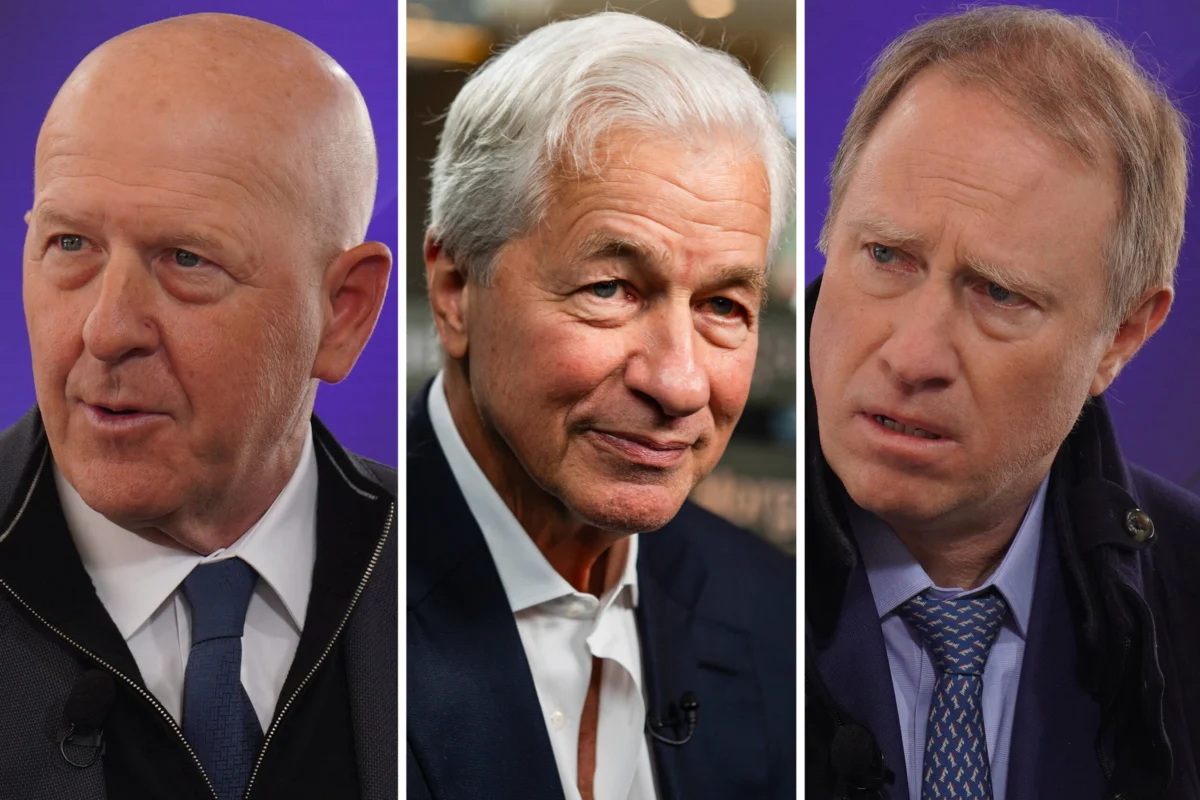
At the forefront of this financial triumph are Wall Street’s "Big Three": Goldman Sachs, JPMorgan Chase, and Morgan Stanley. These three financial behemoths have collectively captured the lion’s share of the booming equities market, amassing a combined $52 billion in stock trading revenue so far this year, accounting for nearly 80% of the total. This commanding lead solidifies their position in what is rapidly becoming the industry’s most lucrative arena.
The primary catalyst for this extraordinary surge is undeniably the global enthusiasm surrounding artificial intelligence. The relentless pursuit of AI advancements has ignited a speculative fervor across equity markets, driving valuations of companies involved in AI hardware, hyperscalers, and semiconductor manufacturing to unprecedented heights. "When it comes to the AI mega trade, the Big Three consider each other their main competitors, and that’s pretty much it," observed Mike Mayo, a veteran banking analyst at Wells Fargo, in an interview with CNBC. "They’ve been best positioned to take advantage of this market."
The current stock market rally, which commenced in October 2022, just weeks before OpenAI unveiled its revolutionary ChatGPT, has laid the groundwork for this AI-driven boom. Institutional and retail investors alike have poured capital into equities, exchange-traded funds (ETFs), and derivatives, amplifying trading activity and ballooning the total value of the stock market. This expansive market growth, coupled with the strategic deployment of capital, has created a fertile ground for the Big Three to thrive.
Prime Brokerage: The Engine of Leverage
Central to the Big Three’s unparalleled success is their robust prime brokerage business. Prime brokerage, the intricate ecosystem of services provided to hedge funds, includes crucial components such as margin loans, securities lending, and comprehensive trading infrastructure. It has emerged as a key battleground for market share and a significant driver of growth. These specialized desks at Goldman Sachs, JPMorgan, and Morgan Stanley cater to the largest and most sophisticated hedge funds, offering a full suite of services across diverse markets and products, thereby becoming indispensable to the broader equities story.
The demand for leverage to finance aggressive bets on AI-related assets has reached unprecedented levels. Executives from these leading banks articulated last week how this "insatiable demand for capital" has become a defining characteristic of the current market cycle. At Goldman Sachs, equities financing activities soared by an astounding 96% in the third quarter, reaching a record $3.37 billion. While JPMorgan and Morgan Stanley do not delineate this specific figure in their public filings, both acknowledged experiencing a similar dynamic.
Jeremy Barnum, CFO of JPMorgan, echoed this sentiment during the bank’s third-quarter conference call, stating, "I like your ‘insatiable demand for capital’ point. That feels about right." He further elaborated on the pervasive nature of this demand, noting, "In this moment where AI is such an overwhelming theme… there is capital being tapped through all kinds of different mechanisms." This burgeoning demand has fundamentally transformed the equities desks at the Big Three, shifting them from traditionally cyclical, transactional businesses into more resilient, high-margin lending engines.
Regulatory Shifts Pave the Way
Adding another layer of impetus to this growth story are the regulatory adjustments initiated during the Trump administration. Regulators moved to ease certain leverage rules for the largest U.S. banks, providing them with increased flexibility to expand balance sheet-heavy businesses, including prime brokerage. These revised rules were finalized in 2025, and banks were permitted to adopt them as early as January of that year.
Previously, stringent balance sheet caps treated highly collateralized assets, such as Treasurys and prime brokerage loans, in the same manner as riskier, uncollateralized assets. The updated framework differentiated these assets, affording dealers greater latitude to deploy their balance sheet capital more efficiently. Darrell Duffie, a distinguished finance professor at Stanford University and a leading expert on financial stability, commented on the implications of these changes: "Capital did go down, so you have to say the system is somewhat more levered because of the relaxation in regulations. It’s not a good idea, but it hasn’t gotten dramatically out of whack." He added that while a larger market size and higher volatility can spur more trading, derivatives activity, and leverage, this is not inherently alarming.

The competitive landscape for prime brokerage has also benefited from the strategic retreat of several European banks. Notably, Credit Suisse, which had been a significant player, announced its exit from prime brokerage in 2021 as part of a broader restructuring, eventually leading to its acquisition by UBS in 2023. This withdrawal created a vacuum, allowing U.S. prime brokers to consolidate their market dominance and absorb business from former rivals. Herman Chan, an analyst with Bloomberg Intelligence, emphasized the inherent advantage of scale in this sector: "Prime is one of the ultimate scale businesses. If you have a strong equities franchise, the hedge funds will want to transact with you because you have a bigger pool of trading opportunities with counterparties."
A Widening Chasm Among Financial Giants
The exceptional performance of the Big Three starkly highlights a widening divide within the broader capital markets. Rivals such as Bank of America and Citigroup have not been able to match the scale and profitability seen by Goldman Sachs, JPMorgan Chase, and Morgan Stanley in equities trading. This disparity underscores the unique advantages possessed by the top-tier institutions.
Executing multibillion-dollar bets, such as leveraged swaps on highly volatile AI stocks or complex sector ETFs, demands an enormous balance sheet. The largest banks possess the financial fortitude to absorb potential losses in the magnitude of $100 million without jeopardizing their quarterly performance. In contrast, smaller or more specialized banks often lack the capacity to underwrite single-trade risks of such magnitude, compelling them to decline lucrative business opportunities or cede market share to their larger counterparts. Rachid Alaoui, JPMorgan’s global head of equities, articulated the client perspective in an interview with CNBC: "For clients, the value isn’t just a price on one trade, it’s coverage and continuity. You want a dealer that can give you the full suite across products, and you want that service to travel with you across regions. That matters in stressed markets and periods of volatility." This holistic service offering, underpinned by robust balance sheets and extensive global networks, is a crucial differentiator.
Beyond domestic markets, the Big Three’s global footprint has been instrumental. While U.S. markets have been captivated by software and cloud computing giants, trading executives point to Asia as the fastest-growing frontier for equities. Institutional investors have heavily invested in South Korea and Taiwan, targeting the "picks and shovels" of the AI supply chain – the memory chipmakers and semiconductor manufacturers that are foundational to data center construction. For the Big Three, with established presences in Tokyo, Hong Kong, Seoul, and Mumbai, this "Asia trade" has proven to be a goldmine, although transaction taxes and stamp duties can sometimes artificially inflate reported top-line revenues in these regions.
Navigating the Known Unknowns: Risks and Resilience
Despite the celebratory atmosphere surrounding these record profits, concerns about potential risks, particularly those posed by hedge funds, have emerged. The International Monetary Fund (IMF) issued a warning this month, highlighting that growing leverage, crowded positions, and correlated selling from hedge funds could introduce systemic stability risks. The IMF estimated that global hedge fund assets had swelled to an astonishing $13 trillion. Echoing these concerns, JPMorgan CEO Jamie Dimon remarked in August that industrywide leverage was "the highest it’s ever been," although he refrained from categorizing the risk as significant enough to threaten overall financial markets.
Wall Street executives and analysts, however, largely downplay these broader systemic concerns, pointing to the industry’s enhanced risk management protocols. They emphasize the extensive use of collateral and frequent stress testing designed to anticipate and mitigate potential problems. The market’s swift recovery from the meltdown of several hedge funds last summer served as a testament to this resilience. While the hedge fund managed by former OpenAI researcher Leopold Aschenbrenner, Situational Awareness, garnered significant media attention for its forced unwinding, several other smaller firms experienced similar deleveraging events without triggering a broader market crisis.
JPMorgan’s Alaoui explained the efficacy of modern prime brokerage practices: "In the summer, some investors had positions they were forced to unwind. They deleveraged, risk came down, and the market moved on." This ability to rapidly execute margin calls and reduce risk when markets turn against clients is a critical safeguard. Jeremy Barnum succinctly encapsulated this perspective last week, stating, "Hedge fund leverage as a contributor of risk to the system is very much in the category of known unknowns. It doesn’t mean it’s riskless, but we kind of know what it is." This acknowledgment suggests a proactive and informed approach to risk management within the industry.
The Road Ahead: Sustaining the Momentum
As the year draws to a close, the outlook for equities trading remains largely optimistic. CEOs like Morgan Stanley’s Ted Pick firmly believe that "equities are still, all things being equal, the attractive asset class," reinforcing the long-term viability of stock-based investments. Both Goldman Sachs and Morgan Stanley leaders have indicated that the AI build-out is still in its nascent stages, suggesting a prolonged period of growth potential.
However, analysts also caution that should AI prove to be less transformative than currently anticipated, a significant downturn could disproportionately impact the banks that have heavily capitalized on this trend. The complexities of defining and comparing equities trading revenue across banks, given variations in what is included (e.g., clearing services), also present challenges for precise industry-wide comparisons. Yet, these nuances do not diminish the undeniable momentum generated by the confluence of technological innovation, strategic regulatory adjustments, and robust market demand.
The current landscape represents a powerful convergence of factors that have propelled Wall Street’s elite to unprecedented heights in equities trading. The AI revolution, coupled with favorable regulatory conditions and the critical role of prime brokerage, has not only delivered record profits but also reshaped the operational dynamics of the industry’s most powerful players. As the financial world continues to navigate the intricacies of this new era, the Big Three stand poised to capitalize on these evolving market forces, albeit with a watchful eye on the inherent "known unknowns" that always accompany such profound shifts.

