
A volatile diplomatic encounter unfolded within the venerable halls of the United Nations last week, as Cuba’s communist regime brought its confrontational tactics to a head, triggering a heated showdown with U.S. Ambassador Mike Waltz. The dramatic confrontation, punctuated by verbal sparring and an alleged physical assault, underscored the deep-seated animosity and ideological chasm that continues to define relations between Washington and Havana, particularly ahead of the UN General Assembly’s annual vote on the U.S. economic embargo against Cuba. This incident not only highlighted the persistent allegations of human rights abuses under the Cuban government but also showcased the increasingly aggressive nature of diplomatic exchanges on the international stage.
The Genesis of the Confrontation: "Free Cuba" Forum
The flashpoint occurred on October 19, 2026, following a pivotal U.S. Mission event titled "Free Cuba: The Oppression That Havana Hides." Organized by the United States, the forum was designed to provide a platform for Cuban dissidents to share their harrowing experiences under Havana’s authoritarian rule. Among those who bravely recounted their ordeals were prominent figures like artist Luis Manuel Otero Alcántara and opposition leader José Daniel Ferrer. These individuals, whose voices are often stifled within Cuba, detailed accounts of arbitrary imprisonment, forced labor, and systematic repression, painting a stark picture of the challenges faced by those who dare to dissent on the island. Their testimonies aimed to expose what the U.S. describes as the brutal realities hidden by the Cuban government from international scrutiny.
As the forum concluded, the atmosphere, already charged with the weight of the dissidents’ narratives, rapidly escalated. Cuban Ambassador Ernesto Soberón Guzmán, accompanied by members of his delegation, directly confronted attendees. According to footage obtained by the New York Post, the Cuban representatives engaged in an angry and intimidating display, shouting accusations of "terrorists" and "liars" at the Cuban dissidents and U.S. officials alike. Ambassador Soberón reportedly called U.S. Ambassador Waltz a "liar" to his face, a direct challenge to diplomatic decorum and a clear indication of the Cuban government’s fury over the event.
The situation intensified when a member of the Cuban delegation allegedly assaulted J.P. Freire, Waltz’s spokesman, in an attempt to snatch his cell phone as he filmed the escalating argument. This alleged act of aggression, if substantiated, represents a significant breach of diplomatic conduct and the norms of international engagement, particularly within the confines of the United Nations headquarters, a neutral territory meant for peaceful discourse. Ambassador Waltz, a former Green Beret and a vocal critic of the Cuban regime, immediately fired back at the Cuban delegation, publicly condemning their actions. He told reporters, "I hope you…noted the so-called diplomats from the Cuban embassy here that we allow here by dint of treaty, harassing, yelling, intimidating, and filming not only our just released former political prisoners but others." His words underscored the U.S. government’s perception of Cuban tactics as an attempt to silence opposition and intimidate those who speak out against the regime.
The Broader Context: The U.S. Embargo and Cuba’s Annual Condemnation
This dramatic confrontation on October 19 was not an isolated incident but rather a sharp manifestation of the long-standing, deeply entrenched animosity between the United States and Cuba, particularly preceding the UN General Assembly’s annual debate and vote on the U.S. economic embargo. The embargo, often referred to by Cuba as "el bloqueo," has been in place for over six decades, tracing its origins to the early 1960s in response to the expropriation of U.S. properties by Fidel Castro’s revolutionary government. It was codified into law through various acts, including the Cuban Assets Control Regulations of 1963 and the Helms-Burton Act of 1996, which strengthened its extraterritorial reach.
The U.S. maintains that the embargo is a tool to pressure the Cuban government towards democratic reforms and respect for human rights, arguing that the regime’s economic mismanagement and totalitarian policies are the primary causes of suffering for the Cuban people. Conversely, Cuba consistently attributes its economic hardships—including shortages of food, medicine, and fuel—directly to the embargo, framing it as an act of "collective punishment" and an illegal violation of international law. This narrative forms the cornerstone of Cuba’s annual resolution at the UN General Assembly, which seeks to condemn the embargo.
The Annual Debate and Vote: A Diplomatic Ritual
The formal annual debate on the U.S. economic embargo on Cuba commenced on October 27, 2026, at UN Headquarters, with a vote scheduled for October 27-28. This event has become a predictable diplomatic ritual, with Cuba presenting a resolution calling for an end to the sanctions, and the vast majority of UN member states consistently voting in favor of the resolution. Since 1992, the non-binding measure has been adopted annually with overwhelming support, with the notable exception of 2020 when no vote was held due to the COVID-19 pandemic. Typically, only the United States and Israel vote against the resolution, with a handful of nations abstaining.
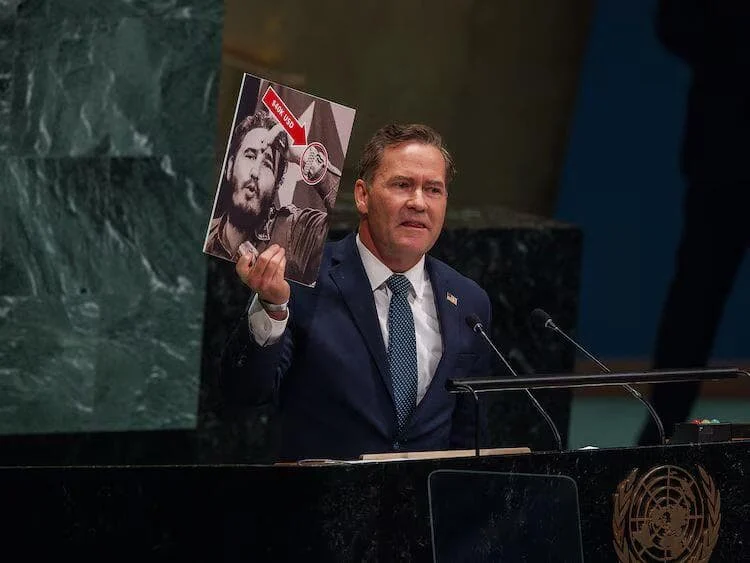
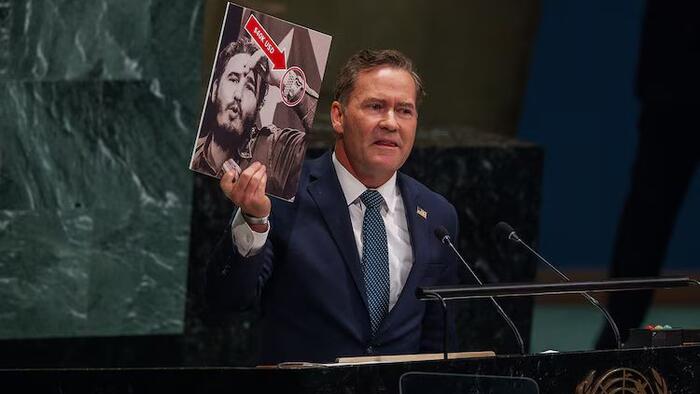
During the October 27 debate, Ambassador Mike Waltz once again took aim at Havana’s campaign, characterizing it as a deceptive tactic. "Year after year, the Cuban regime comes to the General Assembly and propagates a lie through its annual resolution," Waltz stated, asserting that the Cuban government "uses excuse after excuse to justify its oppression, to justify the misery of the Cuban people." To underscore his point, Waltz was photographed holding up an image of former Cuban leader Fidel Castro wearing a luxury watch, an apparent attempt to highlight the perceived hypocrisy of a communist regime that preaches austerity while its leaders allegedly enjoy privileges.
In response, Cuban Minister of Foreign Affairs Bruno Eduardo Rodríguez Parrilla (or Ambassador Soberón, based on the original context, though Parrilla is the Foreign Minister and typically leads this debate) vehemently fired back. He reiterated Cuba’s long-standing position, accusing Washington of imposing "collective punishment" on Cubans and declaring that "the US is acting as an international delinquent." Cuban officials emphasized the extraterritorial nature of the embargo, arguing that it penalizes third-country entities for engaging in trade with Cuba, thus violating the sovereignty of other nations. They presented data on the alleged economic damage caused by the sanctions, citing billions of dollars in lost revenue and increased costs for essential goods.
Human Rights Concerns and International Scrutiny
The "Free Cuba" forum and the subsequent confrontation brought renewed international attention to the human rights situation in Cuba. Organizations such as Amnesty International and Human Rights Watch have consistently documented severe restrictions on fundamental freedoms in Cuba, including freedom of expression, assembly, and association. They report arbitrary detentions of peaceful dissidents, limitations on internet access, and the criminalization of independent journalism and political opposition.
Luis Manuel Otero Alcántara, a prominent artist and leader of the San Isidro Movement, and José Daniel Ferrer, a key figure in the Patriotic Union of Cuba (UNPACU) opposition group, represent countless Cubans who have faced government repression. Their testimonies at the UN are crucial for raising awareness about the conditions inside the island, particularly following the widespread protests of July 11, 2021 (11J), which saw thousands take to the streets demanding change and were met with a harsh government crackdown and mass arrests. The U.S. Mission’s decision to host these dissidents at the UN was a deliberate move to amplify their voices and challenge the Cuban government’s narrative on human rights.

The alleged assault on Ambassador Waltz’s spokesman, J.P. Freire, also raised concerns about diplomatic immunity and the conduct of state representatives within the UN premises. Such an incident, if proven, could lead to formal complaints and potentially investigations into the behavior of the Cuban delegation, further straining diplomatic relations. U.S. State Department officials, while not issuing an immediate detailed statement, indicated that they were reviewing the incident and that all diplomatic staff are entitled to safety and respect in international forums.
Broader Implications and Future Outlook
The recent clashes at the UN underscore the enduring complexity and intractability of U.S.-Cuba relations. Far from easing, tensions appear to be escalating, particularly as the U.S. continues to press on human rights issues and maintain its sanctions policy, while Cuba steadfastly resists external pressure and defends its sovereignty. The incident also highlights the UN General Assembly as a critical battleground for competing narratives and ideological struggles, where nations leverage the platform to advance their political agendas and rally international support.
For the United States, the confrontation served to reinforce its message that the Cuban regime is repressive and unwilling to tolerate dissent, even in an international setting. By showcasing the alleged aggression of Cuban diplomats, the U.S. aims to discredit Havana’s claims of being a victim of U.S. aggression. For Cuba, the incident, while potentially damaging in terms of diplomatic conduct, plays into its long-standing narrative of being under siege by a hostile superpower, justifying its actions as a defense against foreign interference.
The annual UN vote on the embargo, while non-binding, serves as a significant barometer of international opinion. The consistent overwhelming support for Cuba’s resolution indicates a broad international consensus against the U.S. sanctions, suggesting that many nations view the embargo as an outdated and counterproductive policy. However, the U.S. has shown no signs of altering its stance, particularly under administrations that prioritize human rights and democratic transitions in Cuba.
Looking ahead, this incident is likely to harden positions on both sides. It diminishes prospects for any immediate diplomatic thaw or constructive dialogue between Washington and Havana. Instead, it signals a continued period of intense diplomatic rivalry, with the UN serving as a prominent arena for these ideological battles. The international community will continue to watch closely as Cuba grapples with its economic challenges and human rights record, and as the United States maintains its pressure, ensuring that the decades-old standoff remains a defining feature of global diplomacy.

