
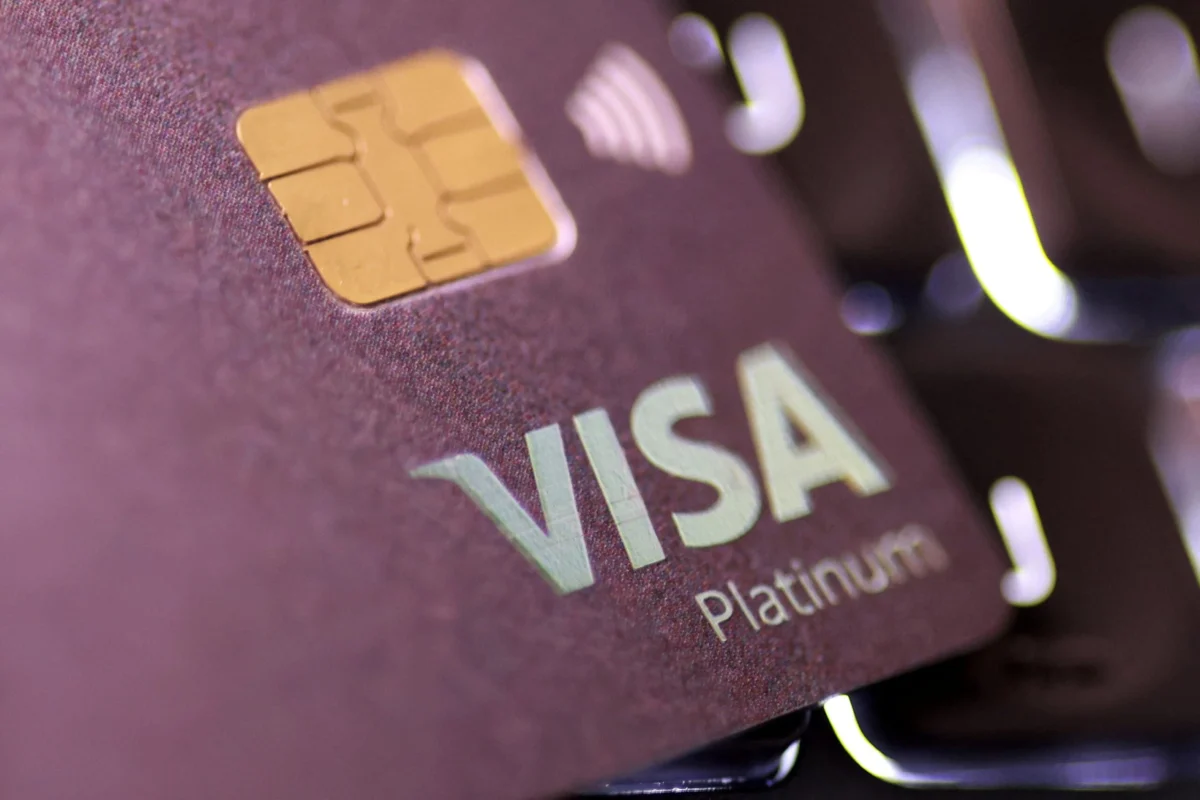
BEIJING — U.S. credit card giant Visa announced Tuesday it has received crucial approval from the People’s Bank of China (PBOC) to establish and operate a bank card clearing business within the country. This long-anticipated decision marks a significant milestone for the global payments leader, granting it direct access to China’s vast and rapidly evolving domestic payments market, a sector historically dominated by local players. The timing of the announcement is particularly noteworthy, preceding a planned third meeting between the U.S. and Chinese presidents this year, underscoring Beijing’s apparent intent to demonstrate tangible progress on market access for American businesses.
The approval allows Visa to move forward with the necessary steps to begin processing yuan-denominated transactions domestically, a capability previously restricted to China’s state-backed UnionPay. For decades, foreign card networks primarily facilitated cross-border transactions for Chinese cardholders, while domestic payments remained largely off-limits. This development represents a pivotal shift, potentially reshaping the competitive landscape of one of the world’s largest consumer markets.
"This marks an important milestone toward the company serving China’s domestic payments market," Visa said in an official statement following the PBOC’s green light. Ryan McInerney, Visa CEO, further elaborated, stating, "For more than 40 years, Visa has been an active contributor to China’s dynamic payments landscape. We look forward to taking the necessary steps in the process, pursuant to the PBOC’s regulations, to begin operating domestically in China." McInerney’s active engagement in U.S.-China economic diplomacy, including his participation in U.S. President Donald Trump’s business delegation to Beijing in May and his subsequent election as chair of the U.S.-China Business Council in June, highlights the strategic importance of this market access. He also led a key delegation trip to Beijing in early September, signaling sustained high-level advocacy for Visa’s entry.
A Long-Awaited Opening: The Chronology of Market Access
The journey for foreign payment networks to gain full access to China’s domestic clearing market has been protracted and complex, spanning well over a decade. Historically, China maintained a tightly controlled financial sector, citing concerns over financial stability and capital flight. This stance effectively shielded domestic players, particularly China UnionPay, which was established in 2002, from direct foreign competition in the vast domestic clearing space.
The pressure for China to open its market intensified following a World Trade Organization (WTO) ruling in 2012, which found that China had discriminated against foreign electronic payment service providers. The WTO panel concluded that Beijing had violated its commitments by requiring all yuan-denominated card transactions to be cleared through a single domestic provider, then UnionPay. Despite the ruling, the actual implementation of reforms to allow foreign entry progressed slowly.
- 2014: China first announced regulations to allow foreign companies to apply for bank card clearing licenses, signaling an intent to comply with the WTO ruling. However, the application process and approval criteria remained opaque and challenging.
- 2017: The U.S. and China engaged in intensified discussions regarding market access for financial services, with U.S. officials repeatedly raising concerns about the lack of progress. President Trump, after his Beijing trip in May, publicly stated he had brought up Visa’s request for China market access.
- 2018: American Express became the first foreign entity to receive preliminary approval from the PBOC to set up a bank card clearing institution. This marked a significant breakthrough, albeit one that took years to materialize into operational capacity.
- June 2020: American Express officially received its processing license, allowing its joint venture to begin local transactions in mainland China.
- February 2020: Mastercard’s joint venture in China also received preliminary PBOC approval to begin bank card clearing preparations.
- May 2020: Visa formally applied with the PBOC to operate a bank card clearing institution, initiating its official bid for domestic market entry.
- 2024: Mastercard’s joint venture announced it had commenced processing its first domestic transactions in China, following a lengthy preparatory period.
- Tuesday (Current Announcement): Visa receives its full approval, positioning it to follow Amex and Mastercard in directly competing within the domestic clearing market.
This chronology underscores the persistent efforts by foreign card networks and the gradual, often politically influenced, opening by Chinese authorities. The recent approval for Visa, coming years after its initial application, reflects a complex interplay of economic liberalization, regulatory processes, and geopolitical considerations.
The Strategic Context: U.S.-China Relations and Economic Signals
The timing of Visa’s approval is not lost on observers. George Chen, partner and chair of digital practice at The Asia Group, noted, "The timing is notable. Beijing chose to approve Visa’s license just ahead of the APEC Leaders’ Meeting in Shenzhen next month, where Xi [Jinping] and Trump are expected to meet again." Chen suggested that this move indicates Beijing’s eagerness "to demonstrate tangible progress for American businesses before Trump’s next visit to China."
This diplomatic calculus is critical. For years, the U.S. has pressed China to level the playing field for American companies, particularly in the financial services sector. The approval for Visa can be interpreted as a goodwill gesture, a concrete deliverable amidst broader trade tensions and an ongoing strategic rivalry between the two global powers. After a summit in September, China reiterated its commitment to approve applications from all foreign financial institutions to operate in the country, signaling a broader policy directive to open its financial markets further. This aligns with China’s long-term strategy to deepen its integration into the global financial system while managing domestic stability.
Navigating China’s Payments Landscape: Opportunities and Challenges
China’s payments market is arguably the most dynamic and technologically advanced globally. While traditional bank cards are widely used, mobile payment platforms, primarily Tencent’s WeChat Pay and Alibaba-affiliate Ant’s Alipay, have achieved near-ubiquitous adoption for daily consumer transactions. These platforms leverage QR code technology and offer integrated financial services, making them dominant forces in the everyday spending habits of hundreds of millions of Chinese consumers.
- Market Size: China boasts the world’s largest consumer market, with a rapidly growing middle class. The total transaction value of China’s third-party mobile payment market exceeded RMB 200 trillion (approximately $28 trillion USD) annually in recent years, demonstrating its immense scale. While bank card transactions remain significant, particularly for larger purchases and online commerce, the sheer volume of daily micro-transactions flows through mobile wallets.
- UnionPay’s Dominance: China UnionPay has long held a near-monopoly on domestic yuan-denominated bank card clearing. It is the largest card payment organization in the world by number of cards issued and transaction volume. Foreign players, including Visa, have historically partnered with Chinese banks to issue "dual-branded" cards, where UnionPay handles domestic transactions and Visa processes overseas payments. Visa also previously supported mainland China-issued cards to be linked to Apple Pay for overseas use, offering a taste of its digital capabilities.
- Competitive Dynamics: Visa’s entry will intensify competition within the clearing sector. While UnionPay has a significant head start and deep integration with Chinese banks, foreign players bring global expertise, advanced fraud detection technologies, and potentially new product offerings. However, competing with the entrenched mobile payment giants (WeChat Pay, Alipay) presents a different set of challenges, requiring innovative strategies to gain market share in a highly saturated environment.
- Regulatory Framework: Operating a bank card clearing business in China involves adhering to strict PBOC regulations, including data localization requirements, cybersecurity standards, and compliance with anti-money laundering (AML) protocols. Visa will need to build out its domestic infrastructure, establish local data centers, and ensure seamless integration with the country’s financial system.
Implications for Visa and the Broader Market
For Visa, this approval unlocks a massive potential revenue stream. By directly clearing domestic transactions, Visa can:
- Expand its product offerings: Introduce a wider range of Visa-branded credit and debit products tailored for the Chinese market.
- Deepen partnerships: Collaborate more extensively with Chinese banks and financial institutions on domestic card issuance and innovative payment solutions.
- Capture domestic transaction fees: Generate revenue from transaction processing fees within China, a market it previously only accessed for cross-border payments.
- Foster innovation: Leverage its global network and technological prowess to introduce new payment technologies and security features, potentially influencing the evolution of China’s payments ecosystem.
The move also carries broader implications:
- Increased Consumer Choice: Chinese consumers may benefit from a wider array of payment options, potentially leading to improved services, enhanced security features, and competitive pricing.
- Enhanced Competition: The entry of global players like Visa, Mastercard, and American Express will push UnionPay and potentially even the mobile payment giants to innovate further and refine their offerings.
- Modernization of Financial Infrastructure: Foreign companies often bring best practices in technology, risk management, and compliance, which can contribute to the overall modernization and robustness of China’s financial infrastructure.
- Signal of Financial Openness: For international investors and businesses, Visa’s approval reinforces China’s commitment to gradually open its financial markets, a promise that has been met with skepticism in the past. This could encourage further foreign direct investment in other financial sectors.
However, the path to significant market penetration will not be without hurdles. Visa will need to invest heavily in brand building, merchant acceptance, and consumer education to compete effectively with the deeply ingrained habits surrounding UnionPay and mobile payments. Building trust and adapting to local preferences will be paramount.
In conclusion, Visa’s receipt of a domestic bank card clearing license in China is a landmark event, not just for the company but for the broader landscape of international finance and U.S.-China economic relations. It signifies a long-awaited opening of a critical market, promising increased competition, innovation, and choice, while also serving as a tangible indicator of ongoing diplomatic and economic engagement between the world’s two largest economies. The journey from approval to widespread adoption will be a testament to Visa’s strategic execution and China’s evolving financial market dynamics.

