
The Financial Independence, Retire Early (FIRE) movement, long lauded for its emphasis on aggressive savings and conscious spending, is currently facing renewed scrutiny regarding its applicability in the contemporary economic climate. A recent comment from a reader of a prominent FIRE blog encapsulates a growing sentiment: that the movement’s foundational advice, often rooted in past economic conditions, may no longer resonate with individuals navigating today’s high housing costs, elevated interest rates, and persistent income disparities. This critique highlights a perceived disconnect, suggesting that many early FIRE proponents benefited from six-figure tech salaries and more affordable housing markets pre-2019, making their pathways seem unattainable for a new generation.
The Genesis of FIRE and its Modern Challenges
The FIRE movement gained significant traction in the early 21st century, particularly in the wake of the dot-com boom and later, the post-2008 recession recovery. Its core tenets — cultivating a high savings rate (often 50% or more of income), drastically reducing expenses, and investing prudently to achieve financial independence — resonated with those seeking an alternative to the traditional career ladder and delayed retirement. Many early adherents leveraged burgeoning tech salaries and a relatively stable, though appreciating, housing market to accumulate wealth rapidly. The period leading up to 2019 was characterized by historically low interest rates and a generally buoyant stock market, creating fertile ground for wealth accumulation strategies.

However, the economic landscape has undergone significant shifts, particularly in the post-pandemic era. Inflation surged, supply chain disruptions impacted consumer goods, and the housing market experienced an unprecedented boom, followed by a rapid rise in interest rates designed to cool the economy. These factors have converged to create a challenging environment for aspiring individuals, especially those without existing homeownership or substantial incomes. The traditional FIRE advice of "house hacking" or "buying a fixer-upper" now seems daunting, if not impossible, for many, given current property valuations and regulatory hurdles around multi-unit conversions.
Deconstructing the Critique: Income and Housing Affordability
The reader’s critique centers on two primary points: the perceived reliance on high salaries, particularly in the tech sector, and the dramatic increase in housing costs and interest rates.
Income Disparities and the Role of Spending
While it is undeniable that higher incomes accelerate the path to financial independence, the core principles of FIRE emphasize that income alone is not the sole determinant of success. The movement’s philosophy posits that spending habits are often more critical than income levels. Numerous examples exist of high-income professionals, such as software engineers or medical practitioners, who, despite earning substantial salaries for decades, still experience financial stress due to lifestyle inflation and inefficient spending. This paradox underscores the argument that one can "waste almost any amount of income" if spending is not consciously managed. Therefore, a fundamental tenet of FIRE remains the ruthless optimization of spending and the elimination of waste, allowing individuals to live joyfully and efficiently regardless of their income bracket. This focus on value-driven expenditure, rather than mere deprivation, is designed to be universally applicable, becoming even more potent for those with more modest incomes.
The Housing Conundrum: Data and Regional Variances
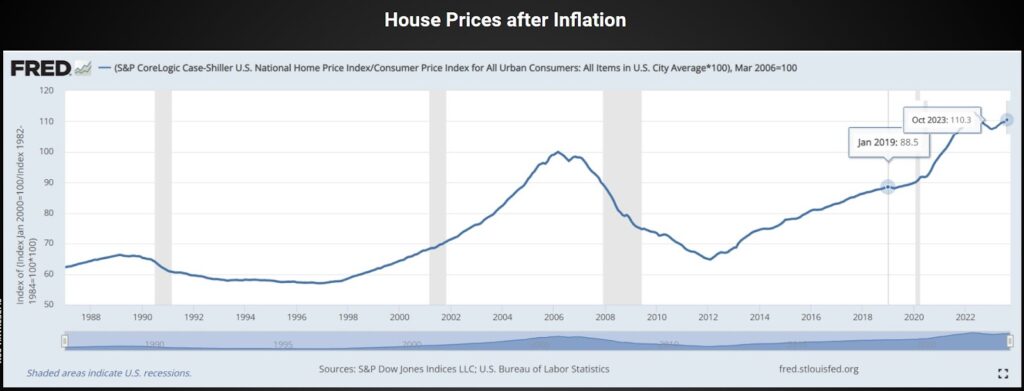
The soaring cost of housing is perhaps the most significant hurdle identified by contemporary FIRE aspirants. An analysis of data from the St. Louis Federal Reserve provides critical context. Inflation-adjusted U.S. house prices have indeed risen by approximately 25% since the beginning of 2019. This national average indicates a substantial increase in the real cost of homeownership relative to average salaries and other consumer goods. Interestingly, when viewed over a longer timeline, current prices are only about 10% higher than the peak reached in early 2006, eighteen years prior. This suggests that while the recent surge is significant, it’s part of a cyclical, albeit upward, trend.
However, national averages often obscure pronounced regional disparities. Cities like Longmont, Colorado, for instance, have seen median home prices triple since 2011, reaching approximately $540,000, or $450 per interior square foot. Such localized spikes mean that in certain desirable metropolitan areas, housing has become drastically less affordable for the average person, far outstripping wage growth. This creates a challenging scenario where traditional homeownership, a common component of long-term financial stability, appears increasingly out of reach. The added burden of higher interest rates further exacerbates this issue, significantly increasing monthly mortgage payments even if the principal remains stable.
Strategic Relocation: A Proactive Approach to Housing
In response to these challenges, the FIRE philosophy advocates for a proactive and data-driven approach, urging individuals to transcend a mindset of victimhood and embrace strategic decision-making. Houses, like any other commodity, are subject to supply and demand, and their prices vary widely based on location.
Domestic Geographic Arbitrage
One powerful strategy involves geographic arbitrage – intentionally relocating to areas where the cost of living, particularly housing, is significantly lower while maintaining or improving quality of life. This requires individuals to critically evaluate their ties to a specific location, distinguishing between genuine community bonds and mere inertia or fear of change.
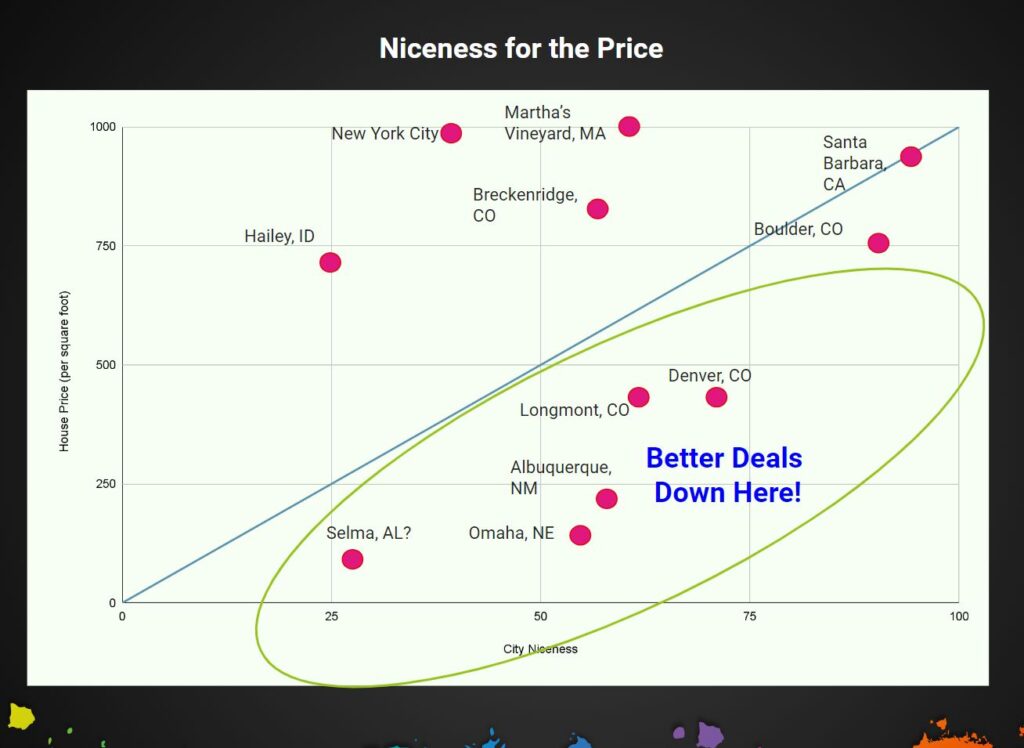
Utilizing resources like the St. Louis Fed’s data on metro areas, which provides metrics such as price per square foot, allows for objective comparison. For example, while Longmont, Colorado, might command $450 per square foot, a city like Albuquerque, New Mexico, might offer significantly lower costs, potentially around $200-$250 per square foot, while still providing desirable amenities and a sunny climate. This data-driven exploration can reveal numerous cities across the United States where a 2,000-square-foot home could be acquired for around $200,000, representing a stark contrast to more expensive markets.
Such a comparative analysis, which might plot cities based on a subjective "niceness" score against their price per square foot, empowers individuals to identify optimal locations that align with their financial goals and lifestyle preferences. This could mean moving to a different neighborhood within the same city, relocating to a more affordable state, or even making a seasonal move, as exemplified by the comparison between Phoenix and Denver metro areas, which, despite similar price per square foot ($272 vs. $299), offer vastly different climates and lifestyle options.
International Geographic Arbitrage
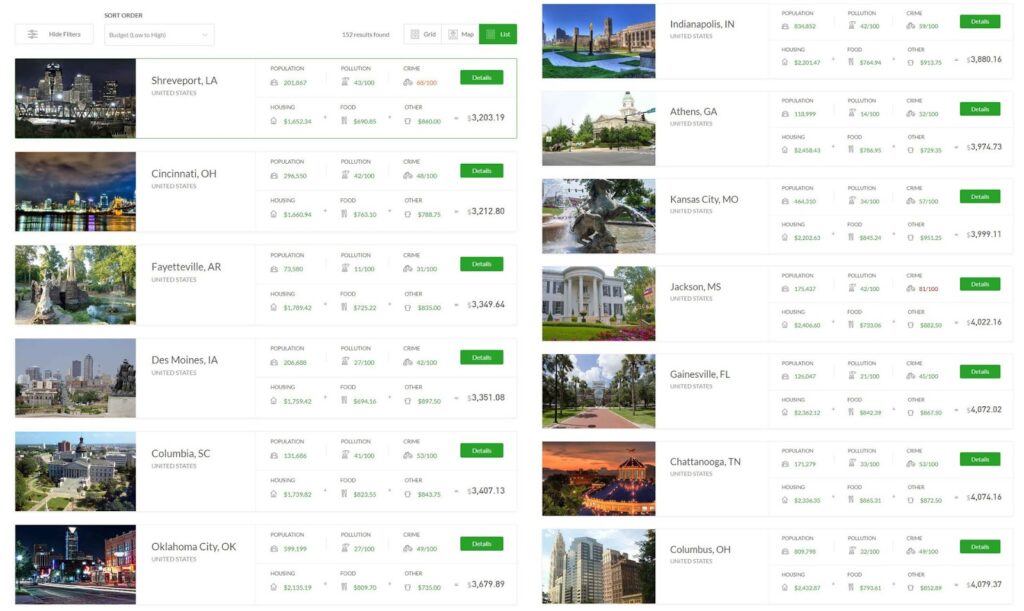
Extending this concept globally, international geographic arbitrage offers even more substantial cost-of-living reductions. Websites like "The Earth Awaits" enable users to filter cities worldwide based on budgets, family size, apartment type, and climate preferences. A hypothetical search for a two-person family with a monthly budget up to $6,000 seeking a two-bedroom apartment outside a city center in North America, with January lows not colder than 10°F, might yield results ranging from Fayetteville, Arkansas (population 93,000, monthly cost $3,000), to Chattanooga, Tennessee (population 184,000, monthly cost $3,200). These options offer considerably lower costs than major coastal cities or rapidly appreciating regions.
Expanding the search to South America reveals even more dramatic savings. Cities like Medellín, Colombia; Cuenca, Ecuador; or Buenos Aires, Argentina, often present living costs a fraction of those in North America, while offering rich cultural experiences and diverse environments. While moving internationally introduces administrative complexities—navigating visas, local laws, banking, and cultural adaptation—these challenges are often framed as "adulting puzzles" rather than insurmountable barriers. The perceived "hassle" of relocation pales in comparison to the long-term financial burden of remaining in an unaffordable area or extending one’s working career by decades due to high living expenses.
Broader Implications for Financial Independence
The current economic climate, particularly regarding housing affordability, necessitates a more adaptable and creative application of FIRE principles. The core tenets of frugality, conscious spending, and disciplined investing remain robust, but their effective deployment now often requires a willingness to consider significant lifestyle adjustments, including geographical relocation.
This shift underscores the importance of:
- Data-Driven Decision Making: Relying on objective data from sources like the Federal Reserve or specialized cost-of-living tools is crucial for making informed choices rather than succumbing to emotional attachments or generalized anxieties.
- Challenging Assumptions: Individuals must be prepared to question long-held beliefs about where they "should" live, or what constitutes a "good" life, recognizing that happiness and financial well-being are not exclusively tied to a single geographical location.
- Embracing Flexibility: The ability to pivot—whether by choosing renting over buying in a particular market, or by relocating entirely—is a significant asset in today’s volatile economic environment.
- Community Support: The collective knowledge and shared experiences within the broader FIRE community can be invaluable for identifying emerging opportunities and navigating the complexities of relocation and cost optimization.
In conclusion, while the economic landscape has undeniably evolved, posing new challenges to the traditional pathways of financial independence, the fundamental principles of conscious spending and strategic living remain highly relevant. The key to successful wealth building in 2024 and beyond lies not in abandoning these principles, but in applying them with greater adaptability, embracing data-driven decision-making, and cultivating a willingness to explore all available options, including the profound impact of strategic geographic relocation on one’s financial trajectory. The choice of where and how to live is a powerful lever for achieving financial freedom, and thoughtful engagement with this choice offers substantial rewards.

