
As Israel navigates its most tumultuous period in decades, the nation headed to the polls on Tuesday, October 27, 2026, for its 26th national legislative election. This vote, the first since the devastating Hamas-led attacks of October 7, 2023, which plunged the region into an extended state of war, is characterized by an exceptionally high voter turnout, suggesting a deeply mobilized and perhaps agitated electorate. Shin Bet chief David Zini affirmed the integrity of the democratic process, stating, "Voter turnout is high, and we can confidently tell the citizens of Israel that the elections are being monitored and conducted in a proper and inspiring manner." This assurance comes as the country grapples with ongoing conflicts in Gaza and Lebanon, and Prime Minister Benjamin Netanyahu’s assertive rhetoric regarding potential renewed hostilities with Iran, all while his own political future hangs in the balance.
The gravity of the current geopolitical landscape has undoubtedly influenced the electorate. The Oct. 7, 2023, attacks unleashed years of sustained conflict, particularly concentrated in the Gaza Strip, leading to immense human suffering and profound shifts in Israeli society and security doctrine. Concurrently, the Lebanon conflict continues to smolder, maintaining a constant state of alert along Israel’s northern border. Against this backdrop, Prime Minister Netanyahu, a figure who has dominated Israeli politics for nearly two decades, has escalated warnings of potential conflict with Iran, a stance his opponents frequently criticize as a strategic maneuver to consolidate power. These intertwined crises form the somber backdrop against which millions of Israelis cast their ballots, seeking leadership capable of navigating a deeply uncertain future.
A Nation Mobilized: Unprecedented Voter Engagement
Early indications from the Central Elections Committee pointed to a remarkable surge in voter participation. By noon, turnout stood at an impressive 31.5%, a significant increase from the 28.4% recorded at the same juncture during the 2022 election. This figure marks the highest turnout at this hour since 1973, an election that followed closely on the heels of the Yom Kippur War – another pivotal moment in Israel’s history. The comparison to 1973 is particularly poignant, highlighting a national mood of urgency and a collective desire to shape the country’s direction in the face of existential threats.
Political analysts and commentators were quick to interpret this robust turnout. The prevailing sentiment suggests that such high engagement might not bode well for Prime Minister Netanyahu and his Likud party. A phenomenon dubbed "Bibi fatigue" is believed to be a driving factor, indicating a widespread desire for change after Netanyahu’s prolonged tenure. This fatigue is anticipated to translate into increased support for parties across the political spectrum, both further to the right of Likud and towards the left, as voters seek alternatives to the current leadership and its policies. High turnout in Israel often signifies a mobilized opposition or a significant shift in public sentiment, making the final results all the more unpredictable.
The Mechanics of Israeli Democracy: Proportional Representation and Coalition Challenges
The electoral process for the 26th Knesset saw 7,331,981 eligible voters given the opportunity to choose from 36 lists vying for the 120 seats in Israel’s legislature. Polling stations, numbering 12,018, were established nationwide, opening at 7:00 AM and scheduled to close at 10:00 PM local time. Unlike many other democracies, Israel operates under a system of proportional representation without geographic electoral districts. The entire country functions as a single constituency, meaning voters across Tel Aviv, Jerusalem, and Haifa all select from the identical national party lists. This system, while ensuring broader representation for diverse political views, often leads to a highly fragmented parliament and necessitates complex coalition negotiations to form a governing majority of at least 61 seats.
The challenges of forming a stable government are a recurring theme in Israeli politics. The nation has experienced a series of snap elections in recent years, reflecting deep ideological divides and the difficulty of forging lasting alliances among numerous parties. The collapse of the Bennett-Lapid government in 2022, leading to a fifth election in a span of just a few years, serves as a stark reminder of this inherent instability. The current political climate, exacerbated by war and internal tensions, makes the post-election coalition-building process particularly fraught with potential pitfalls.
Benjamin Netanyahu: A Wartime Leader at a Crossroads
At 77 years old, Benjamin "Bibi" Netanyahu has been the preeminent figure in Israeli politics, leading the country for nearly 19 of the past 30 years. His political identity has long been intertwined with national security, often portraying himself as a permanent wartime prime minister. His current term has seen the decimation of Gaza following the Oct. 7 attacks, ongoing conflicts in Lebanon and Syria, and occasional strikes against targets in Yemen.
However, it is the specter of a broader conflict with Iran that looms largest over his rhetoric and political platform. Netanyahu has consistently highlighted the Iranian threat, even as his opponents accuse him of leveraging this issue to extend his political power. Previous Iranian retaliation waves, involving ballistic missiles and drones raining down on Israeli cities and bases, underscore the volatile nature of this regional rivalry. The accusation that Netanyahu might seek to restart such a conflict under "false pretenses" to secure his position reflects the deep distrust and polarization within the Israeli political landscape.

On election day, Netanyahu, accompanied by his wife Sara, cast his ballot in Jerusalem, urging Israelis in Hebrew to "Go vote!" Yet, his campaign also took a more confrontational turn with a video warning supporters that "they are trying to steal the election from us." This accusation, referencing the recent arrests of three Ra’am operatives on suspicion of bribing voters, introduces a contentious element into the electoral process. Ra’am, a religious Arab Muslim party, represents a significant bloc within the diverse Israeli electorate, and such allegations, regardless of their veracity, can further inflame political passions.
The Opposition’s Bid and the Path to Government
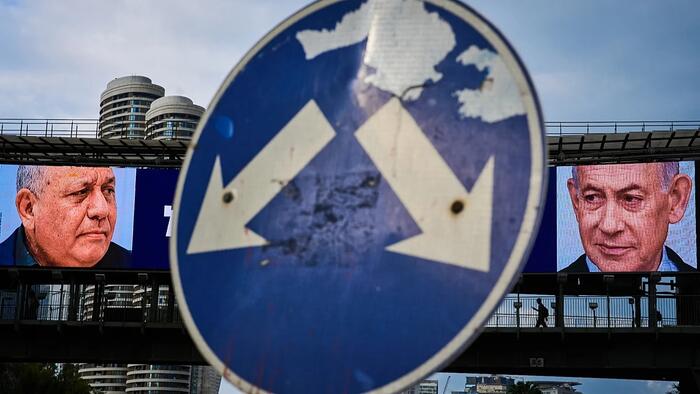
Final polls leading up to the election suggested an extremely tight race. The contest was primarily framed between Netanyahu’s bloc of right-wing and ultra-Orthodox parties and the opposition, ostensibly led by Gadi Eisenkot’s Yashar (often referred to as the National Unity party). While the opposition appeared to possess more theoretical paths to assemble a parliamentary majority, their ability to translate this electoral advantage into a stable governing coalition is hampered by "deep divisions among its leaders, particularly over cooperation with Arab parties."
This internal schism within the opposition is a critical factor. The potential necessity of including Arab parties in a governing coalition is a highly contentious issue for many centrist and right-leaning Zionist parties. Historically, such alliances have been difficult to forge and maintain, often leading to stalemates and the collapse of governments. The question of whether the opposition can overcome these ideological hurdles and present a united front capable of unseating Netanyahu remains the most significant challenge post-election.
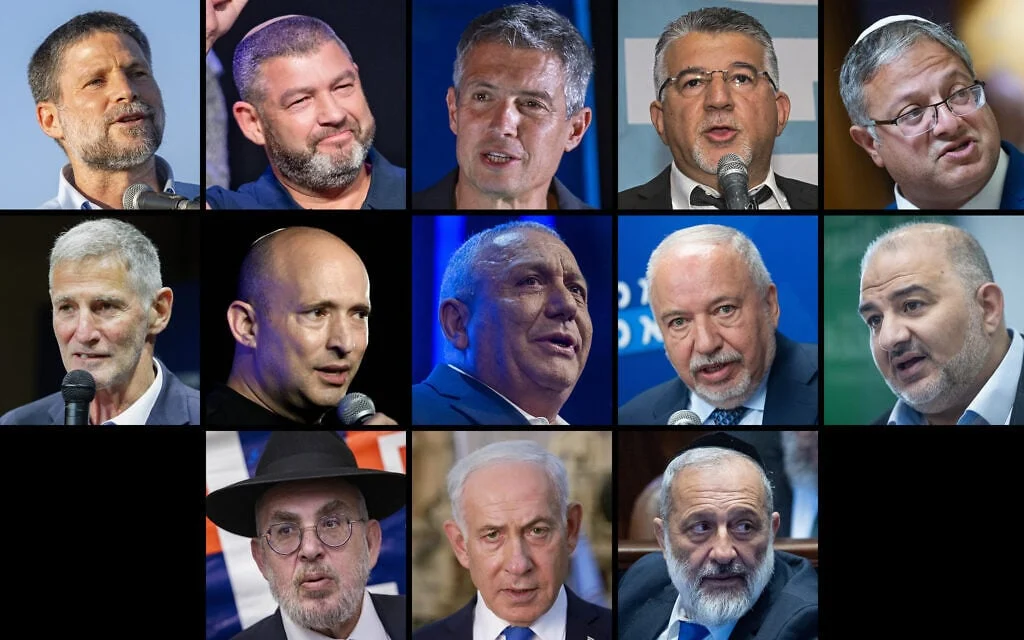
Beyond the major blocs, the political landscape is dotted with a diverse array of parties and leaders, each representing specific segments of Israeli society and their unique concerns. Figures like Bezalel Smotrich (Religious Zionism), Itamar Ben Gvir (Otzma Yehudit), Yair Golan (Democrats), Naftali Bennet (B’Yachad), Avigdor Liberman (Yisrael Beytenu), Mansour Abbas (Ra’am), Yaakov Asher (United Torah Judaism), and Aryeh Deri (Shas) all play crucial roles in the intricate dance of coalition formation. Their individual performances and willingness to negotiate will ultimately determine the shape of the next government.
Implications for Israel and the Region

The outcome of this election carries profound implications, both domestically and internationally. Domestically, a continuation of Netanyahu’s leadership could signal a deepening of conservative and nationalist policies, potentially impacting judicial reforms, religious-secular relations, and the handling of the ongoing conflicts. A shift to an opposition-led government, particularly one involving more centrist or even Arab parties, could usher in a period of significant policy re-evaluation, especially concerning the future of Gaza, diplomatic efforts, and internal social cohesion.
Regionally, the election’s results will be closely watched by neighboring countries and international powers. The direction of Israeli policy towards Iran, Lebanon, and the Palestinian territories is directly linked to who forms the government. Netanyahu’s hawkish stance on Iran contrasts with potential alternative approaches that might prioritize de-escalation or different diplomatic strategies. The handling of the Gaza conflict’s aftermath – including reconstruction, security arrangements, and the long-term political future of the enclave – will be a defining challenge for any new government.
Internationally, Israel’s relationship with key allies, particularly the United States, could also be influenced. While the strategic alliance remains strong, the specific policies and rhetoric of the Israeli government can impact the dynamics of these relationships, especially concerning regional stability and peace efforts.
As polls close and the counting of ballots begins, Israel stands at a critical juncture. The high voter turnout underscores a nation deeply invested in its future, yet also deeply divided. The path forward, whether under familiar leadership or a new coalition, promises to be fraught with challenges as Israel seeks to navigate its complex internal landscape and an increasingly volatile regional environment. The possibility of attempts by party heads to form a government failing, leading to parliamentary dissolution and yet another election, remains a palpable concern, reflecting the inherent fragilities of Israel’s current political system.

