
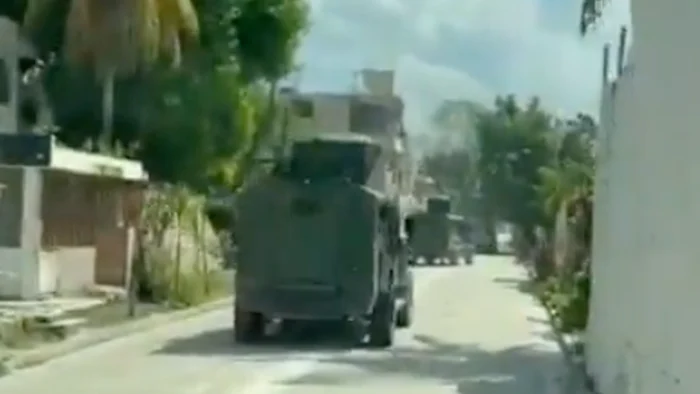
San Salvador’s decisive move to deploy military assets into the tumultuous landscape of Haiti marks a significant escalation in regional efforts to combat rampant gang violence, following the abduction of four Salvadoran aviation technicians. President Nayib Bukele, known for his unyielding stance against criminal organizations, publicly announced the launch of a rescue operation, simultaneously delivering an unequivocal warning to the Haitian gang leaders responsible for the kidnapping. This incident underscores the profound instability plaguing Haiti and the complex challenges faced by international missions attempting to restore order.
The Abduction and Immediate Response
The crisis began on Sunday when the four Salvadoran technicians, part of an international mission focused on humanitarian aid and medical evacuations, vanished in the Croix-des-Bouquets area of Port-au-Prince. Their armored vehicle reportedly came under attack by local gangs in the Santo neighborhood. In the ensuing chaos, the vehicle caught fire, forcing the occupants to flee, after which they were abducted. The Salvadoran personnel were returning after purchasing food supplies, highlighting the pervasive danger even for those engaged in non-combat roles within the conflict-ridden nation.
President Bukele swiftly addressed the nation and the international community via his official X account. He clarified the non-combatant status of the kidnapped individuals, emphasizing their role as "aviation technicians who are part of our mission in Haiti, within the framework of an international mission." He underscored that their primary job is to "carry out medical evacuations and save lives, not to wage war." This distinction is crucial in framing the nature of the Salvadoran presence and the gravity of the abduction. Bukele’s immediate declaration that "today, we have launched a military operation to rescue them" signals a direct and forceful response, setting a clear objective: "to bring our four compatriots back home alive, without any harm."
Bukele’s Unprecedented Warning
The most striking element of Bukele’s announcement was his direct and chilling warning to the gang leaders in Haiti. Drawing parallels to his administration’s successful, albeit controversial, crackdown on gangs within El Salvador, he stated, "However, I want you, the gang leaders, to understand one thing very clearly: today’s attack is nothing compared to what is coming if we do not get all four hostages back alive. And do not take our word for empty threats. We have already finished with the gangs in El Salvador, and we can finish with you too." This assertive declaration, delivered in both Spanish and Haitian Creole, leaves no ambiguity regarding the potential repercussions should the hostages not be returned safely. It serves as a potent reminder of Bukele’s domestic policies, which have dramatically reduced crime rates in El Salvador but have also drawn international scrutiny over human rights concerns.
The explicit threat to replicate El Salvador’s anti-gang strategies in Haiti marks a significant departure from conventional diplomatic responses to such crises. It signals a willingness to engage directly and forcefully, potentially beyond the scope typically associated with international peacekeeping or humanitarian missions. The message concludes with a final plea, offering a path to de-escalation: "You still have time to avoid this. Return our four compatriots alive, unharmed, and everything will return to how it was before the kidnapping. The decision is yours."
Haiti’s Deepening Crisis and Gang Hegemony
The abduction occurs against a backdrop of unprecedented instability in Haiti, a nation reeling from chronic political crises, natural disasters, and a severe humanitarian emergency. Since the assassination of President Jovenel Moïse in July 2021, the country has been plunged into a power vacuum, allowing armed gangs to expand their influence and control over vast swathes of territory, particularly in the capital, Port-au-Prince. These gangs, often operating with impunity, engage in widespread kidnappings, extortion, and violence, effectively paralyzing daily life and economic activity.
According to reports from the United Nations and various human rights organizations, gang violence in Haiti has reached epidemic proportions. In 2023, the UN estimated that over 8,000 people were killed, injured, or kidnapped in Haiti, a staggering increase compared to previous years. Kidnappings alone surged by over 80% in the past year, with thousands of individuals, including foreign nationals, aid workers, and local residents, falling victim. Gangs now control an estimated 80% of Port-au-Prince, blocking access to essential services, disrupting supply chains, and displacing hundreds of thousands of people. The ongoing violence has triggered a severe humanitarian crisis, with over 5.5 million people, nearly half of Haiti’s population, requiring humanitarian assistance, and acute food insecurity affecting millions.
The area of Croix-des-Bouquets, where the Salvadoran technicians were abducted, is particularly notorious for gang activity. It is a critical corridor frequently used for travel within and out of the capital, making it a high-risk zone for both locals and international personnel. The attack on an armored vehicle underscores the sophisticated nature and brazenness of these criminal enterprises, which often possess significant firepower and local intelligence networks.
The International Stabilization Mission
El Salvador’s participation in Haiti is part of a broader United Nations-authorized international gang suppression mission, a multinational security support (MSS) initiative aimed at assisting the Haitian National Police (HNP) in restoring security and dismantling criminal networks. Last year, the UN Security Council authorized the deployment of up to 5,550 security personnel and more than 50 civilian staff for this mission, recognizing the urgent need for external intervention.
The mission, led by Kenya, includes contributions from various countries such as Chad, Jamaica, Guatemala, and El Salvador. While Kenya is expected to deploy a significant contingent of police officers, other nations contribute specialized personnel, equipment, and logistical support. El Salvador’s role, as clarified by President Bukele, has primarily focused on providing aviation technical support, including pilots and maintenance personnel, crucial for medical evacuations and logistical operations in a country with challenging infrastructure and pervasive insecurity.
The international mission itself has faced numerous delays and obstacles, including legal challenges in Kenya and logistical complexities. Its deployment has been seen as a last-ditch effort to prevent Haiti from descending further into anarchy, but its effectiveness is contingent on sustained international commitment, adequate resources, and a clear strategy to confront entrenched gang power. The abduction of the Salvadoran technicians highlights the extreme risks associated with this mission and the formidable challenge of operating in an environment where state authority is virtually non-existent.
The "Bukele Model" and Regional Implications
President Bukele’s threat to "finish with" Haitian gangs draws directly from his controversial but highly effective anti-gang strategy in El Salvador. Since March 2022, Bukele’s government has implemented a "state of exception," suspending certain constitutional rights to allow for mass arrests of suspected gang members. This policy has led to the detention of over 78,000 individuals, drastically reducing murder rates in El Salvador, which was once one of the most violent countries globally. The "Bukele model" has been lauded by many Salvadorans and some regional leaders for restoring order, but it has also been condemned by human rights organizations for alleged arbitrary detentions, due process violations, and overcrowded prisons.
The application of such a model, or even the threat of it, in Haiti carries significant implications. Firstly, it signals a willingness by El Salvador to project its security doctrines beyond its borders, potentially setting a precedent for other nations grappling with transnational organized crime. Secondly, a direct military operation by El Salvador, if it extends beyond a targeted rescue to broader anti-gang efforts, could complicate the existing multinational security support mission, potentially overlapping or conflicting with its mandate and rules of engagement.
The Haitian government, in a press release issued late Wednesday, affirmed that the "abduction" of the four Salvadorans was an "absolute priority." This statement underscores the gravity of the situation and the immediate need for a resolution, while also acknowledging the delicate balance required in managing international responses to domestic crises. The timing of this event is also critical, as Haiti is ostensibly preparing for its first general election in more than a decade, a process that is already fraught with immense logistical and security challenges. The outcome of this abduction and El Salvador’s military response could profoundly influence the feasibility and fairness of any future electoral process.
Broader Impact and Unanswered Questions
The immediate implications of El Salvador’s military operation are multifaceted. For the international mission, it raises questions about coordination, intelligence sharing, and the potential for unilateral actions by contributing nations. While the objective of rescuing hostages is clear, the methods and long-term engagement could alter the dynamics of the multinational force. For Haiti, it deepens the sense of external intervention and could potentially trigger retaliatory actions from gangs, further destabilizing an already fragile nation.
Furthermore, the operation raises complex legal and diplomatic questions. While the UN authorized a security support mission, a direct military rescue operation by a contributing nation, especially one with a stated intent to "finish with" local gangs, could be interpreted in various ways by the international community and Haitian authorities. There has been no specific claim of responsibility for the attack or abduction, adding another layer of complexity to identifying and negotiating with the perpetrators.
The situation remains fluid and highly sensitive. The success or failure of El Salvador’s military operation will not only determine the fate of the four kidnapped technicians but could also set a new precedent for how regional powers respond to transnational criminal threats in unstable environments. It underscores the urgent need for comprehensive, coordinated international strategies that address both the immediate security challenges and the underlying socio-economic and political causes of Haiti’s perpetual crisis. The world watches closely to see if President Bukele’s bold move can secure the safe return of his compatriots and what long-term consequences it will unleash upon the embattled nation of Haiti.

