

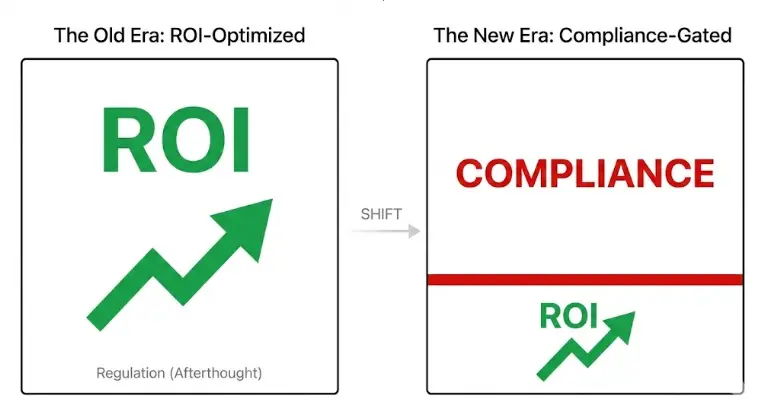
For nearly a decade, the short-term rental (STR) investment landscape operated with a dynamic akin to a digital gold rush. Investors meticulously optimized for nightly rates, occupancy curves, and complex platform algorithms. The prevailing sentiment was straightforward: if the financial projections aligned, the investment was deemed viable. Regulatory considerations, while acknowledged, often remained a secondary concern, a checkbox to be addressed somewhere between securing financing and furnishing the property. This era, characterized by a focus on maximizing yield with a deferred approach to compliance, has definitively concluded.
Today, STR regulation has transcended its status as a minor legal hurdle, evolving into a terminal underwriting risk for investors and PropTech platforms alike. A single city council vote can fundamentally alter the landscape overnight, potentially eliminating non-owner-occupied rentals. The introduction of a newly enforced permit cap can instantly freeze new supply development. Moreover, aggressive enforcement cycles can quietly decimate occupancy rates across entire zip codes, rendering previously lucrative investments untenable. In this transformed environment, the illusion of yield without legality is no longer sustainable. This paradigm shift necessitates a fundamental reevaluation for PropTech platforms, marketplaces, analytics dashboards, and STR lending engines. Compliance can no longer be relegated to the periphery, residing in blog posts or manual research efforts. It must be integrated as a core, programmatic underwriting input.
The API as a Policy Enforcement Engine
In the context of real estate compliance, an Application Programming Interface (API) transcends its role as a mere data conduit. It emerges as the foundational infrastructure for automated policy enforcement. The notion of "staying compliant by city" translates to the ability to systematically translate thousands of disparate local municipal codes into a singular, executable logic gate. This programmatic approach is crucial for navigating the increasingly complex and localized regulatory environment governing short-term rentals.
Deterministic vs. Probabilistic Data: The Compliance Threshold
A critical distinction in real estate technology lies between probabilistic modeling and deterministic data. Historically, most PropTech platforms have relied heavily on probabilistic data, which encompasses estimations, inferred classifications, and Automated Valuation Models (AVMs). While such probabilistic data might be acceptable for general return on investment (ROI) calculations, it presents a significant liability when it comes to regulatory compliance.
Probabilistic data operates on the basis of "likelihoods." For instance, it might infer that a property is a single-family home based on its square footage or its neighborhood profile. However, if a specific city ordinance explicitly bans STRs in multi-family units while permitting them in single-family homes, a probabilistic assessment of "likely" eligibility is insufficient. The absence of definitive, legally binding information introduces unacceptable risk.
Deterministic data, conversely, is substantiated by authoritative records. This includes official tax assessments, deed filings, and established land-use codes. For a platform to function as a genuine underwriting tool, its API must provide these deterministic metadata points. True compliance necessitates a binary outcome – a definitive "Yes" or "No" – grounded in legal truth. When a platform relies on inferred data for compliance, it exposes its users to catastrophic capital risk. If an institutional investor allocates substantial capital, say $50 million, into a market based on "probable" eligibility, and that metadata proves inaccurate, the entire portfolio’s cash flow can be jeopardized by a single enforcement letter from municipal authorities.
The "Ghost Listing" Problem and Enforcement Signals
Standard real estate APIs often falter when confronted with the "Ghost Listing" problem. In markets undergoing aggressive regulatory crackdowns, a significant number of listings may remain technically "active" on booking platforms even after their legal permits have been revoked. This can create a misleading impression of a healthy market.
If a platform solely tracks active listings, it might report a seemingly robust and thriving market. In reality, that market could be experiencing a severe "supply contraction" due to regulatory action. A compliance-aware API must offer more than a static snapshot; it needs to provide historical performance trends. By cross-referencing a sudden drop in supply with sustained demand, platforms can detect an "enforcement signal."
For example, if the number of active rentals in a specific zip code plummets by 40% within a single quarter, while nightly rates remain consistently high, it is rarely indicative of market failure. Instead, it strongly suggests a regulatory "clean sweep." Platforms equipped to programmatically identify these signals can effectively guide their users away from markets where the "door is closing," even if the immediate ROI appears attractive. This proactive approach is essential for mitigating unforeseen risks associated with evolving regulatory landscapes.
Turning Ordinances Into Logic: The Three Core Guardrails
To automate compliance effectively, PropTech platforms must translate the often convoluted language of legal ordinances into structured, queryable data. At a practical level, most STR regulations can be categorized into three fundamental operational "guardrails":

1. Zoning and Property-Type Restrictions
A significant number of municipalities impose restrictions on STRs based on building classification. By leveraging property-level metadata, a platform can automatically flag ineligible property classes or exclude restricted asset types from search results. This ensures that users are presented only with inventory that is legally viable for short-term rental operations, thereby preventing potential compliance violations from the outset. This proactive filtering is crucial for both individual investors and larger institutional entities looking to deploy capital efficiently and without undue risk.
2. Residency and Ownership Mandates
A growing trend in STR regulation involves allowing rentals only if the property is owner-occupied. By utilizing ownership indicators embedded within property datasets, a platform can seamlessly transition from mere "ROI modeling" to "operational viability modeling." This distinction is profound: it shifts from a tool that merely suggests what a property could earn to one that accurately informs users about what they are legally allowed to earn. This is particularly critical for platforms serving lenders and investors who require a clear understanding of the regulatory framework governing potential returns. The ability to programmatically verify owner occupancy status is a significant step towards de-risking STR investments.
3. Market Saturation and Permit Caps
Certain cities implement regulations through strict permit caps, effectively controlling market saturation. While ordinance databases provide the official limits, performance trends offer a real-world perspective on enforcement patterns. This is where a platform evolves from analyzing static data to engaging in predictive risk modeling. By monitoring permit application backlogs, expiration rates, and the overall availability of new permits, platforms can provide early warnings of potential market closures or restrictions, allowing investors to make informed decisions before significant capital is committed. This forward-looking approach is essential in dynamic regulatory environments.
Technical Architecture: Building the Compliance Layer with Mashvisor
For compliance to function as a genuine underwriting input, it must be deeply integrated within a platform’s technical architecture. By leveraging Mashvisor’s structured data, platforms can feed their own validation frameworks, creating a robust and automated compliance layer.
A compliance-aware underwriting engine can be constructed by integrating multiple Mashvisor API endpoints that expose deterministic property metadata and historical rental performance data. This integration allows for the programmatic assessment of regulatory compliance at scale.
Phase 1: The Eligibility Filter (Property Info)
The foundational data pull is initiated via the GET /v1.1/client/property endpoint. When a user selects a listing, the platform retrieves the comprehensive Property Object. This object contains critical deterministic data points such as property_type, occupancy_status, and specific zoning information relevant to STR operations. This initial step acts as an immediate eligibility filter, allowing the system to quickly identify properties that may be fundamentally incompatible with local STR ordinances based on their classification or existing use.
Phase 2: Ownership & Residency Screening (Property Ownership)
For regulations that mandate primary residence status or specific ownership structures, the platform leverages the GET /v1.1/client/owner/contact endpoint. This API call provides access to the Property Ownership section of the data. Here, the system can extract crucial information like the owner’s mailing address. By cross-referencing this with the property’s physical address, the platform can programmatically determine if the owner resides at the property, a key determinant in many "owner-occupied" STR regulations. This programmatic verification is essential for scaling investment analysis across portfolios, eliminating the need for time-consuming manual checks.
Phase 3: Regulatory Pressure Detection (Rental Activity Data)
While static rules capture the letter of the law, real-time trend data captures its practical impact. The GET /v1.1/client/rento-calculator/historical-performance endpoint is crucial for detecting "enforcement signals." This endpoint provides access to historical rental activity, including metrics like active listing counts, average daily rates, and occupancy trends over time. By analyzing this data, platforms can identify sudden or significant shifts in supply that may indicate an ongoing regulatory crackdown or a forthcoming change in enforcement. This allows for a more nuanced understanding of market dynamics beyond simple supply and demand projections.
Case Study: Institutional Underwriting for a Multi-Market REIT
Consider a Real Estate Investment Trust (REIT) with a strategic focus on the Florida market, specifically targeting areas like Miami, where city-level ordinances are notoriously dynamic and carry substantial fiduciary implications. For such an entity, compliance is not merely a legal objective; it is a fundamental capital markets requirement. Their investment committee (IC) mandates a rigorously audited, traceable risk framework before any institutional capital is deployed.
Example: Institutional STR Underwriting Workflow
Step 1: The Metadata "Gateway"
The process commences with a query to GET /v1.1/client/property to retrieve the high-fidelity Property Object. In a traditional, manual workflow, an analyst might spend hours navigating a city’s GIS website and zoning maps. Programmatically, however, the system can interrogate property_type and occupancy_status within milliseconds. If the property is flagged as a "Second Home" in a zone that strictly requires primary residency, the potential investment is immediately disqualified, preventing it from reaching an analyst’s desk and saving valuable time and resources.
Step 2: Ownership & Residency Verification
Next, the platform verifies the owner’s details via GET /v1.1/client/owner/contact. The engine extracts the owner’s mailing address and programmatically cross-references it with the subject property’s physical address. For a REIT evaluating hundreds or even thousands of potential acquisitions, this programmatic check is vital for scale. Manual verification for such a portfolio would be an insurmountable task. The API provides the deterministic proof required for the IC memo, ensuring that all investment decisions are backed by verifiable data.
Step 3: Market Contraction & Enforcement Analysis
The platform then queries GET /v1.1/client/rento-calculator/historical-performance. If the data reveals a sharp, inexplicable decline in active listing counts – a clear indicator of potential regulatory intervention – the REIT identifies a "Regulatory Pressure" signal. This insight allows the REIT to pivot its capital allocation towards more stable micro-markets or to reassess the viability of investments in that specific area, thereby preserving capital in the face of municipal volatility.
Step 4: Output – The Unified Underwriting Score
Finally, the platform aggregates these Mashvisor data points into its proprietary decision engine, generating a comprehensive underwriting score.
| Metric | Mashvisor API Source | Value |
|---|---|---|
| Projected ROI | Investment Analysis | 8.2% |
| Zoning Match | Property Info (property_type) |
Pass (Single Family) |
| Residency Match | Property Ownership (mailing_address) |
Fail (Absentee Owner) |
| Market Pressure | Historical Performance Trends | High (Supply contraction) |
The Result: The system generates a decisive "No-Buy" signal. This automated, programmatic workflow ensures that every deal in the pipeline rigorously adheres to the REIT’s stringent fiduciary standards for operational certainty, mitigating risks associated with regulatory uncertainty.
Compliance as a Fiduciary Guardrail
As the short-term rental market matures from an opportunistic retail play into a recognized institutional asset class, the demand for repeatable risk frameworks has shifted from a "nice-to-have" to a fundamental capital markets requirement. For institutional funds, compliance has become the ultimate fiduciary guardrail.
Lenders and capital partners are increasingly attuned to "regulatory drift"—the phenomenon where an asset is acquired under one legal framework but subsequently becomes "orphaned" by evolving regulations. In this high-stakes environment, a platform’s reliance on manual research or generic "best-effort" disclaimers is no longer acceptable. Institutional underwriting demands an audit-traceable data lineage. By leveraging deterministic property metadata, platforms can provide a digital paper trail for every investment decision. When a lender inquires about the rationale behind approving a specific asset for a high-leverage loan, the platform can precisely pinpoint the Mashvisor-backed occupancy_status and property_type indicators that aligned with the city’s ordinance at the time of underwriting. This transforms compliance from a potential legal burden into a tangible liquidity feature, making assets demonstrably more attractive to risk-averse institutional buyers.
Conclusion: From ROI to Operational Viability
The short-term rental market has irrevocably moved beyond its initial "growth at all costs" phase. In this new landscape, the most sophisticated calculation is no longer solely about how much a property could generate in revenue, but rather whether it is legally allowed to operate. For PropTech platforms, this represents a fundamental shift in their product category and value proposition.
By integrating deterministic property metadata and real-time performance signals directly into the underwriting workflow, platforms transcend their role as simple ROI calculators. They evolve into essential risk infrastructure—tools that actively protect capital, ensure fiduciary compliance, and provide the operational certainty that institutional investors demand. As regulatory scrutiny continues to tighten and localize, the platforms that proactively encode legality into their technical architecture will not merely survive; they will define the next era of real estate investing by providing the transparency and predictability necessary for sustained success.
Scaling Compliance in Your Real Estate Data Stack?
If you are evaluating how to integrate structured property metadata into your underwriting engine or transition from manual research to a programmatic compliance workflow, we encourage you to test your architecture.
Book a short intro call with our data team to walk through your specific use case, technical requirements, and how to leverage Mashvisor’s API to build a compliance-aware roadmap for your platform.

