
Morgan Stanley, one of Wall Street’s prominent investment banks, delivered a stronger-than-anticipated third-quarter earnings report, largely propelled by a blockbuster performance in its equities trading division. The financial giant announced a profit increase of 6.5% to $4.91 billion, translating to $3.03 per share, while total revenue climbed 12% to reach $20.34 billion. These figures largely surpassed analyst consensus, offering a mixed but generally positive picture of the firm’s resilience in a complex global economic landscape.
A Deep Dive into Divisional Performance
The third quarter, ending September 30, 2023, showcased a clear bifurcation in performance across Morgan Stanley’s key business segments. The firm’s long-standing strength in equities trading once again emerged as a significant driver of overall results, overshadowing lingering challenges in fixed income and investment banking.
Equities Trading: A Marquee Performance
Morgan Stanley’s equities trading division, a historically dominant franchise for the bank, recorded an impressive 41% surge in revenue, reaching $5.8 billion. This figure significantly exceeded StreetAccount estimates by approximately $909 million, underscoring the segment’s exceptional strength. The company attributed this robust growth to widespread strength across its diverse equities products and geographical regions, with Asia specifically highlighted as a source of particular vigor during the quarter. This stellar performance in equities proved crucial in offsetting softer results and missed expectations in other areas of the business. The firm’s deep institutional client relationships, sophisticated technological platforms, and broad product offerings—spanning cash equities, derivatives, and prime brokerage—are consistently cited as foundational to its enduring leadership in this highly competitive space. The increased volatility and trading volumes observed in certain equity markets during the quarter, potentially spurred by sector-specific trends and macro news flow, likely contributed to this strong showing.
Fixed Income and Investment Banking: Navigating Headwinds
While equities soared, other key divisions faced more pronounced headwinds. Fixed income trading revenue experienced a 7% decline, settling at $2.01 billion, roughly $260 million below expectations. This dip was primarily driven by contractions in credit and commodities trading, reflecting a broader industry trend where rising interest rates and subdued client activity impacted fixed income markets. The tightening monetary policies adopted by central banks globally, aimed at combating persistent inflation, have led to increased funding costs and reduced risk appetite, particularly in less liquid credit segments.
Investment banking revenue, a bellwether for corporate deal-making, edged up a modest 2% to $2.16 billion but still fell short of expectations by about $110 million. The bank noted an increase in advisory revenue, largely attributable to a rise in completed mergers and acquisitions (M&A) transactions, indicating a gradual thawing in deal pipelines that had been frozen for much of the preceding year. However, this positive development was partially negated by declines in both equity underwriting, due to a lower volume of initial public offerings (IPOs), and fixed income underwriting. The IPO market, in particular, remained largely subdued throughout Q3 2023, as market volatility and high interest rates deterred many companies from pursuing public listings. Similarly, bond issuance saw varied activity, with higher borrowing costs impacting corporate decisions to tap debt markets.
Analyst Reactions and Market Response
Despite the headline beat on profit and revenue, the mixed divisional performance prompted a nuanced reaction from market analysts. Wells Fargo analyst Mike Mayo characterized the results as "good, but not great," in a Wednesday note to clients. Mayo’s assessment pointed to slower-than-expected improvement in certain business metrics, particularly in areas like investment banking and wealth management net new assets, which are key strategic growth pillars for Morgan Stanley. This sentiment suggests that while the firm demonstrated strong execution in its core equities franchise, the broader recovery across all business lines remains uneven.
Following the earnings announcement, Morgan Stanley shares experienced a decline of approximately 3% in midday trading. This market reaction likely reflected investor concerns over the persistent weakness in fixed income and investment banking, coupled with the "good but not great" sentiment, indicating that the market was perhaps looking for a more comprehensive rebound across all segments rather than an equities-led beat. The stock movement also mirrored broader anxieties about the future trajectory of interest rates, inflation, and geopolitical stability, which continue to influence investor sentiment towards financial institutions.
CEO Ted Pick’s Macroeconomic Outlook
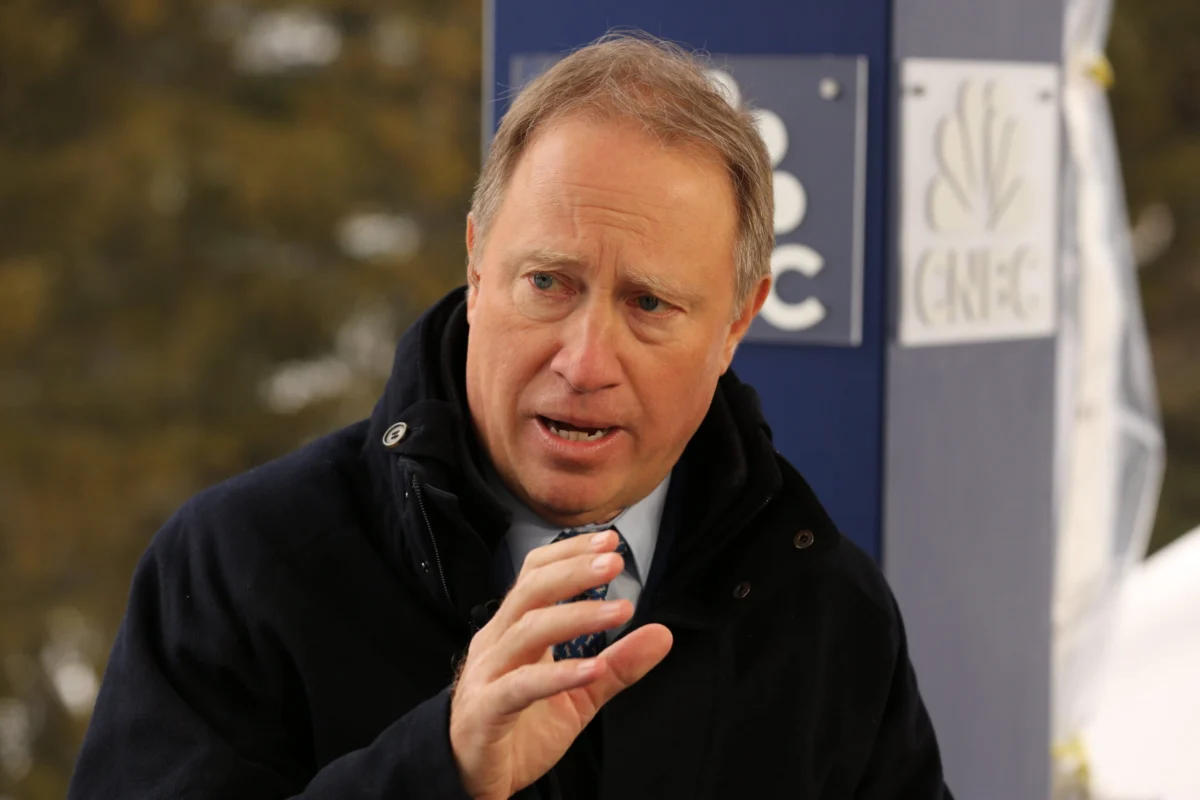
Morgan Stanley CEO Ted Pick provided a comprehensive macroeconomic perspective during an interview with CNBC’s Leslie Picker, highlighting the intricate interplay of two dominant forces shaping the global economy. Pick articulated that the current economic landscape is being simultaneously boosted by the rapid buildout of artificial intelligence (AI) infrastructure and technological advancements, while being dragged down by geopolitical strife and persistent inflationary pressures.

"The interaction of the AI phenomenon and geopolitics has been the dominant reality the whole year," Pick stated, emphasizing the stark contrast between these two narratives. He expressed a desire for the "positive narrative" of AI-driven growth to prevail, contingent on achieving greater control over geopolitical tensions. Pick specifically noted that a slowdown in activity across Wall Street began in early September, attributing it to mounting concerns over overseas conflicts, stubbornly high inflation, and a significant surge in bond yields. These factors collectively contributed to a more cautious approach among investors and corporations, impacting deal flow and trading volumes in the latter part of the quarter.
Despite these headwinds, Pick maintained a "cautiously optimistic" stance regarding market performance in the fourth quarter. This guarded optimism reflects a recognition of both the underlying strengths in certain economic sectors, particularly those benefiting from AI investments, and the potential for continued volatility stemming from geopolitical developments and monetary policy uncertainties. His comments underscore the delicate balancing act faced by financial institutions in navigating an environment characterized by both innovation-driven growth and pervasive macro-level risks.
Background and Chronology of Key Economic Forces
The third quarter of 2023 unfolded against a backdrop of complex economic dynamics that directly influenced Morgan Stanley’s performance. The "AI buildout" narrative gained significant momentum throughout the year, with major tech companies announcing substantial investments in AI research, development, and infrastructure. This fueled a rally in technology stocks and created a demand for related financial services, including capital raising for AI startups and increased trading activity in AI-adjacent equities.
Concurrently, geopolitical tensions remained a persistent drag. The ongoing conflict in Ukraine continued to cast a shadow over global energy and commodity markets, contributing to inflationary pressures. Elsewhere, simmering tensions in various regions, including concerns about U.S.-China relations, added layers of uncertainty, impacting global supply chains and cross-border investment flows.
Inflation, though showing signs of moderation from its peaks in 2022, remained a critical concern for central banks. The U.S. Federal Reserve, alongside other major central banks, continued its hawkish monetary policy stance, implementing further interest rate hikes throughout Q3. This sustained tightening contributed to the "surging yields" mentioned by Pick, with the benchmark 10-year U.S. Treasury yield notably crossing the 4.5% mark and approaching multi-year highs by the end of the quarter. Higher yields increase borrowing costs for companies and consumers, potentially dampening economic activity and making some investment banking deals less attractive.
The specific slowdown observed by Pick in early September aligns with a period of heightened market anxiety. Data released during this time, including stronger-than-expected inflation figures and robust jobs reports, fueled expectations that the Federal Reserve would maintain higher interest rates for longer, leading to a sharp rise in bond yields and a sell-off in equity markets. This "higher for longer" narrative contributed to a more risk-averse environment, impacting capital markets activity across Wall Street.
Morgan Stanley’s Strategic Positioning and Broader Implications
Morgan Stanley’s strategic evolution over recent years has seen it pivot significantly towards its wealth management division, aiming for a more stable, recurring revenue stream less susceptible to the cyclical volatility of capital markets. Acquisitions like E*TRADE and Eaton Vance were instrumental in this strategy. While the strong equities trading results in Q3 underscore the enduring value of its institutional securities franchise, they also highlight the ongoing challenge of achieving balanced growth across all segments. The "good, but not great" assessment by analysts like Mike Mayo may reflect a desire to see stronger performance from these strategic growth areas, even as capital markets provide a welcome boost.
The broader implications for the financial services industry are significant. Morgan Stanley’s Q3 results serve as a microcosm of the current environment: banks with strong, diversified trading desks capable of capitalizing on market volatility can outperform, even when traditional fee-generating businesses like investment banking face headwinds. However, the persistent slowdown in M&A and IPOs suggests that a full recovery in investment banking might be a prolonged process, contingent on greater economic stability and a clearer interest rate outlook.
The emphasis on AI by CEO Ted Pick also points to a future where technological innovation will increasingly shape financial markets. Banks that invest heavily in AI capabilities, both for internal operations and client-facing services, are likely to gain a competitive edge. This includes leveraging AI for enhanced trading algorithms, risk management, data analysis, and personalized wealth management advice.
Looking Ahead: Cautious Optimism for Q4 and Beyond
Ted Pick’s "cautiously optimistic" outlook for the fourth quarter suggests that while the underlying economic forces of AI innovation remain powerful, the immediate future is still clouded by geopolitical uncertainties and the effects of monetary policy. The banking sector will likely continue to grapple with the dual challenges of high interest rates, which can boost net interest income but suppress deal activity, and evolving regulatory environments.
For Morgan Stanley, maintaining its leadership in equities while fostering a stronger recovery in fixed income, investment banking, and steadily growing its wealth management assets will be critical. The ability to adapt to rapid technological shifts, particularly in AI, and to navigate a fragmented geopolitical landscape will determine its sustained success. The Q3 performance, while buoyed by a standout equities showing, reinforces the narrative of an industry in transition, balancing traditional strengths with strategic adaptation to new economic realities. The path to a truly "great" quarter, rather than merely "good," will depend on a more harmonious alignment of global economic and geopolitical factors.

