
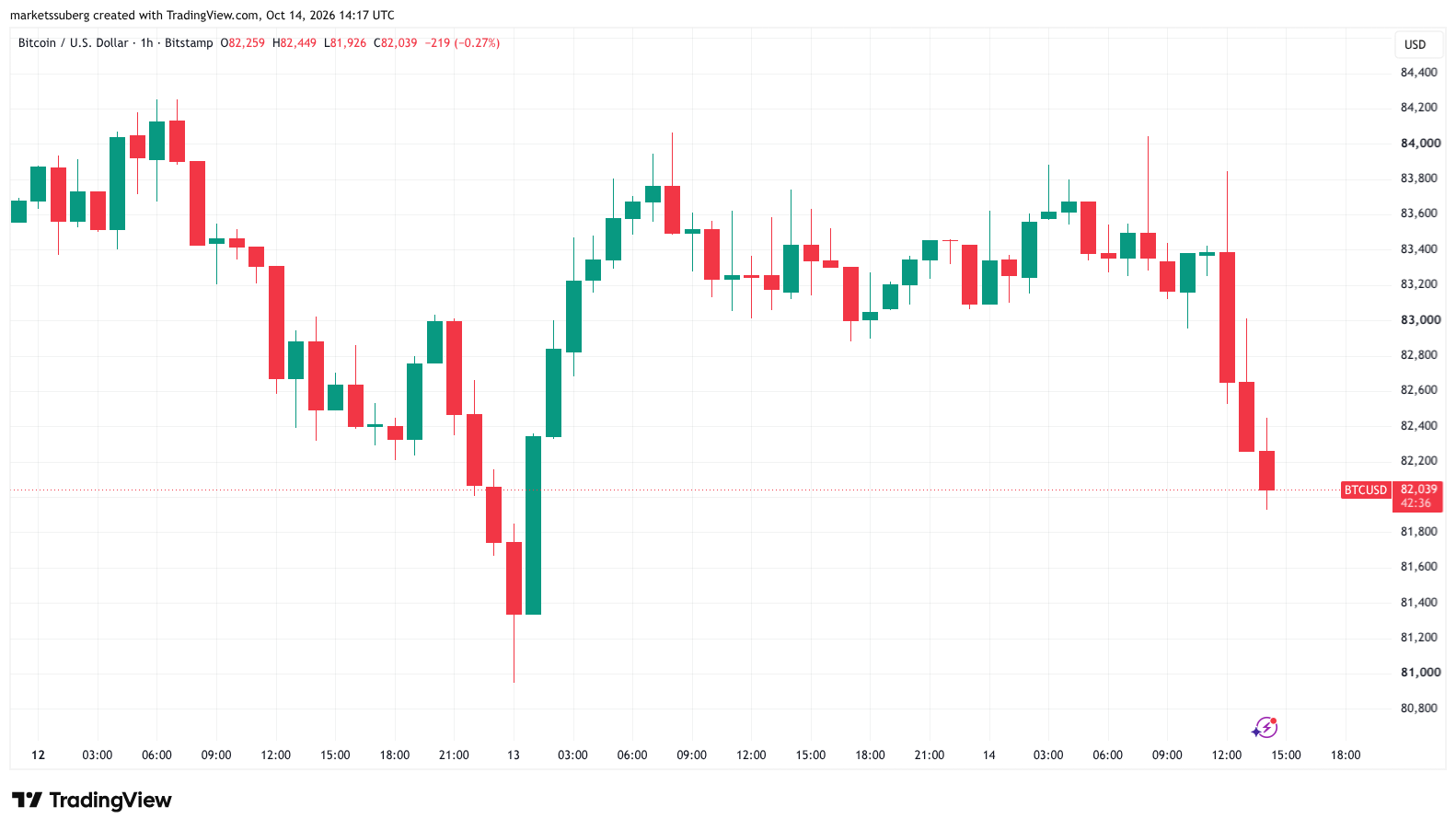
Bitcoin (BTC) experienced a significant downturn, slipping below the $82,000 mark shortly after the Wall Street trading session commenced on Wednesday, a reaction directly linked to the release of US consumer inflation data for September that exceeded market forecasts. The digital asset’s decline was mirrored by broader financial markets, with gold and stock-market futures also registering losses following the unveiling of the Consumer Price Index (CPI) figures.
Inflationary Pressures Mount: September CPI Exceeds Projections
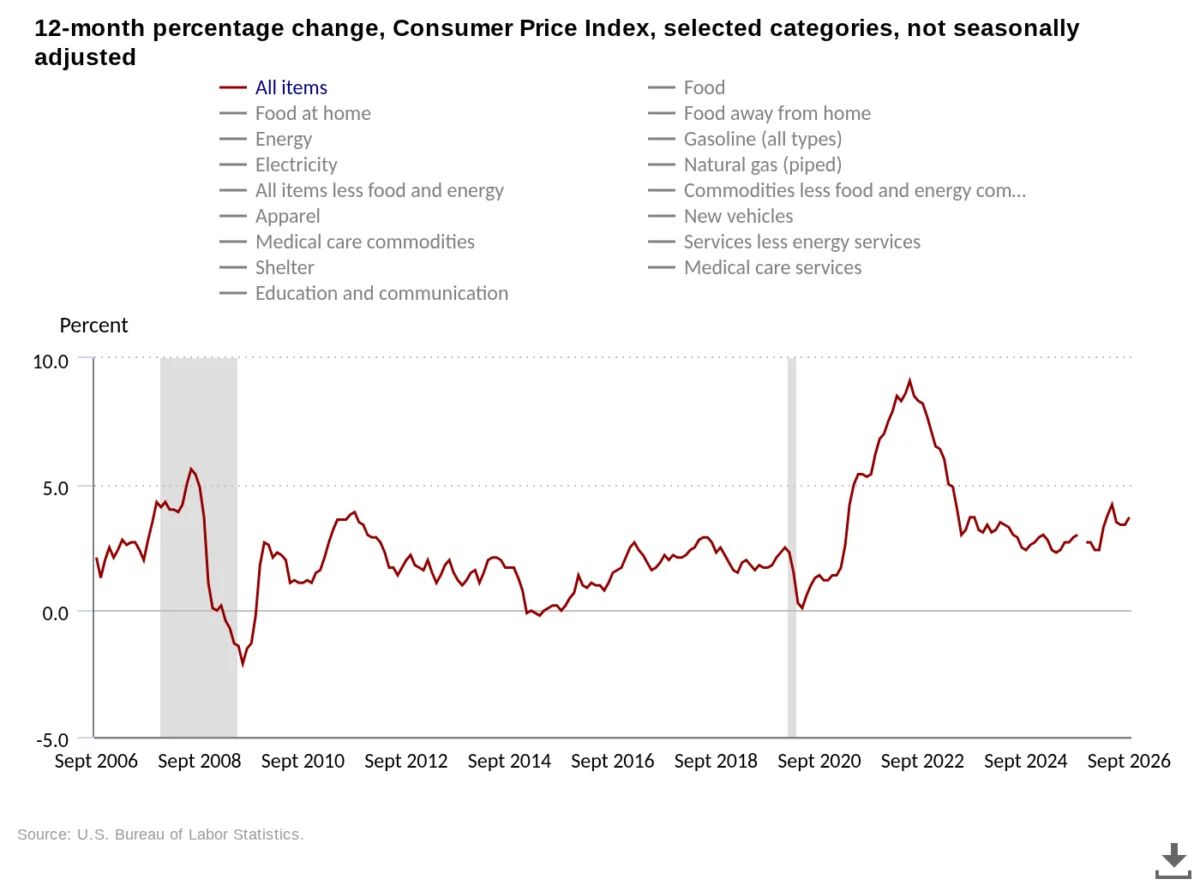
The Bureau of Labor Statistics (BLS) reported that the Consumer Price Index (CPI) for September registered a 3.7% increase year-on-year. This figure was a notable 0.1% higher than the consensus expectation among market participants, signaling persistent inflationary pressures within the US economy. A significant contributor to this uptick was the surge in fuel prices, exacerbated by ongoing geopolitical tensions in the Middle East and disruptions to oil supply chains.
The official BLS release highlighted the impact of energy costs, stating, "The index for gasoline rose 9.1 percent in September, accounting for over half of the monthly all items increase. The energy index increased 5.2 percent over the month following a 2.1-percent increase in August." This dramatic rise in gasoline prices directly translated into higher transportation costs for consumers and businesses, a factor that ripples through various sectors of the economy.

Core Inflation Also Shows Resilience
Beyond headline figures, core CPI, which excludes the more volatile components of energy and food, also demonstrated its own inflationary momentum. This index rose by 2.6% year-on-year, a figure that was also 0.1% above what analysts had projected. The resilience of core inflation suggests that underlying price pressures remain entrenched, independent of immediate energy market fluctuations. This broad-based increase across different categories of goods and services indicates a more systemic inflationary environment.
Market Reactions and Expert Commentary
The unexpected strength of the inflation report immediately triggered a reassessment of market expectations regarding future monetary policy. Sonu Varghese, Chief Macro Strategist at Carson Group, commented on the recurring nature of these inflationary surprises, suggesting that the market’s consistent underestimation of inflation might be a recurring theme. "The only surprise is that investors keep getting surprised by broad-based inflation," Varghese noted in an interview with CNBC. "And we’ve yet to see the full impact of higher diesel prices and the AI boom." His remarks underscore the potential for further inflationary pressures stemming from emerging economic trends and supply-side constraints.
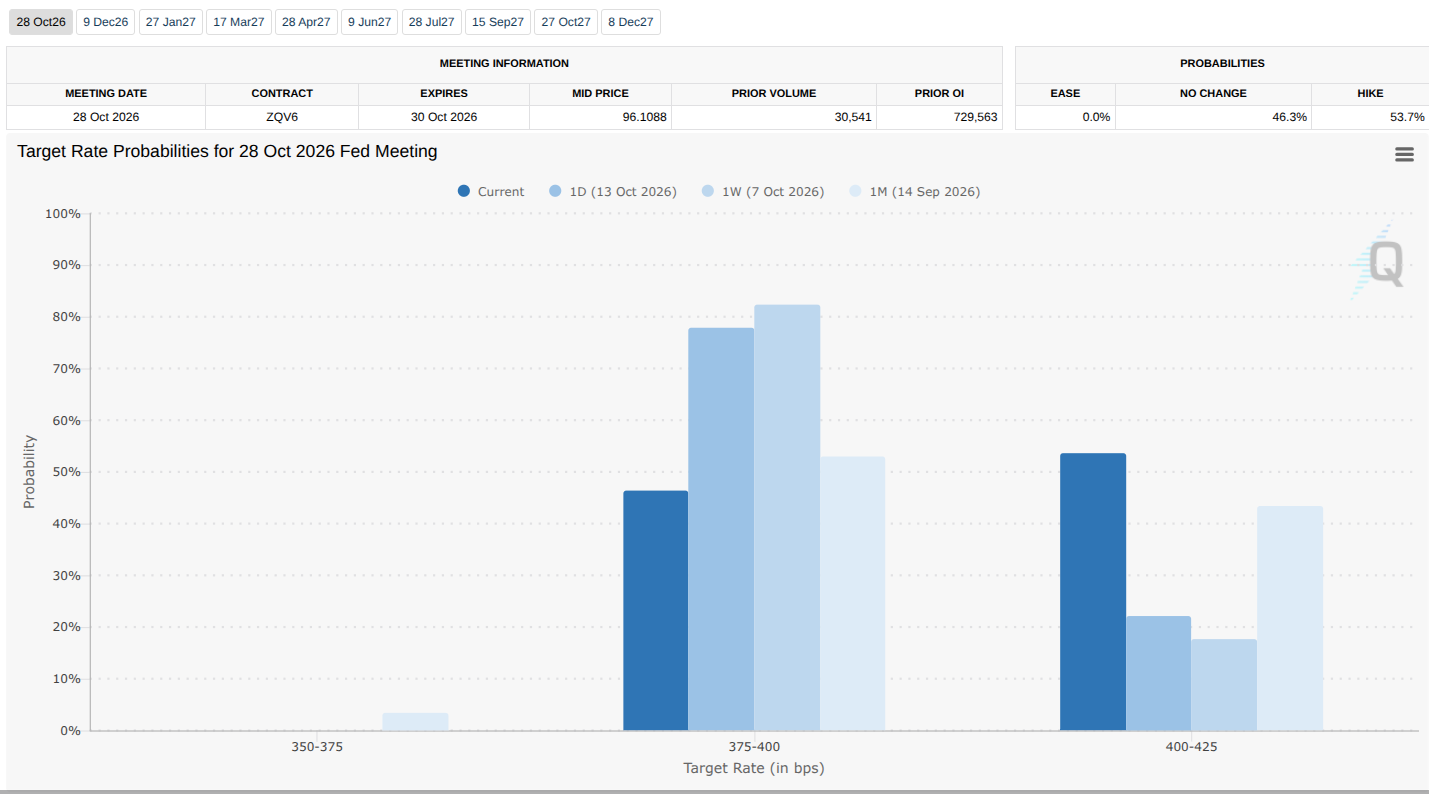
The implications of the September CPI report were keenly felt in the futures markets for Federal Reserve policy. Data from CME Group’s FedWatch Tool indicated a significant shift in expectations for interest rate adjustments. Prior to the CPI release, the market had a more divided outlook. However, following the data, the probability of a 25-basis-point interest-rate hike at the Federal Reserve’s upcoming meeting on October 28th surged to 53.7%, a substantial increase from 22.1% the previous day. Furthermore, the odds of a second 25-basis-point hike in December climbed to approximately 50%.
Theresa Sheehan, an economic analyst at Econoday, offered her perspective on the Federal Reserve’s likely course of action. "Taken in combination with the soft payroll numbers in the September employment report, the FOMC is probably on hold for any rate moves at the upcoming October 27-28 meeting although with a definite bias toward a hike in December," Sheehan stated. This suggests a nuanced approach from the central bank, balancing the immediate inflationary data with other economic indicators.
Broader Market Impact: Bonds and Gold Feel the Heat
The surge in US consumer inflation had a cascading effect across global financial markets. Gold, often considered a safe-haven asset and a hedge against inflation, experienced a notable decline, falling to intraday lows of $4,079 per ounce. Simultaneously, US bond yields, which are highly sensitive to inflation expectations and interest rate movements, saw a sharp spike. The yield on the benchmark 10-year US Treasury note reached approximately 5.329%, nearing a 24-year high.
Economist Robin Brooks articulated the negative sentiment surrounding the bond market in a blog post, describing the inflation data as "the last thing global bond markets needed." He elaborated, "Prior to this number, it looked like the global bond sell-off was calming, but now bond markets are catching on fire again." This indicates that the higher-than-expected inflation has reignited concerns about rising interest rates and their impact on bond valuations, potentially leading to further market volatility.
Bitcoin’s Price Action and Support Levels
In this volatile environment, Bitcoin’s price movement reflected the broader market sentiment. Following the CPI release, BTC/USD experienced a sharp correction, falling below the $82,000 threshold. The cryptocurrency’s price action has been oscillating around a critical zone between $82,500 and $83,400, with market participants closely observing whether this range can hold as a significant support level. The ability of Bitcoin to maintain its footing in this area will be crucial in determining its short-term trajectory.
Context and Chronology of Events
The release of the September CPI data was a pre-scheduled economic event, with market participants keenly awaiting the figures to gauge the Federal Reserve’s potential policy responses. The data was released on Wednesday, coinciding with the opening of the US stock markets, which amplified the immediate impact on financial assets.
- Pre-Release Expectations: Analysts had widely anticipated the CPI data, with forecasts generally suggesting a slight moderation or stabilization in inflation. However, the actual figures proved to be more stubborn.
- Data Release: The BLS published the September CPI report on Wednesday morning.
- Market Reaction: Immediately following the release, Bitcoin, gold, and stock futures experienced sharp declines.
- Expert Analysis: Economists and strategists provided commentary on the inflation figures and their implications for monetary policy.
- FedWatch Tool Adjustments: Market probabilities for Federal Reserve interest rate hikes were significantly revised.
- Bond Yield Spikes: US Treasury yields surged as inflation concerns intensified.
Broader Economic Landscape and Future Outlook
The persistent inflation observed in the September CPI report arrives at a critical juncture for the US economy. While recent employment data had offered some signs of cooling in the labor market, the continued rise in consumer prices suggests that inflationary pressures may be more deeply entrenched than previously believed. The Federal Reserve faces a delicate balancing act: controlling inflation without triggering a significant economic downturn.
The upcoming Producer Price Index (PPI) for September, scheduled for release on Friday, will offer another important perspective on inflationary trends, focusing on the costs faced by producers. Any further indications of rising input costs could reinforce concerns about future consumer price increases.
The interplay between inflation, interest rates, and asset prices remains a central theme in financial markets. For Bitcoin, its correlation with risk assets like technology stocks means that broader market reactions to inflation data and central bank policy will continue to be a significant driver of its price movements. The digital asset’s ability to decouple from traditional market dynamics in the long term remains a subject of ongoing debate among investors and analysts.
Conclusion
The September US CPI report delivered a jolt to financial markets, with Bitcoin experiencing a significant price correction as a direct consequence of higher-than-expected inflation. The data has bolstered expectations for further interest rate hikes by the Federal Reserve, creating headwinds for risk assets and reigniting concerns in the bond market. As markets digest this latest inflation data, attention will now turn to subsequent economic indicators and the Federal Reserve’s future policy decisions, which will undoubtedly shape the trajectory of Bitcoin and other financial assets in the coming months. The dynamic between inflation, monetary policy, and investor sentiment will continue to be the dominant narrative for the foreseeable future.

