
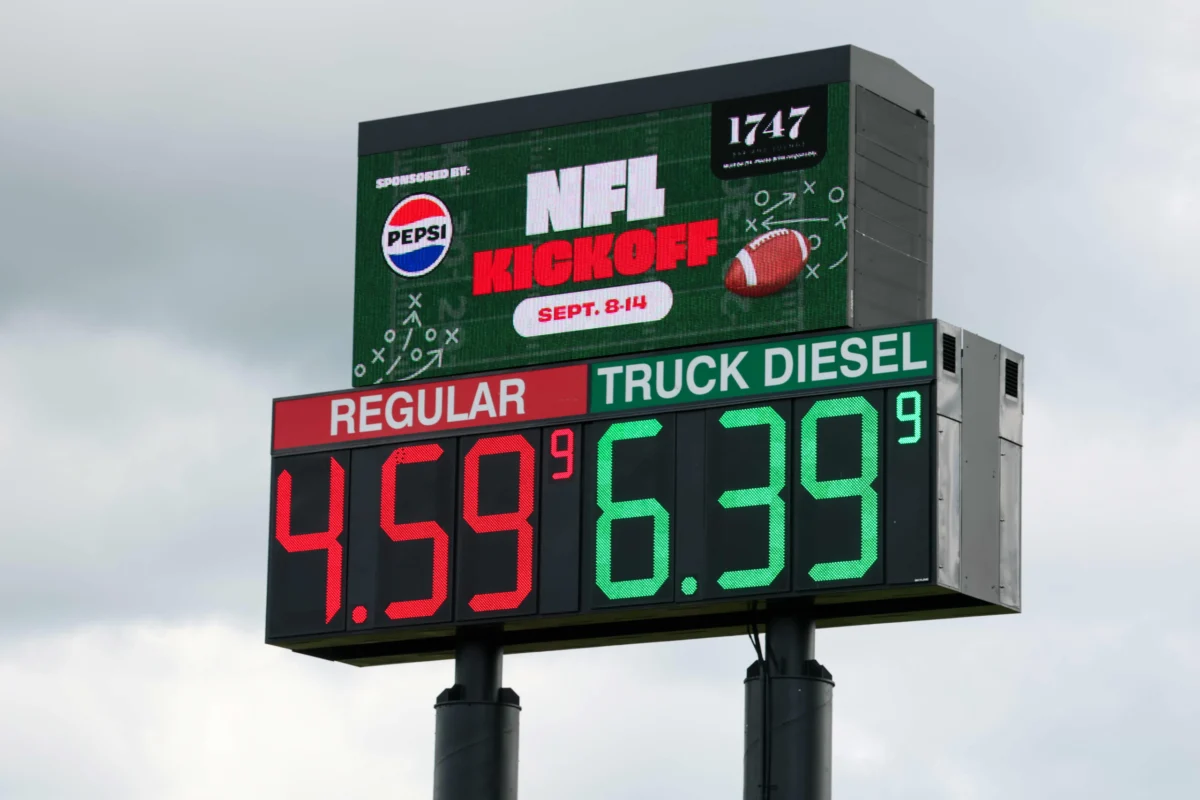
As the 2026 midterm elections draw nearer, the pervasive issue of affordability has emerged as a dominant concern for voters across the United States. Central to this economic anxiety are stubbornly high fuel prices, which continue to squeeze household budgets and are widely expected to remain elevated through Election Day on November 3. The financial strain at the pump is not merely an inconvenience; it represents a significant factor shaping voter sentiment and the political landscape, particularly in crucial battleground states.
The Persistent Shadow of Elevated Fuel Costs
The current economic climate sees consumers facing a barrage of rising costs, with gasoline prices standing out as a particularly acute pain point. Data from the prediction market platform Kalshi indicates a strong consensus among traders that the national average for gas prices, as tracked by AAA, will likely remain above $4 per gallon by November 3, with an 87% probability assigned to this scenario. While this suggests a continued burden on consumers, there is some anticipation that prices might recede slightly from their current peaks. Kalshi traders place only a 42% chance that the national average will remain above $4.25 per gallon on Election Day. As of Thursday, the national average stood at $4.36 per gallon, underscoring the immediate financial pressure felt by millions of American households and businesses. This projection highlights a critical juncture for policymakers and campaigns, as the perception of economic well-being is inextricably linked to the cost of everyday necessities.
The psychological impact of high gas prices often transcends their direct economic effect, becoming a highly visible and frequently discussed indicator of broader economic health. For many commuters, small business owners, and families, the cost of filling up a vehicle directly translates into less discretionary income, impacting everything from grocery budgets to holiday planning. This tangible burden makes gas prices a potent political weapon, capable of swaying undecided voters and galvanizing opposition.
A Volatile Year: The 2026 Fuel Price Rollercoaster
The year 2026 has been marked by significant volatility in fuel markets, presenting a challenging and unpredictable environment for consumers and economists alike. The national average for gasoline prices experienced a sharp initial spike in March, following the outbreak of the Iran War and the subsequent closure of the Strait of Hormuz. This geopolitical event, detailed further below, sent shockwaves through global energy markets, propelling prices upwards. By late May, gasoline prices had peaked at an average of $4.56 per gallon, reaching levels not seen in years and triggering widespread alarm about inflationary pressures.
Following this intense period, a brief respite offered some relief. Prices gradually receded through June and into early July, bottoming out at an average of $3.79 per gallon. This temporary dip was attributed to a combination of factors, including potential strategic petroleum reserve releases by major economies, a slight easing of immediate geopolitical tensions, and possibly a transient decrease in demand as consumers adjusted their driving habits. However, this period of lower prices proved short-lived. Throughout the remainder of the summer months, prices began a steady climb once more, driven by a confluence of resurgent demand, ongoing supply concerns, and the lingering effects of global instability. This rollercoaster trajectory has left consumers with little confidence in price stability, contributing to a broader sense of economic uncertainty.
Geopolitical Undercurrents: The Iran War and the Strait of Hormuz
The primary catalyst for the early 2026 surge in global oil prices was the outbreak of the Iran War and, critically, Iran’s subsequent closure of the Strait of Hormuz. This development sent immediate shockwaves through international energy markets due to the strait’s unparalleled strategic importance. The Strait of Hormuz is a narrow, 21-mile-wide waterway located between the Persian Gulf and the Gulf of Oman, serving as the sole sea passage from the Persian Gulf to the open ocean. It is the world’s most important oil transit chokepoint, through which approximately one-fifth of the world’s total petroleum liquids consumption, or about 21 million barrels per day (b/d) of crude oil and condensate, passed in 2023. This volume includes nearly all the oil exports from Saudi Arabia, Iran, Iraq, Kuwait, Qatar, and the United Arab Emirates.
The closure of such a vital artery effectively bottlenecked a significant portion of the global oil supply, creating an immediate and severe supply shock. The geopolitical tensions leading to the conflict, while complex, centered on longstanding regional rivalries, maritime security disputes, and concerns over nuclear proliferation. When the conflict escalated in March, market participants reacted swiftly, fearing prolonged disruption to oil flows. Futures contracts for Brent crude and West Texas Intermediate (WTI) crude oil, the international and U.S. benchmarks, surged dramatically, with some analysts predicting prices well over $100 per barrel. The immediate impact was felt at the pump, as refiners passed on the increased cost of crude oil to consumers. While international efforts, including naval patrols and diplomatic pressure, were reportedly initiated to ensure the eventual reopening or bypass of the strait, the initial disruption underscored the fragility of global energy supply chains in the face of geopolitical instability. The incident served as a stark reminder of the interconnectedness of international politics and domestic economic well-being.
The Diesel Dilemma: A Deeper Economic Strain
Beyond gasoline, diesel prices have presented an even more alarming trend, hitting new record peaks in September 2026. On September 22, the national average for diesel reached an astonishing $6.53 per gallon. While prices have since seen a modest decline to $6.28, the outlook remains concerning. Traders on Kalshi assign a 68% probability that diesel prices will remain above $6 per gallon on November 3. This sustained elevation in diesel costs carries profound and far-reaching economic implications that extend beyond individual commuters.
Diesel fuel is the lifeblood of numerous critical sectors, particularly transportation, agriculture, and industrial operations. Every product moved by truck, train, or ship relies on diesel. Consequently, rising diesel prices directly translate into higher operating costs for trucking companies, freight haulers, and logistics providers. These increased costs are inevitably passed down the supply chain, contributing to higher prices for consumer goods, from groceries to electronics. This "diesel inflation" acts as a powerful multiplier, exacerbating broader inflationary pressures across the economy.
The impact is particularly acute in states with large agriculture industries, such as Iowa and Kansas. Farmers depend heavily on diesel to power tractors, combines, irrigation systems, and to transport their crops to market. Record-high diesel prices directly cut into farmers’ profits, increase the cost of food production, and can lead to higher food prices for consumers. Agricultural economists have warned that sustained high diesel costs threaten the viability of smaller farms and could lead to reduced planting or livestock production in future seasons, impacting national food security. Similarly, states like Alaska, which rely significantly on diesel fuel for electricity generation in remote areas, face substantially higher utility bills for residents and businesses, further straining local economies. The unique vulnerability of these states to diesel price fluctuations makes the issue a potent political talking point, especially as Iowa, Kansas, and Alaska are all home to highly competitive races for the U.S. Senate in November. The economic distress caused by diesel prices in these key states could significantly influence voter turnout and preferences, making it a pivotal factor in the national political calculus.
Voter Sentiment and the Midterm Landscape
The pervasive concern over affordability, driven significantly by elevated fuel costs, is undeniably shaping voter sentiment ahead of the 2026 midterm elections. Economic issues consistently rank among voters’ top priorities, and the tangible impact of higher gas and diesel prices on household budgets makes them a highly visible and emotive issue. When consumers feel the pinch at the pump, it often translates into broader dissatisfaction with the economic direction of the country and, by extension, with the incumbent party.
Historically, midterm elections frequently serve as a referendum on the sitting president’s party, particularly when economic conditions are challenging. High inflation, fueled in part by energy costs, tends to penalize the party in power. This dynamic appears to be playing out in 2026. Despite the economic headwinds, prediction markets suggest a subtle shift in the political landscape. Traders on Kalshi now give the Democratic Party 63% odds of wresting control of the U.S. Senate from Republican hands. This improvement in Democratic prospects, even amidst economic concerns, suggests a complex interplay of factors, potentially including voter dissatisfaction with alternative policy proposals, the strength of individual candidates, or the framing of economic challenges by different political factions. Nevertheless, the relentless pressure of fuel costs remains a dominant narrative, forcing both parties to address the issue head-on in their campaigns.
The Political Battleground: Key Senate Races and Energy Policy
The high stakes of the 2026 midterms are particularly evident in competitive Senate races where energy policy and fuel costs have become central campaign themes. The aforementioned states of Iowa, Kansas, and Alaska exemplify this trend.
In Iowa, a state with a robust agricultural sector, candidates are keenly aware of the impact of diesel prices on farmers and rural communities. Debates often revolve around proposals to alleviate fuel costs, whether through federal subsidies, adjustments to biofuel mandates, or calls for increased domestic oil production. Candidates are pressed to articulate concrete plans to address the economic burden on a constituency that heavily relies on diesel for its livelihood.
Kansas, another agricultural powerhouse, faces similar pressures. The state’s Senate race sees candidates vying to demonstrate their understanding of farmers’ plights and their commitment to finding solutions for high input costs, including fuel. The discussion often expands to broader energy independence strategies and the role of the Strategic Petroleum Reserve.
Alaska, a state uniquely dependent on fuel for transportation and electricity in its vast and often remote regions, offers a distinct set of challenges. High diesel prices here directly translate into higher costs of living and doing business across the state. Candidates in Alaska’s Senate race are compelled to discuss federal energy policies, resource development, and infrastructure investments that could mitigate the impact of volatile fuel markets on their constituents.
Across these and other battleground states, political strategists are advising candidates to acknowledge voter frustration and offer credible solutions. Republicans often emphasize deregulation, increased domestic drilling, and criticism of current administration policies perceived as hostile to fossil fuels. Democrats, while acknowledging the immediate pain, tend to highlight investments in renewable energy, price gouging investigations, and targeted relief measures, while also pointing to global factors beyond domestic control. The ability of each party to effectively frame the energy crisis and offer compelling remedies will be crucial in determining the outcome of these tight races.
Economic Analysis: Beyond the Pump
The implications of sustained high fuel costs extend far beyond the immediate impact on consumer wallets. Economists widely agree that elevated energy prices are a significant contributor to broader inflationary pressures across the economy. Energy is a fundamental input for nearly all goods and services. When the cost of energy rises, it increases the cost of manufacturing, transporting, and distributing products. Businesses, facing higher operational expenses, often pass these costs on to consumers in the form of higher prices for goods and services, contributing to the overall Consumer Price Index (CPI). This phenomenon creates a feedback loop, where rising energy costs fuel general inflation, eroding purchasing power and potentially slowing economic growth.
The current economic environment, characterized by strong labor markets but persistent inflation, presents a delicate balancing act for monetary policymakers. Central banks, tasked with maintaining price stability, may feel compelled to continue tightening monetary policy, even at the risk of slowing economic activity, if inflationary pressures remain stubborn. This could lead to concerns about a potential recession if the economy cannot absorb higher interest rates alongside elevated energy costs.
Furthermore, high fuel prices can alter consumer spending patterns. Households with less disposable income due to higher gas bills may cut back on other expenditures, impacting sectors such as retail, hospitality, and entertainment. This shift in spending can have ripple effects throughout the economy, affecting business revenues, investment decisions, and ultimately, employment levels. Government responses, such as potential further releases from the Strategic Petroleum Reserve (SPR), are often considered in an attempt to alleviate supply pressures and bring down prices, though the long-term effectiveness of such measures is debated. The SPR, designed for emergency supply disruptions, has a finite capacity, and its strategic deployment carries both economic and geopolitical considerations.
Expert Perspectives and Policy Debates
Inferred statements from various experts underscore the complexity of the current energy crisis. Oil market analysts suggest that while demand remains robust, global supply continues to be constrained by underinvestment in new production capacity, geopolitical risks, and the ongoing transition towards cleaner energy sources. "The market is finely balanced," one analyst might comment, "and any significant disruption, like the Strait of Hormuz closure, immediately exposes its vulnerabilities."
Economists frequently warn about the regressive nature of energy price shocks, noting that they disproportionately affect lower-income households who spend a larger percentage of their income on essentials like transportation. "High gas prices act as a de facto tax on the poor," an economist might observe, "exacerbating income inequality and creating immense hardship for working families."
Political strategists, meanwhile, are keenly focused on the narrative surrounding fuel costs. "The party that can convincingly demonstrate it understands voters’ pain and has a viable plan to address it will gain a crucial advantage," a strategist might explain. "Blaming external factors might be factual, but voters want solutions, not excuses." Policy debates often center on the balance between energy security and climate goals. Some advocate for accelerating the transition to renewable energy sources to reduce dependence on volatile fossil fuel markets, while others argue for increasing domestic oil and gas production in the short term to stabilize prices and ensure energy independence. These divergent approaches highlight the deep ideological divisions that characterize the contemporary energy policy landscape.
Looking Ahead: The Road to November and Beyond
As the 2026 midterm elections approach, the enduring challenge of high fuel costs remains a potent force shaping the national conversation and individual voting decisions. The confluence of geopolitical instability, supply chain pressures, and robust demand has created a volatile energy market that directly impacts the daily lives of millions. While prediction markets offer a glimpse into the likely trajectory of prices, the underlying economic and political implications are far more complex.
The outcome of the elections will not only determine the balance of power in Congress but may also influence the direction of national energy policy for years to come. Regardless of the political shifts, the imperative to address affordability and energy security will remain paramount. The events of 2026 have underscored the fragility of global energy systems and the profound impact that disruptions can have on domestic economies and political stability. For policymakers, the challenge lies in crafting sustainable, long-term solutions that balance economic needs, environmental imperatives, and geopolitical realities, while simultaneously providing immediate relief to citizens grappling with the persistent burden of elevated fuel costs. The road to November and beyond will undoubtedly be paved with ongoing debates and difficult choices concerning the nation’s energy future.

