
US officials have reportedly initiated diplomatic overtures to several NATO member states, urging them to moderate their public discourse concerning the perceived threat from Russia. This directive, primarily delivered in bilateral meetings to the Baltic nations of Lithuania, Latvia, and Estonia, stems from a concern that recent inflammatory statements by European leaders and officials could inadvertently undermine continental security. The development, initially reported by Reuters on Friday, October 30, 2026, highlights a nuanced divergence in strategic perspectives within the transatlantic alliance at a critical juncture for European stability.
The Diplomatic Overtures and Their Recipients
According to the Reuters report, which cited three European officials and one US official privy to the discussions, the message was explicitly conveyed to Vilnius, Riga, and Tallinn. While it remains unclear whether other European capitals received similar counsel, the focus on the Baltic states is significant. These nations, despite being among NATO’s smallest members, have consistently adopted some of the most assertive and vocal stances against Russia since Moscow’s full-scale invasion of Ukraine in February 2022. Their proximity to Russia and historical experiences under Soviet occupation have forged a deep-seated conviction regarding the existential nature of the Russian threat, translating into robust rhetoric and proactive measures within the alliance.
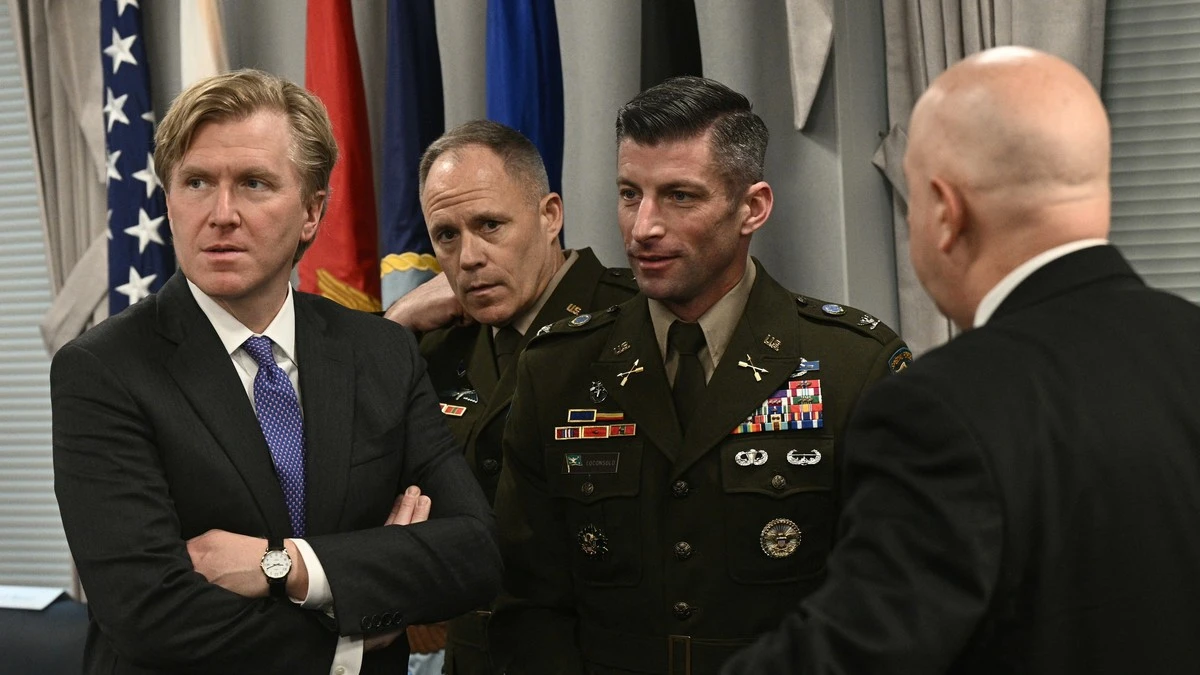
One of the key figures delivering this message was Elbridge Colby, identified as a Pentagon policy chief. Colby reportedly advised a Baltic official to refrain from "poking" the Russians, emphasizing a need for restraint. Another European official recounted the essence of Colby’s message, stating, "We are helping you. The Americans are there. Just don’t be loud. Don’t make noise." This directive suggests a US desire to manage perceptions and avoid unnecessary provocations that could complicate broader diplomatic efforts or inadvertently escalate tensions. The Pentagon, when contacted, declined to comment on the Reuters report.
The US message was reportedly triggered by specific comments asserting that "Russia is cornered" and resorting to "desperate measures" against Ukraine, particularly as Moscow’s battlefield progress appeared to stall. Such rhetoric, while perhaps intended to project confidence and unity, is viewed by Washington as potentially counterproductive. An illustrative example cited in the report was Estonian Prime Minister Kristen Michal’s statement in September, where he referred to Russian President Vladimir Putin as a "rat in a corner" and accused Russia of engaging in sabotage campaigns across Europe to compensate for military setbacks in Ukraine. Such strong language, while reflective of genuine fears in the Baltics, seems to be precisely what Washington is now seeking to temper.
Understanding the Baltic Stance: A History of Vigilance
To fully grasp the implications of Washington’s request, it is crucial to understand the historical and geopolitical context shaping the Baltic states’ unwavering stance on Russia. Lithuania, Latvia, and Estonia share extensive borders with Russia and, in Latvia’s case, with its ally Belarus. All three nations endured decades of Soviet occupation following World War II, a period that deeply ingrained a sense of vulnerability and an acute awareness of Russian imperial ambitions. Their independence, regained in the early 1990s, was swiftly followed by an earnest push for integration into Western structures, primarily NATO and the European Union, viewing these as essential guarantees against future aggression.
Since joining NATO in 2004, these countries have consistently advocated for a robust collective defense posture on the alliance’s eastern flank. Russia’s annexation of Crimea in 2014 and its subsequent support for separatists in eastern Ukraine significantly reinforced their concerns, prompting calls for increased NATO presence and readiness. Following the 2022 full-scale invasion of Ukraine, the Baltic states became some of Kyiv’s most ardent supporters, providing substantial military, financial, and humanitarian aid proportional to their economies. They have also been vocal proponents of stringent sanctions against Moscow and the complete isolation of Russia from international institutions.
Their hawkish rhetoric is not merely symbolic; it reflects a deeply held belief that Russia understands only strength and that any perceived weakness or hesitation by the West could invite further aggression. For them, a "cornered" Russia is not less dangerous, but potentially more so, making vigilance and a firm stance paramount. This perspective is often rooted in their collective memory of historical subjugation and the conviction that appeasement has historically failed to deter Russian expansionism. They have consistently pushed for higher defense spending, with all three nations exceeding NATO’s 2% of GDP target, and have hosted significant NATO Enhanced Forward Presence (EFP) battlegroups on their soil, further underscoring their commitment to collective defense.
Washington’s Shifting Strategic Calculus
The US request for de-escalation in rhetoric comes amid a complex web of strategic considerations and evolving foreign policy priorities for Washington. Several factors appear to be driving this shift:
Firstly, there are ongoing, sensitive negotiations between Washington and Moscow. Reports suggest these discussions involve a potential arrangement where Moscow could receive relief from certain US sanctions in exchange for an end to Ukraine’s drone and missile attacks on Russian energy infrastructure, particularly oil refineries. Such a deal would require a delicate diplomatic environment, and inflammatory rhetoric from NATO allies could complicate or even derail these efforts. The US appears keen to create a conducive atmosphere for these back-channel discussions to progress, seeking a pragmatic pathway to de-escalation, at least concerning specific aspects of the conflict.
Secondly, the prospect of a potential return of Donald Trump to the US presidency looms large. Trump’s son-in-law and advisor, Jared Kushner, along with US envoy Steve Witkoff, have reportedly been engaged in discussions concerning potential business deals with Russia, ostensibly under the guise of peace negotiations. A future Trump administration is widely anticipated to pursue a more transactional and less interventionist foreign policy, potentially seeking a swift resolution to the Ukraine conflict, even if it entails significant concessions or a re-evaluation of alliances. The current administration might be laying groundwork or managing expectations for such a potential shift, signaling a desire for reduced tensions that could align with a future policy direction.
Thirdly, the Pentagon is reportedly reviewing US troop levels in Europe, a process that could lead to a significant drawdown of America’s military presence on the continent. This review is part of a broader US strategy to rebalance its global commitments. US officials have repeatedly stated that European NATO members need to assume greater responsibility for their own defense and for supporting Ukraine, thereby allowing Washington to increase its focus on other strategically vital regions such as West Asia, Latin America, and East Asia. In this context, reducing tensions with Russia through tempered rhetoric could be seen as a prerequisite for a reduced US military footprint in Europe, as it might lower the immediate risk of a direct confrontation requiring heavy US intervention. The message to "not poke the Russians" could be interpreted as a desire to prevent situations that would necessitate a surge, rather than a drawdown, of US forces.
Recent Escalations on the Battlefield
These diplomatic efforts unfold against a backdrop of continued intense fighting and mutual strikes between Russia and Ukraine. On Thursday, October 29, 2026, Russia launched a significant barrage of eight ballistic missiles and multiple drones targeting Kyiv overnight and into the morning. These strikes resulted in one fatality and one injury in the Dniprovskyi district of the Ukrainian capital, underscoring the ongoing human cost of the conflict.
Concurrently, Ukrainian forces continue their campaign against Russian energy infrastructure. On the same Thursday morning, Ukrainian drones successfully struck the Novokuibyshevsk oil refinery in Russia’s Samara Oblast, sparking a considerable fire at the facility. These attacks on Russian energy assets have persisted despite reported requests from former President Trump (and potentially from the current US administration in less public channels) for Ukrainian President Volodymyr Zelensky to cease them. The continuation of these strikes highlights Ukraine’s strategic imperative to degrade Russia’s war-making capabilities and inflict economic pain, even if it complicates Western diplomatic overtures. This disparity in operational objectives between Ukraine and certain Western allies adds another layer of complexity to the US’s de-escalation efforts.
Implications for NATO Cohesion and European Security
Washington’s call for tempered rhetoric within NATO carries significant implications for the cohesion of the alliance and the future of European security.
Strains within NATO: The US message exposes potential fissures within NATO, particularly regarding differing perceptions of the Russian threat and the optimal strategy for managing it. While the Baltic states prioritize deterrence through unequivocal strength and vocal condemnation, the US appears to be leaning towards a more nuanced approach that incorporates elements of de-escalation and diplomatic engagement. This divergence could strain alliance unity, especially if the Baltic states feel their legitimate security concerns are being downplayed or overridden. It also raises questions about the principle of "speaking with one voice" within NATO.
Future of US-Europe Relations: A potential US troop drawdown in Europe, coupled with the explicit request for European allies to assume more responsibility, signals a possible recalibration of the transatlantic relationship. European nations, particularly those on the eastern flank, might perceive this as a step towards US disengagement, forcing them to confront Russia with less direct American backing. This could prompt greater European strategic autonomy, but also generate anxieties about the reliability of the US security umbrella.
Impact on Ukraine: The US push for de-escalation, especially in the context of discussions involving sanctions relief for Russia, could be interpreted by Kyiv as a signal of shifting Western priorities or a weakening of resolve. While the US still officially supports Ukraine, any perception of a softening stance or a desire to limit Ukraine’s operational choices (like striking Russian refineries) could undermine Ukrainian morale and its ability to negotiate effectively. It raises the question of whether the US is prioritizing a stable, albeit potentially unfavorable, equilibrium with Russia over Ukraine’s maximalist objectives.
Russia’s Interpretation: Moscow will undoubtedly scrutinize these developments. The US request for its allies to temper rhetoric might be interpreted by Russia as a sign of Western division or a weakening of resolve, potentially emboldening Moscow. Conversely, it could also be seen as a genuine signal of Washington’s desire for de-escalation, opening avenues for more substantive discussions. The exact interpretation will depend on Russia’s strategic calculations and its assessment of the overall geopolitical landscape.
The Broader Geopolitical Landscape
The US strategic pivot, hinted at by the desire to shift focus away from Europe towards West Asia, Latin America, and East Asia, reflects a broader recalibration of global power dynamics. The rising influence of China in the Indo-Pacific region, ongoing instability in the Middle East, and persistent challenges in Latin America are increasingly demanding Washington’s attention and resources. This reorientation necessitates a more self-reliant Europe, capable of managing its own security challenges, including the Russian threat, with less direct US intervention.
This global chessboard scenario requires a delicate balancing act. While the US seeks to contain China’s rise and manage other regional crises, it also needs to prevent an uncontrolled escalation in Europe. Therefore, maintaining a stable, albeit tense, relationship with Russia becomes a strategic imperative to avoid a multi-front geopolitical confrontation. The tempering of rhetoric is a tool in this larger strategy, aiming to reduce the risk of miscalculation that could divert critical resources from other priority theaters.
Looking Ahead: Uncertainties and Strategic Realignments
The US request to its Baltic allies underscores a complex moment in international relations, characterized by strategic recalculations, internal alliance pressures, and ongoing conflict. The immediate future will likely see further efforts by Washington to manage the messaging and actions of its allies, while simultaneously pursuing its own diplomatic channels with Moscow.
For the Baltic states, this directive presents a challenge to their long-held security paradigm. They will need to navigate the delicate balance between articulating their deeply felt security concerns and aligning with broader NATO strategic objectives, particularly if those objectives involve a degree of de-escalation that feels uncomfortable to them. Their historical experience dictates vigilance, but alliance solidarity might demand a degree of rhetorical restraint.
The unfolding situation will test NATO’s ability to maintain cohesion amidst diverging national interests and strategic priorities. It will also reveal the extent to which a powerful member like the United States can shape the public posture of its allies, even on issues they perceive as existential. As the war in Ukraine continues, and as global power dynamics shift, the transatlantic alliance faces a period of significant adaptation and potential realignment, where the tone of public statements can hold as much weight as military deployments.

