
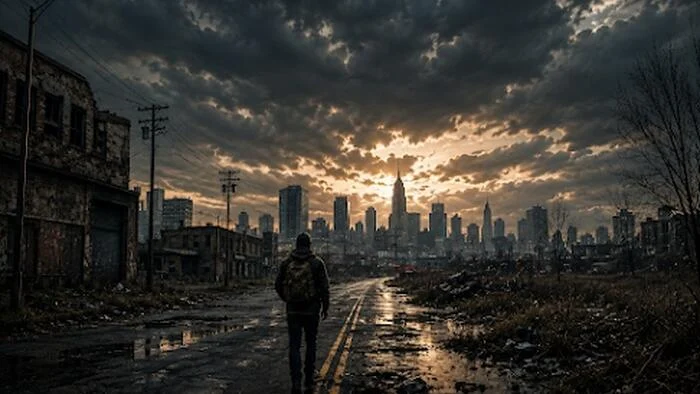
The popular imagination often conjures dramatic, cinematic images of societal collapse: tanks in the streets, banks shuttering overnight, or panicked crowds besieging empty stores. While such visible chaos represents the endpoint of profound systemic stress, history and contemporary observation suggest that fundamental shifts in a nation’s foundational systems typically unfold gradually. These transformations accumulate silently, altering the underlying mechanisms of society in ways that are often imperceptible to daily observers but become evident to those who scrutinize emerging patterns. By the time visible disorder erupts, the structural integrity of institutions and processes has often been compromised for years, if not decades.
Real societal change rarely arrives with a dramatic announcement. Instead, it manifests through a series of subtle adjustments in daily life, a slow recalibration of expectations, and the quiet realization that once-reliable systems now demand increasing effort, patience, and improvisation. Examining the current American landscape through this lens reveals several patterns indicative of a transitional period—not a sudden implosion, but a gradual reconfiguration of how fundamental aspects of life function. These diagnostic markers, like vital signs in a medical check-up, offer insights into the health and stability of the systems that underpin modern American society.
The Erosion of Purchasing Power: Persistent Inflation and Monetary Policy
One of the most insidious indicators of systemic strain is the gradual but relentless erosion of purchasing power, a phenomenon often misconstrued as individual financial hardship rather than a symptom of broader monetary stress. The rising cost of groceries, escalating fuel prices, and significant rent increases are not merely personal budgeting challenges; they are tangible manifestations of a deeper, systemic devaluation of currency.
According to data from the U.S. Treasury, the national debt now exceeds $34 trillion. This astronomical figure, abstract to most, becomes concrete when one observes the federal budget. An increasingly significant portion of annual federal spending is allocated not to new infrastructure, education, or essential services, but to servicing the interest on past borrowing. The Congressional Budget Office (CBO) has repeatedly warned that interest payments are projected to become one of the fastest-growing components of the federal budget, crowding out other critical investments. This dynamic creates a difficult feedback loop for policymakers: faced with the unpopular choices of raising taxes (which can stifle economic activity) or cutting popular services, governments often resort to expanding the money supply. This path, frequently labeled quantitative easing or stimulus, offers immediate relief but invariably leads to rising prices later.
Historically, this pattern is well-documented. From the Roman emperors debasing their coinage to Weimar Germany’s hyperinflation and more recent examples in Venezuela and Zimbabwe, governments have frequently chosen currency expansion as the path of least immediate political resistance. While modern American monetary policy employs more sophisticated tools than ancient coin-clipping, the underlying principle remains: when more dollars chase a relatively stable supply of goods and services, prices rise. This is not a conspiracy; it is a fundamental economic principle.
The danger of this particular sign lies in its gradual unfolding and the human tendency to normalize it. Inflation rarely arrives as a sudden, society-altering shock; rather, it manifests as a series of small, cumulative disappointments. People adjust their expectations, learn to do without, and rationalize these changes as "the new normal." However, historical trajectories suggest that monetary deterioration follows predictable phases: initial steady price increases that outpace wage growth, followed by erosion of savings and hardship for fixed-income populations, potentially culminating in rapid currency collapse under extreme circumstances.
Currently, the U.S. appears to be in an early-to-middle phase. This is evident in the prevalence of "side hustle" culture, where individuals seek additional income to cover basic expenses, and in the strategic planning now required for routine grocery shopping. Retirees on fixed incomes, renters, and workers in sectors with limited bargaining power are often the first to feel this pressure acutely. Conversely, those holding tangible assets—real estate, productive equipment, commodities—often fare better, as these assets tend to retain value regardless of currency fluctuations.
Official narratives often downplay these effects, characterizing inflation as "transitory" or "manageable," sometimes using statistical measurements that exclude the very categories (like food and energy) experiencing the most rapid price increases. This creates a significant disconnect between official pronouncements and lived experience. The underlying reality is a quiet transfer of wealth from those holding currency to those holding debt, as debt can be repaid with devalued dollars, profoundly shaping economic outcomes without explicit legislative action. Recognizing this sign involves understanding that the fundamental relationship between work and purchasing power has shifted, making life harder for millions and signaling a systemic economic vulnerability.
The Shift Towards Citizen Self-Reliance: A Changing Social Contract
The language used in official government and emergency preparedness documents offers a revealing insight into institutional thinking. Over the past two decades, there has been a noticeable shift from an implicit message of "we have this covered" to a more explicit emphasis on individual and community self-sufficiency. Federal agencies like FEMA now routinely recommend that households prepare for 72 hours of self-reliance, stocking food, water, and essential supplies. The American Red Cross often suggests preparedness for up to two weeks, while local emergency management offices increasingly promote "community resilience" and "neighbor helping neighbor" initiatives, rather than solely focusing on centralized response capabilities.

While preparation and self-reliance are undoubtedly virtuous, the growing frequency and urgency of these messages suggest more than just standard caution. It implies a recognition of inherent limitations within the institutional response framework. Lessons from recent major disasters underscore this reality. Hurricane Katrina in 2005 exposed severe federal logistical failures, leaving thousands stranded and supplies undistributed. Hurricane Maria in 2017 devastated Puerto Rico, with full electrical restoration taking months and clean water remaining problematic for extended periods, highlighting critical failures in medical and supply chains within U.S. territory. The Texas winter storm of 2021 saw a modern, energy-rich state’s electrical grid collapse, leading to widespread power outages, water treatment failures, and hypothermia deaths—events that should be anachronistic in a developed nation.
Following each of these events, official messaging subtly recalibrated, acknowledging potential delays in assistance and emphasizing the necessity of individual preparedness. This represents a significant psychological shift in the social contract. For much of the modern era, citizens in developed nations assumed that professional systems—police, fire, medical, logistical—would respond swiftly and comprehensively to serious emergencies. The question was typically "when," not "if." Current messaging, however, suggests a more qualified understanding: help will come, but perhaps not immediately or completely.
This shift has profound practical implications. When individuals internalize the possibility of being on their own for an extended period, behaviors change. People stock supplies, acquire basic emergency skills, and cultivate stronger relationships with neighbors. Historically, an increased emphasis on citizen self-reliance by governing bodies has often signaled underlying institutional capacity constraints. The term "resilience," now a prevalent buzzword in governmental and civic discourse, sounds positive but simultaneously acknowledges existing brittleness and the need for mitigation.
The normalization of these lowered expectations is striking. Within a few years, stocking emergency supplies transitions from an "eccentric" behavior to mainstream prudence. Discussions about potential grid failures move from fringe theories to common conversation. This gradual adaptation means people often don’t fully grasp how much their expectations of governmental support have shifted. This sign is critical because it alters the psychology of crisis, potentially fostering greater individual and community preparedness but also diminishing trust in centralized institutional response capabilities. It also reflects fiscal realities: maintaining comprehensive emergency response capacity for multiple simultaneous major disasters is extraordinarily expensive, and as budgets strain under other obligations, advising self-preparation becomes a more fiscally palatable option than fully funding robust, centralized response mechanisms.
Fragile Foundations: The Vulnerability of Modern Supply Chains
The apparent abundance in any modern retail store—thousands of products from global origins, available instantly and affordably—is a testament to the miracle of modern logistics. Yet, this abundance rests on a precarious foundation of stable energy prices, efficient ports, reliable transportation, complex international agreements, and sophisticated software systems. When these underlying conditions falter, the inherent fragility of the "just-in-time" supply chain model becomes starkly apparent.
The global supply chain disruptions of 2021 offered a stark preview of this brittleness. The pandemic triggered widespread factory closures, labor shortages, and unprecedented shipping bottlenecks, leading to empty shelves, delayed deliveries, and critical shortages. Baby formula became a national crisis, automobile production halted due to semiconductor scarcity, and lumber prices tripled, stalling construction. While many of these issues have since abated, the fundamental structural vulnerabilities that allowed them to escalate remain largely unaddressed. If anything, the relentless pursuit of efficiency has often led to even leaner systems with minimal buffer inventory, thereby reducing resilience against future shocks.
Modern supply chains operate on "just-in-time" principles, minimizing expensive inventory storage by coordinating deliveries to arrive precisely when needed. This model thrives in stable environments but proves catastrophically vulnerable to disruptions, as a delay in one component can halt entire production lines, and a single port closure can ripple across continental distribution networks. Furthermore, geographic concentration exacerbates this vulnerability: critical manufacturing for pharmaceuticals, electronics, and industrial components is often concentrated in specific regions, particularly East Asia. Rare earth elements, vital for batteries and green technologies, originate from limited sources. Major ports handle disproportionately large percentages of national imports, creating dangerous centralization.
Climate volatility is an increasingly significant stressor. Recent droughts on the Mississippi River have reduced barge traffic, impacting agricultural exports and domestic commodity movement. Wildfires in Canada have disrupted North American air freight. Extreme weather events, such as the Texas freeze, have crippled chemical production facilities vital to national manufacturing. Beyond natural events, cyber vulnerabilities present another significant attack surface. The Colonial Pipeline ransomware attack in 2021 demonstrated how digital infiltration can immediately translate into physical shortages, halting fuel distribution across large regions. Similar attacks targeting meatpacking facilities and port operating systems highlight the growing recognition among adversaries of these critical logistical weaknesses.
The interconnectedness of various supply systems amplifies these risks. Energy shortages can affect fertilizer production, impacting agricultural yields and food prices, which in turn can influence social stability. Financial stress can trigger credit contraction, leading to inventory reduction and employment cuts. These connections create cascade risks, where problems in one sector quickly propagate and amplify across others. The margin between abundance and absence has become perilously narrow: grocery stores typically maintain only about three days of inventory, hospitals increasingly rely on daily pharmaceutical deliveries, and electrical grids operate with insufficient surge capacity.
Historically, pre-industrial societies maintained local food reserves, understanding the inevitability of harvest failures. Modern societies, however, have largely traded this redundancy for efficiency, assuming the perpetual reliability of global markets—an assumption that holds until it doesn’t. The psychological impact of supply disruption is profound; populations accustomed to immediate availability can perceive empty shelves as existential threats, even in the absence of imminent hunger, often triggering panic buying that exacerbates shortages in self-fulfilling cycles. Recognizing this sign means acknowledging that apparent abundance often masks deep structural fragility, and that the transition from abundance to scarcity can occur with alarming speed when core assumptions about system stability fail.

The Erosion of Institutional Trust: Fracturing the Social Fabric
Trust serves as the invisible infrastructure of any complex society. It does not appear on balance sheets or infrastructure maps, but its absence paralyzes intricate systems. When citizens trust institutions—courts, media, scientific bodies, electoral processes—they generally comply with decisions, even those they may not fully understand or support. When this trust erodes, cooperation becomes grudging, or vanishes entirely, forcing systems that once appeared stable to rely on constant enforcement.
Long-term polling data, such as that from Gallup, consistently reveals a decades-long decline in public confidence across virtually every major American institution. Congress, the presidency, the Supreme Court, banks, large corporations, news media, and organized religion have all experienced significant drops in public trust since the mid-20th century. This is not a fleeting phenomenon tied to a specific administration or scandal; it represents a structural trend spanning generations and political alignments. The cumulative effect, though gradual, is profound: institutions that once commanded automatic respect now frequently face automatic skepticism.
The consequences extend far beyond political inconvenience. Modern societies depend heavily on voluntary compliance; laws alone cannot regulate every interaction. Systems assume that people will generally adhere to rules because they believe the system is legitimate. When this belief weakens, coordinated action becomes significantly harder, even if the formal structures remain intact. This is evident in public responses to health guidance, financial advice, or educational recommendations. High institutional trust fosters compliance, even when sacrifice is required. Low trust breeds suspicion, causing individuals to filter information for perceived hidden agendas or incompetence.
The causes of this erosion are multifaceted and debated. Some analysts point to events like the Vietnam War and Watergate as pivotal moments that inflicted lasting damage on establishment credibility. Others highlight the internet’s role in democratizing information, thereby dismantling elite monopolies over narrative construction. Still others argue that institutional performance has genuinely declined in certain areas, with failures in financial regulation, military interventions, and public health responses providing legitimate grounds for skepticism. Regardless of the root causes, the effects are plainly visible: conspiracy theories proliferate not because people are inherently foolish, but because they no longer trust official sources for accurate information. Partisan polarization intensifies as individuals retreat into information ecosystems that confirm existing biases. Civic engagement often declines as people withdraw from associations perceived as futile or corrupt.
Historical parallels are instructive. Pre-revolutionary France saw Enlightenment philosophy undermine religious authority while a detached court culture maintained aristocratic pretensions. Late-stage Soviet society operated on official narratives that few citizens believed, yet everyone publicly affirmed, creating a society of pure performance. The modern American version involves parallel information ecosystems where identical events receive wildly contradictory interpretations. Climate change, election integrity, medical guidance, economic data—all become contested territories where "truth" is often tribal rather than empirical, making coordinated responses to shared problems nearly impossible due to a lack of fundamental agreement on the problems themselves.
This erosion of trust poses a particular threat during crises. Emergency response relies heavily on rapid public compliance with evacuation orders, safety instructions, and resource rationing. If significant portions of the population distrust the sources issuing these directives, compliance becomes unpredictable, potentially leading to widespread rejection of legitimate warnings or, conversely, panic based on misinformation that official sources lack the credibility to correct. Economic systems, too, depend on confidence; a loss of faith in financial institutions can trigger bank runs or investment withdrawals, precipitating the very failures feared. Rebuilding trust is an arduous process, requiring both sustained institutional reform and a significant cultural shift, both of which face considerable headwinds in the current environment.
Local Services at Breaking Point: The Strain on Daily Life
While national politics frequently dominates headlines, the tangible reality of daily life is shaped by local services: the quality of tap water, the condition of roads, the availability of police and fire protection, and the efficacy of public schools. When these municipal functions degrade, the impact is immediate, personal, and profoundly felt, often far more so than abstract federal debates.
Across the United States, cities and counties are grappling with intensifying fiscal pressures, forcing agonizing choices between competing necessities. Pension obligations, often incurred during more prosperous decades, now consume ever-larger percentages of operating budgets. Infrastructure maintenance, deferred for generations, demands attention that crowds out current services. Tax bases erode as commercial real estate values fluctuate and residents migrate to lower-tax jurisdictions.
Chicago serves as a stark example. Decades of structural deficits have pushed its credit ratings to near-junk status despite its economic significance. Basic services, such as street maintenance, snow removal, and public lighting, exhibit visible degradation. Police response times have lengthened significantly, rendering emergency calls for crimes in progress often symbolic. Detroit’s municipal bankruptcy in 2013 provided a chilling template, demonstrating how rapidly a major American city can reach a breaking point, leading to widespread streetlight outages, skeleton emergency crews, and asset privatization. While Detroit has since stabilized, its experience underscores the fragility of municipal finances. Similar pressures are evident in smaller jurisdictions like Harrisburg, Pennsylvania, and Stockton, California, indicating widespread structural stress rather than isolated failures.
Rural areas face parallel but distinct challenges. County sheriff departments may cover vast territories, leading to emergency response times measured in hours. Volunteer fire departments struggle with recruitment amid demographic shifts. Hospital closures eliminate emergency medical access across entire regions, necessitating lengthy ambulance transports for basic trauma care. Staffing shortages in essential services have reached critical thresholds nationwide, affecting police departments, nursing staff, and public school teachers, leading to accelerated burnout, service reductions, and generational capability deficits.

Infrastructure maintenance backlogs are growing geometrically. Water main breaks are increasingly frequent, bridge weight restrictions force costly commercial detours, and electrical grid components operate well beyond their designed lifespans, escalating the probability of failure during stress periods. What distinguishes the current local deterioration from previous cyclical downturns is its systemic nature. Past urban decline often occurred within a more robust national context, with federal transfers and regional adaptations providing cushions. Today’s fiscal stress manifests simultaneously across diverse jurisdictions, suggesting macro-economic causes rather than localized policy failures.
The psychological impact of degrading local services is profound. When streetlights remain dark, 911 calls receive automated apologies, or water quality visibly declines, citizens experience government failure in immediate, visceral ways. These experiences erode the foundations of the social contract more effectively than any political rhetoric. Local systems often serve as the early warning signals of broader systemic stress; central systems may remain stable longer, while local systems absorb initial pressures. However, this pressure inevitably builds downward, and widespread local failures signal a deeper, systemic strain. The typical resident response involves private adaptation: installing generators, hiring private security, or drilling private wells, each representing a rational individual response to a collectively experienced system failure. Recognizing this sign means understanding that the infrastructure of daily life is showing critical wear, affecting safety, convenience, and quality of life, and that these systems are under stress manifesting in delayed response, deferred maintenance, and reduced capacity.
Living With Uncertainty: Collective Implications and Future Outlook
Each of these five signs, when viewed in isolation, might be explained away as temporary or anomalous. Monetary stress is "just inflation," emergency guidance is "prudent caution," supply chain fragility is "pandemic aftermath," trust erosion is "partisan politics," and local fiscal stress is "specific mismanagement." However, when observed collectively, they form a discernible pattern that historically emerges whenever complex systems transition from stability towards strain. This pattern does not predict specific outcomes—history is too contingent for such certainty—but it strongly suggests that current conditions involve deep-seated structural pressures that demand significant adaptation or fundamental transformation.
Navigating this period requires clarity without succumbing to either panic or denial. Panic can paralyze useful action and diminish quality of life even before a crisis materializes. Denial prevents essential preparation, leaving individuals and communities vulnerable when pressures inevitably intensify. The prudent path involves recognizing these patterns and engaging in thoughtful preparation. This preparation will vary by individual circumstances: for some, it means building financial resilience through diversified assets and reduced debt; for others, it involves developing practical skills such—as gardening, basic repair, or emergency medical knowledge—to enhance self-sufficiency. For many, it will necessitate strengthening local community relationships to foster mutual aid networks when external systems falter.
Moreover, addressing these structural issues demands active participation in civic life. Monetary policy, infrastructure investment, emergency preparedness, and institutional reform are all domains subject to democratic influence, however imperfectly. Abandoning the field to those with narrow interests virtually guarantees less favorable outcomes. Historical experience teaches that systems rarely collapse entirely and suddenly. More commonly, they undergo prolonged periods of transformation, during which some functions persist while others degrade. This transition can span years or even decades, with populations gradually adapting to new normals without fully realizing the extent of the change.
The primary objective of recognizing these signs is not to forecast catastrophe but to enable informed decision-making in an era of heightened uncertainty. Those who understand these patterns are better positioned to make choices regarding their residency, financial strategies, skill development, and community engagement to better withstand systemic stress. Conversely, those who overlook or dismiss these indicators risk being caught unprepared when the systems they once took for granted begin to falter.
The future remains unwritten. While these signs unequivocally point to vulnerability and mounting pressure, they do not predetermine outcomes. Human societies have confronted similar pressures throughout history, sometimes emerging transformed but intact, and sometimes descending into darker periods. The decisive factor often lies in whether a sufficient number of people recognize these patterns early enough to initiate meaningful adjustments, individually and collectively. Awareness is the foundational step; what follows depends entirely on the choices—both personal and collective—that have yet to be made.

