
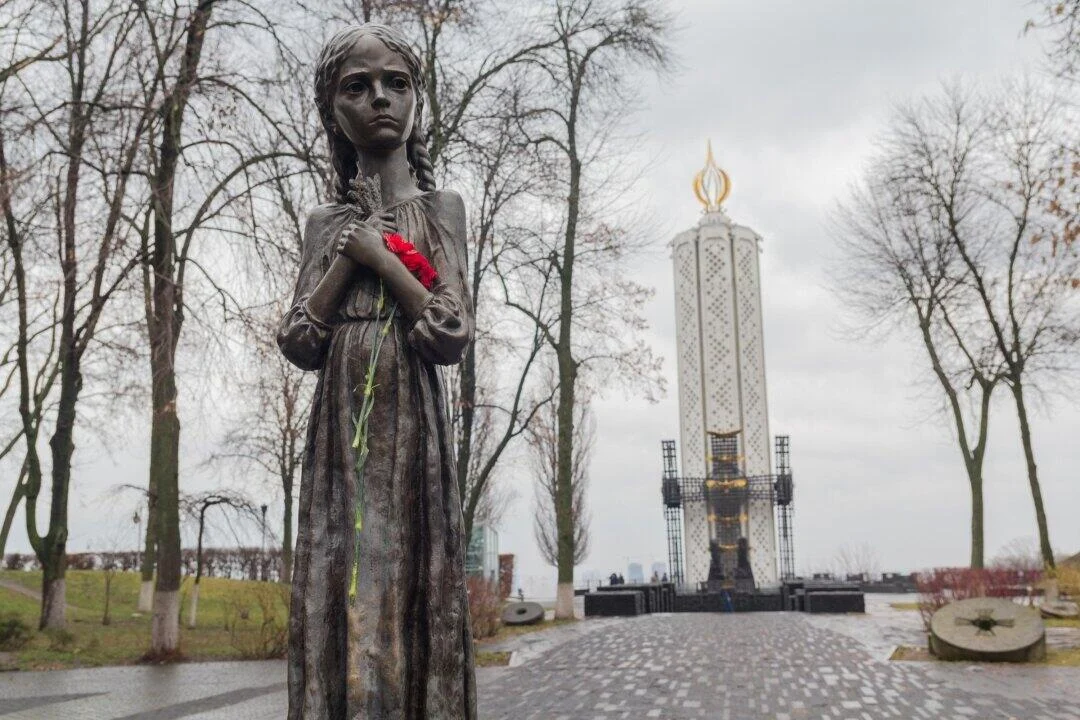
The Holodomor, meaning "death by hunger," stands as one of the 20th century’s most horrific man-made famines, a period of engineered starvation that devastated Soviet Ukraine in 1932-1933. This catastrophic event, which claimed millions of lives, primarily Ukrainian peasants, was not merely an act of nature but a deliberate outcome of specific Soviet policies under Joseph Stalin. What is particularly striking about the Holodomor, beyond its sheer brutality, is the sophisticated campaign of denial and censorship that concealed its true scale and nature from the international community as it unfolded. Decades later, as societies grapple with new forms of information control in an era of unprecedented connectivity, some observers draw parallels to more recent episodes, questioning whether the mechanisms of silencing inconvenient truths have merely evolved, rather than disappeared.
The Holodomor: A Deliberate Famine Concealed
The roots of the Holodomor lie in the Soviet Union’s ambitious, often brutal, agricultural collectivization drive initiated in the late 1920s. Stalin’s regime aimed to transform traditional peasant farming into a system of state-controlled collective farms (kolkhozes) to fund rapid industrialization. This policy was met with widespread resistance, particularly in Ukraine, a region historically known as the "breadbasket of Europe." Ukrainian peasants, many of whom owned small plots of land, resisted the forced requisition of their property and crops, fearing the loss of their independence and livelihoods.
Chronology of Catastrophe and Suppression:
- Late 1920s: Forced collectivization begins across the Soviet Union. Peasants are compelled to join collective farms, often under threat of violence or deportation. The term "kulak" (meaning "fist" or "tight-fisted"), initially used for wealthier farmers, is expanded to include any peasant resisting collectivization, leading to widespread repression, arrests, deportations to Siberia, and executions.
- 1930: Widespread peasant uprisings and sabotage of agricultural equipment occur in response to collectivization. Stalin temporarily eases the pressure but soon renews the campaign with increased ferocity.
- 1931-1932: Grain quotas imposed on Ukrainian farmers are set at impossibly high levels, often exceeding the total harvest. Even seed grain is confiscated. The internal passport system is introduced, restricting movement and preventing peasants from fleeing famine-stricken areas. Border controls are tightened to prevent food from entering or people from leaving Ukraine.
- 1932 (November): A decree known as the "Law of Spikelets" is enacted, criminalizing the collection of even small amounts of grain left in fields after the harvest. Penalties range from imprisonment to execution. Villages failing to meet quotas are "blacklisted," meaning all food supplies are confiscated, and residents are prevented from leaving.
- 1933 (Spring/Summer): Mortality peaks. Millions die from starvation, exhaustion, and disease. Reports of widespread cannibalism, a grim testament to the extreme conditions, emerge from survivors. The precise death toll remains debated, but estimates range from 3.5 million to 7 million, with some historical accounts suggesting even higher figures for the wider Soviet famine of 1930-1934 that also affected parts of Russia and Kazakhstan. The Ukrainian famine, however, is widely considered to have been intensified by specific, punitive policies directed at the region, leading many nations and historians to recognize it as an act of genocide.
- 1933 (December): The famine largely subsides as a new harvest comes in, though its long-term effects on Ukrainian society and demography are profound.
The Role of International Media and Official Denial:
During the Holodomor, the Soviet state orchestrated an aggressive campaign of denial. Foreign journalists stationed in Moscow were crucial conduits of information, yet many either ignored or actively debunked claims of famine. Walter Duranty, the Moscow bureau chief for The New York Times, became notorious for his reporting, which consistently downplayed or denied the famine’s existence. In 1931, he won a Pulitzer Prize for his earlier reporting, lending credibility to his subsequent dispatches. "There is no famine or actual starvation nor is there likely to be," he wrote, dismissing contrary reports as "exaggeration or malignant propaganda." Duranty’s access and privileges within the Soviet system were contingent on his favorable portrayal of the regime, a Faustian bargain that effectively silenced a major Western news outlet.
In contrast, a few courageous journalists, such as Gareth Jones, a Welsh freelance reporter, and Malcolm Muggeridge of the Manchester Guardian, risked their lives to report the truth. Jones’s detailed accounts of starvation in Ukraine, published in March 1933, were largely dismissed as sensationalism or "conservative alarmism" by a Western press that often preferred to believe the Soviet narrative. The lack of independent verification mechanisms, combined with the Soviet Union’s tightly controlled information environment, meant that the truth of the Holodomor remained largely hidden from the global public for decades.
Contemporary Challenges in Information Control: The V-safe Data
The historical narrative of the Holodomor serves as a stark reminder of how devastating events can be obscured through coordinated censorship, particularly when sources of information are few and easily controlled. Today, with the advent of the internet, social media, and ubiquitous personal recording devices, many believe such large-scale information suppression is impossible. Yet, recent events, particularly concerning public health data during the COVID-19 pandemic, have prompted some to question this assumption, highlighting what they perceive as evolving forms of information control.
During the global COVID-19 pandemic, governments worldwide implemented unprecedented public health measures, including mass vaccination campaigns. In the United States, alongside the rapid development and deployment of vaccines in late 2020 and early 2021, the Centers for Disease Control and Prevention (CDC) launched a smartphone-based tool called V-safe. This voluntary program was designed to allow vaccine recipients to report their health experiences and side effects after vaccination, offering a direct channel for safety monitoring. Its very existence was intended to bolster public confidence in the vaccine rollout by demonstrating transparency and a commitment to safety surveillance. Over 10 million Americans reportedly signed up for V-safe, providing a vast dataset of real-world experiences.
Unveiling the V-safe Data and Claims of Suppression:
According to information eventually released through Freedom of Information Act (FOIA) requests and subsequent legal action, the V-safe program collected a substantial volume of adverse event reports that, for a significant period, were not publicly detailed by the CDC in their entirety. The initial promise of V-safe was that if anything went wrong, the agency would follow up. However, reports indicated that while automated messages prompted users for their experiences, there was no immediate human review of the vast majority of these reports. The CDC did issue summary reports in scientific publications, generally portraying the vaccines as overwhelmingly safe and effective.
However, subsequent analysis of the raw V-safe data, compelled by court orders, painted a more complex picture. By September 10, 2021, reports of possible injury had reportedly reached 700,000. Further data analysis suggested that a significant proportion of V-safe participants experienced side effects that impacted their daily lives. Specifically, it was reported that approximately one-third of respondents indicated side effects severe enough to disrupt normal activities, and between 7% and 10% reported needing to seek medical care.
The reported symptoms from these V-safe entries were varied and often debilitating. They included severe headaches, menstrual irregularities (missed or excessive bleeding), tinnitus (screaming rings in the ears), rashes and bleeding welts, tachycardia (racing heart rates often exceeding 150 bpm, even at rest), loss of mobility, vision impairment, palpitations, memory loss, confusion, and chronic fatigue. Many individuals reporting these symptoms described a profound impact on their ability to work, leading to despair and, in some cases, even suicidal ideation. For those who sought medical attention, the experience was often frustrating, with doctors unfamiliar with the post-vaccination symptoms, leading to expensive tests that frequently came back negative, reportedly costing some individuals tens of thousands of dollars without a clear diagnosis or effective treatment.
The Mechanisms of Modern Information Control:
Critiques emerging from these revelations suggest that the scale of reported adverse events contrasted sharply with public statements from health officials, such as Dr. Anthony Fauci’s assurance that severe vaccine injuries were "very, very rare." This discrepancy fueled concerns about a perceived suppression of information.
The alleged mechanisms of information control in this contemporary context differ from the explicit state censorship of the Soviet era but are described as equally effective. These include:
- Algorithmic Censorship and Deplatforming: Social media platforms, under pressure from government entities and public health organizations, reportedly removed groups and individual accounts attempting to discuss or document vaccine adverse events. This included Facebook groups created by individuals seeking support or sharing experiences, and Twitter accounts attempting to report on the V-safe data.
- Media Self-Censorship: Reports from within the journalistic community suggested that news outlets faced internal and external pressures to avoid covering negative vaccine side effects. Editors allegedly instructed reporters to downplay or ignore such stories, with publishers reportedly influenced by advertisers, particularly pharmaceutical companies, many of whom were heavily invested in vaccine development and promotion.
- Professional Retaliation: Healthcare professionals who attempted to raise alarms about vaccine injuries or question official narratives faced investigations by medical boards, potentially jeopardizing their licenses and careers.
- Lack of Proactive Transparency: The CDC and FDA’s initial resistance to releasing the raw V-safe data, requiring years of litigation to compel its disclosure, contributed to the perception of a lack of transparency and a deliberate effort to control the narrative.
Broader Impact and Implications:
The parallels drawn between these two seemingly disparate historical episodes, the Holodomor and the contemporary debates around vaccine safety data, center on the theme of information control and its profound societal consequences. While the nature and intent of the actions in each case are vastly different – one a deliberate act of genocide, the other a public health crisis managed with rapidly developed interventions – the concerns raised by critics focus on the silencing of dissenting narratives and the suppression of inconvenient facts.
The Holodomor underscores the danger of totalitarian regimes’ ability to dictate truth and manipulate international perception, leading to immense suffering and a delayed reckoning with historical atrocities. The revelations regarding the V-safe data, as interpreted by some, highlight a more nuanced, yet potentially pervasive, form of information management in democratic societies. This involves a complex interplay of governmental influence, corporate interests (especially in the pharmaceutical and tech sectors), and the evolving role of media.
Such incidents, whether historical or contemporary, raise critical questions about:
- Public Trust: The erosion of trust in governmental institutions, scientific bodies, and traditional media when information is perceived to be withheld or manipulated.
- Accountability: The mechanisms by which powerful entities are held accountable for their decisions and their communication strategies, particularly when those decisions have widespread public impact.
- The Nature of Truth in the Digital Age: How truth is constructed, disseminated, and challenged in an environment saturated with information, yet also susceptible to sophisticated forms of censorship, both overt and subtle.
- The Role of Independent Journalism: The enduring necessity of independent, fearless journalism to uncover and report facts, even when they are unpopular or challenge powerful narratives.
Ultimately, both the Holodomor and the recent debates surrounding vaccine adverse events serve as powerful reminders of the enduring human struggle for transparency, truth, and the right to information. They challenge societies to remain vigilant against any efforts to silence voices or suppress data, recognizing that the integrity of information is fundamental to public health, historical justice, and democratic discourse. The mechanisms of censorship may evolve, but the imperative to speak truth to power remains constant.

