
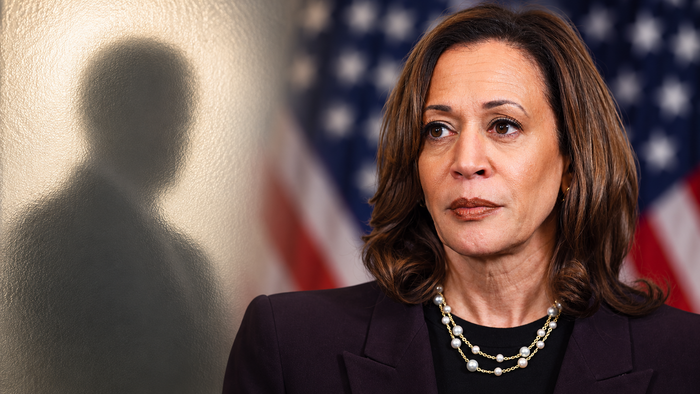
The nascent stages of the 2028 Democratic presidential nomination race reveal a fragmented field, with no singular candidate yet commanding a decisive lead. Early polling data from RealClearPolitics indicates a tight cluster of prominent figures vying for position, suggesting a highly competitive primary season on the horizon. Former Vice President Kamala Harris, despite an initial post-2024 election surge, currently registers at the top with a national average of 16.5%. However, her lead is tenuous, with Senator Jon Ossoff (D-GA) closely trailing at 15%, and both Representative Alexandria Ocasio-Cortez (D-NY) and former Transportation Secretary Pete Buttigieg holding strong at 14%. This early fluidity points to a party grappling with its future direction and a desire among its base for a compelling, electable standard-bearer.
The Early Polling Landscape: A Race Without a Clear Front-Runner
The current polling figures present a snapshot of a dynamic and unpredictable race. Kamala Harris, who served as Vice President alongside Joe Biden and was the Democratic nominee against Donald Trump in 2024, initially enjoyed a significant boost in speculative 2028 polling. This momentum, often seen for recent high-profile figures, appears to be dissipating as other potential candidates gain traction. Her current 16.5% average, while technically the highest, is far from a commanding position, especially when viewed against the statistical margins of error inherent in early polling.
Senator Jon Ossoff, a relatively younger face in the Democratic establishment who gained national prominence through his successful 2021 Senate runoff victory in Georgia, has demonstrated remarkable upward mobility. His ascent from single-digit support to the current 15-18% range since the most recent midterms highlights a potential appetite within the Democratic electorate for fresh leadership. This surge suggests that Ossoff’s message and profile resonate with a significant segment of voters, perhaps those seeking a departure from more established figures.
Representative Alexandria Ocasio-Cortez, a leading voice of the progressive wing of the Democratic Party, and Pete Buttigieg, who previously mounted a strong presidential bid in 2020 before joining the Biden administration, are both positioned solidly at 14%. Their sustained presence in these early polls underscores the diverse ideological currents within the Democratic Party. Ocasio-Cortez appeals to a base eager for transformative policy and a clear progressive vision, while Buttigieg often draws support from more moderate, professional demographics, admired for his intellectual acuity and pragmatic approach. The close proximity of these four candidates at the top of the RealClearPolitics average signals a wide-open contest where narrative and momentum will play crucial roles.
Geographic Nuances and Shifting Preferences
Beyond national averages, specific state-level polling offers a more granular view of candidate strengths and weaknesses. In New Hampshire, traditionally one of the earliest and most influential primary states, the landscape for Harris appears significantly more challenging. Here, her support plummets to a mere 6%, ceding the lead to Pete Buttigieg. This stark contrast between national and early-state performance is a critical indicator for any aspiring presidential candidate. New Hampshire’s primary electorate is known for its independent streak and a tendency to thoroughly vet candidates in intimate town hall settings, often favoring candidates who demonstrate a strong retail political presence. Buttigieg’s past performance in early states during his 2020 campaign, where he exceeded expectations in Iowa and New Hampshire, suggests a continued resonance with these critical voters.
A Reuters/Ipsos poll, conducted on November 12, further underscored the evolving preferences of Democratic voters. When asked which potential candidates would make an "excellent nominee," Ossoff and Buttigieg were tied at 29% each, significantly outperforming Harris and California Governor Gavin Newsom, who were tied at 23%. This metric, which gauges perceived electability and suitability for the top of the ticket, suggests that a significant portion of the Democratic base may be seeking qualities beyond mere name recognition or prior office-holding. The emphasis on "excellent nominee" implies a desire for a candidate capable of uniting the party and mounting a formidable challenge in the general election, especially in the wake of the 2024 outcome.
The Shadow of 2024 and Harris’s Position
Kamala Harris’s current standing must be understood within the context of her 2024 presidential campaign, which culminated in a loss to Donald Trump. While the specific dynamics of that election are complex, the outcome inevitably shapes perceptions of her electability and strategic acumen within the Democratic Party. Her initial strength in 2028 polling reflected her status as the former Vice President and the most recent standard-bearer, but the subsequent decline suggests that Democratic voters are actively re-evaluating her viability for another run. The message from the Democratic electorate, as highlighted by some analysts, appears to be that Harris’s grip on the presumptive front-runner status is weakening, opening the door for alternatives. This sentiment is amplified by the strong performances of newer faces and those perceived as having different electoral strengths.
The Enduring Influence of California’s Political Kingmaker: Willie Brown
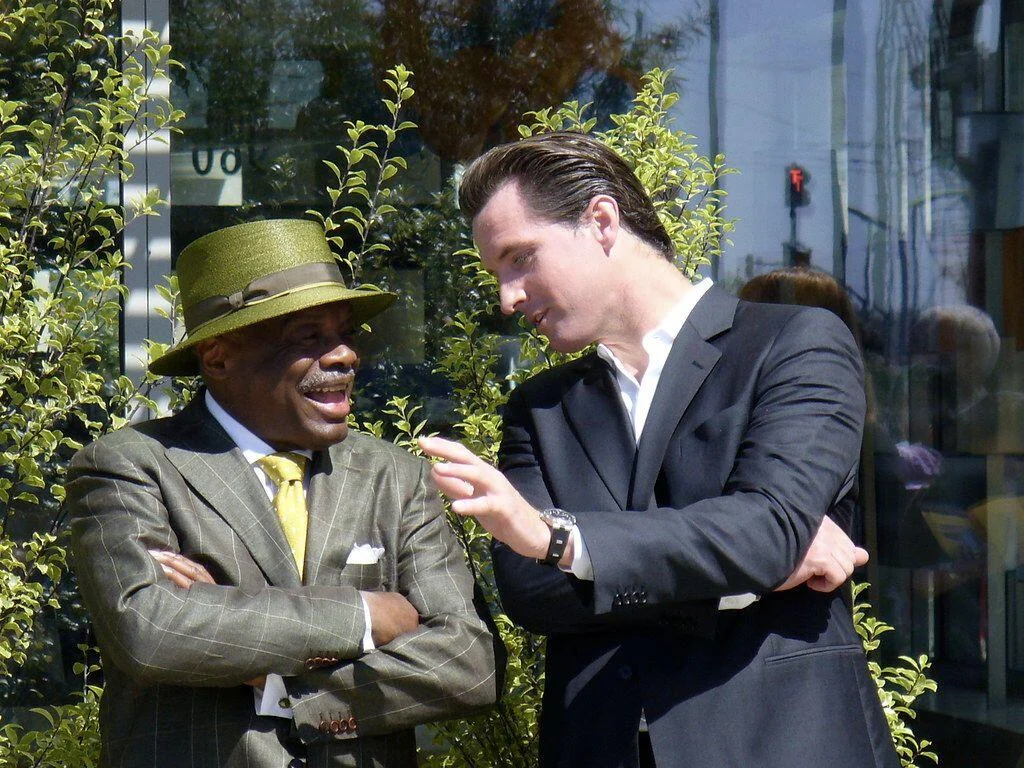
The 2028 race, particularly concerning two of its most prominent figures, Kamala Harris and Gavin Newsom, cannot be fully understood without acknowledging the profound and often controversial influence of Willie Brown. The 92-year-old former Mayor of San Francisco and long-time Speaker of the California Assembly remains a powerful, if informal, political force in the state and beyond. Brown’s career spans decades, during which he cultivated a reputation as a shrewd strategist and a mentor to a generation of California politicians.
Brown’s historical connection to Kamala Harris is well-documented. In the mid-1990s, when Harris was a 29-year-old prosecutor, Brown, then 60 and one of the state’s most powerful figures, began dating her. During this period, Brown appointed Harris to two significant state boards: the California Unemployment Insurance Appeals Board and the California Medical Assistance Commission. These appointments, while drawing scrutiny at the time due to their personal relationship, provided Harris with valuable experience and visibility early in her career. Brown himself has openly discussed his role in supporting her political ascent, including his assistance in her successful 2003 campaign for San Francisco District Attorney, a fact he reaffirmed in a 2019 San Francisco Chronicle column.

More recently, Brown has offered remarkably candid assessments of Harris’s political future. In a lunch interview with The Red Letter on November 21, he expressed strong reservations about her potential 2028 presidential bid. "I’m sorry that she even thinks about running for president," Brown reportedly stated, adding unequivocally, "I don’t want her to run." He further elaborated on Harris’s emotional state following her 2024 loss, noting, "She was clearly very hurt." Brown’s criticisms extend to Harris’s perceived communication style and presence, suggesting she lacks a certain "Baptist preacher flavor in her soul" necessary to connect with a broad electorate and command a room effectively.
Brown’s advice for Harris has been to consider pathways outside traditional electoral politics, such as leading a major institution or pursuing a career in media. He also expressed surprise that she did not run for Governor of California, a move he believed would have significantly bolstered her national standing. Indeed, polling data from 2026 suggested that had Harris opted to run for California Governor, she would have been the clear frontrunner, indicating a missed opportunity for a strong political platform.
Gavin Newsom: The Other Protégé and Strategic Calculus
Willie Brown’s influence extends equally to Gavin Newsom, the current Governor of California. Brown played a pivotal role in launching Newsom’s career, much as he did for Harris. He appointed Newsom to San Francisco’s Parking and Traffic Commission, supported his successful bid for a seat on the city’s Board of Supervisors, and was instrumental in his victorious 2003 campaign for Mayor of San Francisco. Newsom himself publicly acknowledges this patronage, stating at a 2024 ceremony inducting Brown into the California Hall of Fame, "I’m standing here because of Willie Brown."
Brown’s preference in the potential 2028 contest is clear. In a June 2026 interview with ABC News, he articulated a distinct advantage for Newsom over Harris: Newsom, he argued, was not the "most recent loser." Brown emphasized the importance of backing a "winner," a label he unequivocally applied to Newsom at that moment. This statement underscores a pragmatism often found in seasoned political operators: electability, particularly after a recent electoral defeat, can be a heavy burden for a candidate.
Despite Brown’s apparent preference, Governor Newsom has publicly tied his own presidential aspirations directly to Kamala Harris’s decision. In a September interview with CNN’s Jake Tapper, Newsom unequivocally stated his intention to stay out of the race if Harris decides to run. "I wouldn’t run if she ran," Newsom affirmed, reiterating, "Of course not. Why would I? I wouldn’t do that to her. I wouldn’t do it to me. I wouldn’t do that to you. I wouldn’t waste everyone’s time. Who needs that?"
Newsom elaborated on the rationale behind this strategic decision, describing a potential primary contest between the two Californians as a "gift from God for everybody else. They’d enjoy the hell out of it. Mutual assured destruction. It services no greater good." He highlighted the significant overlap in their political bases, asserting that the "Venn diagram on that is just pure crossover," making it impossible for either to succeed without cannibalizing the other’s support. This "mutual assured destruction" argument suggests a calculated move to avoid a damaging intra-party battle that could weaken the eventual nominee and the Democratic Party as a whole. His statement implies a desire to preserve party unity and focus on the general election challenge, rather than engaging in a potentially acrimonious primary.

Broader Implications for the Democratic Party
The current state of the 2028 Democratic primary race carries significant implications for the party’s future. The absence of a dominant front-runner suggests a period of internal debate and ideological alignment. The strong showings of diverse candidates like Ossoff, Ocasio-Cortez, and Buttigieg indicate that the party’s base is open to a range of leadership styles and policy priorities, from progressive populism to more centrist, technocratic approaches.
The question of electability, particularly after the 2024 outcome, will undoubtedly loom large. Democratic voters, bruised by a national defeat, may prioritize a candidate perceived as having the broadest appeal and the best chance to win against a potentially strong Republican opponent. This focus could benefit candidates with less baggage or those who project a message of unity and forward-looking vision.
Furthermore, the generational shift within the party is evident. While figures like Harris and Newsom represent a certain era of Democratic leadership, the rise of Ossoff, Ocasio-Cortez, and Buttigieg signals a potential desire for a new generation to take the reins. This dynamic could lead to a vigorous contest over the party’s identity and its strategic direction for the next decade.
The candid interventions of figures like Willie Brown, while controversial, highlight the deep-seated network and influence that shape political trajectories, especially in states like California. His willingness to openly critique a former protégé and endorse another underscores the high stakes involved and the ongoing assessments of who is best positioned to lead the party.
Looking Ahead: An Evolving Narrative
As the 2028 election cycle slowly takes shape, the Democratic nomination race remains wide open. Kamala Harris has yet to publicly declare her intentions for 2028, a decision that will undoubtedly trigger a cascade of reactions and strategic realignments among other potential contenders. The coming months and years will likely see candidates intensify their efforts to build national profiles, cultivate donor networks, and test messages with key constituencies. The dynamic interplay of polling trends, strategic endorsements, and the evolving political landscape will ultimately determine who emerges as the Democratic Party’s choice to lead the nation. The early indicators suggest a fascinating and fiercely contested battle ahead, shaping not just the presidency but the very identity of the modern Democratic Party.

