
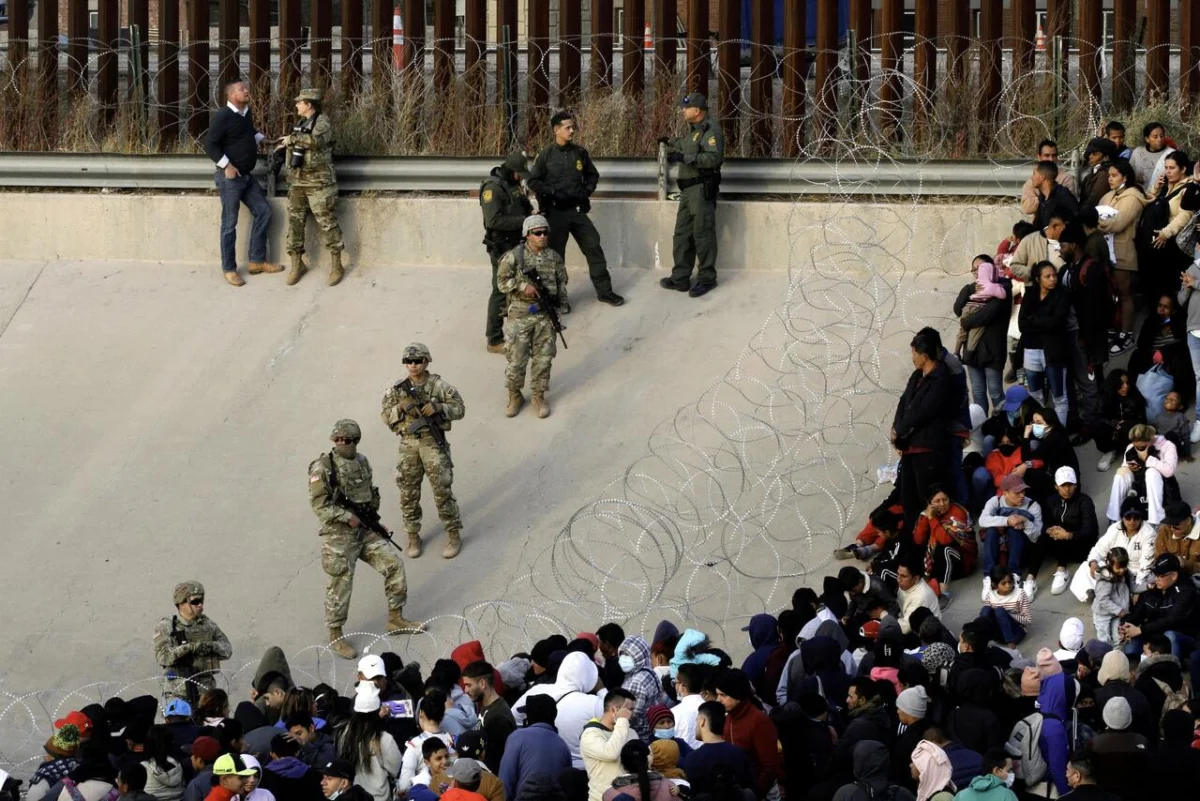
In a move set to reshape border security policy for decades, Texas has formalized an agreement to keep its controversial concertina wire barriers along the Rio Grande for the next 30 years. This landmark settlement, reached with the federal government weeks before the anticipated departure of Governor Greg Abbott and Attorney General Ken Paxton from their respective offices in January, holds profound implications for both state and federal border management. The deal, signed on November 18 and 19, 2024, explicitly binds the incoming Democratic governor, Gina Hinojosa, who reportedly defeated Abbott in the recent gubernatorial election, and future heads of the Department of Homeland Security (DHS), effectively barring Texas from unilaterally removing the wire without Washington’s consent until 2056.
The agreement, publicly announced by Attorney General Ken Paxton on November 19, 2024, is a bilateral commitment. It mandates that federal entities—specifically the Department of Homeland Security, Customs and Border Protection (CBP), and the Border Patrol—and their agents and contractors "will not willfully cut, damage, destroy, remove, or otherwise interfere with" concertina wire owned or placed by Texas on non-federal land within a 25-mile radius of the border in the Border Patrol’s Del Rio Sector. This critical stretch, encompassing the area between Big Bend and Laredo, includes Eagle Pass, which has emerged as a significant flashpoint in the ongoing border standoff throughout 2024.
Terms of the Enduring Agreement
The settlement outlines specific exceptions to this non-interference clause for federal agents. They are permitted to cut the wire when "objectively necessary" to provide emergency aid to individuals, to "apprehend and process an alien under federal immigration law," to respond to serious and immediate threats to officers or the public, or to undertake emergency repairs to DHS border infrastructure following natural disasters such as flooding. In such instances, federal agents are required to notify Texas in writing within 72 hours, to repair the barrier where feasible, and to coordinate with the state before relocating wire for new barrier construction or routine maintenance. The agreement also preserves Border Patrol’s existing authority under federal law to access private land, excluding private homes, within 25 miles of the international border for operational purposes.
Conversely, Texas, under the terms of the agreement, "will not undertake or authorize any Restricted Acts without the prior written consent of DHS." These "Restricted Acts" mirror the actions federal agents are prohibited from taking: cutting, damaging, destroying, or removing the wire. This means that concertina wire installed by the state in the Del Rio Sector cannot be removed by Texas authorities acting independently.
A crucial aspect of the settlement’s long-term impact is its binding nature on future administrations. Citing Federal Rule of Civil Procedure 25(d), the agreement explicitly states that "all successors to the named Defendants and Plaintiffs in their official capacity are legally bound as if they were named in the Agreement." This provision ensures that the terms extend to Governor-elect Gina Hinojosa, who is set to assume office in January, and any future leader of the Department of Homeland Security, irrespective of presidential changes. The settlement’s terms can only be altered through a written amendment "signed by the Parties," signifying a high bar for modification.
Background: A Protracted Legal and Political Struggle
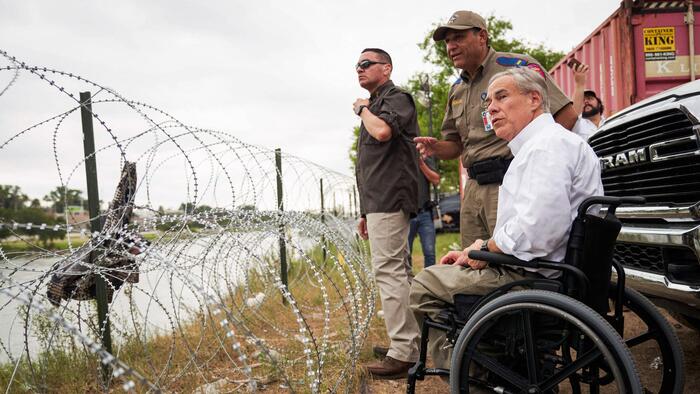
This settlement is the culmination of a heated and prolonged legal and political battle between the state of Texas and the federal government over border enforcement. The conflict intensified with Governor Abbott’s launch of Operation Lone Star in March 2021, an initiative deploying thousands of Texas National Guard members and state law enforcement officers to the border. The operation aimed to deter illegal immigration and combat drug trafficking, with tactics including the installation of concertina wire and floating barriers in the Rio Grande. Texas officials argued these measures were necessary due to what they perceived as insufficient federal action in securing the border amidst historically high migrant encounters.
The installation of concertina wire, in particular, became a flashpoint. Texas asserted its right to defend its border, while the federal government, through DHS and Border Patrol, maintained its exclusive authority over immigration enforcement and border management. Federal agents frequently cut the wire to facilitate migrant processing, provide humanitarian aid, or access the river for patrolling, leading to accusations from Texas of actively undermining state efforts.
In October 2023, Attorney General Ken Paxton filed a lawsuit against the Biden administration, accusing federal agents of systematically destroying Texas’s border barriers. A federal judge initially issued a temporary order halting the cutting of the wire, though a subsequent request for a longer injunction was denied, despite the court acknowledging that the federal government’s actions were "likely unlawful." The legal seesaw continued when the Fifth Circuit Court of Appeals intervened, granting an injunction pending appeal, which temporarily prevented federal agents from cutting the wire.
However, this temporary victory for Texas was short-lived. In January 2024, the U.S. Supreme Court vacated the Fifth Circuit’s injunction in a 5-4 decision, effectively freeing federal agents to resume cutting the wire. This ruling came just days after Texas had taken control of Shelby Park in Eagle Pass, further escalating tensions. The legal saga took another turn in November 2024, when the Fifth Circuit granted Texas a preliminary injunction specifically covering the Eagle Pass area, highlighting the localized nature of some of the disputes. The settlement now aims to bring a comprehensive resolution to these ongoing legal skirmishes.
The Del Rio Sector: A Strategic Priority
The choice to focus the settlement’s scope on the Del Rio Sector underscores its significance as a primary corridor for irregular migration. This sector, stretching roughly 245 miles along the Rio Grande, has witnessed a dramatic surge in migrant encounters in recent years. Data from U.S. Customs and Border Protection (CBP) consistently shows the Del Rio sector as one of the busiest, with hundreds of thousands of encounters annually. The geographical features of the area, including sections of relatively shallow river and sparse terrain, make it attractive to migrants and human smugglers. Eagle Pass, a city within this sector, has been particularly impacted, leading to significant local and state resources being dedicated to border enforcement there. The concentration of concertina wire in this sector, therefore, reflects a strategic effort by Texas to deter crossings in a high-traffic area.

Political Implications and Future Challenges
The timing of the settlement, signed just as Governor Abbott and Attorney General Paxton prepare to leave office, injects a layer of political complexity. Paxton hailed the agreement as a victory, stating, "Through coordination between federal and state authorities, this settlement ensures that concertina wire will remain in place to protect our southern border. We must never stop fighting to protect our nation from those who seek to destroy it."
However, the agreement places the incoming administration of Governor-elect Gina Hinojosa in a challenging position. Hinojosa, a Democrat, has been a vocal critic of Operation Lone Star, famously calling it "political theatre." While she has stated her commitment to a secure border, she has also expressed different philosophies on how to achieve it, telling the Texas Tribune that people near Big Bend would prefer electronic monitoring over a physical wall. Her past remarks, such as "What ICE is doing is making us less safe," and her suggestion that she might revoke Abbott’s order directing state agencies to assist federal immigration officers, indicate a potential shift in state policy.
Despite her intentions, the settlement legally binds Hinojosa’s administration, limiting her ability to dismantle the concertina wire in the Del Rio Sector. This creates a potential point of contention between the new state leadership and the federal government, especially if a future presidential administration, such as a hypothetical return of Donald Trump, seeks to further enforce a stringent border policy. Trump himself has publicly stated that if Texas’s new government does not "continue his policy," he "will." This sentiment was echoed by Rep. Keith Self (R-Texas), who posted on November 20, 2024, that "Texas has a new governor who will open the border and welcome criminals with open arms," calling on Congress to codify Trump’s border executive orders.
Humanitarian and Practical Considerations
The use of concertina wire as a primary border deterrent raises significant humanitarian concerns. Human rights organizations and migrant advocates have repeatedly condemned its use, citing numerous reports of injuries to migrants, including women and children, who attempt to cross. Critics argue that such barriers push migrants into more dangerous crossing areas, increasing risks of drowning, exposure, or exploitation by smugglers. The effectiveness of concertina wire as a long-term deterrent is also debated, with many experts suggesting that determined individuals will find ways around or through such obstacles, often at greater personal risk.
From a practical standpoint, the agreement necessitates continued coordination between state and federal agencies, despite their past adversarial relationship. The provisions for federal agents to cut the wire in emergencies or for processing migrants, coupled with the requirement to notify and potentially repair, establish a framework for cooperation that was largely absent during the peak of the dispute. However, the potential for disagreements over what constitutes an "objectively necessary" intervention or the adequacy of repairs remains.

Financial Aspects and Resource Allocation
Operation Lone Star has incurred substantial costs for Texas taxpayers, reportedly running into billions of dollars since its inception. While the settlement ensures the longevity of the concertina wire component, it does not explicitly address the broader funding or operational scope of Operation Lone Star. The incoming Hinojosa administration will face decisions regarding the allocation of state resources towards border security, balancing the mandates of the settlement with her stated policy preferences and the overall financial burden on the state. The long-term maintenance of the concertina wire itself will also require ongoing state resources.
Conclusion: An Enduring Legacy and Future Uncertainties
The 30-year settlement over concertina wire in the Del Rio Sector represents a significant and potentially enduring shift in border management responsibilities and authorities. It is a testament to the Abbott-Paxton administration’s assertive stance on border security and an unexpected legacy binding future state and federal leaders. While the agreement seeks to formalize and stabilize the presence of these barriers, it simultaneously sets the stage for future political and legal debates, particularly concerning the balance of power between state and federal governments, the humanitarian implications of border enforcement, and the strategic direction of Texas’s approach to immigration. Whatever the new Governor Gina Hinojosa chooses to do with Operation Lone Star, the wire in the Del Rio Sector is now legally mandated to remain in place, unless DHS agrees otherwise, until 2056, a stark symbol of Texas’s persistent push for enhanced border control. The settlement, currently awaiting judicial approval from the federal court in Del Rio, marks a pivotal moment in the ongoing national discourse on border security, underscoring the complexities and long-term consequences of these highly politicized issues.

