
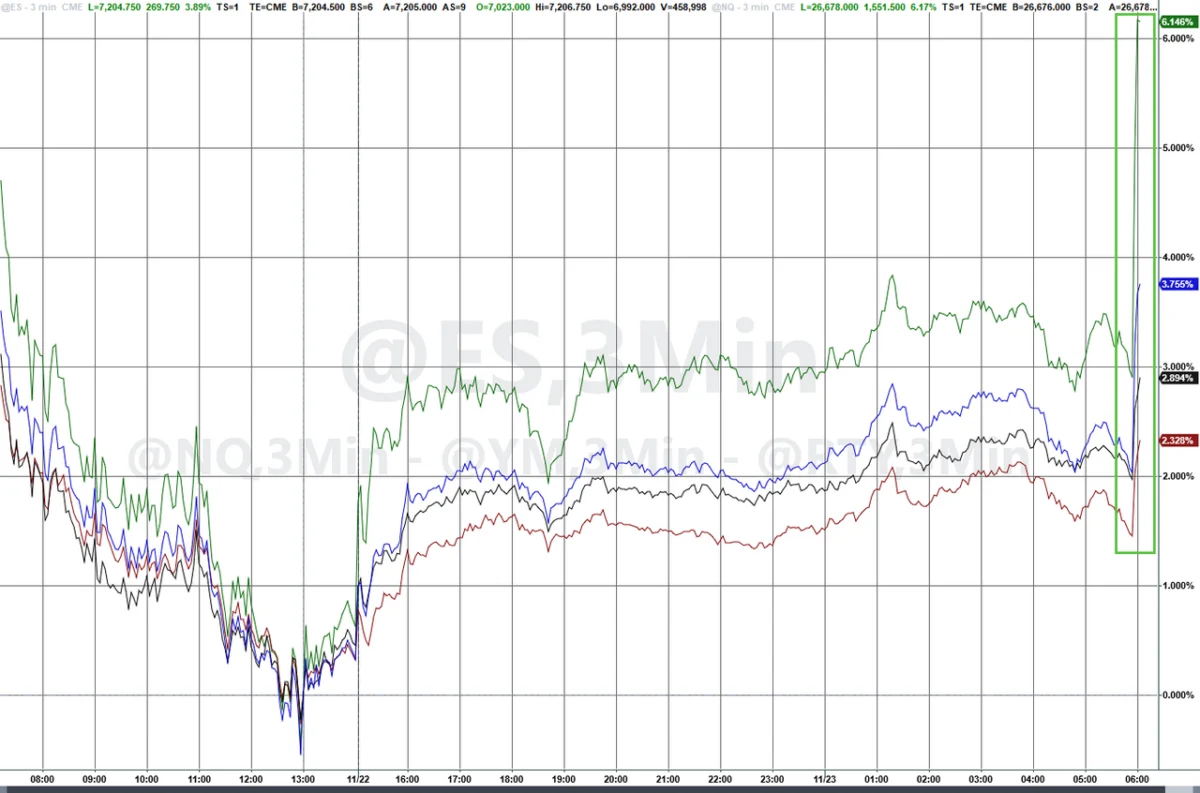
In a stunning reversal of corporate governance, Jensen Huang has been reinstated as President and Chief Executive Officer of Nvidia, less than two weeks after his resignation following revelations of an extramarital affair, including one with an alleged Chinese intelligence operative. This dramatic development, which sent Nvidia shares soaring over 30% and significantly buoyed the broader market, was directly influenced by an unprecedented personal intervention from President Donald J. Trump, who publicly confirmed he spoke with Nvidia’s board and "convinced them" to bring Huang back.
Presidential Influence and White House Confirmation
President Trump, speaking to CNBC on Monday morning, unequivocally stated his personal involvement in the decision-making process. "I spoke to them, let me put it that way," Trump told Eamon Javers in a phone interview, adding, "And I convinced them." The President defended Huang, asserting he "did nothing wrong" and commended the Nvidia board for acting "responsibly" in reinstating him. Crucially, Trump also noted that the board "did ask for assurance on the national security threat," indicating that government clearance was a prerequisite for Huang’s return.
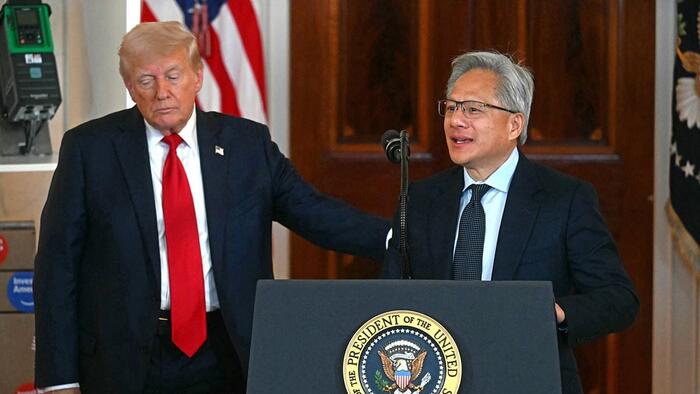
The White House swiftly corroborated President Trump’s account, with Communications Director Steven Cheung telling Semafor, "President Trump was totally involved and this is a great decision by the NVIDIA board. We have to protect our geniuses." This official confirmation underscores the significant and highly unusual White House dimension to a corporate leadership decision at one of the nation’s most strategically important technology companies. Trump later reinforced his stance with a Truth Social post, congratulating the board and stating, "The United States Government has no reason to believe that Jensen’s return to NVIDIA poses any risk to National Security." He also highlighted that the Attorney General had confirmed no evidence of unlawful conduct by Huang.
Nvidia Board’s Unanimous Decision and Government Assurances
Nvidia’s board of directors announced Huang’s immediate reinstatement, effective Monday. The decision, reached through a unanimous vote following intensive discussions, came after the board received direct assurances from "senior levels of the United States government" that Huang posed no national security risk. Harvey C. Jones, Chair of the Board, affirmed, "The Board believes Jensen is the right person to lead NVIDIA, and that his reinstatement is in the best interests of our stockholders, employees, partners and customers. We have every confidence in Jensen and look forward to working with him as he resumes his leadership of the Company." Interim CEO Colette Kress, who served briefly during Huang’s absence, will return to her role as Chief Financial Officer.
Jensen Huang, in a statement accompanying the press release, expressed humility and renewed commitment. "I am honored to return to NVIDIA and lead one of the most consequential technology companies in the world at the beginning of a new industrial revolution," Huang said. "I take this responsibility with the greatest humility and renewed commitment." He thanked the board, his family, employees, shareholders, and industry partners for their support during the challenging period.

The Scandal That Preceded the Reinstatement
Huang’s dramatic resignation less than two weeks prior had sent shockwaves through the tech and financial worlds. He stepped down on November 12, admitting to marital infidelity. The scandal intensified with subsequent reports, particularly from The New York Times, alleging that one of his affairs was with Alice Huang (no relation), a former executive at Megaspeed, a Singapore-based company and a significant Nvidia customer. Alarmingly, the reports claimed that U.S. intelligence had tracked Alice Huang in contact with an officer of China’s Ministry of State Security from the spring of 2025 until the fall of 2026, a period that overlapped with her relationship with Jensen Huang. Furthermore, her business partner, Kang Wei, often introduced as her husband, was also reported to have worked with the same Chinese spy agency.
Megaspeed itself had been under investigation since 2024 by the U.S. Commerce Department for suspected smuggling of Nvidia’s advanced AI chips into China, in violation of stringent U.S. export controls. Nvidia had placed Megaspeed on its "no sell" list in June 2025, the same month Alice Huang was interviewed by Commerce agents during an on-site check. This meant her alleged contacts with Chinese intelligence continued for over a year after Nvidia severed ties with her company, raising significant national security red flags.
A Swift Chronology of Events

The events leading to Huang’s reinstatement unfolded rapidly:
- 2024: The U.S. Commerce Department initiates an export-control investigation into Megaspeed.
- June 2025: Nvidia places Megaspeed on its "no sell" list. Alice Huang, then Megaspeed CEO, is interviewed by Commerce agents.
- Spring 2025 – Fall 2026: U.S. intelligence reportedly tracks Alice Huang in contact with China’s Ministry of State Security.
- November 12 (approx.): Jensen Huang resigns as Nvidia CEO, admitting to marital infidelity. Nvidia stock plunges.
- November 16: President Trump states he "would not mind" seeing Huang return, beginning his public advocacy.
- November 17: Nvidia Chairman Harvey Jones states on an earnings call that the board "unanimously accepted his resignation and does not intend to reinstate Jensen as CEO."
- November 20: President Trump, in a Fox News interview, defends Huang, dismissing the spy angle ("Any pretty woman that comes from China, they consider her to be a spy") and comparing him to Elon Musk, emphasizing the need to "protect our brilliant people."
- November 23 (Sunday night):
- The New York Times publishes its report detailing Alice Huang’s alleged contacts with Chinese intelligence.
- Shortly after, President Trump posts on Truth Social, urging Nvidia’s board to rehire Jensen Huang, calling it "the best thing for the Company, and also, for the U.S.A."
- Charles Gasparino reports that Huang’s supporters believe their best chance lies in getting the Trump administration to cast doubt on the national security risk posed by Alice Huang.
- Polymarket odds for Huang’s return briefly plummet to 17%.
- November 23 (Monday morning):
- Nvidia announces Jensen Huang’s immediate reinstatement as CEO, citing assurances from "senior levels of the United States government" regarding no national security risk.
- Nvidia shares surge over 30% in pre-market trading.
- President Trump confirms his direct intervention to CNBC, stating he "convinced them."
- The White House confirms Trump’s involvement, praising the decision.
- Trump posts on Truth Social, congratulating Nvidia and confirming government belief that Huang poses no national security risk.
- Separately, Rene Haas, a strong contender for the Nvidia CEO role, has his contract extended at Arm and is promoted to vice chairman of SoftBank Group, effectively removing him from Nvidia’s candidate pool.
Official Stance on Spy Allegations and Broader Context
Throughout the scandal, various U.S. government officials maintained a cautious stance on definitively labeling Alice Huang as a spy. Attorney General Todd Blanche stated on November 12 that neither the Justice Department nor the FBI had confirmed she was a Chinese spy. Director of National Intelligence Jay Clayton echoed this on Sunday, noting it was "a matter under investigation." Treasury Secretary Scott Bessent, who had previously advised Nvidia to look outside the company for a new CEO, declined to rule out Huang’s return and referred to the spy angle as "kind of a canard," though still demanding answers on Nvidia’s chip sales to China. Beijing, for its part, has consistently denied the spy claims.
President Trump, however, had consistently downplayed the intelligence concerns, citing Huang’s critical importance to Nvidia and the broader U.S. economy. His repeated public defenses of Huang, culminating in his direct intervention, suggest a prioritization of economic leadership and technological prowess over lingering national security concerns that the administration now claims have been addressed.

Nvidia’s Future Compliance and Governance
Despite the reinstatement, Nvidia is not dismissing the serious allegations that led to Huang’s initial departure. The company announced that the independent committee formed to investigate reports of Huang being targeted by a foreign intelligence effort will "proceed to conclusion." Huang has pledged his full cooperation with this ongoing investigation.
Furthermore, the board has established a new National Security and Export Control Committee, composed solely of independent directors. This committee will oversee trade compliance and national security risks, engaging counsel and advisors with specialized expertise. Nvidia also plans to hire a Chief Compliance Officer, a new position reporting to the Nominating and Corporate Governance Committee, to enhance overall compliance efforts. These measures indicate Nvidia’s commitment to addressing the governance and security concerns that were brought to light by the scandal.
Market Reaction and Broader Implications

The financial markets reacted with overwhelming enthusiasm to Huang’s return. Nvidia’s shares surged over 30% in pre-market trading, adding hundreds of billions to its market capitalization and reflecting investor relief and confidence in Huang’s leadership, which is widely seen as indispensable to the company’s dominance in the artificial intelligence and semiconductor sectors. The positive sentiment extended to the broader tech market, with Nasdaq futures rising over 6%, signaling a strong start to the trading week.
This episode sets a remarkable precedent for presidential intervention in private corporate governance, particularly concerning individuals deemed "national treasures" in critical industries. It highlights the growing intersection of national security, economic competitiveness, and corporate leadership in an era of intense technological rivalry, particularly between the U.S. and China. The U.S. government’s willingness to provide assurances to a corporate board regarding a CEO’s security clearance, coupled with the President’s direct advocacy, underscores the strategic importance of companies like Nvidia and their leaders to national interests. The reinstatement, while celebrated by investors, will undoubtedly be scrutinized for its long-term implications on corporate independence, government oversight, and the delicate balance between economic prowess and national security vigilance.

