

The pursuit of traditional adult milestones—homeownership, debt freedom, and retirement security—has become an increasingly complex endeavor for professionals in the current economic landscape. This is exemplified by the case of Brian and Michael, both 34, a couple residing in central Connecticut who, despite stable public sector careers and a combined six-figure income, find themselves navigating the friction between rising living costs and the desire for long-term financial stability. As they approach their tenth anniversary, the couple’s trajectory serves as a microcosm for the broader financial challenges facing the millennial demographic in the Northeastern United States, particularly regarding the transition from low-cost rental living to the high-stakes real estate market.

Financial Profile and Career Trajectories
Brian and Michael maintain a robust household income, yet their balance sheet reflects a common modern dichotomy: significant retirement assets coupled with high-interest consumer debt. Michael serves as a project coordinator for a state behavioral health agency and supplements this income as a disability leadership coordinator and advocate. His professional focus is deeply personal, rooted in his experience as a brain injury survivor. Brian operates as a quality assurance manager for a state-run hospital, a role that provides substantial benefits, including a pension and lifetime healthcare, which are increasingly rare in the private sector.
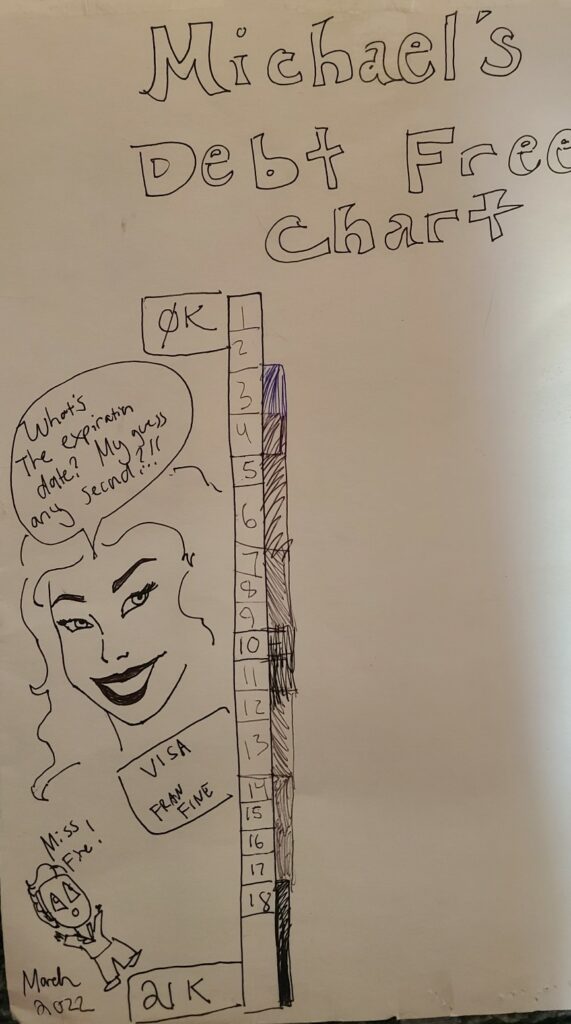
The couple’s annual net income is approximately $109,455, derived from a gross household income of $167,544. Despite this strong cash flow, they carry $28,259 in consumer debt. This debt is distributed across several credit lines, including a $16,057 balance on a Visa card with an impending 17.99% interest rate and a $9,700 balance on a Visa Platinum card at 10.99% interest. The presence of this debt, largely accumulated during a period of housing instability and unexpected veterinary expenses, has created a sense of "dream deferred" regarding their goal of purchasing a home.

Chronology of Financial Disruption (2022–2023)
The couple’s current financial anxiety is largely a byproduct of a tumultuous twelve-month period beginning in late 2022. For eight years, they resided in a 600-square-foot studio apartment with a monthly rent of $945, a figure significantly below market value for the region. This low overhead allowed for a degree of financial flexibility that was abruptly terminated when they were forced to re-enter the rental market during a period of historic inflation and low inventory.
Between late 2022 and early 2023, the couple spent nearly four months searching for a new residence while simultaneously managing health issues for two new kittens. The transition to a two-bedroom, two-bathroom apartment in a refurbished industrial mill resulted in a rent increase to $2,000 per month—a 111% surge in housing costs. This shift, while providing a more "age-appropriate" living environment and a dedicated home office for Michael, significantly constricted their ability to save for a down payment.

The Connecticut Housing Market and Economic Context
The challenges faced by Brian and Michael are exacerbated by the specific economic conditions of Connecticut. According to data from the Connecticut Association of Realtors, the state has seen a consistent increase in median home prices coupled with a chronic shortage of inventory. In 2023, the median sales price for single-family homes in Connecticut rose by nearly 10% year-over-year, while the number of homes for sale hit record lows.
For a couple looking to move from a $2,000-a-month rental to a mortgage, the barrier to entry is high. Current mortgage rates, which have fluctuated between 6% and 8% over the last year, further complicate the math. To secure a home in a rural or semi-rural part of the state, Brian and Michael would likely need a down payment in the range of $40,000 to $60,000 to avoid private mortgage insurance (PMI) and maintain a monthly payment comparable to their current rent. However, their current liquid savings stand at just $9,000, which serves as their emergency fund.

Asset Analysis and the "Triple Crown" of Retirement
While the couple expresses shame regarding their consumer debt, their long-term asset position is notably strong compared to national averages for their age group. Their total assets are valued at $91,250, but it is the structure of these assets that provides a unique safety net.
Brian’s employment in the public sector grants him access to what financial analysts often call the "triple crown" of retirement: a 403(b) tax-sheltered annuity, a 457(b) deferred compensation plan, and a defined-benefit pension. The 457(b) plan is particularly advantageous, as it allows for penalty-free withdrawals upon separation from service, regardless of age, providing a potential bridge for early retirement.
Furthermore, Michael’s 401(k) through his primary employer is fully vested, with a 4% company match. Their combined retirement contributions are significant, yet they face the dilemma of whether to temporarily reduce these contributions to accelerate debt repayment—a move that would sacrifice the long-term compounding of tax-advantaged dollars.
Strategic Recommendations for Debt Elimination
Financial experts, including Elizabeth Willard Thames (known as Liz Frugalwoods), suggest that Brian and Michael are in a stronger position than they perceive. The primary obstacle is not their income, but a lack of rigorous expense tracking and a cycle of "feast and famine" spending.

To achieve debt freedom within a six-month window, the proposed strategy involves a "spending detox." By categorizing expenses into fixed, reducible, and discretionary categories, the couple can identify approximately $1,370 in monthly discretionary spending that can be redirected toward debt.
Proposed Budget Adjustments:

- Discretionary Eliminations: Temporarily halting spending on dining out ($200), gifts ($200), home goods ($200), and personal care ($150).
- Targeted Debt Payoff: By combining their current $2,000 monthly debt allocation with the $1,370 in found savings, the couple could apply $3,370 per month toward their balances.
- Interest Rate Mitigation: Prioritizing the $16,057 SCU Visa before the 0% APR expires in November 2023 is critical to avoiding a sharp increase in monthly interest charges.
The Graduate Degree Debate
A significant point of discussion in the couple’s ten-year plan is Brian’s desire to pursue a master’s degree. From a journalistic and financial analysis perspective, the return on investment (ROI) for such a degree must be scrutinized. In the current labor market, particularly within state hospital administration, a graduate degree often serves as a prerequisite for senior leadership roles.
However, unless there is a guaranteed salary increase or a clear "step-up" in the state’s pay scale, the cost of tuition—compounded by the opportunity cost of lost time—could hinder their homeownership goals. Financial advisors typically recommend that such degrees be pursued only if the employer provides tuition reimbursement or if the credential leads to an immediate and significant income boost.

Broader Implications and Future Outlook
The story of Brian and Michael reflects a broader trend among millennials: the "delayed adulthood" narrative driven by structural economic shifts rather than personal failure. The transition from a low-cost "lifestyle subsidy" (their $945 apartment) to market-rate living often reveals underlying budget inefficiencies that were previously masked by low overhead.
To reach their ten-year goals—which include homeownership, starting a business, and leaving a legacy—the couple must bridge the gap between their public-sector stability and their private-sector spending habits. The analysis suggests that with disciplined tracking and a temporary period of austerity, they can eliminate their consumer debt by mid-2024. Once debt-free, their strong income could allow them to build a robust down payment within two to three years, placing homeownership within reach by 2027.

The case underscores the importance of the emergency fund as a "buffer from debt." The couple’s previous reliance on credit cards for car repairs and vet bills was a symptom of an underfunded liquid reserve. Moving forward, the establishment of a six-month emergency fund ($40,000–$50,000) will be the most critical factor in preventing a recurrence of the debt cycle.
As they celebrate their tenth anniversary, Brian and Michael stand at a financial crossroads. While the psychological weight of debt is significant, their high earnings and exceptional retirement benefits provide a foundation that many of their peers lack. Their ability to "unlock the next level of adulting" depends not on a windfall, but on the granular management of the $109,000 that passes through their hands each year.

