

The cryptocurrency market experienced a significant shake-up this week as HEX, a digital asset known for its unique staking mechanisms, saw its market capitalization plummet by over $246 million. This sharp decline followed the detention of its founder, Richard Schueler, widely recognized in the crypto community as Richard Heart, by authorities in Istanbul, Turkey, on October 14. The incident has sent ripples through the digital asset space, raising questions about regulatory oversight, founder accountability, and the inherent volatility of the cryptocurrency market.
Detention and Seizure in Istanbul
According to statements from Turkey’s Justice Minister, Akın Gürlek, the detention was part of a coordinated raid in Istanbul’s Beşiktaş district. Turkish police executed an early morning operation that not only led to Schueler’s apprehension but also resulted in the seizure of substantial assets. The haul included $7.15 million in cash, alongside a cache of firearms and ammunition. The operation extended beyond the initial raid, with searches conducted at 15 other related addresses, underscoring the extensive nature of the investigation.
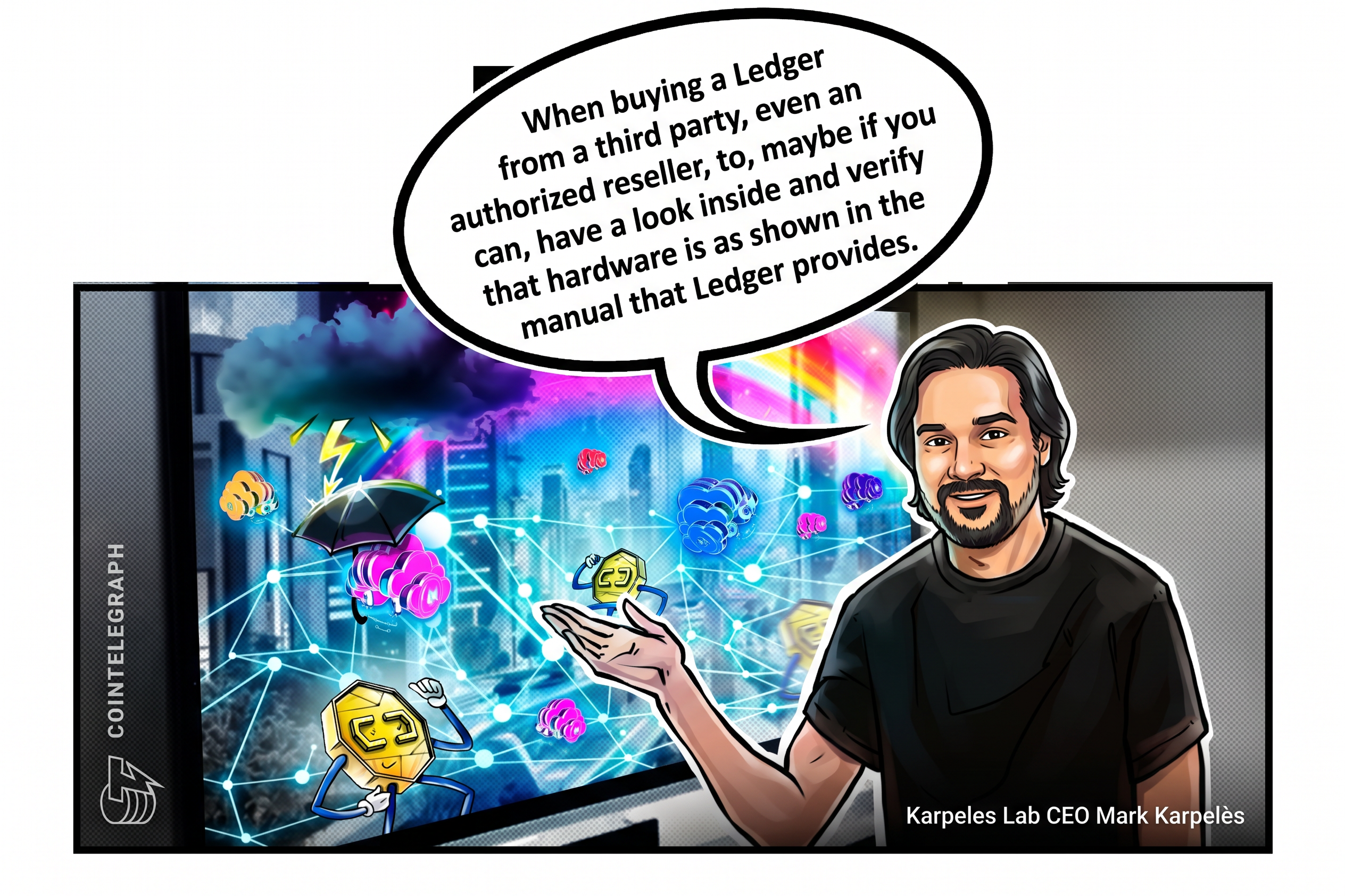
Further details emerging from the Turkish justice system indicated that nine luxury vehicles, reportedly registered to Schueler’s wife, were impounded. The inventory of seized items also included a significant collection of 28 watches, 300 bags, and 19 high-end graphics cards, hinting at the considerable wealth associated with the individual. News agency Anadolu provided further reports on the specifics of the seizures.
A History of International Scrutiny
The detention in Turkey is not the first instance of international authorities showing interest in Richard Heart. Approximately two years prior, Interpol had issued a "Red Notice" for Schueler. This action was initiated following a request from Finnish authorities, who were investigating allegations of tax fraud and assault. While the exact status of those allegations and their connection to the current events in Turkey remains unclear, the Red Notice signifies a pre-existing pattern of international legal scrutiny. A spokesperson for Finland’s National Bureau of Investigations declined to comment on the specifics of the ongoing investigations, citing the sensitive nature of such matters.
Turkish media outlets have reportedly referred to Schueler as "Whale James" and have linked him to a previously alleged $1 billion unregistered securities offering in the United States. However, it is crucial to note that this particular case was dismissed by a U.S. judge in February 2025, suggesting a lack of sufficient evidence or a legal resolution in favor of the defense at that time. The juxtaposition of these past allegations with the current detention highlights a complex and ongoing narrative surrounding the HEX founder.
Market Reaction and Social Media Buzz
The immediate impact of Schueler’s detention was a dramatic downturn in the market capitalization of HEX. The token’s value, which stood at $561 million prior to the news, plummeted to $315 million within the week, representing a loss of approximately $246 million. This significant market correction underscores the high degree of reliance the HEX ecosystem places on its founder and the speculative nature of many cryptocurrency investments.
Adding to the public narrative, images circulating on Turkish media have generated considerable discussion and, in some corners, amusement. These widely shared visuals reportedly depict a disheveled Heart, with his lower body blurred out, in what appears to be a surprised state. The unconventional nature of the imagery has led to widespread commentary on social media platforms. Eric Wall, a vocal critic of HEX and Richard Heart, known for his public debates with Schueler, initially expressed skepticism, suggesting the images might be AI-generated. However, he later revised his assessment, indicating his belief in their authenticity, though CoinTelegraph has clarified that its verification extends only to the circulation of the images, not their potential alteration.
Despite the public spectacle, supporters of HEX have pointed to a lack of official confirmation regarding whether Schueler has been formally arrested or charged with any specific offenses. This has fueled ongoing debate within the community about the legal standing of his detention and the potential ramifications for the HEX project.
Broader Implications for the Crypto Market
The detention of a prominent cryptocurrency founder like Richard Heart serves as a stark reminder of the evolving regulatory landscape surrounding digital assets. As authorities worldwide grapple with how to categorize and regulate cryptocurrencies, events like these highlight the potential for significant legal and financial repercussions for individuals involved in the space.

The substantial market cap loss experienced by HEX also emphasizes the inherent risks associated with investing in highly centralized or founder-dependent crypto projects. Investors often place a premium on the vision and leadership of a project’s creator, but this can also lead to disproportionate vulnerability when that leadership faces legal challenges.
Furthermore, the international dimension of the allegations – from Finland to the US and now Turkey – points to the cross-border nature of cryptocurrency transactions and the challenges in enforcing regulations uniformly across different jurisdictions. The involvement of Interpol signals a concerted effort by global law enforcement to address perceived financial crimes within the digital asset realm.
The Future of HEX and Regulatory Uncertainty
The immediate future of HEX remains uncertain. The project’s reliance on its founder, coupled with the negative publicity and market downturn, could pose significant challenges to its continued development and adoption. The community will be closely watching for any official statements from Richard Heart, his legal representatives, or the HEX foundation itself to understand the path forward.
This incident also reinforces the ongoing debate about the need for greater transparency and robust governance structures within cryptocurrency projects. As the market matures, there is increasing pressure for projects to demonstrate a commitment to regulatory compliance and to establish decentralized operational frameworks that are less susceptible to the personal fortunes of their founders.
The detention of Richard Heart is a complex event with far-reaching implications. It underscores the high stakes involved in the cryptocurrency industry, the increasing attention from global regulators, and the potential for significant market volatility driven by the actions of key figures. As the situation unfolds, it will undoubtedly contribute to the broader discourse on how to foster innovation in the digital asset space while ensuring accountability and investor protection.
Ledger Addresses Wallet Tampering Concerns with New High-Security Device and Faces Scrutiny Over Past Vulnerabilities
In parallel to the drama surrounding HEX, hardware wallet manufacturer Ledger has unveiled a new device aimed at bolstering security against tampering, a move prompted by recent revelations of malicious implants found in wallets sold through an Asian reseller. The announcement comes amidst an ongoing exchange of sharp words between Ledger’s CEO, Pascal Gauthier, and former Mt. Gox CEO Mark Karpeles, who has accused Ledger of failing to act promptly on prior warnings of security breaches.
Introducing the Atom: A New Era of Secure Wallets
Ledger’s latest offering, dubbed "Atom," is priced at $849 and is designed to integrate cryptocurrency wallet functionalities with everyday applications, adopting a smartphone-like interface. A key feature of the Atom is its architectural separation of Android applications from sensitive wallet operations, a design choice Ledger claims will effectively neutralize the type of implants discovered in the recent Asian incident. The company asserts that the device possesses advanced tamper-detection capabilities, capable of identifying malicious interference even when the device is powered off.
The Atom is slated for release in the summer of 2027 and will incorporate support for emerging technologies such as AI agent approvals, encrypted messaging, and post-quantum cryptography. This forward-looking approach addresses the growing concerns about future cryptographic threats, including those posed by quantum computing.
Accusations of Delayed Action and a Public Spat
The unveiling of the Atom occurs against a backdrop of controversy. Mark Karpeles, a figure with a deeply intertwined and often contentious history with cryptocurrency security, has publicly accused Ledger of negligence. Karpeles claims that at least two individuals had alerted Ledger to the presence of spyware within tampered Ledger devices as early as December 2025. He further points to a March 2026 blog post by Ledger itself that reportedly discussed similar security issues. According to Karpeles, Ledger’s failure to adequately secure its reseller supply chains has resulted in significant losses, with over $90 million reportedly stolen due to these vulnerabilities. Consequently, Ledger has suspended its reseller operations across Asia.
Ledger CEO Pascal Gauthier responded to Karpeles’s accusations with a pointed remark on the social media platform X, referring to Karpeles as "no white knight" and alluding to his past failures leading up to the catastrophic Mt. Gox hack. This public retort escalated the dispute, drawing further attention to Ledger’s handling of the security incident.
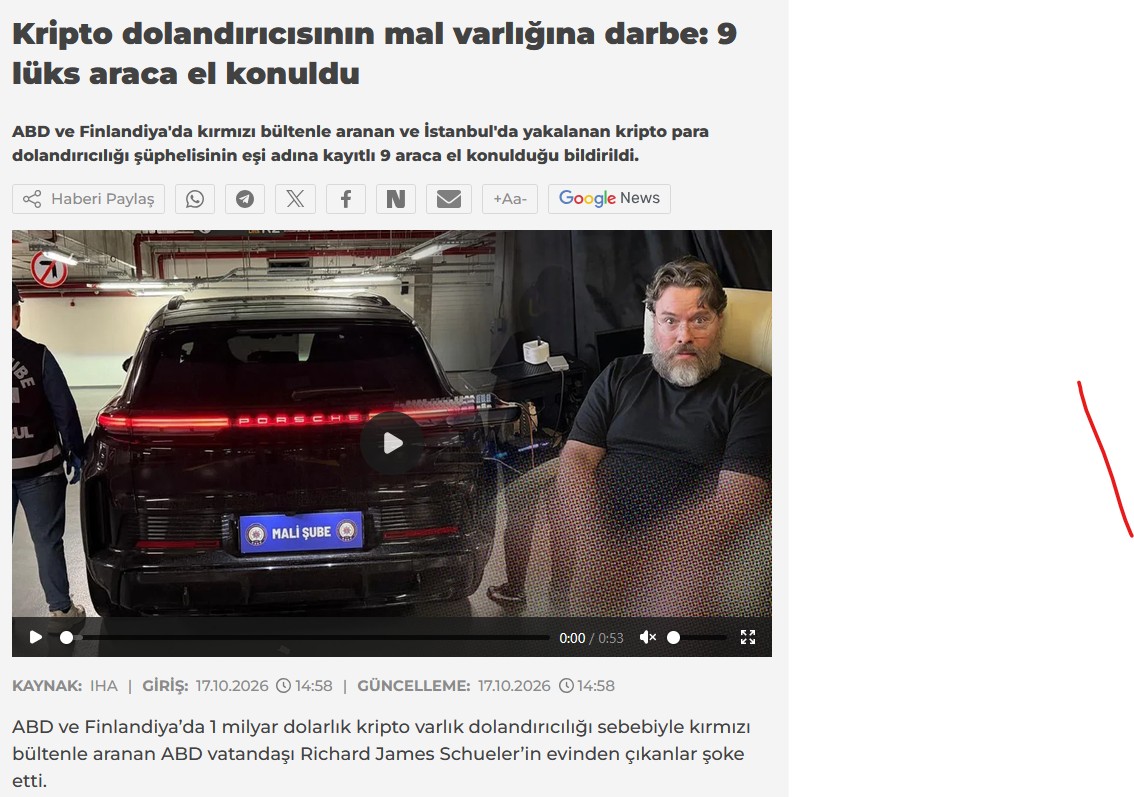
Karpeles, in a subsequent post, expressed his disappointment, stating, "I was hoping you guys were better than that. I’ve been holding Ledger at a higher standard than what happened at MtGox, because I trusted you to do better by learning of my failure – to be better than me." His statement highlights a perceived betrayal of trust, particularly given his own history with a major cryptocurrency exchange collapse.
The public exchange between Gauthier and Karpeles has cast a shadow over Ledger’s new product launch, raising questions about the company’s transparency and its responsiveness to security threats. While Ledger is taking steps to enhance its hardware security, the past controversies and the ongoing dispute with Karpeles may influence consumer confidence.
Quantum Computing Advances and Starknet’s Bold L1 Transition: A Race Against QDay
The accelerating pace of quantum computing development continues to present both opportunities and existential threats to the digital asset landscape. Recent breakthroughs in error reduction for quantum processors and advancements in quantum circuit design are pushing the timeline for "QDay"—the hypothetical point at which quantum computers could break current encryption standards—ever closer. In response, layer-2 scaling solution Starknet is proposing a radical shift to become a post-quantum L1 blockchain, signaling a proactive approach to safeguarding the future of decentralized finance.
Google’s Quantum Leap in Error Correction
Google has announced a significant advancement in quantum computing, demonstrating a new technique termed "magic state cultivation" on its Willow quantum processor. This method has achieved a remarkable 40-fold reduction in quantum errors, reaching a near-perfect accuracy rate of 99.99% for specialized quantum states essential for complex calculations. This breakthrough represents a crucial step towards building stable and reliable quantum computers capable of performing tasks previously beyond the reach of classical computing.
Concurrently, Theta Labs has unveiled three new quantum circuits that could dramatically reduce the computational resources required to break elliptic curve cryptography. Their research suggests a potential 28% decrease in the number of qubits needed compared to Google’s current estimate of 1,175 logical qubits for such an attack. This development further intensifies the urgency surrounding quantum-resistant cryptography.
Starknet’s Strategic Pivot to a Post-Quantum L1
The convergence of these quantum computing advancements and the growing sophistication of Artificial Intelligence in mathematical computation has spurred a critical discussion within the blockchain community. There is a palpable concern that AI’s rapid progress in computational power could enable it to breach elliptic curve cryptography even before the full realization of powerful quantum computers.
In light of these pressing threats, Starknet, currently operating as an Ethereum Layer-2 scaling solution, has initiated a community vote to transition into a fully post-quantum Layer-1 blockchain. Eli Ben-Sasson, CEO of StarkWare, the development company behind Starknet, articulated the necessity for such a swift and decisive move. He argued that Ethereum’s existing roadmap for post-quantum integration might be too slow to adequately address the imminent threat posed by AI and quantum computing. By becoming a dedicated post-quantum L1, Starknet aims to preemptively secure its network against future cryptographic vulnerabilities.
"Quantum-proofing crypto is urgent, so we must move at lightning speed," Ben-Sasson told Cointelegraph. The proposal has garnered overwhelming support, with over 99% of votes cast to date favoring the transition. This significant endorsement reflects a broad consensus within the Starknet ecosystem regarding the criticality of quantum resistance.
However, the proposed transition has coincided with a notable market reaction. Starknet’s native token, STRK, has experienced a substantial decline of nearly 50% in value this week, following a significant surge in the preceding week. This volatility may be attributed to a combination of factors, including profit-taking after the prior rally and uncertainty surrounding the implications of the L1 transition for tokenomics and market perception.
The decision by Starknet to consider such a fundamental shift underscores the disruptive potential of quantum computing. It also highlights a growing divide between established blockchain ecosystems and those willing to undertake radical transformations to secure their future. The success of Starknet’s transition will be a closely watched case study in the ongoing race to build a quantum-resistant decentralized future.
Standard Chartered Projects $2 Trillion Stablecoin Market by 2030 Amidst EU’s Embrace of USDC
Global financial institution Standard Chartered has revised its forecast for the stablecoin market, now anticipating it to reach a staggering $2 trillion by the year 2030. This projection, adjusted from an earlier estimate, reflects a nuanced view of the market’s growth trajectory, emphasizing increased circulation of existing stablecoins rather than solely new supply. Meanwhile, the European Union has taken a significant step in recognizing the role of stablecoins by classifying Circle’s USD Coin (USDC) as a "significant e-money token" under its landmark Markets in Crypto Assets (MiCA) framework.
Stablecoin Market Dynamics: Growth in Velocity, Not Just Value
According to Standard Chartered’s latest analysis, the transaction activity within the stablecoin market continues its upward trend. However, the overall market capitalization has experienced a plateau, hovering around $309 billion this year. This observation suggests that the growth is primarily driven by the increased velocity of stablecoin circulation—meaning existing tokens are being used more frequently in transactions—rather than a substantial influx of new capital into the stablecoin supply.
The revised forecast of $2 trillion by 2030, two years later than initially projected, acknowledges this shift in growth dynamics. It indicates a sustained long-term expansion for stablecoins, albeit at a pace influenced by factors such as regulatory clarity, adoption rates, and the integration of stablecoins into traditional financial systems.
European Union’s Regulatory Milestone for USDC
The European Banking Authority’s (EBA) classification of Circle’s USDC as a "significant e-money token" under the MiCA regulation marks a pivotal moment for both the stablecoin and the broader digital asset industry in the EU. The MiCA framework, which came into effect in June 2024, aims to provide a comprehensive regulatory structure for crypto assets, fostering innovation while mitigating risks.
The "significant e-money token" designation is a rigorous classification, granted only to projects that meet stringent criteria related to stability, market impact, and operational robustness. The fact that USDC is among the select 45 projects to receive this designation underscores its standing as a reputable and widely adopted stablecoin within the European market. This regulatory clarity is expected to foster greater institutional adoption and investor confidence in USDC, potentially accelerating its use in cross-border payments and other financial applications within the EU.
This development signifies a proactive approach by European regulators to integrate digital assets into the existing financial infrastructure in a controlled and secure manner. It also positions the EU as a leading jurisdiction in establishing clear guidelines for stablecoins, potentially setting a precedent for other regulatory bodies worldwide.
Binance.US Eyes $1 Billion Valuation in Potential $100 Million Funding Round
Binance.US, the American arm of the global cryptocurrency exchange giant, is reportedly seeking to raise up to $100 million in a new funding round, aiming for a valuation of approximately $1 billion. This strategic move comes as the exchange seeks to expand its business operations and solidify its position in the competitive U.S. market.
According to a report by Bloomberg, Binance.US is actively pursuing private investment to fuel its growth initiatives. The potential $1 billion valuation represents a notable adjustment from its previous funding rounds, which saw a pre-money valuation of $4.5 billion when it secured $200 million in seed funding in 2022. This downward adjustment in valuation may reflect the current market conditions, increased regulatory scrutiny faced by cryptocurrency exchanges, or a recalibration of investor expectations.
The success of this funding round will be a key indicator of investor sentiment towards U.S.-based cryptocurrency exchanges and Binance.US’s strategy for navigating the evolving regulatory and competitive landscape. The funds raised are expected to be deployed towards enhancing its platform, expanding its product offerings, and potentially pursuing strategic partnerships to bolster its market presence.
Market Wrap-Up: Bitcoin Dips, Altcoins Show Mixed Fortunes, and a "Crypto Spring" Forecast
The cryptocurrency market concluded the week with a general downturn, as Bitcoin (BTC) experienced a 3.8% decline, trading at $81,484. Ethereum (ETH) followed suit, down 5.7% to $2,386, while XRP (XRP) saw a more significant drop of 8.3%, settling at $1.28. The total cryptocurrency market capitalization stood at approximately $2.72 trillion, according to CoinMarketCap.

Altcoin Performance: Winners and Losers
Amidst the broader market correction, several altcoins demonstrated resilience and posted gains. Among the top 100 cryptocurrencies, Monero (XMR) emerged as a significant winner, achieving a 9.7% gain over the week. Injective (INJ) followed with a 5.6% increase, and Celestia (TIA) rounded out the top three gainers with a 5.1% rise.
Conversely, the week saw considerable losses in certain altcoin segments. Starknet (STRK) bore the brunt of the downturn, plummeting by 46.7%, likely influenced by its proposed transition to a post-quantum L1 and associated market reactions. Pump.fun (PUMP) also experienced a substantial decline of 27.1%, and Raydium (RAY) closed the week down 26.5%.
Bitwise Analyst Predicts "Crypto Spring"
Despite the weekly losses, a more optimistic outlook for the crypto market has been presented by Matt Hougan, Chief Investment Officer at Bitwise. In a recent quarterly market review, Hougan posited that the third quarter of the year may have been "one of the best quarters in crypto’s history." He cited a sharp rebound in crypto prices and expanding on-chain market activity as indicators of an emerging "crypto spring."
Bitwise’s report highlighted a 46.4% quarterly gain in its large-cap crypto index. Furthermore, the report noted significant inflows into U.S. spot Bitcoin ETFs, totaling $6 billion, which has successfully pushed year-to-date net flows back into positive territory. "Page after page after page, it’s all the same: The most recent part of the chart is turning sharply upwards," Hougan wrote, emphasizing the bullish technical signals. "That’s exactly what you want to see if you’re looking for the start of a crypto spring." This perspective suggests that the current market movements, while experiencing weekly fluctuations, may be part of a larger, sustained upward trend.
Regulatory Headwinds and Market Concerns: Top FUD of the Week
The cryptocurrency landscape continues to be shaped by regulatory developments and market anxieties, with several key events dominating discussions this week.
MSCI Adopts Exclusion Rules Potentially Impacting Crypto-Related Equities
Index provider MSCI has implemented new rules that could lead to the exclusion of companies such as Strategy, Metaplanet, and Upexi from its global indexes. This development raises concerns for other crypto treasury companies facing potential similar exclusions. Strategy, in August, had voiced opposition to these changes, though it had downplayed the potential disruption, stating that funds tracking MSCI’s Global Investable Market Indexes held a relatively small percentage of its outstanding shares, representing less than a day’s trading volume. The implications of these index changes for the liquidity and valuation of affected companies remain a key point of concern.
Russia Moves to Ban Direct Peer-to-Peer Crypto Trades
Russia is set to implement a ban on direct peer-to-peer (P2P) cryptocurrency transactions between individuals, effective July 1, 2027. Under the new regulations, individuals will be required to utilize authorized intermediaries for such trades. Furthermore, the regulator has clarified that individuals will be prohibited from transferring crypto assets from their digital accounts to their own non-custodial wallets. This move signifies a tightening of regulatory control over cryptocurrency transactions within Russia, aiming to channel activity through regulated channels.
Former Trump Advisor’s Alleged Conflict of Interest in Stablecoin Bill Passage
The Wall Street Journal has reported that Bo Hines, a former crypto advisor to then-U.S. President Donald Trump who later joined stablecoin issuer Tether, allegedly profited from the passage of a stablecoin bill while serving in the White House. According to the report, Hines retained a stake in Nxum, an investment company he co-founded, which reportedly received $6.3 million in a deal with Tether. The first payment from this deal reportedly occurred while Hines was still in government service. This revelation raises questions about potential conflicts of interest and the influence of special interests in legislative processes concerning the cryptocurrency industry.

