
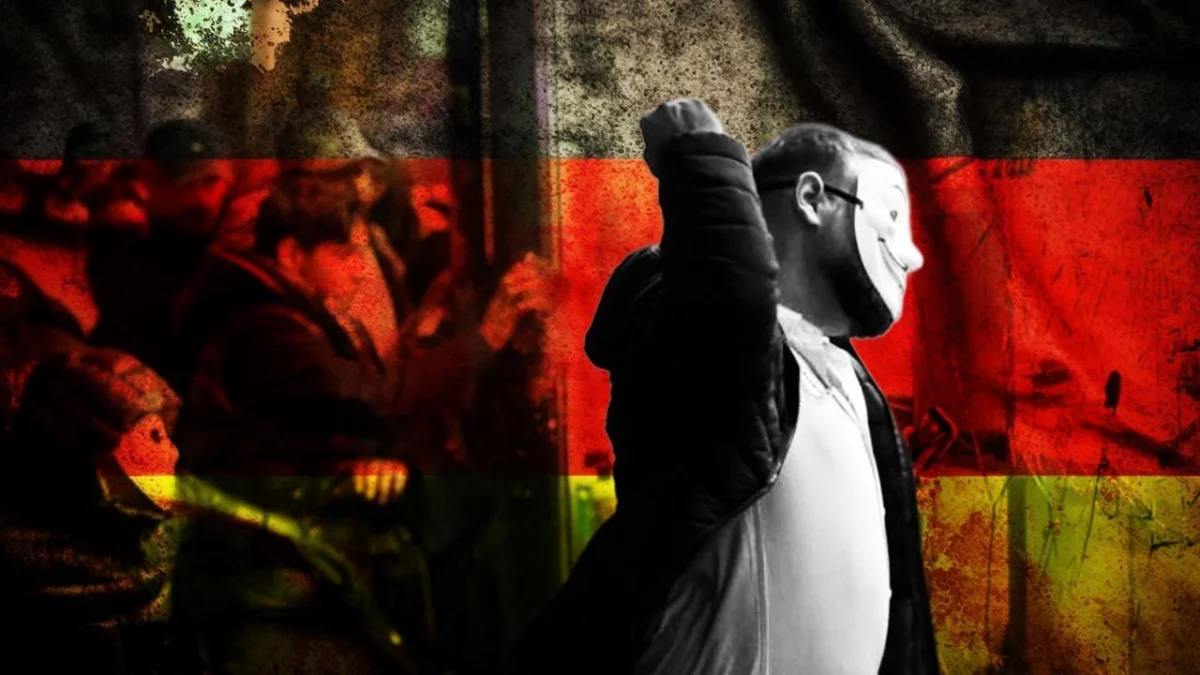
Frankfurt, Germany – A detailed breakdown released by Frankfurt police concerning the violent unrest that erupted in the city center on October 31 has cast a stark light on the complex interplay of migration, integration, and social stability in Germany. The data indicates that a significant majority of those arrested during the Halloween night disturbances – 58 percent – either held foreign nationality or possessed dual citizenship. This figure was further underscored by remarks from Hesse Interior Minister Roman Poseck, who estimated that an even larger proportion, between 80 to 90 percent of all detained individuals, possessed a migration background, regardless of their current citizenship status. The events have ignited a fervent public and political debate about the efficacy of Germany’s integration policies and the underlying challenges faced by its diverse urban centers.
The Night of October 31st: From Protest to Mayhem
The evening began under the banner "Gen Z regelt" (Gen Z takes charge), initially conceived as a youth protest against a range of grievances including military conscription, education cuts, and the escalating cost of living. Frankfurt was one of several German cities where such demonstrations were planned, but it quickly distinguished itself as the epicenter of the most intense clashes and widespread disorder. What commenced as a peaceful assembly rapidly deteriorated into a scene of widespread looting, property damage, and violent confrontations with law enforcement, much of which was disturbingly livestreamed across social media platforms like TikTok.
Eyewitness accounts and police reports describe a rapid escalation after dark. Groups of young people, seemingly detached from the initial protest’s political aims, began engaging in acts of vandalism and theft. Stores were targeted, with one notable incident involving the plundering of a shop selling weapons, a detail that immediately raised alarms about public safety and the motives behind the unrest. Molotov cocktails were reportedly hurled at police officers, signaling a dangerous shift from civil disobedience to outright aggression. The sheer scale of the violence overwhelmed initial police responses, necessitating reinforcements and prolonged efforts to restore order. The atmosphere was described as chaotic, with a palpable sense of lawlessness prevailing in parts of the city center for several hours.
Demographic Profile of Those Apprehended
The initial police response led to the detention of approximately 54 individuals. A preliminary analysis of their citizenship revealed a significant demographic pattern. Of these initial detainees, 22 held exclusively German citizenship. A further 15 individuals possessed dual citizenship, reflecting a diverse mix of origins: five were German-Moroccan, two German-Italian, and one each held dual nationality with Afghanistan, Algeria, France, Iran, Pakistan, Serbia, Syria, or Tunisia. The remaining 16 individuals held only foreign passports. This early snapshot already hinted at the predominant non-German background of those involved.
As investigations progressed, the number of identified suspects rose to 73. The updated breakdown reinforced the initial observations: 30 held exclusively German citizenship, 17 had dual citizenship (covering an even broader array of origins), and 26 held solely foreign nationality, representing 18 different countries. This expanded data set further solidified the understanding that individuals with direct or indirect ties to migration constituted a substantial majority of the perpetrators.
Several other key details emerged from the police analysis. All arrested suspects were male, highlighting a specific demographic involvement. Furthermore, more than half of those identified were already known to the police, indicating a pattern of prior involvement in criminal activities. Interestingly, only a minority of the suspects actually resided in Frankfurt itself, suggesting a degree of mobilization from surrounding areas or a transient element among the instigators. The presence of individuals from countries like Afghanistan (the largest contingent among exclusively foreign arrestees with four arrests), Syria, Tunisia, Turkey, Bosnia, Eritrea, Iraq, Poland, Romania, and Ukraine underscores the diverse international origins among the foreign passport holders.
Official Reactions and the Integration Debate
The aftermath of the Halloween riots prompted swift and strong condemnation from German political leaders, particularly those responsible for internal security. Hesse Interior Minister Roman Poseck (CDU) did not mince words, describing the roughly 1,000 to 1,500 "violent troublemakers" as "predominantly from an immigrant background." His estimation that 80 to 90 percent of those involved had a migration background became a focal point of the subsequent debate. Poseck’s statement, "I am shocked by what I have seen, and there is no point in sugar-coating it. Let me make this very clear: Things cannot go on like this," resonated deeply, signaling a political resolve for firm action.
Crucially, Minister Poseck went further, articulating a profound concern about the underlying causes: "the police are a victim of a partially failed integration policy." This statement shifted the discourse beyond mere law enforcement, placing the blame squarely on systemic issues within Germany’s societal framework. He also cautioned against "false taboos" when discussing the perpetrator profile, urging for an open and honest conversation about the challenges presented by certain segments of the migrant community.
Echoing these sentiments, Federal Interior Minister Alexander Dobrindt also affirmed that the "rioters came from the migrant milieu" and noted their alignment with violent left-wing groups, suggesting a confluence of various disaffected elements. The federal government, through statements from Berlin, swiftly vowed a "tough response" to such acts of lawlessness, emphasizing that such violence would not be tolerated and that perpetrators would face the full force of the law. These official reactions signaled a significant moment of introspection for German policy-makers, forcing a re-evaluation of current integration strategies.
The Human Cost and Broader Societal Impact
The violence took a considerable toll on law enforcement. A staggering 181 police officers were injured during the clashes, with 13 temporarily rendered unfit for duty. The severity of the attacks was highlighted by at least one officer losing teeth after being struck by a stone, underscoring the extreme danger faced by those trying to maintain order. These injuries not only represent a physical cost but also a psychological burden on the police force, which is increasingly confronted with aggressive and unprovoked attacks during public order incidents.
Beyond the immediate injuries and property damage, the Frankfurt riots have broader implications for social cohesion and public trust. Frankfurt, often lauded as one of Germany’s most diverse cities, has simultaneously faced growing problems related to crime, education, and overall public safety. The city’s multicultural fabric, while a source of strength and vibrancy, has also presented unique challenges, particularly in areas where integration efforts may have fallen short. The events of October 31st serve as a stark reminder that diversity, without successful integration, can lead to societal fragmentation and conflict.
The concept of a "failed integration policy" as articulated by Minister Poseck points to a complex array of socio-economic factors. These can include a lack of educational and employment opportunities for young people with migration backgrounds, the formation of "parallel societies" where integration into mainstream German culture is limited, and feelings of alienation or disenfranchisement among certain youth demographics. The "Gen Z regelt" slogan, while co-opted by rioters, initially pointed to genuine grievances among young people regarding their future prospects, which, when combined with other factors, can create fertile ground for unrest.
Implications for Policy and Future Outlook
The Frankfurt riots will undoubtedly intensify the national debate on immigration and integration policies in Germany. There will likely be increased pressure for stricter enforcement of laws, potentially including measures to expedite deportations for non-citizens involved in serious disturbances. Calls for a more robust integration framework, focusing on early language acquisition, vocational training, and social programs aimed at preventing alienation, are also expected to gain traction. The role of social media in mobilizing and escalating such events will also come under scrutiny, potentially leading to discussions about platform accountability.
For law enforcement, the incident highlights the evolving nature of public order challenges. The readiness of groups to engage in targeted violence against police, combined with the use of social media for coordination and live broadcasting, necessitates new strategies for crowd control, intelligence gathering, and de-escalation. The fact that many perpetrators were already known to police suggests a need for more proactive intervention strategies to address repeat offenders and dismantle networks promoting violence.
Ultimately, the Frankfurt unrest is a wake-up call for German society. It underscores that while Germany has embraced diversity, the task of successful integration is ongoing and requires continuous, multifaceted efforts. Addressing the root causes of disaffection, ensuring equitable opportunities, and fostering a shared sense of belonging are crucial to preventing future outbreaks of violence and strengthening the social fabric of a nation grappling with the complexities of its demographic transformation. The incident forces Germany to confront uncomfortable truths about the limits of its current approaches and the urgent need for comprehensive solutions to ensure peace and cohesion in its multicultural urban landscapes.

