

The economic landscape for mid-career professionals in the Northeastern United States has become increasingly complex, characterized by rising housing costs, significant consumer debt loads, and the challenge of balancing immediate lifestyle needs with long-term retirement security. A recent comprehensive financial case study of Michael and Brian, two 34-year-old public sector employees residing in central Connecticut, provides a granular look at the fiscal pressures facing modern households. Despite a combined gross annual income of approximately $167,544, the couple faces a critical juncture as they navigate $28,259 in consumer debt while attempting to transition from high-end renters to first-time homeowners. This analysis explores their financial health, the impact of the Connecticut real estate market, and the strategic pathways toward permanent debt elimination and asset accumulation.

Background and Chronology of Financial Transition
Michael and Brian have maintained a partnership since 2013, a decade-long period that has seen significant professional growth alongside personal and medical challenges. Michael, a brain injury survivor, serves as a project coordinator for a state behavioral health agency and maintains a secondary role as a disability leadership coordinator. Brian operates as a quality assurance manager for a state-run hospital. Their transition into the public sector has provided them with a stable income floor and robust benefits, yet their recent history highlights the volatility of the rental market and the high cost of living in New England.
The couple’s current financial situation was heavily influenced by a period of instability between late 2022 and early 2023. For eight years, they resided in a 600-square-foot studio apartment with a monthly rent of $945. However, an unplanned relocation forced them into the 2023 rental market, where they eventually secured a two-bedroom, two-bathroom apartment in a refurbished industrial mill for $2,000 per month. This move, combined with significant veterinary expenses for two kittens and Brian’s previous car repair issues, stalled their plans to enter the housing market by late 2023.

Detailed Financial Profile: Income and Obligations
The household’s financial structure is defined by strong cash flow but hampered by high monthly expenditures. According to the data provided, the couple’s annual net income—after taxes, insurance, and initial retirement contributions—stands at $109,455.42.
Household Debt Inventory
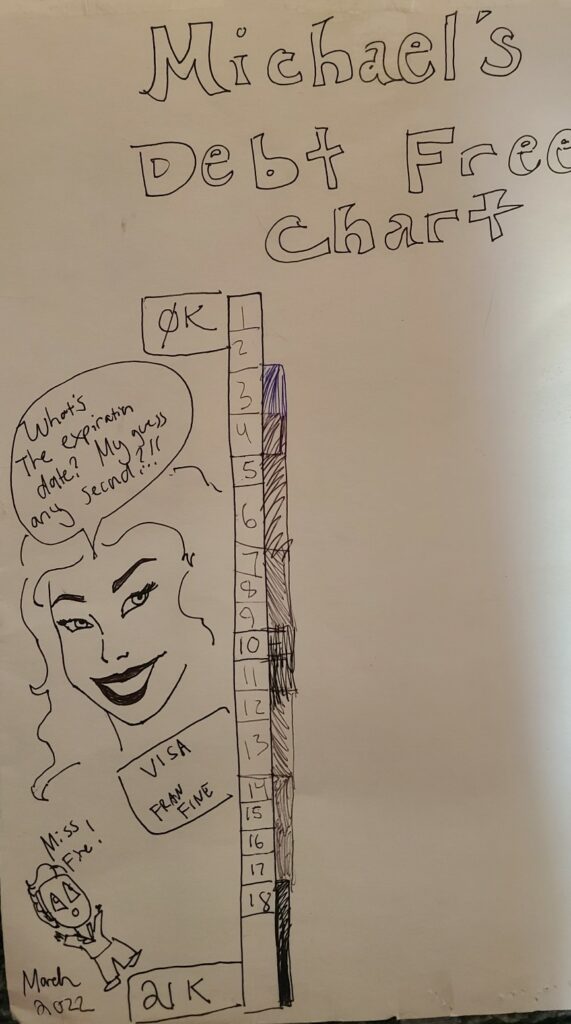
The most pressing concern for the household is a $28,259 consumer debt balance, largely residing on credit cards with expiring promotional interest rates.

- Brian’s Primary Credit Line: $16,057 at 0% interest, expiring in November 2023 (projected 17.99% thereafter).
- Michael’s Primary Credit Line: $9,700 at 10.99% interest.
- Brian’s Secondary Credit Line: $2,503 at 0.99% interest, expiring in November 2023 (projected 17.74% thereafter).
Expenditure Analysis
The couple’s monthly expenses total $8,035, resulting in an annual spend of approximately $96,414. While this includes $2,000 in monthly debt repayments, several "reducible" and "discretionary" categories have been identified as areas for potential optimization. Notably, pet care (including prescription food) averages $517 monthly, and utility costs in Connecticut remain a significant burden, with electricity averaging $235 per month—a reflection of the state’s energy rates, which are among the highest in the continental United States.
Supporting Data: The Connecticut Economic Context
To understand the couple’s struggle with homeownership, one must look at the broader Connecticut real estate and economic data. According to the Connecticut Association of Realtors, the median sales price for single-family homes has seen steady year-over-year increases, often exceeding 10% in certain suburban corridors. Low inventory has created a "seller’s market" that necessitates a substantial down payment and a high credit score to secure competitive mortgage rates.

Furthermore, the "cost of adulting" for millennials has been exacerbated by the transition from 0% interest rate environments to a high-inflation economy. Michael and Brian’s debt, while manageable given their income, represents a common trend where "lifestyle creep" and emergency expenses (veterinary and automotive) collide with a lack of liquid savings. Their current cash reserves of $9,000 represent only about 1.1 months of their current spending, significantly below the recommended three-to-six-month emergency fund benchmark.
Professional Analysis of Retirement and Benefits
One of the strongest pillars of the couple’s financial future is their access to state-sponsored retirement programs. Brian’s employment with the state grants him access to a "triple crown" of retirement vehicles: a 403(b), a 457(b), and a traditional pension.
The Value of the 457(b) and Pension
Financial analysts often highlight the 457(b) plan as a superior vehicle for those considering early retirement, as it allows for penalty-free withdrawals upon separation from service, regardless of age. Additionally, Brian’s projected pension, estimated at a monthly payout of $4,150 starting in 2054, provides a guaranteed income stream that mitigates the risks associated with Social Security’s long-term viability.
Michael’s retirement strategy includes a 401(k) through his primary employer with a 4% match and a current balance of $36,992. When combined with Brian’s various accounts, the household’s total investment assets are approximately $91,250. While this is a respectable sum for 34-year-olds, it remains underfunded relative to their goal of total financial independence.

Strategic Recommendations and Implications
Financial experts suggest a tiered approach to stabilizing Michael and Brian’s trajectory. The immediate priority is the elimination of the $28,259 debt before the November interest rate "cliff." By shifting from a "discretionary spending" model to an "austere" model, the couple could potentially increase their monthly debt repayment to over $4,400. At this rate, the debt would be eradicated in roughly six to seven months.
The Graduate Education Debate
A point of internal discussion for the couple is Brian’s interest in pursuing a master’s degree. From a journalistic and data-driven perspective, the Return on Investment (ROI) for graduate degrees has become increasingly scrutinized. Unless a master’s degree is a prerequisite for a specific, contractually guaranteed salary increase within the state system, the "opportunity cost" of the tuition and time may hinder their more pressing goals of homeownership and debt-free living.

Path to Homeownership
For Michael and Brian, the path to owning "a piece of the earth" requires a sequential strategy:
- Debt Elimination: Removing the $2,000 monthly debt obligation to free up cash flow.
- Emergency Fund Expansion: Building a $25,000 to $30,000 liquid cash reserve to prevent future debt cycles.
- Down Payment Accumulation: Socking away funds in a High-Yield Savings Account (HYSA) once the first two pillars are established.
Broader Impact: The Millennial Milestone Delay
The case of Michael and Brian is emblematic of a broader sociological and economic trend often referred to as the "delay of milestones." Like many in their cohort, the couple feels a sense of "shame" for not yet owning a home or being debt-free by their mid-30s. However, analysis suggests that their situation is common among professionals in high-cost-of-living areas.

The transition from "feast and famine" spending to a sustainable middle ground is the primary psychological hurdle. The "shame" cited by both Michael and Brian is a frequent byproduct of comparing one’s internal financial struggles to the curated external successes of peers. Factual analysis of their balance sheet indicates they are actually in a superior position compared to the average American household, provided they can discipline their discretionary spending.
Conclusion
Michael and Brian possess the necessary ingredients for long-term financial success: high income, stable public sector employment, and a shared vision for their future. The primary obstacles—consumer debt and a lack of liquid reserves—are "spreadsheet problems" that can be solved through a rigorous, short-term reallocation of capital. By prioritizing debt repayment over immediate lifestyle upgrades and graduate education, the couple can likely achieve homeownership within a three-to-five-year window. Their story serves as a template for other mid-career professionals: the combination of state benefits and aggressive debt management remains one of the few viable paths to wealth accumulation in the current economic climate of the American Northeast.

