
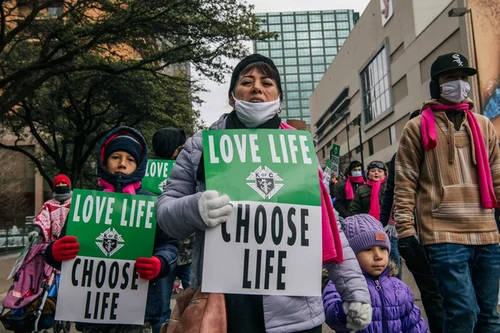
A bombshell Department of Justice (DOJ) report released on Tuesday has unveiled damning allegations against federal prosecutors, accusing them of deliberately withholding exculpatory evidence and engaging in a "two-tiered system of justice" while pursuing cases against individuals who protested at abortion clinics. The comprehensive report, authored by the DOJ’s Weaponization Working Group, asserts that prosecutors not only suppressed critical information but also applied federal law unevenly, favoring abortion clinics while largely ignoring attacks against pregnancy resource centers and houses of worship. This revelation sends shockwaves through the legal and political landscape, raising serious questions about the impartiality and integrity of federal law enforcement under the prior administration.
The Genesis of the Investigation: Addressing Allegations of Politicization
The DOJ Weaponization Working Group, established in 2025 by former Attorney General Pam Bondi, was specifically mandated to scrutinize alleged politicization within the Justice Department. A primary focus of its inaugural investigation was the Biden administration’s enforcement of the Freedom of Access to Clinic Entrances (FACE) Act. For years, conservative lawmakers and advocacy groups had voiced increasing concerns that the federal government was disproportionately targeting anti-abortion activists with severe federal charges, while similar or more egregious acts of violence and vandalism against pro-life organizations went largely unaddressed. These concerns intensified in the wake of the Supreme Court’s decision to overturn Roe v. Wade, which dramatically escalated tensions surrounding abortion rights across the nation.
The working group embarked on a rigorous review of FACE Act prosecutions initiated by the DOJ up to January 2025, delving into case files, internal communications, and prosecutorial decisions. Its 882-page document meticulously details a pattern of conduct that, according to its findings, systematically disadvantaged defendants with anti-abortion views and undermined the principles of fair legal process. The formation of such a group itself signaled a significant shift in departmental priorities, indicating a commitment by the new administration to re-evaluate and potentially rectify perceived imbalances in federal enforcement.
Understanding the FACE Act: A Contested Legal Framework
Central to the controversy is the Freedom of Access to Clinic Entrances (FACE) Act, enacted in 1994. This federal law makes it a crime to injure, intimidate, or interfere with individuals seeking or providing reproductive health services. It also protects the exercise of religious worship. Specifically, the Act prohibits "physical obstruction that injures, intimidates, or interferes with any person obtaining or providing reproductive health services" and "physical obstruction of a place of religious worship." Violations can carry significant penalties, including fines and imprisonment, depending on the severity and nature of the offense.
When originally passed, the FACE Act aimed to balance the constitutional rights to free speech and assembly with the need to ensure safe access to medical facilities and places of worship. It was intended to be a neutral statute, applicable regardless of the specific views of the protesters or the nature of the facility. However, in the highly polarized environment surrounding abortion, the application of the FACE Act has become a flashpoint. Critics, primarily from the conservative spectrum, have long argued that the Act has been selectively applied, turning a blind eye to violence against pro-life centers while aggressively prosecuting anti-abortion demonstrators, often for non-violent acts of protest or minor infractions that might otherwise be handled at the state or local level. The report directly addresses these long-standing criticisms, providing what it claims is systemic evidence of such bias.
Damning Findings: Withholding Evidence and Uneven Enforcement
The core of the working group’s report revolves around several grave accusations, the most significant being the deliberate withholding of evidence. Investigators concluded that federal prosecutors "knowingly withheld evidence that defense counsel requested to prepare an affirmative defense" and "falsely claimed to not have such information available." This allegation points to potential violations of the Brady rule, a cornerstone of American criminal justice that mandates prosecutors disclose all exculpatory evidence to the defense. The suppression of such evidence can severely prejudice a defendant’s ability to mount a fair defense, potentially leading to wrongful convictions. The report did not specify the exact nature of the withheld evidence, but its impact on the defendants’ ability to present affirmative defenses—arguments that, if true, would excuse or justify the conduct—suggests it was material to the cases.
Beyond evidence suppression, the report found that the DOJ applied the FACE Act with a stark bias through its National Task Force on Violence Against Reproductive Health Care Providers. This task force, ostensibly created to ensure comprehensive protection for all reproductive health care facilities, allegedly provided "extensive support to abortion clinics." This support manifested in various forms, including heightened federal monitoring, rapid response to incidents, and aggressive federal prosecution. In stark contrast, the report states that the "Biden DOJ often ignored and downplayed vandalism and attacks against pregnancy resource centers or houses of worship." This alleged disparity suggests a systemic failure to uphold the neutrality of the law, where the ideological nature of the target facility dictated the level of federal intervention and prosecutorial zeal.
Supporting data, inferred from the report’s conclusions, indicates a significant imbalance in federal resources and attention. While specific numbers were not provided in the summary, the report implies that a disproportionate number of federal charges under the FACE Act were brought against individuals protesting abortion clinics, often for acts that could be considered civil disobedience or minor disturbances. Conversely, numerous incidents involving arson, vandalism, and even physical assaults on pregnancy resource centers and churches, which escalated significantly in the post-Roe landscape, were reportedly treated as local matters or investigated with less urgency by federal authorities, if at all. This creates a perception, and according to the report, a reality, of unequal protection under federal law.
Collaboration with Advocacy Groups and Disparate Penalties
Further deepening the allegations of bias, investigators uncovered evidence that DOJ personnel collaborated directly with abortion-rights groups to monitor and target anti-abortion activists. The report claims that in "several instances, abortion-advocacy organizations identified specific individuals, who were then charged by federal prosecutors." This alleged coordination raises serious ethical and legal concerns about the independence of federal law enforcement and whether the DOJ acted as an extension of partisan interests rather than as an impartial arbiter of justice. Such collaboration could blur the lines between advocacy and prosecution, undermining public trust in the department’s neutrality.
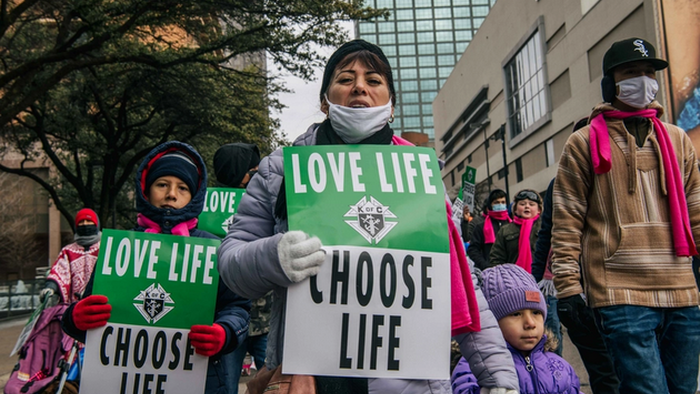
Moreover, the working group determined that prosecutors "routinely sought tougher penalties for pro-life defendants" compared with those sought for individuals who supported abortion and faced charges for violent acts. This suggests a systematic bias in sentencing recommendations, where federal prosecutors used their discretion to push for maximum sentences or more severe charges against anti-abortion protesters, even for offenses that might otherwise warrant lesser penalties or state-level prosecution. This practice, if widespread, points to a deliberate strategy to leverage the federal justice system as a tool for political or ideological ends, rather than solely for the impartial enforcement of the law. Allegations also include efforts by prosecutors to "keep committed religious people off juries," a practice that, if proven, would represent a direct assault on the right to a fair and impartial jury, further compromising the integrity of the trials.
Official Responses and Corrective Actions
The findings of the report have elicited strong condemnation from the current leadership of the Justice Department. Acting Attorney General Todd Blanche emphatically stated that the report confirms a "two-tiered system of justice" that "will not be tolerated." He vowed that the "weaponization that happened under the Biden Administration will not happen again, as we restore integrity to our prosecutorial system." This statement underscores the new administration’s commitment to reforming the DOJ and ensuring that prosecutorial decisions are based on law and fact, not political beliefs.
Assistant Attorney General Daniel Burrows echoed this sentiment, describing the behavior unearthed in the report as "shameful." He specifically criticized lawyers who "should have known better withheld evidence, worked to keep committed religious people off juries, and generally allowed the Department of Justice to be used as the enforcement arm of pro-abortion special interests." These strong words indicate that the DOJ is taking the report’s findings with utmost seriousness and is prepared to address the systemic issues it highlights.
In a swift response to these findings and consistent with the new administration’s agenda, President Donald Trump, soon after taking office in January 2025, began a series of corrective actions. He pardoned numerous individuals who had been convicted under the FACE Act during the prior administration, signaling a belief that these convictions were unjust or politically motivated. Furthermore, the DOJ has since moved to dismiss several pending FACE Act cases and has reached settlements in others, explicitly aiming to "correct what it described as injustices against clinic protesters." These actions represent a tangible effort to reverse the alleged biases and restore fairness to the federal justice system.
Broader Context and Implications
The release of this report and its explosive findings are set against a backdrop of intense political polarization, particularly concerning abortion rights. The overturning of Roe v. Wade in 2022 by the Supreme Court ignited a national debate, leading to a patchwork of state laws and a surge in protests and counter-protests across the country. In this highly charged environment, allegations of federal agency politicization take on magnified significance.
For critics of the Biden administration, the report serves as vindication, confirming their long-held suspicions that federal agencies were being weaponized against political opponents. They argue that such actions erode the fundamental principles of justice and the rule of law. For abortion-rights advocates and some former DOJ officials, the report may be viewed with skepticism, potentially dismissed as a politically motivated attack on prior enforcement efforts aimed at protecting clinic access. They might argue that the FACE Act was appropriately applied to deter violence and obstruction, and that the report downplays the genuine threats faced by abortion providers and patients. This ideological divide ensures that the report’s findings will continue to be a subject of heated debate and scrutiny.
The implications of this report are far-reaching, touching upon legal, political, and societal spheres.
Legal Implications:
- Review of Past Cases: The pardons and dismissed cases are just the beginning. The report’s findings could trigger a broader review of other FACE Act convictions and settlements from the period under investigation, potentially leading to further pardons, exonerations, or appeals.
- Prosecutorial Ethics and Training: The allegations of withholding Brady material and attempting to exclude jurors based on religious beliefs are extremely serious. This could necessitate new training protocols for federal prosecutors, stricter oversight mechanisms, and even disciplinary action for those found to have violated ethical standards or legal mandates.
- Re-evaluation of FACE Act Enforcement: The DOJ will likely issue new guidelines for the enforcement of the FACE Act, emphasizing neutrality and equal application to all facilities, regardless of their stance on abortion. This could lead to a more balanced approach to investigating and prosecuting incidents targeting both abortion clinics and pregnancy resource centers.
Political Implications:
- Fueling Political Debates: The report provides significant ammunition for Republicans and conservatives who accuse the Democratic administration of weaponizing federal agencies. This narrative will likely be a prominent feature in upcoming political campaigns and legislative battles.
- DOJ Oversight and Reform: Congress may initiate further hearings and investigations into the DOJ’s practices, potentially leading to legislative proposals aimed at reforming the department’s structure, accountability, and prosecutorial discretion to prevent future politicization.
- Public Trust: Allegations of a "two-tiered system of justice" can severely undermine public confidence in the fairness and impartiality of the federal government. Restoring this trust will be a significant challenge for the current administration and future DOJ leaders.
Societal Implications:
- Impact on Activism: Pro-life activists might feel emboldened by the report’s findings, viewing it as a validation of their grievances and potentially leading to more assertive forms of protest. Conversely, abortion-rights groups may perceive this as a rollback of protections for clinic access, potentially increasing their own activism to safeguard reproductive healthcare services.
- Heightened Polarization: In an already deeply divided nation, the report risks further entrenching partisan positions on abortion and the role of government, making constructive dialogue even more difficult.
In conclusion, the DOJ’s Weaponization Working Group report paints a stark picture of alleged systemic bias and prosecutorial misconduct within the Justice Department during the prior administration’s enforcement of the FACE Act. The findings, which include accusations of deliberately withheld evidence, uneven application of the law, and collaboration with advocacy groups, represent a profound challenge to the principles of impartial justice. The current administration’s swift actions—pardons, dismissals, and settlements—underscore its commitment to rectifying these alleged injustices and restoring integrity to the federal prosecutorial system. However, the long-term ramifications for the DOJ’s reputation, public trust, and the ongoing national debate over abortion rights remain to be fully seen.

