
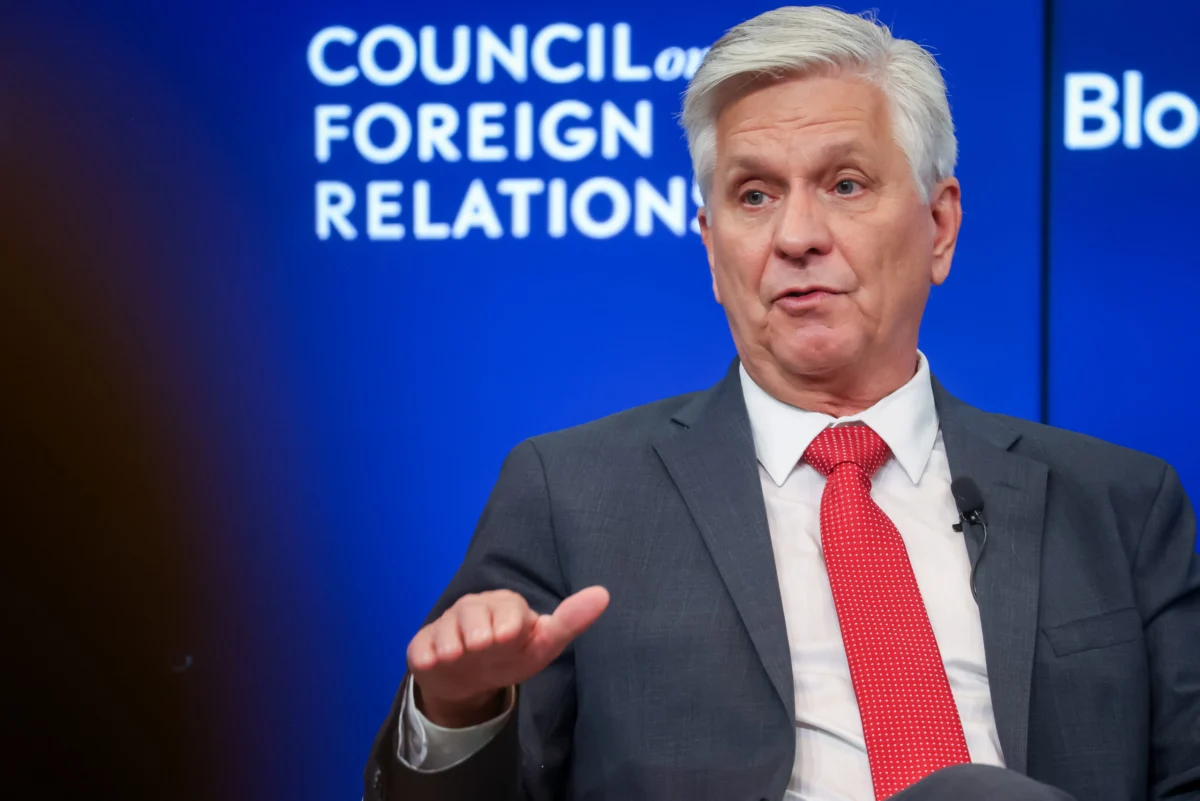
Federal Reserve Governor Christopher Waller delivered a forceful message on Tuesday, emphasizing the critical need for the central bank to uphold its commitment to further interest rate increases. Speaking in London, Waller warned that deviating from market expectations for additional tightening would jeopardize the Fed’s hard-won credibility in its ongoing battle against inflation. His remarks notably included a suggestion that a larger-than-usual half-percentage-point increase could be warranted at the Federal Open Market Committee’s (FOMC) December meeting, particularly if inflation data proved more stubborn than anticipated. This stance underscores the Fed’s resolute focus on restoring price stability, even as the economic landscape presents a complex mix of moderating, yet still elevated, price pressures and a robust labor market.
Waller’s comments arrived on a pivotal day for economic data, coinciding with the release of the Consumer Price Index (CPI) for October. The report indicated a headline price increase of 0.4% and a core inflation rate, excluding volatile food and energy components, of 0.3%. Both figures surpassed the Dow Jones consensus estimates by 0.1 percentage point, providing fresh evidence that inflationary forces, while potentially decelerating, remain persistent. The market’s immediate reaction reflected Waller’s hawkish tone and the CPI data, with traders fully pricing in a quarter-point hike for December and assigning a 12.5% probability to a more aggressive half-point move. This highlights the delicate balance the Fed must strike between guiding market expectations and responding decisively to incoming economic indicators.
The Imperative of Credibility: Waller’s Stance on Monetary Policy
Governor Waller’s address centered heavily on the concept of central bank credibility, a cornerstone of effective monetary policy. He argued that the Federal Reserve’s communications, particularly those preceding and during the October FOMC meeting, had already led markets to price in a trajectory of continued rate hikes. For the Fed to now falter in delivering on these implied promises, Waller contended, would be a significant misstep. "In that case, I believe a 50 basis point hike in the policy rate should be considered at the December meeting," he stated, adding, "Hiking only 25 basis points would put our credibility at risk, a risk I am not eager to take."
This assertion reflects a deep understanding of how market expectations influence financial conditions. If the Fed signals future tightening but then fails to act, markets would swiftly adjust, leading to a reduction in expected rate hikes and an immediate fall in interest rates. Such an outcome, Waller explained, would "loosen monetary policy in an undesirable way," counteracting the very objective the central bank is striving to achieve: cooling an overheated economy and bringing inflation back down to its 2% target.
Waller further elaborated on the flexibility of monetary policy implementation, noting that while consistent communication is paramount, the precise timing of rate hikes is less critical than their eventual execution. "When this communication is clear and credible, what really matters is that those hikes are eventually carried out — it is not necessary, for example, to raise rates at consecutive meetings," he clarified. However, he quickly underscored the necessity of following through within a "reasonable period of time," reiterating that "higher rates will be needed, sooner rather than later." His comments signal a Fed prepared to be adaptable in its meeting-by-meeting decisions, but unwavering in its long-term commitment to a restrictive policy stance until inflation is demonstrably under control.
October Inflation Data: A Mixed Signal for Policymakers
The release of the October Consumer Price Index report on Tuesday provided fresh data points for the ongoing monetary policy debate. The headline CPI increase of 0.4% month-over-month, translating to an annual rate that, while lower than its peak, remains significantly above the Fed’s 2% target, confirmed that disinflationary forces are working slowly. The core CPI, often viewed as a better indicator of underlying inflation trends due to its exclusion of volatile food and energy prices, rose by 0.3% month-over-month. Both figures exceeded economist expectations, indicating that price pressures are more entrenched than some had hoped.
Specifically, the Dow Jones consensus had projected a 0.3% rise for headline CPI and a 0.2% increase for core CPI. The actual readings, each 0.1 percentage point higher, suggest that the services sector, housing costs, and other sticky components of inflation continue to exert upward pressure. While energy prices have shown some moderation and supply chain issues for manufactured goods have largely eased, the broader inflationary trend appears resilient. This persistence makes the Fed’s job more challenging, as it must ensure that inflation expectations remain anchored, preventing a wage-price spiral that could embed higher inflation into the economic fabric.
Market reactions to the CPI data were swift and pronounced. Treasury yields, which move inversely to bond prices, saw an immediate uptick as investors adjusted their expectations for future interest rates. Equity markets experienced volatility, with initial dips reflecting concerns over tighter monetary policy, before some stabilization as traders fully digested the implications. The U.S. dollar generally strengthened against other major currencies, a typical response to expectations of higher interest rates in the United States, which makes dollar-denominated assets more attractive.
Diverse Perspectives Among Federal Reserve Officials
Waller’s hawkish remarks were not the sole voice shaping the monetary policy discourse on Tuesday. Later in the morning, Dallas Fed President Lorie Logan offered her perspective, envisioning a path of two more quarter-point hikes before the central bank might consider a pause to assess the cumulative impact of its tightening cycle. The Fed had approved a quarter-point hike in September, bringing the federal funds rate to a range that is now considered restrictive.
Logan, a voting member on the rate-setting Federal Open Market Committee (FOMC) until she moves to a nonvoting position in 2027, echoed the sentiment that inflation’s broader trend is likely to persist despite some moderation in specific sectors. "While I expect inflation to moderate as price pressures dissipate in energy and manufactured goods, the broader inflationary trend is more likely to persist," she stated. Her view reinforces the idea that the Fed’s work is far from over and that "tighter policy will be necessary to appropriately balance the outlook and risks for inflation and employment." Logan’s comments align with a more measured, yet still resolute, approach to monetary tightening, suggesting a continued gradual upward trajectory for rates.
Adding another layer to the discussion, Chicago Fed President Austan Goolsbee had cautioned on Monday against allowing the economy to "run too hot." His remarks underscored the long-term dangers of unchecked inflation, stating that "once it gets overheated, it’s extremely painful to get rid of that kind of overheating." Goolsbee’s comments highlight the dual risk faced by the Fed: the risk of not doing enough to combat inflation versus the risk of over-tightening and inducing a recession. His cautious tone suggests an awareness of the delicate balancing act required to achieve a "soft landing," where inflation is brought down without causing significant economic disruption.
The Broader Economic Context and the Fed’s Dual Mandate
The current debate among Fed officials takes place against a backdrop of complex economic indicators. Governor Waller characterized the U.S. economy as growing "at a healthy pace," complemented by a labor market that "has also been solid" if not exceptionally dynamic in the current low-hire, low-fire environment. This description points to an economy that, despite significant monetary tightening over the past two years, has shown remarkable resilience. The unemployment rate has remained historically low, hovering around 3.8-3.9% in recent months, and job growth, while slowing from its pandemic-era peaks, continues to be positive. Wage growth, a key factor in services inflation, has also remained elevated, contributing to persistent price pressures.
The Federal Reserve operates under a dual mandate from Congress: to foster maximum employment and stable prices. For much of 2021 and early 2022, the emphasis was on supporting employment recovery post-pandemic. However, as inflation surged to multi-decade highs, reaching 9.1% in June 2022, the focus decisively shifted to price stability. The Fed embarked on an aggressive tightening cycle, raising the federal funds rate from near zero in March 2022 to over 5% by mid-2023. This rapid succession of hikes, including several 75-basis-point increases, was unprecedented in recent history and reflected the urgency with which the central bank sought to rein in inflation.
The challenge now lies in navigating the final stretch of this tightening cycle. While headline inflation has come down significantly from its peak, core inflation remains sticky, and the labor market, though showing signs of cooling, has not yet softened enough to ease wage pressures substantially. This persistent strength in the labor market is a double-edged sword: it prevents a severe economic downturn but also makes the Fed’s inflation fight more arduous.
The October FOMC Meeting and Internal Disagreement
The backdrop to these recent statements includes the Federal Open Market Committee’s decision in October to pass on a rate hike. This decision, following a quarter-point increase in September, was justified by the FOMC as an opportunity to allow for "the accumulation of more information" to guide the proper policy path. This pause, however, was not unanimous, indicating a degree of internal disagreement within the central bank. Governor Lisa Cook and Cleveland Fed President Beth Hammack dissented from the decision, signaling their preference for an immediate rate hike. Their dissent underscores the ongoing debate within the FOMC regarding the appropriate pace and extent of monetary tightening, reflecting different interpretations of incoming economic data and the risks involved.
The dissents highlight the challenges of consensus-building within the FOMC, particularly as the policy rate approaches what many consider a sufficiently restrictive level. Some officials might prioritize the risk of over-tightening and inducing a recession, advocating for a more patient approach, while others, like Waller, appear more concerned about the risk of inflation becoming entrenched and the erosion of central bank credibility. This divergence of views is a natural part of monetary policymaking, especially during periods of high economic uncertainty.
Market Implications and the Road Ahead
The collective statements from Fed officials, particularly Waller’s strong advocacy for continued hikes, send a clear signal to financial markets: the Federal Reserve is far from declaring victory over inflation. The increased probability of a 50-basis-point hike in December, even if still a minority view among traders, suggests that the market is beginning to factor in the possibility of more aggressive action than previously anticipated. This could lead to further upward pressure on short-term interest rates and a continued strengthening of the U.S. dollar.
For consumers, higher interest rates translate to increased borrowing costs for mortgages, auto loans, and credit card debt. This can dampen demand, particularly in interest-rate sensitive sectors like housing, where affordability has already become a significant concern. Businesses will also face higher costs of capital, potentially leading to slower investment, reduced hiring, and tighter profit margins. The combined effect of these factors is intended to slow aggregate demand and bring it back into line with the economy’s productive capacity, thereby easing inflationary pressures.
The path forward for the Federal Reserve remains fraught with challenges. The central bank must navigate between the Scylla of entrenched inflation and the Charybdis of a potential recession. Achieving a "soft landing" – where inflation returns to target without a significant economic downturn – is a notoriously difficult feat. Waller’s emphasis on credibility suggests that the Fed is prepared to err on the side of continued tightening to avoid the more damaging long-term consequences of persistently high inflation and eroded public trust in its ability to manage the economy. The upcoming December FOMC meeting will be closely watched for further indications of the Fed’s resolve and its assessment of the evolving economic landscape.

