
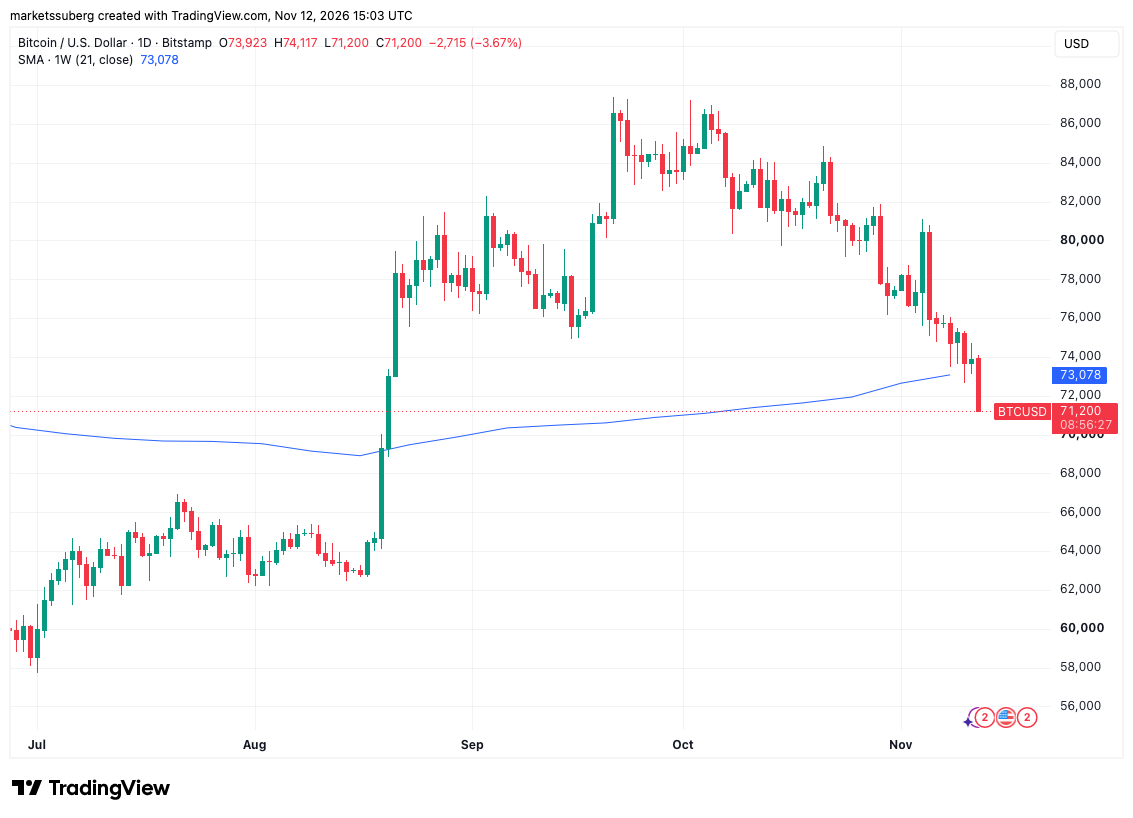
Bitcoin (BTC) experienced a significant downturn, reaching multi-month lows shortly after the opening of Wall Street on Thursday, as renewed selling pressure gripped the U.S. stock market. The cryptocurrency’s decline was largely attributed to the unexpected and immediate resignation of Jensen Huang, CEO of the tech giant Nvidia, a development that sent shockwaves through the financial world and impacted broader market sentiment. Data from TradingView indicated that BTC/USD dipped below the $72,000 mark for the first time since August 20, with month-to-date losses for Bitcoin accumulating to a concerning 7.4%.
This sharp fall in Bitcoin’s price underscores the increasing correlation between the cryptocurrency market and traditional financial assets, particularly tech stocks. As investors reacted to the seismic news from Nvidia, a ripple effect was observed across various asset classes, with digital currencies being particularly sensitive to shifts in market risk appetite. The absence of a clear directional trend in traditional markets, coupled with significant corporate uncertainty, has created a volatile environment for Bitcoin.
Nvidia’s Leadership Turmoil and its Market Repercussions
The catalyst for the market’s jitters was the abrupt departure of Jensen Huang, a pivotal figure whose leadership has been instrumental in Nvidia’s meteoric rise, especially in the artificial intelligence (AI) sector. The company announced that Colette Kress, its Executive Vice President and Chief Financial Officer, would assume the role of Interim Chief Executive Officer. Kress will continue her CFO duties while leading the company during the search for a permanent successor.

In a statement released by Nvidia, the company’s Board of Directors confirmed its commitment to a thorough selection process: "The Board is initiating a search for a permanent Chief Executive Officer and will consider internal and external candidates." This transition marks a significant turning point for a company that has become a bellwether for the AI revolution, with its graphics processing units (GPUs) being indispensable for AI development and deployment.
Economist Mohamed El-Erian, a prominent voice in global financial analysis, characterized Huang’s resignation as a "significant development" with far-reaching implications. He noted in an analysis published on Substack that "The situation will remain in the spotlight, not only as the company navigates the loss of its highly-influential founder, but also as various political investigations (formal and informal) unfold." This comment hints at potential underlying issues or scrutiny that may have contributed to the leadership change, adding another layer of complexity to the market’s reaction.
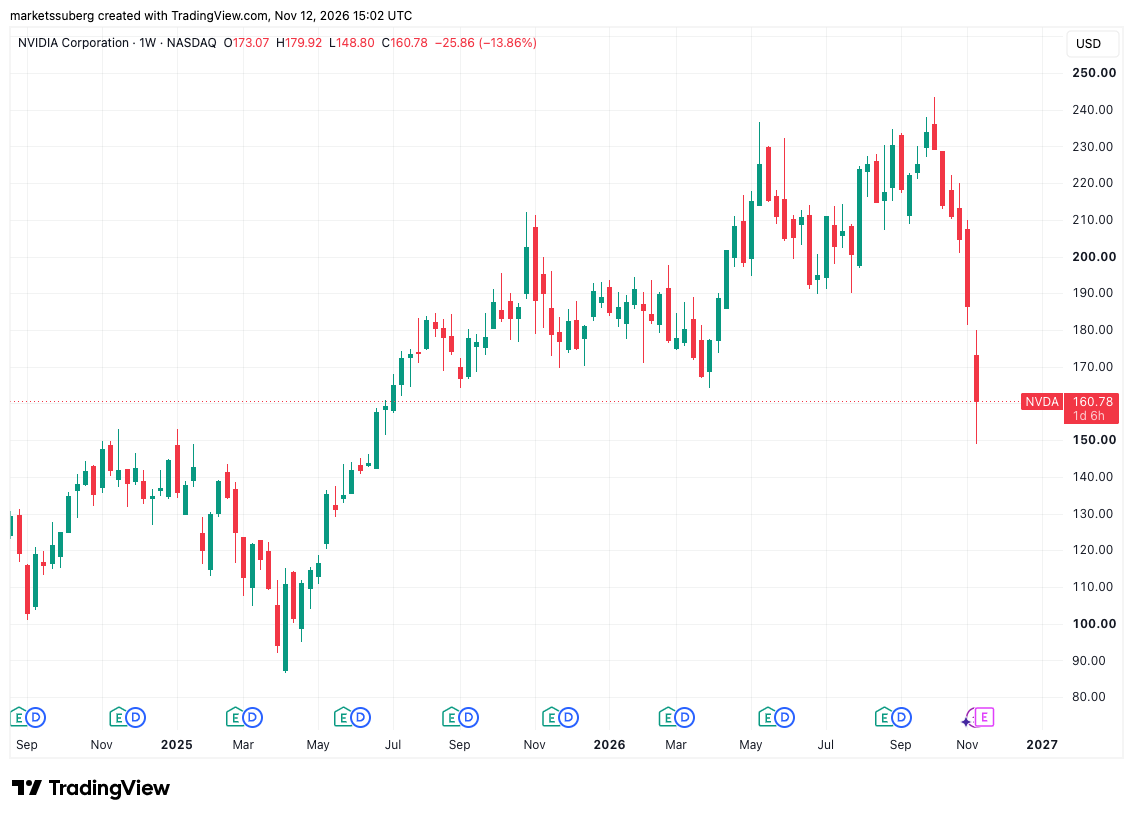
The immediate impact on Nvidia’s stock was dramatic. NVDA shares plunged nearly 13% at the Wall Street open, reflecting investor apprehension about the future leadership and strategic direction of the company. This sharp decline in one of the most influential tech stocks inevitably cast a shadow over the broader market.
Broader Market Impact and Bitcoin’s Vulnerability
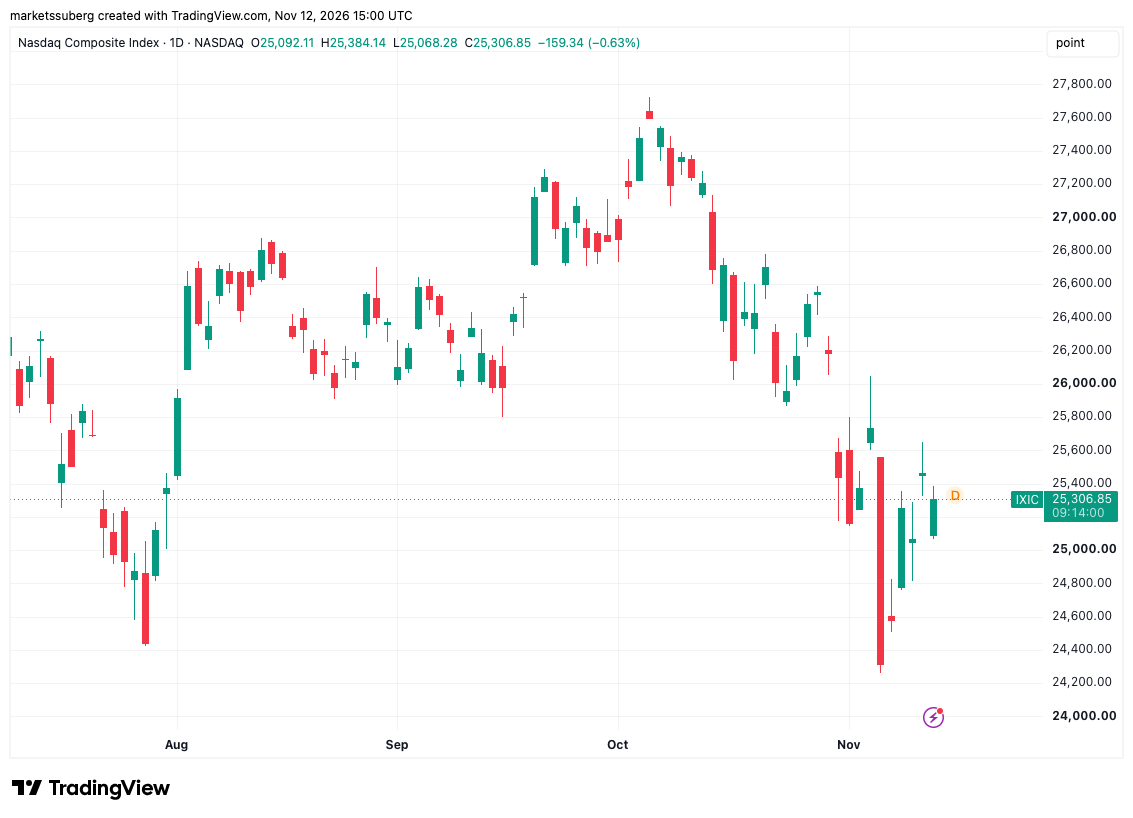
Despite the significant sell-off in Nvidia’s shares, the tech-heavy Nasdaq Composite Index showed some resilience, trading only 0.6% lower at the time of reporting. This relative stability in the broader index suggests that while Nvidia’s news was a major factor, other market forces might have been at play, or that investors were trying to digest the implications before enacting more widespread sell-offs. However, the underlying sentiment remained cautious.
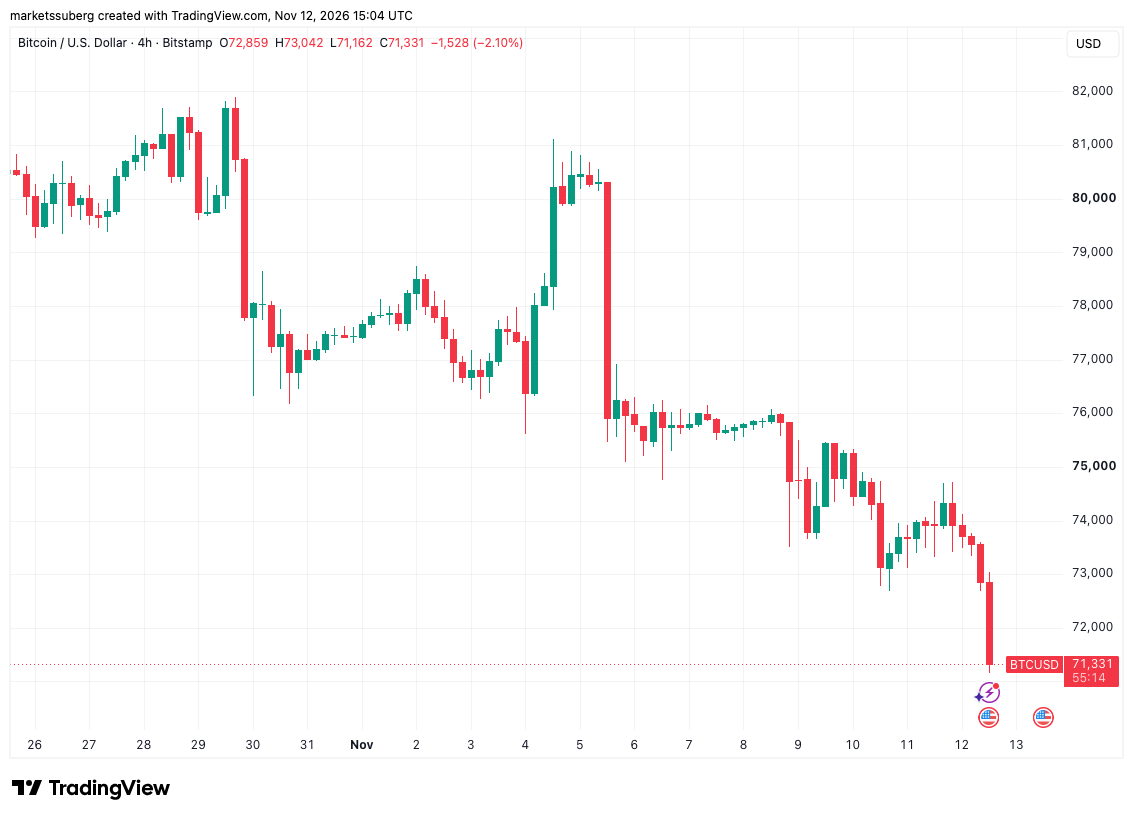
Bitcoin’s price action, however, proved more sensitive to the prevailing risk-off sentiment. The cryptocurrency’s retreat below the $72,000 level is particularly noteworthy as it breached a key technical indicator: the 21-week simple moving average (SMA). This average, which stood at $73,078 on Wednesday, is often viewed by traders as a significant support level. Breaking below it can signal a shift in short-term momentum and potentially attract further selling.
The correlation between Bitcoin and the Nasdaq Composite, while not always perfect, has been a consistent theme in recent market cycles. When the Nasdaq experiences selling pressure due to macroeconomic concerns or negative corporate news, Bitcoin often follows suit. This dynamic highlights Bitcoin’s evolving role in investor portfolios, moving beyond a niche digital asset to an asset class that is increasingly influenced by mainstream financial market trends.
Economic Indicators and Future Price Cues
Looking beyond the immediate corporate news, market participants are keenly awaiting key economic data releases for further directional cues. Keith Alan, co-founder of the crypto trading platform Material Indicators, pointed to Friday’s Producer Price Index (PPI) release as a crucial indicator for Bitcoin’s near-term trajectory.
This focus on economic data is a direct consequence of the Federal Reserve’s monetary policy stance, which has been heavily influenced by inflation figures. On Tuesday, the October Consumer Price Index (CPI) report revealed inflation figures that came in higher than expected. This hotter-than-anticipated inflation data led markets to price in a greater likelihood of further interest rate hikes by the Federal Reserve in the coming months. Such a hawkish monetary policy environment typically dampens investor appetite for riskier assets like cryptocurrencies.
Alan expressed his outlook on X (formerly Twitter), stating, "Fundamentally, a cool PPI report that lowers the odds of aggressive rate hikes in December/January could easily flip this script bullish." Conversely, if the PPI data aligns with market expectations, suggesting persistent inflationary pressures, Bitcoin’s price could face continued downward pressure, potentially oscillating within defined ranges dictated by liquidity levels on exchanges.
The importance of these economic releases cannot be overstated. Central bank decisions on interest rates have a profound impact on the cost of capital, corporate earnings, and investor sentiment. When inflation remains elevated, central banks are more likely to maintain or increase interest rates to curb price increases. Higher interest rates make borrowing more expensive, can slow economic growth, and reduce the attractiveness of speculative investments. For Bitcoin, which has often been viewed as an inflation hedge or a growth asset, a sustained period of high interest rates can be a significant headwind.
Liquidity Dynamics and Market Sentiment
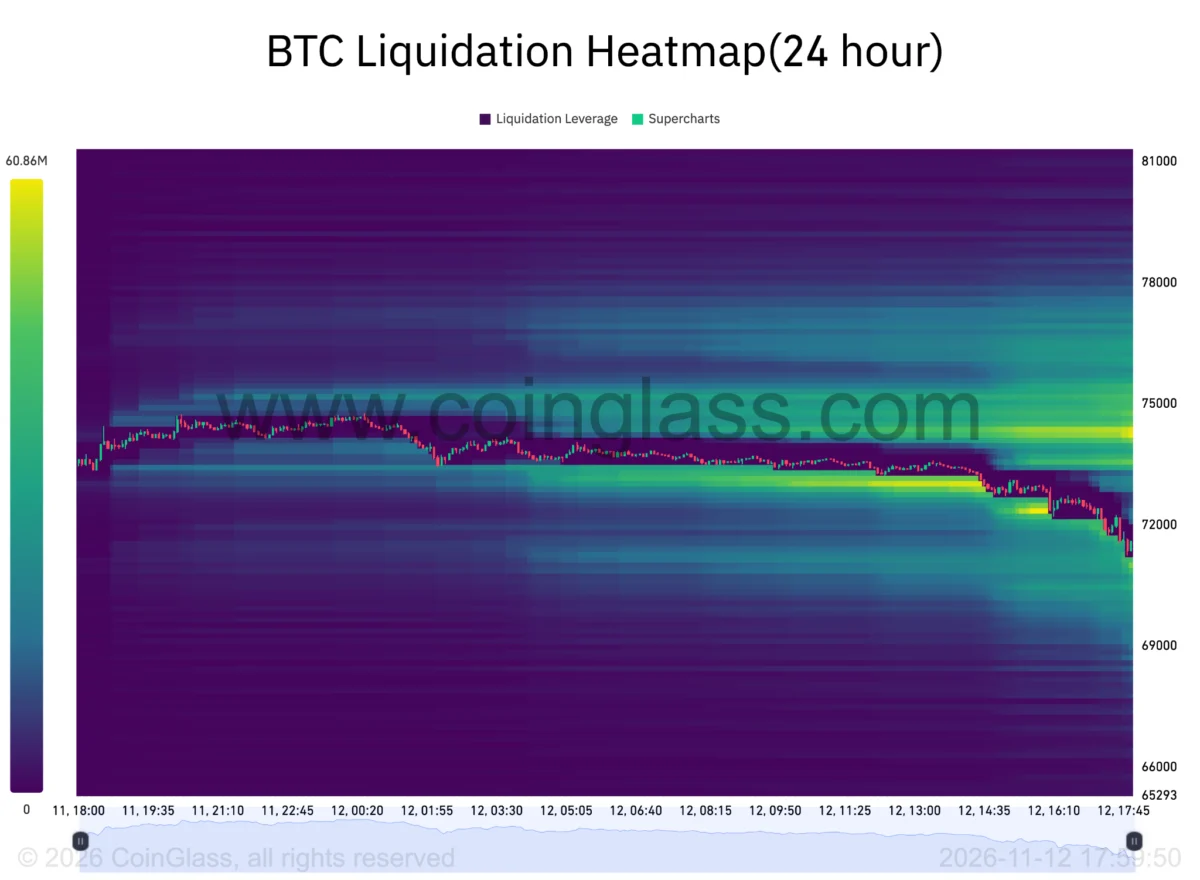
The impact of market volatility is often amplified by the dynamics of liquidity on cryptocurrency exchanges. Latest data from CoinGlass illustrates this, showing that Bitcoin’s price decline has led to the liquidation of a significant amount of leveraged positions. Over the past 24 hours, total crypto liquidations have reached approximately $730 million, indicating that a substantial number of traders who were betting on rising prices have been forced out of their positions.
The liquidation heatmap from CoinGlass reveals that BTC/USD has moved through a significant "bid liquidity" zone. Bid liquidity refers to the concentration of buy orders at specific price levels. When the price falls through these levels, it can trigger automatic buy orders, but more importantly, it can also lead to cascading liquidations if those buy orders are not sufficient to absorb the selling pressure. This process can accelerate price declines and contribute to increased volatility.
The substantial liquidation figures suggest that the market is undergoing a period of deleveraging, where traders are unwinding leveraged positions to reduce their exposure to risk. This deleveraging process can exacerbate downward price movements as forced selling adds to the existing supply pressure. For Bitcoin, breaking through key support levels and triggering liquidations can create a negative feedback loop, attracting more sellers and pushing the price lower until a new equilibrium is found.
Historical Context and Future Outlook
The current price action for Bitcoin also warrants a look at its historical performance. The cryptocurrency has demonstrated a remarkable ability to recover from significant drawdowns in the past, often driven by a combination of increasing institutional adoption, technological advancements, and shifts in macroeconomic sentiment. However, the current environment is characterized by a complex interplay of factors, including persistent inflation, hawkish central bank policies, and now, unexpected corporate leadership changes at major tech firms.
Nvidia’s role in the current technological landscape cannot be understated. Its GPUs are the backbone of the AI revolution, powering everything from large language models to scientific research. Any disruption to its operations or leadership can have ripple effects across the technology sector and beyond. The uncertainty surrounding its future leadership, especially in light of potential investigations, adds a layer of risk that investors are struggling to price in.
For Bitcoin, the path forward will likely depend on several key developments. Firstly, the resolution of the uncertainty surrounding Nvidia’s leadership and the company’s subsequent performance will be closely watched. Secondly, the upcoming economic data, particularly inflation reports and the Federal Reserve’s response, will play a critical role in shaping the broader market sentiment. A sustained period of declining inflation and a less hawkish Fed stance could provide a much-needed tailwind for risk assets.
Finally, the ongoing adoption and development within the cryptocurrency ecosystem itself will continue to be a significant factor. Innovations in blockchain technology, the development of new use cases, and the growing interest from institutional investors could provide underlying support for Bitcoin’s long-term value proposition. However, in the short to medium term, Bitcoin appears to be highly susceptible to the prevailing macroeconomic winds and the sentiment in traditional financial markets. The coming weeks and months will be crucial in determining whether Bitcoin can regain its upward momentum or if it will continue to face headwinds from the current challenging market conditions. The interplay between corporate news, economic indicators, and the evolving digital asset landscape will dictate the cryptocurrency’s trajectory.

