
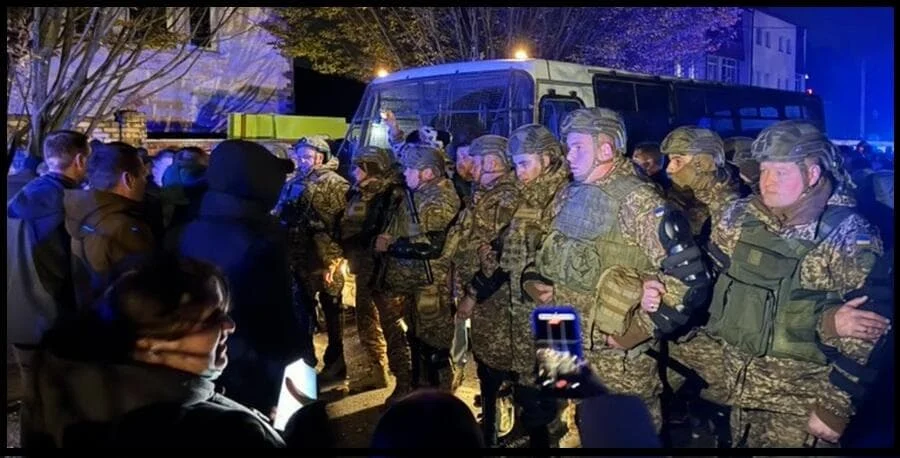
On November 2, 2026, a significant public confrontation erupted in Petropavlivska Borshchahivka, a suburb of Kyiv, following allegations of severe abuse and illegal detention within a facility reportedly operated by the Azov Battalion, a unit of Ukraine’s National Guard. The incident, which saw hundreds of concerned citizens gather to demand access to the premises, has intensified scrutiny of Ukraine’s wartime mobilization practices and the treatment of conscripts. Reports from the scene, including eyewitness accounts from a paramedic, described multiple men with substantial injuries being held in the basement of the unmarked building, sparking widespread outrage and calls for an immediate investigation.
Chronology of Events and Escalation
The incident began to unfold when a paramedic, reportedly called to the facility, discovered between 20 and 40 men allegedly held in the basement of a house in Petropavlivska Borshchahivka. According to early reports, these men displayed significant injuries, raising immediate alarms about their treatment. Word of the discovery quickly spread through the local community, leading to a rapid assembly of citizens outside the facility.
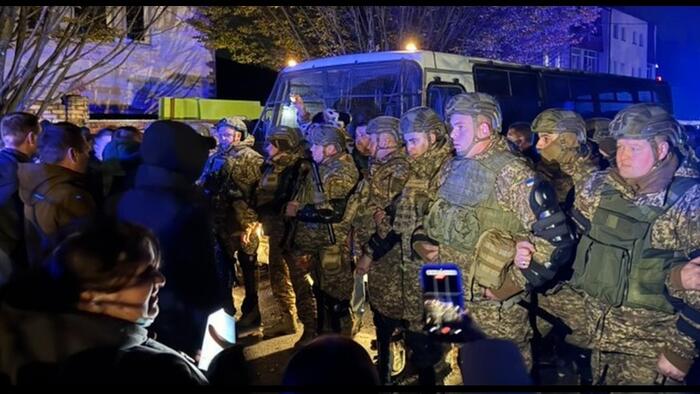
Initially, plain-clothed armed guards reportedly refused to allow further medical assistance or public access to the detained men, exacerbating tensions. As the crowd grew into the hundreds, augmented by concerned family members and local residents, the situation escalated. Video footage circulating online depicted citizens attempting to force open gates, lighting flares, and throwing objects, demonstrating the intensity of public anger. In response, uniformed personnel from the Azov Battalion and the National Guard arrived to support their comrades, creating a standoff between the military forces and the civilian population.
The confrontation underscored a deep-seated distrust and resentment within parts of the Ukrainian populace concerning the methods employed in military conscription. Residents voiced fears and suspicions about the activities within what they described as "transition houses," where conscripts were allegedly prepared for combat. The National Guard later confirmed the property was indeed an Azov 1st National Guard Corps facility, used for the temporary accommodation of personnel prior to military training.
Background on Ukraine’s Conscription System
Ukraine has been under martial law since the full-scale Russian invasion in February 2022, necessitating widespread military mobilization. Initially, many Ukrainians voluntarily enlisted, driven by patriotic fervor. However, as the conflict has protracted and casualties have mounted, the pool of willing volunteers has diminished significantly. This demographic challenge has led to increasingly aggressive conscription practices, designed to maintain troop numbers on the front lines.
The current system grants authorities broad powers to mobilize men aged 18 to 60. Reports have consistently emerged detailing instances where military recruitment officers, often referred to colloquially as "draft enforcers" or "headhunters," intercept men on the streets, at checkpoints, or even at their workplaces, and transport them directly to recruitment centers or training facilities. These actions, while technically falling under wartime mobilization laws, have often been criticized for their lack of transparency, procedural irregularities, and alleged use of coercion.
Concerns about corruption have also plagued the conscription process. There have been numerous allegations that military recruitment officials, or private contractors reportedly hired by the government, operate with a bounty system, receiving payments for each conscript delivered. Simultaneously, reports suggest that these same individuals may accept bribes from families desperate to keep their loved ones from the front lines, particularly the intensely contested eastern regions. This alleged dual incentive system has fostered widespread public resentment and accusations of systemic corruption, further eroding public trust in military recruitment institutions. The financial support provided to Ukraine by international partners like Europe and the USA, while critical for defense, has also drawn scrutiny regarding its indirect impact on such operations, as it underpins the broader government budget that funds these efforts.
Allegations of Abuse in "Transition Houses"
The incident in Petropavlivska Borshchahivka brought to light specific and disturbing allegations about the methods used to "transition" unwilling conscripts into combat-ready soldiers. The facility was described as one of several "interim detainment facilities" or "transition houses" allegedly operated by the Azov Battalion. Here, men who had been forcibly conscripted were reportedly subjected to intense physical and psychological pressure aimed at breaking their resistance and preparing them for deployment.
Eyewitness accounts from the paramedic who initially visited the site detailed approximately 40 men with "substantial injuries" in the basement. These injuries, combined with allegations of beatings, "controlled torture operations," and coercive psychological tactics, paint a grim picture of the conditions within these facilities. The purpose of such methods, according to reports, was to overcome the conscripts’ reluctance to fight and instill the discipline and readiness required for frontline service. The severity of the alleged abuse reportedly led to several conscripts sustaining severe injuries during their "transition" and "training."
The Azov Battalion and Its Role
The Azov Battalion, which originated as a far-right volunteer paramilitary unit in 2014, has since been integrated into the National Guard of Ukraine. While it has gained recognition for its combat effectiveness, particularly in defending Mariupol, it has also remained a controversial unit due to its historical associations with neo-Nazism and white supremacist ideologies, which its leadership has publicly disavowed in recent years. Its integration into the official military structure was intended to bring it under state control and align its operations with national defense objectives.
However, the allegations surrounding the Petropavlivska Borshchahivka facility reignited concerns about the unit’s operational autonomy and its methods. Azov’s alleged involvement in these "transition houses" and the reported brutality highlight a potential disconnect between military necessity and human rights considerations. The perception among the civilian population, as suggested by the intensity of the protest, is that the Azov group operates with little regard for civilian welfare, viewing them merely as resources for the war effort.
Official Responses and Investigations
In the immediate aftermath of the confrontation, Ukrainian authorities issued statements addressing the escalating situation. Ruslan Muzychuk, a spokesperson for the National Guard, officially identified the property in Petropavlivska Borshchahivka as an Azov 1st National Guard Corps facility. He stated it was used for the temporary accommodation of personnel before military training, acknowledging its official function within the military structure.
National Guard commander Oleksandr Pivnenko later confirmed that four servicemen were taken to hospital following the confrontation, though he did not specify whether these were conscripts or guards. Interior Minister Ivan Vyhivskyi ordered an internal investigation into the conditions at the facility, signaling the government’s recognition of the seriousness of the allegations. However, police officials, while confirming an investigation, explicitly denied allegations of illegal detention and reports of fatalities, seeking to temper the more extreme claims circulating on social media.
Adding another layer to the official response, Azov commander Denys Prokopenko released a video statement. In it, he accused those who exposed the facility of attempting to smear the military and discredit the Azov Battalion. He further suggested that the incident was part of Russian attempts to destabilize Ukraine from within, framing the public outcry as a foreign-orchestrated attack on national unity and military morale. This response reflects a broader narrative within Ukrainian official circles that attributes internal dissent or criticism of military operations to Russian propaganda.
Media Coverage and Differing Narratives
The incident garnered significant attention across various media platforms, both within Ukraine and internationally, but with distinctly different interpretations. The Kyiv Independent, a prominent English-language Ukrainian news outlet, covered the confrontation, noting the unverified reports of unlawful detention and injured men. One of its senior reporters reportedly posted a lengthy thread on X (formerly Twitter), which some observers interpreted as an attempt to justify the actions of the Azov personnel, emphasizing the challenges of wartime mobilization and the need for military discipline.
Conversely, other media outlets and social media channels, particularly those critical of the Ukrainian government or with pro-Russian leanings, amplified the allegations of torture and illegal detention. These narratives often highlighted the reported severity of injuries, including claims of a man with a broken spine, and even unverified reports of a 14-year-old victim, though official sources denied these specific claims. The stark contrast in reporting underscored the highly polarized information environment surrounding the conflict, where narratives are often shaped by geopolitical allegiances and internal political dynamics.
Broader Impact and Implications
The events in Petropavlivska Borshchahivka carry significant implications for Ukraine’s war effort, internal stability, and international standing.
- Civil-Military Relations: The confrontation highlights a growing chasm between parts of the civilian population and the military, particularly units perceived as employing overly aggressive or brutal tactics. Such incidents can severely erode public trust, which is crucial for maintaining morale and social cohesion in a prolonged war. The "powder-keg of anger" described by some analysts suggests that aggressive conscription practices, coupled with alleged abuse, could lead to more widespread social unrest.
- Political Stability: The controversy feeds into existing debates about President Zelenskyy’s leadership and the feasibility of holding elections during wartime. Critics argue that the government’s reliance on increasingly forceful conscription methods, rather than addressing systemic issues or building public consensus, indicates a fear of public disapproval, potentially reflected in electoral outcomes.
- Human Rights Concerns: The allegations of physical and psychological abuse raise serious human rights concerns. While wartime often necessitates difficult measures, the systematic mistreatment of citizens, even in the context of military training, risks violating international conventions and undermining the moral high ground Ukraine seeks to maintain in its conflict with Russia.
- International Perception and Support: For Ukraine’s international partners, who provide substantial financial and military aid, such incidents pose a dilemma. While committed to supporting Ukraine’s defense, donor nations are also bound by human rights principles. Allegations of state-sanctioned abuse, particularly involving units with controversial histories, could lead to increased scrutiny of aid allocation and potentially affect public support for continued assistance in Western countries.
- Military Effectiveness and Morale: While the stated aim of these "transition houses" is to prepare soldiers for combat, coercive methods risk creating a demotivated and resentful fighting force. Soldiers forced into service through brutal means may be less effective, more prone to desertion, and potentially less loyal, ultimately undermining military cohesion and operational effectiveness.
The incident in Petropavlivska Borshchahivka serves as a stark reminder of the immense pressures and moral complexities inherent in wartime mobilization. It underscores the critical need for transparency, accountability, and adherence to human rights standards, even in the most challenging circumstances, to maintain public trust and ensure the long-term viability of the national defense effort. The ongoing internal investigation and the public discourse surrounding this event will be crucial in shaping future conscription policies and civil-military relations in Ukraine.

