
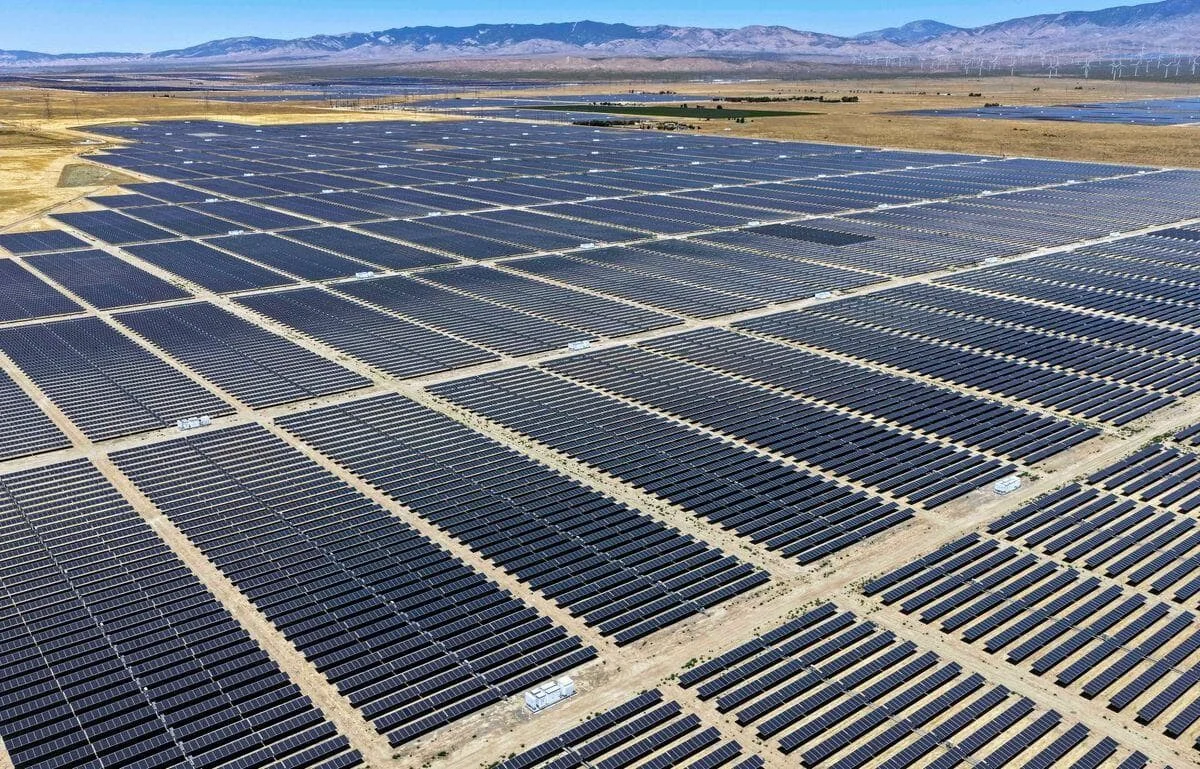
A federal judge on September 18 reinstated a substantial $7 billion federal grant program aimed at promoting solar energy, a key initiative authorized during the Biden administration. The ruling effectively rebuffs efforts by the subsequent administration, referred to in the legal proceedings as the "Trump-era EPA," to terminate the "Solar for All" program. This judicial decision has significant implications for climate policy, federal spending, and the ongoing political tug-of-war over renewable energy initiatives in the United States.
The judgment, issued by Judge Mary McElroy of the U.S. District Court for the District of Rhode Island, explicitly declared the Environmental Protection Agency’s (EPA’s) "termination of the Solar for All program… unlawful." This legal victory for climate advocates and labor unions signals a green light for a program designed to expand access to solar energy, particularly for low-income and disadvantaged communities, which was placed in jeopardy by a change in administrative priorities.
The Genesis of "Solar for All": A Pillar of the Inflation Reduction Act
The "Solar for All" program owes its existence to the landmark Inflation Reduction Act (IRA) of 2022, a sweeping legislative package championed by the Biden administration. The IRA was designed with ambitious goals: to combat climate change, lower healthcare costs, and reduce the national deficit through a combination of tax reforms and investments. A cornerstone of its climate strategy was the establishment of the Greenhouse Gas Reduction Fund (GGRF), for which Congress appropriated billions of dollars. This fund was conceived as a national clean energy accelerator, providing capital to mobilize private financing for clean technology projects, with a strong emphasis on benefiting communities that have historically been underserved or disproportionately affected by pollution.
Within the framework of the GGRF, the "Solar for All" grant program was officially launched in June 2023. Its specific mandate was to "create and expand low-income solar programs that provide financing and technical assistance, such as workforce development, to enable low-income and disadvantaged communities to deploy and benefit from residential solar." This was a targeted effort to address energy equity, ensuring that the economic and environmental benefits of renewable energy are accessible to all Americans, not just those with higher incomes or property values. The program was allocated a substantial $7 billion for grants, with an additional, albeit smaller, sum in the millions dedicated to its administration by the EPA, underscoring the federal commitment to both direct investment and effective oversight.
The underlying philosophy behind "Solar for All" and similar IRA provisions is multifaceted. Economically, it aims to stimulate the domestic clean energy industry, creating manufacturing jobs and fostering innovation. Environmentally, it seeks to accelerate the transition away from fossil fuels by increasing renewable energy adoption, thereby reducing greenhouse gas emissions. Socially, it addresses energy justice, offering solutions to high energy burdens in low-income households and providing pathways for workforce development in emerging green industries. This holistic approach was intended to deliver broad societal benefits, from cleaner air and lower utility bills to new economic opportunities in underserved areas.
A Shift in Policy: The Push for Cancellation
Despite its clear legislative mandate and stated objectives, the "Solar for All" program soon became a casualty of political shifts and differing policy priorities. The administration that followed, referred to as the "Trump-era EPA" in the legal context, moved to terminate the program, citing a legislative act known as the "One Big Beautiful Bill." This subsequent legislation, according to the administration seeking cancellation, eliminated the Greenhouse Gas Reduction Fund and, by extension, the $7 billion "Solar for All" pot.
Critics of the program, articulating a stance aligned with the administration that sought its termination, argued that continuing the program would be fiscally irresponsible and that the EPA no longer possessed the statutory authority or the appropriated funds to maintain it. For instance, a figure identified in the original reporting as "current EPA Administrator Lee Zeldin" (though the date cited, September 7, 2025, is inconsistent with the September 2023 ruling, suggesting a hypothetical or future-oriented criticism) publicly stated that canceling the program would save taxpayers billions of dollars, labeling it a "boondoggle." This perspective underscored a fundamental divergence in philosophy regarding federal investment in renewable energy, with one side viewing it as essential stimulus and the other as wasteful government spending.
An audit conducted as of early August 2025 (again, a date that requires careful contextualization given the September 2023 ruling, likely indicating a projected or hypothetical audit report cited by critics) found that the program’s initial implementation had seen a relatively low drawdown of funds. Out of the $7 billion obligated, approximately $71 million, or just 1.02 percent, had been drawn down by the program’s 60 grant recipients for various aspects of project planning and implementation. This low initial utilization rate was used by critics as evidence of the program’s inefficiency or lack of immediate impact, bolstering arguments for its termination.
The administration that sought to terminate the program contended that the "One Big Beautiful Bill Act" effectively rescinded Greenhouse Gas Reduction Fund money that was not already obligated and canceled some funds earmarked for the program’s administration. Their interpretation was that this new legislation stripped the EPA of its legal basis to continue the "Solar for All" initiative, rendering it defunct. This set the stage for a legal challenge, as proponents of the program sought to preserve what they viewed as a critical investment in the nation’s clean energy future.
The Legal Battle: Standing and Statutory Interpretation
The termination of the "Solar for All" program did not go unchallenged. A coalition of plaintiffs, including prospective subrecipients of the grants and various third-order beneficiaries such as labor unions, filed suit against the government. Among the prominent plaintiffs was the Rhode Island AFL-CIO, representing a significant voice for organized labor and its interest in job creation through green initiatives.
The government, in its defense, argued that these plaintiffs lacked the necessary legal standing to bring the suit. The concept of legal standing requires a plaintiff to demonstrate a direct and personal injury that is fairly traceable to the defendant’s unlawful conduct and likely to be redressed by a favorable judicial decision. The government contended that because the plaintiffs were not direct grant recipients but rather prospective beneficiaries or subrecipients, their alleged injuries were too indirect or speculative to meet the standing requirements. This argument is a common strategy employed by defendants in administrative law cases to dismiss lawsuits before addressing the merits of the case.
However, Judge Mary McElroy disagreed with the government’s assertion regarding standing. In her ruling, she found that the prospective subrecipients and third-order beneficiaries, such as unions, had a sufficiently concrete and particularized interest in the program’s continuation to establish standing. Her decision on this preliminary legal question was crucial, as it allowed the court to proceed to the substantive legal arguments regarding the lawfulness of the program’s termination. This underscores the judiciary’s role in ensuring that executive actions are subject to proper legal review, even when the immediate impact is felt by entities removed by one or two steps from the direct federal funding mechanism.
The core of the legal dispute then hinged on the interpretation of the "One Big Beautiful Bill Act" and its impact on the "Solar for All" program. The previous administration argued that this new act effectively canceled the program by rescinding its underlying funding and statutory authority. Judge McElroy, however, offered a different interpretation of the legislative text. She concluded that the "One Big Beautiful Bill Act" was specifically crafted to ensure that "existing grants were not to be rescinded" and that only minor "unobligated" funds could be clawed back. Her careful textual analysis focused on the precise language used by Congress, determining that the intent was not to retroactively cancel programs that had already been initiated and for which funds had been designated.

The Judicial Verdict: Unlawful Termination
Judge McElroy’s ruling was unequivocal. She declared that the Environmental Protection Agency’s (EPA’s) "termination of the Solar for All program is declared unlawful." This decisive judgment reinforced the principle that executive agencies must act within the bounds of congressional intent and statutory authority. Her interpretation of the "One Big Beautiful Bill Act" held that the funds for "Solar for All" were already "spoken for" by designated recipient organizations, meaning they were considered "obligated" even if not yet fully disbursed or drawn down.
Practically, this means that virtually all of the $7 billion originally appropriated for the "Solar for All" program remains intact and must now be administered as intended. Unless the ruling is reversed on appeal, the current EPA finds itself obligated to give out the remaining nearly $7 billion in solar promotion subsidies from the Biden era. This represents a significant sum of money, earmarked for tangible projects that will directly benefit communities across the nation. The ruling thus not only reinstates the program but also places a clear legal directive on the EPA to proceed with its implementation, ensuring that the legislative intent behind the Inflation Reduction Act’s climate provisions is upheld.
The decision highlights the critical function of the judiciary in the system of checks and balances. When an executive agency takes action that is challenged as exceeding its authority or contradicting legislative directives, the courts serve as arbiters, interpreting laws and ensuring that governmental branches operate within their constitutionally defined roles. In this instance, the court sided with the interpretation that Congress intended the "Solar for All" program to continue, despite subsequent legislative efforts to scale back or reallocate funds. This judicial affirmation provides a degree of stability and predictability for federal programs, especially those that represent significant long-term investments.
Reactions from Stakeholders: Relief and Resolve
The ruling was met with immediate and enthusiastic approval from the plaintiffs and their supporters. Patrick Crowley, president of the Rhode Island AFL-CIO, one of the key parties that brought the suit, expressed his profound satisfaction with the outcome. Speaking to The Epoch Times, Crowley stated he was "very pleased with the ruling," emphasizing that the decision "makes very clear that this program should never have been stopped by the EPA in the first place." He also voiced his hope that the federal government would not appeal the decision, arguing that the clarity of the ruling leaves little room for further legal dispute.
For the state of Rhode Island alone, Crowley estimated that its share of federal funding from the "Solar for All" program would amount to approximately $49 million. This significant investment is projected to provide "thousands of good-paying union jobs," a crucial benefit for the labor movement and local economies. The prospect of these jobs, ranging from solar panel installation and maintenance to related manufacturing and technical support roles, underscores the direct economic impact of such federal programs and explains the strong advocacy from unions.
However, the path forward is not entirely clear of potential hurdles. Carolyn Holran, a spokesperson for the EPA, indicated that the agency might not share Crowley’s desire to forgo further legal action. In her statement to The Epoch Times, Holran said, "EPA is reviewing the decision and considering options for appeal." This response suggests that the legal battle may not be over, and the agency might seek to challenge Judge McElroy’s ruling in a higher court. An appeal could introduce further delays in the program’s implementation and prolong the uncertainty surrounding its future.
The clash over "Solar for All" is emblematic of a broader, ongoing conflict between labor unions and some conservative administrations regarding green energy projects. Crowley pointed out that unions have notched up previous legal victories on issues such as offshore wind projects and other solar grants, signaling a sustained commitment to defending and promoting renewable energy initiatives that they believe create stable, well-paying jobs. He reiterated this resolve, stating, "We won’t back down in our efforts to protect our members’ jobs while we build a new carbon-free economy." This declaration highlights the strong alignment between organized labor’s economic interests and the environmental goals of transitioning to a clean energy future.
Broader Implications: The Future of Green Energy Policy and Federal Funding
The reinstatement of the "Solar for All" program carries substantial implications, extending beyond the immediate disbursement of funds. It underscores the contentious nature of renewable energy policy in the United States, which often becomes a political battleground with each change in administration. Federal funding for climate initiatives, viewed by some as essential investments for future economic prosperity and environmental health, is simultaneously criticized by others as government overreach, wasteful spending, or market distortion.
Economically, the program’s revival represents a significant boost for the burgeoning U.S. solar industry, particularly for companies and organizations focused on equitable access. Data from the Solar Energy Industries Association (SEIA) indicates robust growth in the solar sector, with installations consistently breaking records and projections for continued expansion. Such federal programs act as catalysts, de-risking investments, stimulating demand, and fostering innovation. The focus on low-income and disadvantaged communities also ensures that the benefits of this growth are distributed more broadly, potentially alleviating energy poverty and creating new economic opportunities in areas that need them most. The projected creation of "thousands of good-paying union jobs" aligns with broader goals of workforce development in the green economy, providing career pathways for skilled trades.
From a fiscal perspective, the "boondoggle" argument against the program highlights a recurring debate about the effectiveness and efficiency of government spending. While initial drawdown rates were low, proponents would argue that large-scale grant programs require time for planning, infrastructure development, and community engagement before significant funds are disbursed. The ruling, by compelling the EPA to proceed, puts the onus on the agency to demonstrate the program’s effectiveness and judicious use of taxpayer money in the coming years.
The legal precedent set by Judge McElroy’s ruling is also noteworthy. It reinforces the principle of judicial review as a critical check on executive agency actions, ensuring that legislative intent is respected. This is particularly relevant in an era where executive orders and administrative actions frequently face legal challenges. The decision sends a clear message that statutory mandates, especially those backed by significant congressional appropriations, cannot be easily undone by subsequent administrative policy shifts without clear and explicit legislative authority.
Looking ahead, several challenges and opportunities remain. The EPA’s decision on whether to appeal will dictate the immediate future of the program. If appealed, the case could move to a higher court, potentially prolonging the legal uncertainty. Assuming the program proceeds, effective implementation will be paramount. This includes ensuring that the nearly $7 billion reaches its intended beneficiaries efficiently, transparently, and in a manner that maximizes its impact on solar deployment, job creation, and energy equity. The program will need to navigate potential bureaucratic hurdles, foster partnerships with local communities and organizations, and demonstrate measurable outcomes to justify its significant investment.
Ultimately, the reinstatement of the "Solar for All" program is more than just a legal victory; it is a reaffirmation of a particular vision for America’s energy future. It underscores the complex interplay between legislative ambition, executive action, and judicial oversight in shaping national policy, particularly in critical areas like climate change and renewable energy. As the nation continues its transition to a carbon-free economy, the "Solar for All" program stands as a testament to the persistent efforts to ensure that this transition is not only environmentally sound but also economically inclusive and socially just.

