
The global geopolitical landscape is currently defined by a precarious convergence of military conflicts, economic warfare, and intense competition for critical resources, a dynamic that is reaching a critical juncture as the Northern Hemisphere braces for winter. Against this backdrop of escalating tensions, export restrictions on vital materials and energy products are exerting unprecedented economic pressure worldwide, significantly amplifying the risk that existing conflicts could widen through supply disruptions and retaliatory measures. With diplomatic avenues for de-escalation appearing increasingly elusive, the potential for spillover effects from active war zones remains a paramount concern for international stability and economic resilience.
Major Overnight Drone Strike on Moscow Refinery
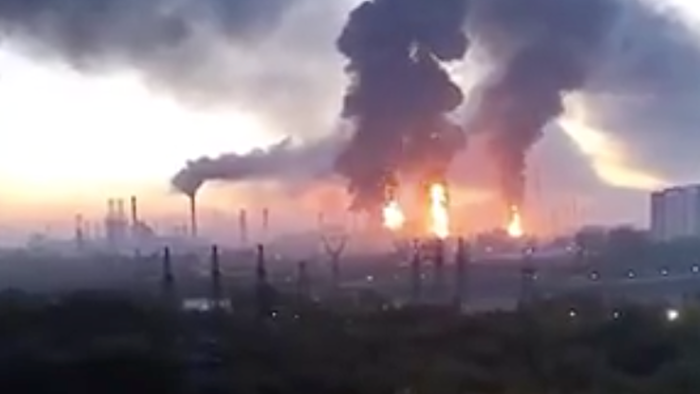
The most immediate and pressing development underscoring these converging crises occurred this morning, as Ukraine launched a substantial overnight drone strike deep into Russian territory. The target, a refinery in Moscow, was successfully hit, a move that starkly defied a recent request from former President Donald Trump for Ukraine to cease striking Russian energy infrastructure. This strike comes at a time when the world is grappling with a deepening global refining crisis, making any disruption to processing capacity particularly impactful.
According to reports from Bloomberg, the facility struck was the Gazprom Neft-owned Moscow Oil Refinery, situated approximately 25 kilometers (16 miles) southeast of the Kremlin. This strategically significant refinery possesses a processing capacity of around 245,000 barrels per day (bpd) and is a crucial supplier of fuel to the vast Moscow metropolitan area. The targeting of such a facility highlights Ukraine’s continued strategy to degrade Russia’s war-making capabilities by disrupting its economic and logistical support systems.
Ukrainian President Volodymyr Zelenskyy confirmed the strike on social media platform X, stating, "Our long-range responses had a very significant impact in the Moscow region last night. One of Russia’s key oil industry facilities and the aggressor’s logistics facility were hit. These are billions of dollars that sustain the war machine." Zelenskyy further detailed the array of unmanned aerial systems employed in the operation, listing FP-1, RZ-100, MICH-2000, Palianytsia, Vendetta, Liutyi, Bars, Flamingo, Sichen, and Pelican, indicating a sophisticated and multi-pronged assault. This public acknowledgment and detailed list of systems serve to underscore Ukraine’s developing capabilities in long-range precision strikes and its commitment to applying pressure on Russia’s economic lifeline.
Chronology of Escalating Energy Market Disruptions
The attack on the Moscow refinery is not an isolated incident but rather the latest event in a rapidly unfolding timeline of energy market instability. Over the past several weeks, the global energy sector has witnessed a dramatic tightening, particularly in the diesel market, which serves as the foundational industrial fuel powering global commerce, transportation, and agriculture.
Last week, diesel futures and refining spreads surged to record highs, propelled by worsening supply disruptions. These disruptions have stemmed from various factors, including maintenance backlogs in the U.S. Gulf Coast, geopolitical tensions, and ongoing operational challenges in Russia. The cumulative effect has been a significant reduction in the availability of this critical fuel, sending shockwaves through commodity markets.
Compounding this squeeze are the growing concerns over potential export restrictions, or the extension of existing ones. Earlier this week, a report indicated that Moscow was actively considering extending its existing diesel export ban, a measure initially implemented to stabilize domestic fuel prices and ensure supply within Russia. Such an extension would further constrict global supply, exacerbating an already fragile market.
Adding another layer of uncertainty, Senate Majority Leader John Thune of the United States publicly stated on Tuesday that he was "open to exploring" a U.S. diesel export ban. This remark, made in response to skyrocketing domestic diesel prices, underscores the severity of the situation and the increasing willingness of major economies to consider protectionist measures to safeguard their own energy security, even if it contributes to global market volatility.
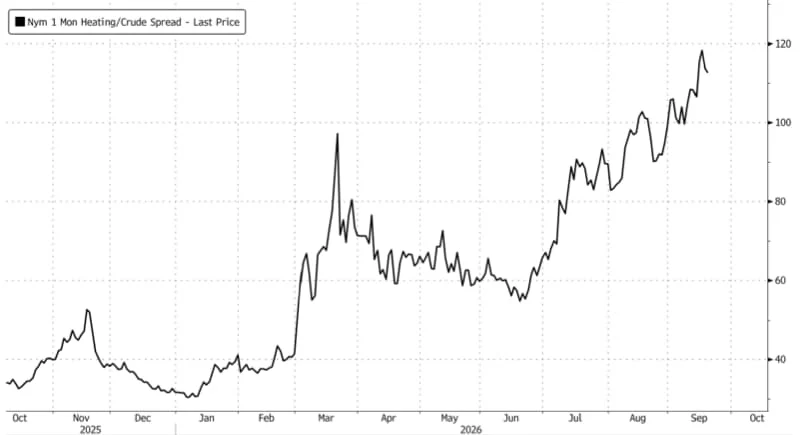
The immediate impact of these converging pressures was evident in refining spreads. The U.S. heating oil crack spread, a key indicator measuring the difference between the price of heating oil (a proxy for diesel) and crude oil, soared to an unprecedented $117 per barrel on Wednesday. This figure represents the highest level recorded in Bloomberg data, which dates back to 2009, highlighting the extreme profitability of refining crude into diesel and the underlying scarcity of the refined product.
Official Responses and Market Reactions
The Ukrainian President’s explicit statement, detailing the targets and the systems used, serves multiple purposes. It publicly asserts Ukraine’s operational successes, aims to boost national morale, and signals to Russia that its economic infrastructure remains vulnerable. The direct reference to "billions of dollars that sustain the war machine" underscores the strategic economic objective behind these strikes, framing them as a necessary component of the broader defense effort.
From the Russian perspective, while no immediate official statement directly addressing the Moscow refinery strike was available at the time of reporting, such attacks invariably lead to heightened security measures and typically prompt calls for retaliatory actions. The context of former President Trump’s request, urging Ukraine to cease such strikes, adds a complex layer to the geopolitical dynamics. Trump’s intervention, reportedly aimed at preventing a deepening global energy crisis, reflects a concern that these attacks could destabilize global markets, potentially impacting economies far beyond the immediate conflict zone. This position, however, contrasts with the prevailing sentiment among many Western allies who support Ukraine’s right to defend itself and target legitimate military and economic infrastructure within Russia.
Market analysts have reacted with significant concern. Mike McGlone, a senior commodity strategist at Bloomberg Intelligence, issued a stark warning that the current diesel price shock bears an unsettling resemblance to similar movements observed in gasoline markets during the 2008 energy crisis. This historical parallel suggests that the current situation could portend broader economic instability.
Broader Economic and Geopolitical Implications
The convergence of military conflicts, economic warfare, and resource competition, exacerbated by the latest refinery strike, carries profound implications across several dimensions.
Geopolitical Ramifications: The strike on the Moscow refinery, particularly after a prominent international figure’s plea against such actions, underscores the persistent escalation of the Russia-Ukraine conflict. It signals Ukraine’s resolve to continue its deep strikes, regardless of external pressures, as long as its sovereignty is threatened. This ongoing targeting of Russian energy infrastructure risks provoking more severe retaliatory actions from Moscow, potentially leading to a dangerous cycle of escalation that could further destabilize Eastern Europe and beyond. The broader implication is a challenge to international efforts to contain the conflict, demonstrating the difficulty in de-escalating when fundamental national security interests are perceived to be at stake.
Deepening Global Energy Crisis: The attack on a refinery with significant processing capacity directly impacts global supply at a critical time. While 245,000 bpd may seem modest on a global scale, the fragility of the current refining network means that every disruption has an outsized effect. Global refining capacity has struggled to recover post-pandemic, with several refineries having closed permanently or operating below peak efficiency due to underinvestment, maintenance backlogs, and skilled labor shortages. This has created a tight market where even localized disruptions can trigger global price spikes. The approaching Northern Hemisphere winter will significantly increase demand for heating oil and diesel, placing immense pressure on already strained supplies and driving up costs for consumers and businesses alike.
Economic Fallout and Inflationary Pressures: The surge in diesel and heating oil prices is not merely a commodity market phenomenon; it translates directly into higher operational costs for nearly every sector of the global economy. Diesel powers logistics (trucking, shipping), agriculture (farm machinery), manufacturing, and construction. Increased fuel costs lead to higher transportation expenses, which are then passed on to consumers in the form of elevated prices for goods and services, fueling inflationary pressures. This could dampen economic growth, potentially pushing vulnerable economies towards recession. The "2008 energy shock" parallel drawn by McGlone is particularly alarming, as that period saw significant economic disruption globally. A sustained period of high energy prices risks triggering a wider economic downturn, impacting everything from food prices to manufacturing output.
Supply Chain Vulnerabilities: The prospect of major economies like Russia and potentially the U.S. implementing or extending export bans on diesel highlights the extreme vulnerability of global supply chains. Such protectionist measures, while perhaps intended to stabilize domestic markets, inevitably create shortages and price volatility internationally. Nations reliant on imported diesel could face severe economic hardship, disrupting industrial activity and essential services. This underscores the urgent need for greater energy diversification and resilience in national energy strategies.
Humanitarian Concerns: As winter approaches, higher energy prices disproportionately affect vulnerable populations. Increased costs for heating oil, transportation, and essential goods place immense strain on household budgets, potentially leading to energy poverty and reduced access to necessities. This humanitarian dimension adds another layer of urgency to the call for de-escalation and stabilization in energy markets.
Supporting Data and Analysis
To put the current situation into perspective, global diesel demand is estimated to be around 30-35 million bpd. While the Moscow refinery’s 245,000 bpd capacity is a fraction of this, its importance lies in its role in regional supply and the cumulative effect of multiple, ongoing disruptions. For instance, planned and unplanned refinery outages globally have consistently exceeded historical averages in recent years. The global refining utilization rate, while recovering from pandemic lows, remains susceptible to shocks.
The "heating oil crack spread" is a crucial metric because it reflects the profit margin for refiners. A high crack spread incentivizes refiners to produce more diesel, but it also indicates strong demand and/or constrained supply of the refined product relative to crude oil. The surge to $117 a barrel is an extreme outlier, far exceeding historical averages which typically range from $20-$40 a barrel, signaling a deep imbalance in the market.
The 2008 energy shock, to which the current situation is compared, saw crude oil prices reach nearly $150 a barrel, driven by speculative trading, strong global demand, and geopolitical tensions. While the current crude oil prices are not at those levels, the refining spread for diesel indicates a unique and severe bottleneck in the downstream segment of the energy market. This suggests that even with ample crude supply, the ability to process it into vital fuels like diesel is critically constrained, making the current crisis arguably more complex than a simple crude oil price surge.
Conclusion
The latest Ukrainian drone strike on the Moscow refinery serves as a stark reminder of the dangerous interconnectedness of military conflict, economic policy, and global energy markets. As the Northern Hemisphere approaches winter, the convergence of these factors—escalating warfare, export restrictions, and a strained global refining capacity—creates a highly volatile and unpredictable environment. With no clear path to de-escalation and the specter of a 2008-style energy shock looming, the international community faces immense pressure to navigate this complex landscape, avert further economic instability, and prevent humanitarian crises while addressing the underlying geopolitical tensions. The world watches closely, hoping that diplomacy can eventually prevail over the forces of conflict and economic disruption.

