
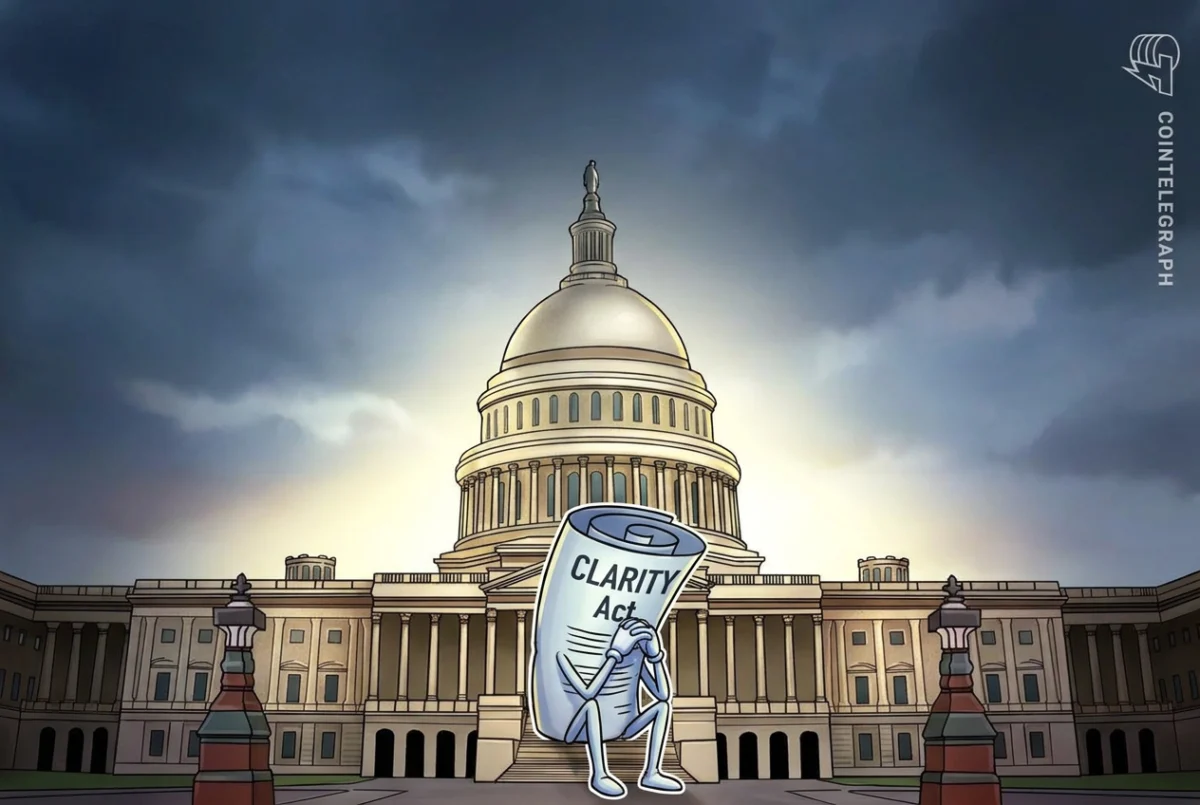
Despite a significant setback in the U.S. Senate this week, there remains a tangible possibility that lawmakers may attempt to advance cryptocurrency market structure legislation during the upcoming post-election "lame-duck" session. Adrian Wall, managing director of the Digital Sovereignty Alliance, a nonprofit advocacy group focused on digital asset policy, revealed in a recent interview that senators from both major political parties are exploring strategies to revive the CLARITY Act. This renewed effort, if successful, would aim to pass the legislation before the current 117th Congress concludes its term.
Wall’s assertion stems from direct conversations with senators, indicating a bipartisan interest in revisiting the bill. "There is an appetite to put this forward even during the lame duck period of Congress," Wall stated during an appearance on Cointelegraph’s Chain Reaction show on X. He acknowledged the formidable challenges ahead, describing the prospect as "very complicated" and a "long shot." The comments underscore a persistent, albeit difficult, drive within certain congressional circles to establish a clearer regulatory framework for the burgeoning digital asset industry.
The CLARITY Act: A Brief History and Recent Setback
The CLARITY Act, a significant piece of proposed legislation, aims to provide a comprehensive regulatory structure for digital assets in the United States. Its failure to advance in the Senate on Tuesday marked a critical juncture, falling short of the 60 votes necessary for cloture, a procedural move to end debate and bring a bill to a vote. This outcome was widely interpreted as a substantial blow to the digital asset industry’s hopes for legislative clarity in the near term.
The vote’s failure can be attributed to a complex interplay of factors, including differing opinions on the scope of regulation, concerns about potential impacts on innovation, and broader partisan divides. Historically, the path for significant financial legislation in the U.S. Congress is often fraught with negotiation, compromise, and political maneuvering. The digital asset space, being relatively new and rapidly evolving, presents unique challenges for established regulatory bodies and legislative processes.
Bipartisan Efforts and the Lame-Duck Session Opportunity
Wall’s disclosure of direct discussions with senators from both Republican and Democratic parties offers a glimmer of hope for proponents of the CLARITY Act. He emphasized that these conversations were initiated by the senators themselves, suggesting a proactive approach to finding a path forward. "I’ve heard it directly from senators on both sides […] saying they have a strategy to engage the other side and see if there’s a last chance to do it," Wall reported.
The lame-duck session, which convenes after the November elections and before the new Congress is sworn in, is a period often characterized by increased legislative activity as outgoing lawmakers seek to finalize their agendas. While typically a time for less contentious issues, significant legislation can sometimes be pushed through, especially if there is a strong bipartisan consensus or a sense of urgency. For the CLARITY Act, this period represents a final, albeit narrow, window of opportunity within the current congressional term.
Potential Implications of Passing the CLARITY Act
The successful passage of the CLARITY Act would have far-reaching implications for the digital asset ecosystem. It would provide much-needed regulatory certainty for businesses operating in the space, potentially attracting greater institutional investment and fostering innovation. Currently, the lack of a clear regulatory framework has led to a fragmented and often confusing legal landscape, with various agencies asserting or debating jurisdiction over different aspects of digital assets.
Key provisions of such legislation typically include:
- Defining Digital Assets: Clearly categorizing different types of digital assets (e.g., securities, commodities, utility tokens) to determine which regulatory bodies have oversight.
- Establishing Registration and Disclosure Requirements: Outlining the rules for digital asset issuers and intermediaries, similar to those in traditional financial markets.
- Consumer and Investor Protection Measures: Implementing safeguards to protect individuals from fraud, manipulation, and other illicit activities.
- Market Integrity Rules: Setting standards for trading, clearing, and settlement of digital asset transactions.
The absence of these clear rules has contributed to market volatility and has made it challenging for U.S. businesses to compete on a global scale. For example, reports have indicated that the uncertainty surrounding regulatory approval of certain digital asset products has impacted market sentiment and trading volumes. The CLARITY Act, if enacted, could help address these issues by providing a predictable environment for growth and development.
Challenges and the Road Ahead
Despite the expressed interest, the path to passing the CLARITY Act during the lame-duck session remains exceptionally challenging. The legislative process is complex, and overcoming the hurdles that led to its failure this week will require significant political will and consensus-building.
- Reaching 60 Votes: The fundamental requirement for cloture in the Senate remains a substantial obstacle. Any renewed attempt would need to secure the support of at least 10 senators from the opposing party, a feat that is difficult to achieve on any legislation, let alone one as complex and potentially divisive as cryptocurrency regulation.
- Political Agendas: The lame-duck session often sees increased focus on must-pass legislation, such as appropriations bills or defense authorizations. Finding the time and political capital to prioritize the CLARITY Act amidst these competing demands will be a significant challenge.
- Industry Consensus: While many in the digital asset industry advocate for regulatory clarity, there can be differing views on the specifics of proposed legislation. Achieving a unified industry front on the CLARITY Act’s provisions would strengthen its chances of passage.
The Digital Sovereignty Alliance’s Role
The Digital Sovereignty Alliance plays a crucial role in advocating for sensible digital asset policy. As a nonprofit organization, it engages with lawmakers and regulators to educate them on the nuances of the digital asset landscape and to promote policies that foster innovation while mitigating risks. Wall’s direct access to senators highlights the organization’s effectiveness in building relationships and influencing policy discussions.
Their involvement underscores the broader trend of increasing engagement between the digital asset industry and policymakers. As the technology matures and its economic impact becomes more pronounced, the need for informed dialogue and constructive policymaking becomes ever more critical.
Looking Beyond the Lame-Duck Session
Even if the CLARITY Act does not pass during the lame-duck session, Wall indicated that the legislative momentum might not entirely dissipate. He suggested that the next Congress, the 118th, could "pick up the pen" and continue the work on cryptocurrency market structure legislation. This implies that the underlying issues and the desire for a regulatory framework remain persistent, regardless of the immediate outcome.
The upcoming midterm elections will play a significant role in shaping the composition of the next Congress. The election results could either bolster or diminish the prospects for digital asset legislation, depending on the political leanings and priorities of the newly elected representatives.
Broader Economic and Technological Context
The debate surrounding the CLARITY Act is taking place against a backdrop of significant global developments in digital assets. Countries around the world are grappling with how to regulate this rapidly evolving sector. Some jurisdictions have moved aggressively to establish comprehensive frameworks, while others, like the United States, have taken a more cautious approach.
The U.S. market for digital assets is substantial, with millions of Americans participating in the trading and use of cryptocurrencies. The failure to provide clear regulatory guidance can lead to several economic consequences:
- Capital Flight: Businesses and investors may choose to relocate to jurisdictions with more favorable and predictable regulatory environments.
- Stifled Innovation: Uncertainty can deter entrepreneurs and developers from launching new projects and businesses in the U.S.
- Increased Risk for Consumers: Without clear rules, consumers are more vulnerable to scams and market manipulation.
The CLARITY Act, in its current form, aims to address these concerns by creating a balanced regulatory environment that encourages responsible innovation while safeguarding market integrity and consumer interests. The ongoing discussions, even after setbacks, signal a recognition of the growing importance of digital assets and the imperative to develop appropriate policy responses. The coming weeks and months will be critical in determining whether the U.S. Congress can seize this opportunity to shape the future of the digital asset industry.

