
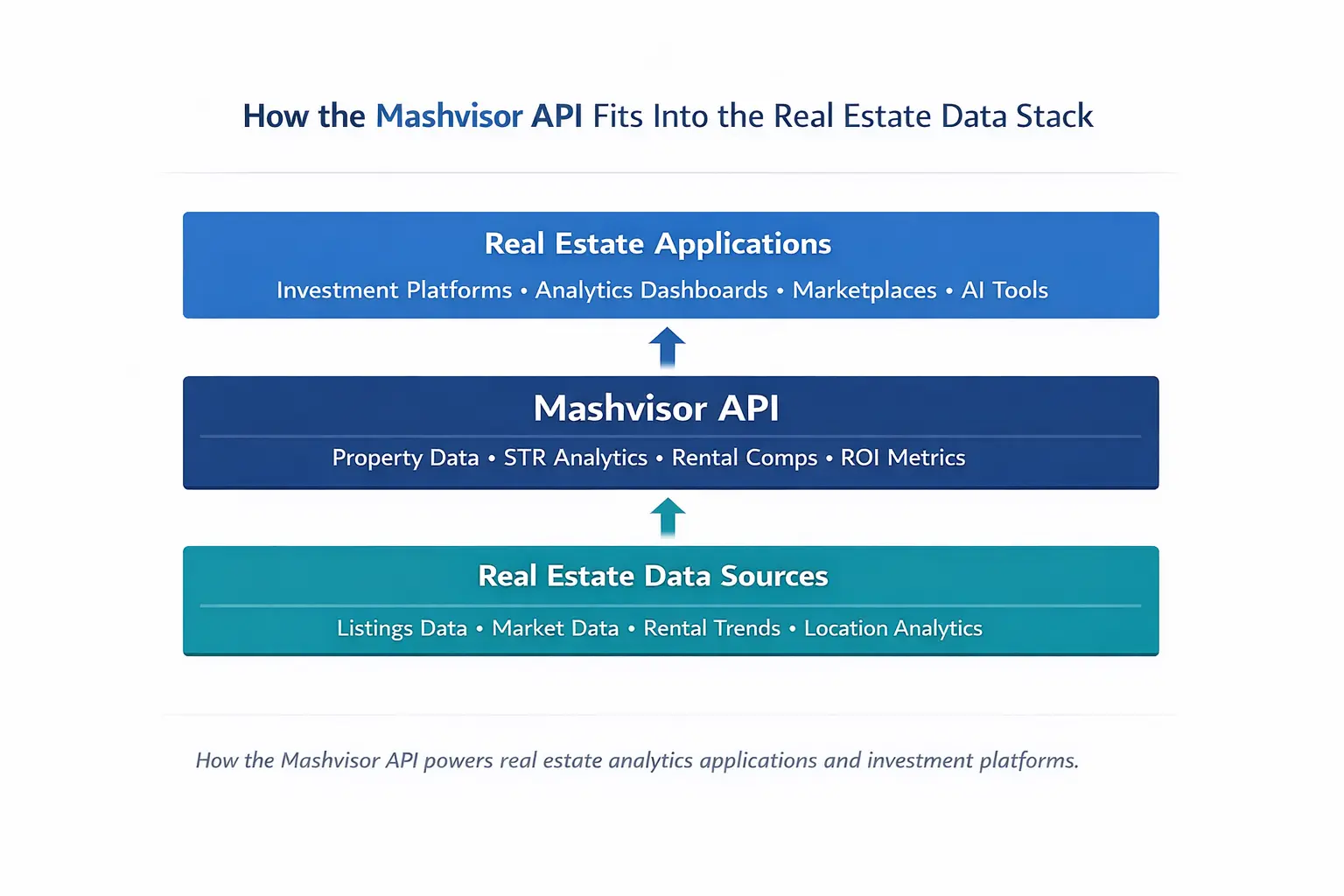
For real estate professionals navigating the complex landscape of data solutions, pricing often emerges as a pivotal consideration after the initial assessment of features and available datasets. Investors, burgeoning PropTech companies, and established analytics teams require unambiguous visibility into anticipated costs before integrating an Application Programming Interface (API) into their operational workflows. This foresight is particularly critical when planning for future scalability and sustained, long-term data utilization. Addressing this fundamental industry need, Mashvisor has structured its API pricing model to offer unparalleled clarity through a flexible, usage-based approach, eschewing traditional, often restrictive, fixed monthly licensing fees. This innovative pricing strategy aligns costs directly with actual data extraction, thereby accommodating a broad spectrum of applications. These applications span from granular investment property analysis and rigorous real estate underwriting to sophisticated short-term rental revenue modeling and critical Debt Service Coverage Ratio (DSCR) checks. Ultimately, this model empowers professionals and businesses to scale their data access efficiently as their operational demands evolve over time, ensuring they only pay for what they use and avoid unnecessary expenditure.
The Mechanics of Mashvisor API Pricing: A Flexible, Usage-Based Framework
Mashvisor’s API pricing model is meticulously engineered to harmonize transparency with adaptability, affording businesses the precise volume of real estate data they require without the burden of fixed monthly financial commitments. In contrast to conventional, often opaque, fixed data package arrangements where users frequently find themselves overpaying for underutilized resources, Mashvisor champions a usage-based structure. This democratized approach to pricing renders the API’s cost profile suitable for a diverse user base, ranging from nascent startups taking their first steps into data-driven real estate ventures to seasoned real estate analytics platforms managing intricate, high-volume workflows.
The platform offers both monthly and annual subscription options. Opting for annual plans provides a distinct financial advantage, effectively granting several months of access at no additional cost throughout the year, thereby enhancing overall value. API access can commence at an entry point of approximately $129 per month for users with smaller-scale data requirements. However, the precise cost is contingent upon individual usage specifications and is definitively established during a personalized demo consultation. This consultative approach ensures that clients fully comprehend the operational capabilities of Mashvisor’s API and that their selected plan precisely aligns with their organization’s unique business objectives and data consumption patterns.
Deconstructing the Credit-Based Pricing Model
At its core, the Mashvisor API’s cost model operates on a credit-based system, where usage is meticulously quantified through API calls, tracked on a monthly basis. Each distinct request directed to an API endpoint deducts a portion from the monthly allocation included in the user’s chosen plan. This methodology sharply contrasts with traditional real estate data licensing agreements, which typically necessitate substantial upfront financial commitments and often involve rigid data access limitations. Mashvisor’s credit-based structure, conversely, enables businesses to initiate operations with modest workloads and progressively expand their data utilization as their needs and confidence grow.
A significant advantage across all subscription tiers is the provision of unrestricted access to the comprehensive Mashvisor API documentation and all available endpoints. This ensures functional consistency irrespective of the chosen pricing level; the primary differentiating factor lies in the scalable capacity of monthly call limits. Consequently, real estate professionals and enterprises can acquire the indispensable data required for comprehensive market research, in-depth investment property analysis, granular rental comparable (comps) intelligence, and sophisticated short-term rental (STR) revenue modeling, without the financial penalty of paying for data access they do not actively consume.
Factors Influencing API Pricing
Several key factors contribute to the determination of the final Mashvisor API cost. It is imperative for businesses to possess a clear understanding of how these variables impact their overall expenditure to accurately estimate their investment before embarking on an integration. The primary indicators that shape the pricing of Mashvisor’s real estate data API include:
- Volume of API Calls: The sheer number of requests made to the API is the most significant cost driver. Higher call volumes equate to greater data retrieval and, consequently, a higher cost.
- Type of Endpoint Accessed: Different API endpoints may consume varying amounts of "credits" or resources. For instance, retrieving aggregated market data might differ in cost from fetching detailed analytics for a single property.
- Data Complexity and Granularity: Accessing highly detailed or complex datasets might be priced differently than simpler data points, reflecting the resources required for retrieval and processing.
- Subscription Term (Monthly vs. Annual): As mentioned, annual subscriptions typically offer cost savings over monthly plans, reflecting a commitment to longer-term usage.
- Customization and Support Needs: While standard plans cover essential functionalities, bespoke integrations or premium support services might incur additional charges.
Recognizing that pricing can fluctuate considerably based on the specific utilization of available data points, Mashvisor offers a range of flexible packages and custom options. These are designed to cater to the distinct requirements of both small, agile startups and large, established enterprises. This approach ensures that the financial outlay is directly commensurate with the measurable business outcomes derived from the API’s data.
Following a theoretical understanding of Mashvisor’s API pricing mechanics, it is beneficial to examine how this structure translates into tangible subscription tiers, specifically designed to accommodate varying levels of data usage and operational scale.
Mashvisor API Pricing Tiers: Tailored Solutions for Diverse Needs
Mashvisor has thoughtfully curated four distinct API plans, each structured around specific monthly request volumes. The fundamental distinction between these subscription tiers lies in the allocated number of API calls, empowering businesses to select the tier that most accurately reflects their current operational scale and projected data consumption. Importantly, all plans grant unfettered access to all API endpoints and comprehensive documentation, ensuring that functionality remains uniform across the spectrum.
The following table provides a clear, comparative overview of the four Mashvisor API pricing tiers, facilitating an easy visualization of their respective capacities and target users:
| Plan | Best For | Monthly API Calls | Typical Users | Common Use Cases |
|---|---|---|---|---|
| Starter | Testing & Validation | 500 | Investors & Developers | Testing & Prototypes |
| Professional | Growing Analytics Tools | 1,000 | Small Startups | Analytics Dashboards |
| Growth | Scalable Platforms | 3,000 | SaaS Products | Production Analytics |
| Enterprise | Large-Scale Applications | 10,000+ | Large Platforms, Enterprises | Marketplaces & Underwriting, High-Volume Needs |
Navigating the Tiers: Selecting the Optimal Plan
The selection of the most appropriate Mashvisor API plan should primarily be guided by the frequency with which your application will access data and the depth to which analytics are integrated into your core workflows. The following guidelines are designed to assist you in estimating which tier might serve as the most suitable starting point for your organization:
- Starter Tier: Ideal for individual investors or small development teams initiating prototype development or conducting initial feasibility studies. The 500 monthly calls are sufficient for validating concepts and performing limited market explorations.
- Professional Tier: Geared towards small startups or independent analytics providers who are building initial data-driven products or dashboards. With 1,000 monthly calls, this tier supports early-stage product deployment and ongoing analysis for a moderate user base.
- Growth Tier: Designed for SaaS products and growing analytics platforms that require robust data integration for their production environments. The 3,000 monthly calls can support a larger user base and more intensive analytical operations.
- Enterprise Tier: Caters to large-scale applications, major real estate marketplaces, and sophisticated underwriting platforms that demand high-volume data access. The 10,000+ monthly calls (often customized) are essential for powering mission-critical operations and extensive market analyses.
Crucially, if you find yourself uncertain about which plan best aligns with your specific requirements, it is important to remember that Mashvisor prioritizes maximum flexibility. Users have the capability to commence with one tier and seamlessly transition to a higher tier as soon as their data needs evolve or expand. While these pricing tiers define usage capacity, the true value proposition of the Mashvisor API becomes most apparent when examining its practical application across diverse real-world business scenarios.
Real-World Mashvisor API Use Cases: Driving Value Across the Real Estate Spectrum
The Mashvisor real estate API pricing tiers are strategically formulated to mirror how businesses actively leverage market and property data within production environments. This alignment enables companies to scale their data access in direct proportion to their operational workflows, whether they are meticulously analyzing individual rental properties or powering extensive, enterprise-level analytics platforms. The following examples vividly illustrate how various organizations effectively match their API access requirements to specific, tangible business objectives.
Empowering Investment Property Analysis Applications
PropTech platforms and investor-focused tools frequently integrate the Mashvisor API to automate the intricate process of rental property analysis. This includes calculating projected returns, such as cash-on-cash return or capitalization rate (cap rate), and facilitating the comparison of investment opportunities across diverse geographical markets. Instead of undertaking the time-consuming and labor-intensive task of manually collecting and organizing data, these applications can programmatically retrieve critical rental estimates, detailed property metrics, and vital market insights through what is widely considered a leading real estate data API. This workflow typically involves recurring queries as users explore new markets or evaluate potential listings, making the usage-based pricing model particularly effective and cost-efficient for investment property analytics.
A typical API request in this context might look like:
GET /property?address=Miami&state=FL
Authorization: Bearer API_KEY
This request allows an application to retrieve key property data for a specific address, forming the basis for subsequent investment calculations.
Revolutionizing Short-Term Rental Revenue Modeling
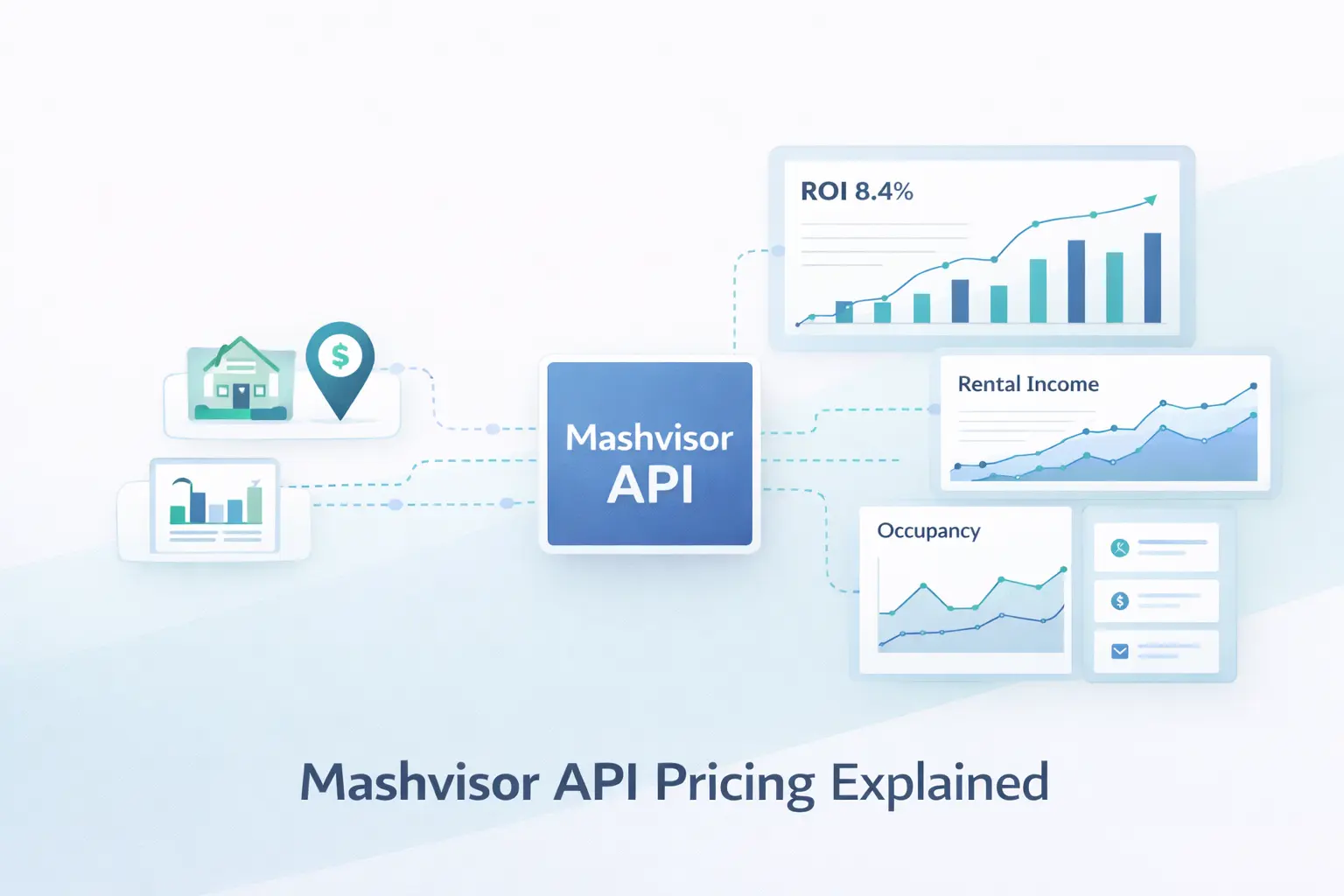
Short-term rental platforms and specialized analytics teams leverage Mashvisor’s Airbnb data API to construct sophisticated models for short-term rental performance. This enables them to forecast revenue potential accurately and to meticulously evaluate market demand and supply dynamics. Access to historical performance data is paramount, allowing applications to provide reliable estimates for Airbnb occupancy rates and average daily rates (ADR) across various locations. Given that this type of analysis is often executed automatically across a multitude of properties, API usage naturally scales in tandem with business growth. Mashvisor’s pricing structure for its Airbnb data API is intrinsically aligned with this operational reality.
A representative API request for historical performance data could be:
GET /airbnb/historical-performance?city=Austin
This request would return historical data crucial for understanding market trends and forecasting revenue.
Automating DSCR and Lending Underwriting
Financial institutions and FinTech platforms are increasingly integrating real estate data APIs to streamline their underwriting processes and automate critical DSCR calculations. By programmatically accessing rental income estimates and comparable property data, these teams can significantly reduce the reliance on manual analysis, thereby standardizing investment evaluations and underwriting procedures. For lenders specializing in investment properties, API usage typically escalates with the volume of loans processed, making scalable property data API pricing models exceptionally beneficial for underwriting automation.
A sample API request to fetch rental estimates for underwriting purposes might be:
GET /rental-estimates?property_id=12345&strategy=traditional
Authorization: Bearer YOUR_API_KEY
Accept: application/json
The rental estimate returned by this query is instrumental in calculating Net Operating Income (NOI) and performing a DSCR check within the underwriting model.
Enhancing Rental Comps Analysis and Market Benchmarking
Real estate investors and analytical PropTech platforms depend heavily on comparable real estate and rental data to accurately assess property values and validate their investment assumptions. The Mashvisor API empowers these applications to programmatically retrieve detailed comparable property performance metrics and neighborhood-level benchmarks. This capability is crucial for users to ascertain whether their projected returns align with prevailing local market conditions. The process of analyzing real estate and rental comps is often iterative, involving repeated queries across numerous properties and markets. Consequently, usage-based API pricing allows businesses to scale these intensive workflows efficiently, without being constrained by inflexible fixed data packages.
A typical API request to retrieve rental comps data would resemble:
GET /rental-comps?property_id=12345
This request provides the necessary comparable data to support valuation and investment decisions.
Powering Real Estate Marketplaces and Data Platforms
Property marketplaces and comprehensive data platforms leverage the Mashvisor API to enrich their listings with valuable investment insights, granular neighborhood analytics, and precise rent projections. These integrations necessitate continuous background queries that dynamically update data as users navigate through properties. For businesses operating at this scale, API usage typically grows in direct correlation with platform adoption, thereby supporting sustained, long-term expansion without requiring significant pricing restructures.
An example of an API request designed to enrich a property listing with investment metrics:
GET /property/analysis?address=Miami&state=FL&strategy=airbnb
Authorization: Bearer YOUR_API_KEY
Accept: application/json
This request retrieves essential investment analytics for a specific property, enabling platforms to enhance listings with vital metrics such as estimated rental income, occupancy rates, and projected Return on Investment (ROI).
While these examples represent some of the most prevalent applications of the Mashvisor API, the platform’s versatility extends to a much broader array of use cases. Many teams successfully integrate the API into market research tools, automated investment screening systems, portfolio monitoring dashboards, and custom real estate analytics solutions, precisely tailoring their data access to meet their unique operational and product development needs. To gain a deeper appreciation for the advantages inherent in this pricing structure, it is beneficial to compare Mashvisor’s approach with other widely adopted real estate data providers in the market.
A Comparative Analysis: Mashvisor API Pricing in the Market Landscape
When evaluating the cost of real estate data APIs, understanding how Mashvisor’s pricing model stacks up against other prominent providers is essential. Platforms such as Zillow and AirDNA, while offering valuable datasets, are often designed with different primary objectives, which in turn influences their pricing and access structures. Zillow, for instance, primarily focuses on property lookup and listing data, whereas AirDNA specializes in short-term rental analytics. Mashvisor, in contrast, offers a unified API that integrates property records, rental analytics, comparable data, and performance trends into a single, cohesive solution.
This fundamental difference not only impacts the breadth of available datasets but also shapes how businesses can scale their data usage and manage costs effectively over time. The following table provides a comparative overview of the investment property API pricing offerings from these three key providers:
| Feature | Mashvisor | Zillow | AirDNA |
|---|---|---|---|
| Best For | Investment platforms, Property search, analytics tools & listing apps | Property search & listing apps | STR operators & market research |
| Primary Focus | Property listings, home values, STR & LTR analytics, comps, investment metrics | Property listings & home values | Short-term rental analytics |
| Pricing Model | Credit-based usage model | Access-restricted or partnership-based | Subscription-based market access |
| Scalability | High – scales directly with usage | Limited for analytics workflows | Moderate – tied to market scope |
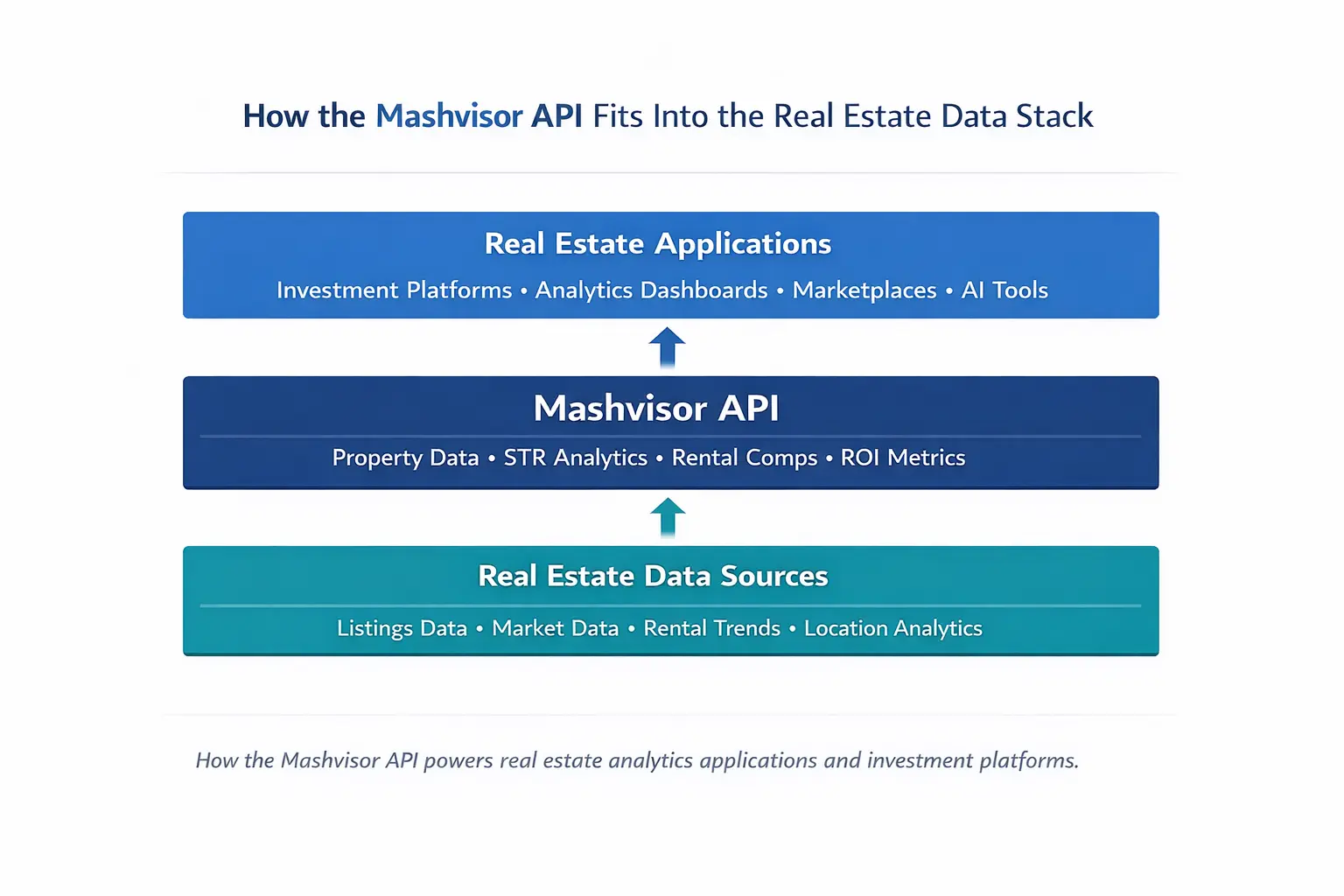
Mashvisor’s API is trusted by PropTech startups, STR operators, and real estate analytics platforms for integration into their production environments. Unlike the Zillow API and the AirDNA API, the Mashvisor API uniquely combines both property-level and market-level data and analytics for both short-term and long-term rentals. This comprehensive approach facilitates efficient rental analysis for investors and platforms that employ a variety of strategies. Furthermore, Mashvisor distinguishes itself with a flexible, transparent cost structure that is solely dependent on usage. Now that the pricing structure and competitive positioning of the Mashvisor API are clear, the next logical step is to understand how these models translate into tangible costs for your specific operational workflow.
Estimating Your Mashvisor API Costs: A Practical Framework
Given Mashvisor’s commitment to a usage-based pricing model for API access, the process of estimating your total API expenditure begins with a thorough understanding of how data will be integrated and utilized within your workflow or application. A significant advantage is that you do not need to concern yourself with selecting a plan based on feature sets, as all four standard plans provide unrestricted access to all available endpoints and comprehensive documentation.
The following step-by-step framework is designed to assist you in estimating your likely Mashvisor API costs before formally requesting access:
Step 1: Define Your Data Use Case
The initial and most critical step is to clearly identify how the API will serve and enhance your business operations. Internal research tools, complex investment analysis workflows, and customer-facing analytics platforms all generate distinct levels of API activity and data demand. Specifically, consider:
- Internal vs. External Facing Applications: Will the API data be used for internal decision-making or to provide insights directly to clients or end-users? External-facing applications often require more frequent updates and potentially higher usage.
- Frequency of Data Access: How often will your application need to query the API? Will it be a constant stream of real-time data, periodic updates, or ad-hoc requests?
- Granularity of Data Required: Do you need high-level market trends, specific property details, or detailed historical performance data for extensive analysis?
- Number of Users or Automated Processes: Quantify the number of individual users or automated jobs that will interact with the API.
Clearly defining your use case establishes a realistic baseline for expected usage and, consequently, for the associated costs.
Step 2: Estimate Monthly API Requests
The subsequent step involves approximating the frequency with which your application will interact with the API. Each individual request – whether it is for retrieving property analytics, obtaining rental comps, or accessing historical performance data – contributes to your monthly usage allocation. A straightforward estimation formula can be employed:
Estimated Monthly API Calls = (Number of Users or Automated Jobs) x (Average Requests per Session) x (Sessions per Month)
Even a rough projection can provide valuable insights into whether the Starter, Professional, Growth, or Enterprise plan is most appropriate for your specific situation.
Step 3: Match Data Needs with a Pricing Tier
Once you have estimated your anticipated usage volume, you can then align this projected request volume with the available Mashvisor API pricing tiers. As all plans include full endpoint access, the primary decision factor revolves around scale rather than functionality. Many businesses strategically begin with a tier that adequately supports their current operational workloads, while simultaneously leaving ample room for growth as their user adoption increases or their automation capabilities expand.
Step 4: Request a Custom Pricing Recommendation
After completing your internal usage estimation, the final and most important step is to engage with Mashvisor for a personalized pricing consultation. Mashvisor offers customized recommendations tailored to each user’s specific integration goals, their expected data volume, and their long-term scaling plans. Precise pricing details are communicated during a dedicated demo session, ensuring that businesses select a plan that is genuinely aligned with their real operational needs, rather than relying on generalized assumptions.
Who Mashvisor API is Best For (and Who It’s Not)
- Ideal For: PropTech startups, real estate investors, analytics teams, SaaS providers, large real estate platforms, lenders, and anyone requiring programmatic access to comprehensive real estate data for analysis, automation, and product development.
- Not Ideal For: Individuals or businesses with minimal or no need for programmatic real estate data access, those who only require occasional, manual data lookups, or organizations with extremely limited budgets that cannot accommodate even the entry-level pricing.
If you are still uncertain about which tier perfectly fits your specific use case, Mashvisor offers a direct pathway to clarity.
Book a 15-minute call with their experts, and they will help map your workflow to the most suitable plan, offering guidance without any pressure or upsell.
The Bottom Line: Scalable Data for a Dynamic Market
Understanding API costs is an indispensable prerequisite for any business that is building data-driven real estate products or seeking to scale its investment analysis workflows. Eschewing rigid, antiquated licensing structures, Mashvisor’s API pricing is fundamentally designed around flexibility. This approach empowers companies to precisely match their data access with their actual usage patterns and operational growth trajectories.
Featuring tiered plans meticulously based on monthly API call volumes, comprehensive endpoint access across all tiers, and customizable packages for high-volume requirements, the Mashvisor API adeptly supports a vast spectrum of applications. These range from essential investor tools and sophisticated underwriting systems to advanced analytics platforms and seamless marketplace integrations. For organizations in pursuit of a scalable, robust real estate data infrastructure, this usage-based model offers both predictability in budgeting and ample capacity for expansion as data requirements inevitably evolve.
For those eager to test the practical efficacy of the Mashvisor API before committing to a paid plan, the opportunity to get a 1-week free trial with 30 credits is readily available.
Frequently Asked Questions About Mashvisor API Pricing
How Much Does Mashvisor API Cost?
The cost of Mashvisor API plans typically starts at approximately $129 per month. The pricing is exclusively determined by monthly API usage. Precise pricing varies based on the volume of requests and the specific integration needs of each business. During a personalized demo, businesses receive tailored pricing recommendations to ensure the selected plan accurately aligns with their specific workflow and data requirements.
Is Mashvisor API Pricing Pay-per-Request?
Mashvisor employs a credit-based pricing model rather than a strict pay-per-request billing system. Each plan includes a predefined monthly allocation of API calls. This structure allows teams to scale their usage predictably while simultaneously avoiding the unpredictable per-call costs that can be associated with some real estate data API pricing models.
Does Mashvisor Offer Enterprise API Pricing?
Yes, in addition to its standard tiered plans, Mashvisor provides specialized Enterprise plans. These are meticulously designed for high-volume platforms and advanced analytics applications that demand extensive data processing capabilities. Furthermore, custom packages can be developed for organizations with highly specialized use cases, exceptionally large datasets, or request volumes that exceed standard monthly allocations.
What Is Included in Mashvisor API Access?
All Mashvisor API plans encompass full access to the complete API documentation and all available endpoints. This extensive access covers a wide range of functionalities, including property analytics, rental comps, investment metrics, and historical performance data, all of which are critical for workflows such as underwriting, DSCR analysis, and short-term rental revenue modeling.
Is the Mashvisor API Worth the Cost?
For businesses that rely heavily on automated investment analysis or require scalable real estate analytics capabilities, the Mashvisor API can deliver substantial efficiency gains. These benefits are particularly pronounced when compared to the laborious process of manual data collection or the complexities of integrating multiple disparate data providers. Its inherently usage-based structure empowers companies to commence with a manageable level of access and gradually expand their data utilization as their products or analytical needs mature.

