
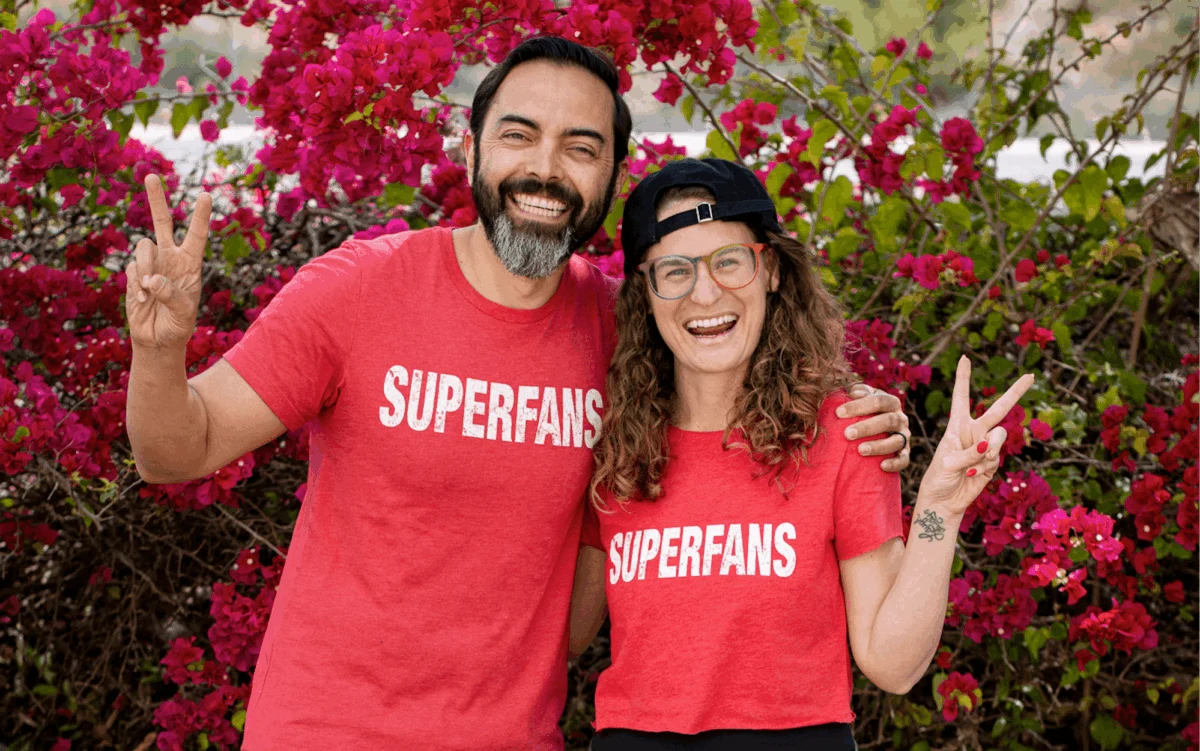
The digital entrepreneurship landscape saw a significant shift this year as Pat Flynn, the founder of the influential brand Smart Passive Income (SPI), officially announced the sale of the company to entrepreneur and email marketing specialist Liz Wilcox. The acquisition, which was finalized in April 2026 and publicly detailed in late 2026, marks the end of Flynn’s 18-year tenure at the helm of a platform that helped define the "passive income" and "lifestyle business" movement of the early 21st century. Flynn, who founded SPI in 2008 following a layoff from his career in architecture, is transitioning his focus toward his rapidly expanding media ventures in the hobbyist space and family-oriented content.
The transaction represents a strategic pivot for SPI, moving from a founder-led personal brand toward a community-centric model under Wilcox’s leadership. While financial terms of the deal were not disclosed, the transition follows a multi-year period of internal restructuring at SPI, which saw the brand move away from traditional affiliate marketing and toward a recurring revenue model centered on its "SPI Pro" community and educational cohorts.
A Chronological History of Smart Passive Income: From 2008 to 2026
To understand the weight of this acquisition, one must look at the 18-year trajectory of the brand. Flynn’s journey began in 2008 after he was laid off from an architecture firm during the Great Recession. His first success, a blog dedicated to helping professionals pass the LEED (Leadership in Energy and Environmental Design) exam, became the case study for what would eventually become Smart Passive Income.
Launched in late 2008, the SPI blog and subsequent podcast became a cornerstone of the burgeoning creator economy. Flynn pioneered the concept of "Income Reports," where he publicly disclosed his monthly earnings, a move that established a high level of transparency and trust in an industry often criticized for lack of accountability. By 2015, SPI had evolved into a multifaceted media company, producing top-tier podcasts, bestselling books such as Will It Fly?, and high-ticket online courses.
The brand’s business model underwent a significant transformation in 2020. Recognizing the limitations of a business tied solely to a single personality, Flynn and his business partner, Matt Gartland, shifted the focus toward community-led growth. This led to the creation of SPI Pro, a private membership community for entrepreneurs. This shift toward recurring revenue made the company an attractive target for acquisition, though Flynn reportedly rebuffed several offers from venture capital firms in 2022 and 2023.
The Catalyst for the Sale: The Seattle Card Party and Divided Focus
The decision to sell was not prompted by financial necessity but by a growing "divided focus" between Flynn’s legacy brand and his new professional calling. In 2020, Flynn launched a YouTube channel focused on Pokémon card collecting with his children. What began as a family hobby quickly transformed into a major business venture, eventually leading to the creation of "Deep Pocket Monster," a channel that commands a massive audience and has spawned its own large-scale live event, "Card Party."
The internal tension reached a breaking point during the fourth annual Card Party in Seattle in 2025. According to reports, Flynn found himself managing SPI administrative tasks and scripting business content while hosting nearly 10,000 attendees at his Pokémon event. This experience highlighted the difficulty of "straddling two different ladders," as Flynn described it.
The introduction to Liz Wilcox occurred through a fortuitous connection. Wilcox’s sister, Patricia Prak, who was assisting Flynn at the Seattle event, observed his exhaustion and suggested that Wilcox—an established entrepreneur in her own right—might be the ideal candidate to take over the SPI legacy.
Profiling the New Owner: Who is Liz Wilcox?
Liz Wilcox enters the role of owner with a background that mirrors Flynn’s own "scrappy" entrepreneurial beginnings. Wilcox first gained prominence in the digital space with a successful RV travel blog, which she eventually sold. She subsequently built a high-volume email marketing business that serves a community of over 4,000 members.
Wilcox is widely recognized for her "Email Marketing Membership" model, which emphasizes low-cost, high-value recurring subscriptions. Her approach to business is characterized by high energy, transparency, and a focus on community engagement. These traits were central to the acquisition discussions, which reportedly focused on cultural alignment and the preservation of the SPI community’s values rather than purely financial metrics.
Before the official announcement of the sale, Wilcox served as SPI’s Director of Community starting in April 2026. This period served as a "proof of concept" phase, allowing Wilcox to demonstrate her ability to lead the brand without Flynn’s constant presence.
Data-Driven Results: Impact of the Leadership Transition
The efficacy of Wilcox’s leadership during the transition period is supported by significant performance metrics. Since taking over the role of Director of Community in April 2026, SPI has reported the following:
- Engagement Growth: Community activity and engagement within the SPI platforms increased by over 400%.
- Membership Acquisition: The number of new members joining the SPI community doubled within a six-month period.
- Operational Innovation: Wilcox introduced new recurring "co-working" experiences and streamlined the brand’s email marketing funnels, identifying and closing gaps in the previous customer acquisition strategy.
These figures suggest that the transition from a "Flynn-centric" brand to a "Wilcox-led" community has been met with positive reception from the subscriber base. Many long-term followers have noted that the community’s energy currently mirrors the excitement of the brand’s early 2020 pivot.
Analysis of Business Implications and the Creator Economy
The sale of SPI is emblematic of a broader trend in the creator economy: the maturation of personal brands into sustainable, exit-ready businesses. For years, the primary challenge for influencers and "solopreneurs" has been the "key person risk"—the reality that the business’s value is tied entirely to the founder.
Flynn’s successful exit demonstrates a viable roadmap for other creators. By building a robust community infrastructure (SPI Pro) and a professional leadership team (led by Matt Gartland and Caleb Wojcik), Flynn transformed SPI from a personal blog into an institutional asset. This allowed him to sell the company to a buyer who shares his values, rather than a venture capital firm that might have prioritized data harvesting over community health.
Furthermore, the acquisition highlights the rising importance of "niche authority." Wilcox’s expertise in email marketing and community management provides SPI with a fresh technical edge, while Flynn’s move into the hobbyist and family space reflects the diversification of the creator economy into specialized entertainment and education.
Pat Flynn’s Future: The "Mr. Rogers" Vision
Following the sale, Flynn has indicated that he will remain involved with SPI in a limited advisory capacity and will make occasional guest appearances on the SPI podcast. However, his primary professional focus has shifted toward his new film studio and production house.
Flynn has articulated a long-term vision that transcends business coaching. Inspired by the legacy of Fred Rogers (Mr. Rogers), Flynn aims to produce content that fosters positive values and family connectivity. This includes his continued work in the Pokémon space, which he views as a medium for parents and children to connect over shared interests away from digital screens.
"I don’t want to become the next Mr. Beast," Flynn stated in a recent address to his followers. "I want to become, in a sense, the next Mr. Rogers." This shift signifies a move from "how-to" entrepreneurial content to "how-to-live" family and educational content, utilizing high-production filmmaking and storytelling techniques.
Official Responses and Stakeholder Reactions
The transition has been supported by the existing SPI leadership team. Matt Gartland, who served as CEO and Flynn’s long-time business partner, played a pivotal role in the negotiations, ensuring that the deal prioritized the long-term health of the SPI staff and community. Caleb Wojcik, who served as CEO during the two-year lead-up to the sale, was also instrumental in organizing the company for a smooth handoff.
Liz Wilcox, in her new capacity as owner, has expressed a commitment to radical transparency. She has already launched initiatives to pull back the curtain on the acquisition process, providing a "behind-the-scenes" look at the financial and operational realities of taking over a major digital brand.
Industry analysts view the move as a win-win for both parties. Flynn secures his legacy and the freedom to pursue a new calling, while Wilcox gains an established platform with a loyal audience and a proven revenue model.
Conclusion
The sale of Smart Passive Income marks the conclusion of one of the most successful chapters in the history of online business education. Pat Flynn’s 18-year journey from a laid-off architect to a media mogul serves as a blueprint for the modern entrepreneur. As Liz Wilcox takes the baton, the focus of SPI appears set to remain on the core mission Flynn established in 2008: serving the audience and fostering a community of ethical, sustainable entrepreneurs.
While the "Pat Flynn era" of SPI has ended, the brand’s evolution into a community-led institution suggests that its influence on the digital marketing world will continue for years to come. For Flynn, the transition represents the ultimate "passive income" success—building a business so robust that it can thrive, and even grow, in the hands of its next steward.

